Skip to content

Knowledge Of Sea

We will keep you updated

  • Home
  • Video
  • Chartering Terms
  • Rule of the Road (COLREG)
    • Nautical Flags
    • Rule of the Roads – CARDS
  • Tanker Definitions
  • Downloads
  • ORAL NOTES
    • ORAL NOTES- 2ND OFFICER
    • ORAL NOTES- CHIEF MATE
    • ASM ORAL NOTES 1
    • ASM ORAL NOTES 2
  • About Me
  • Exit Exam
    • FPFF exit exam questions and answers
    • EFA exit exam questions and answers
    • BST exit exam questions and answers
    • AFF DG Shipping exit exam question and answers
  • Toggle search form

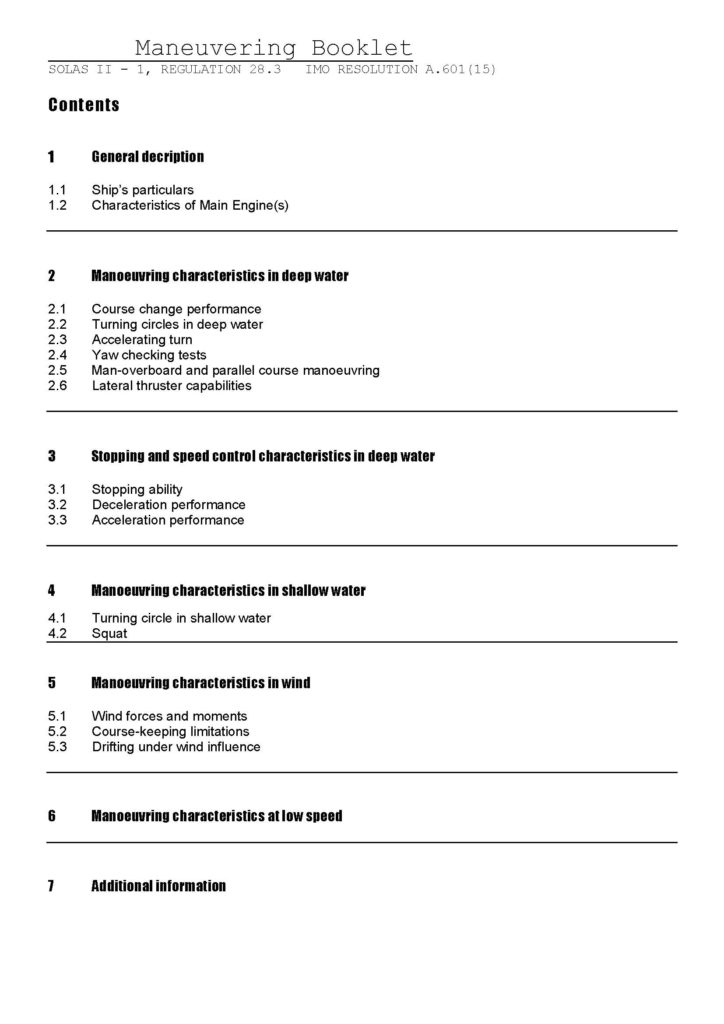
Manoeuvring Booklet

Posted on November 21, 2019March 3, 2020 By admin No Comments on Manoeuvring Booklet
Manoeuvring Booklet

Contents

1 General description

  • Ship’s particulars
  • Characteristics of Main Engine(s)

2 Manoeuvring characteristics in deep water

  • Course change performance
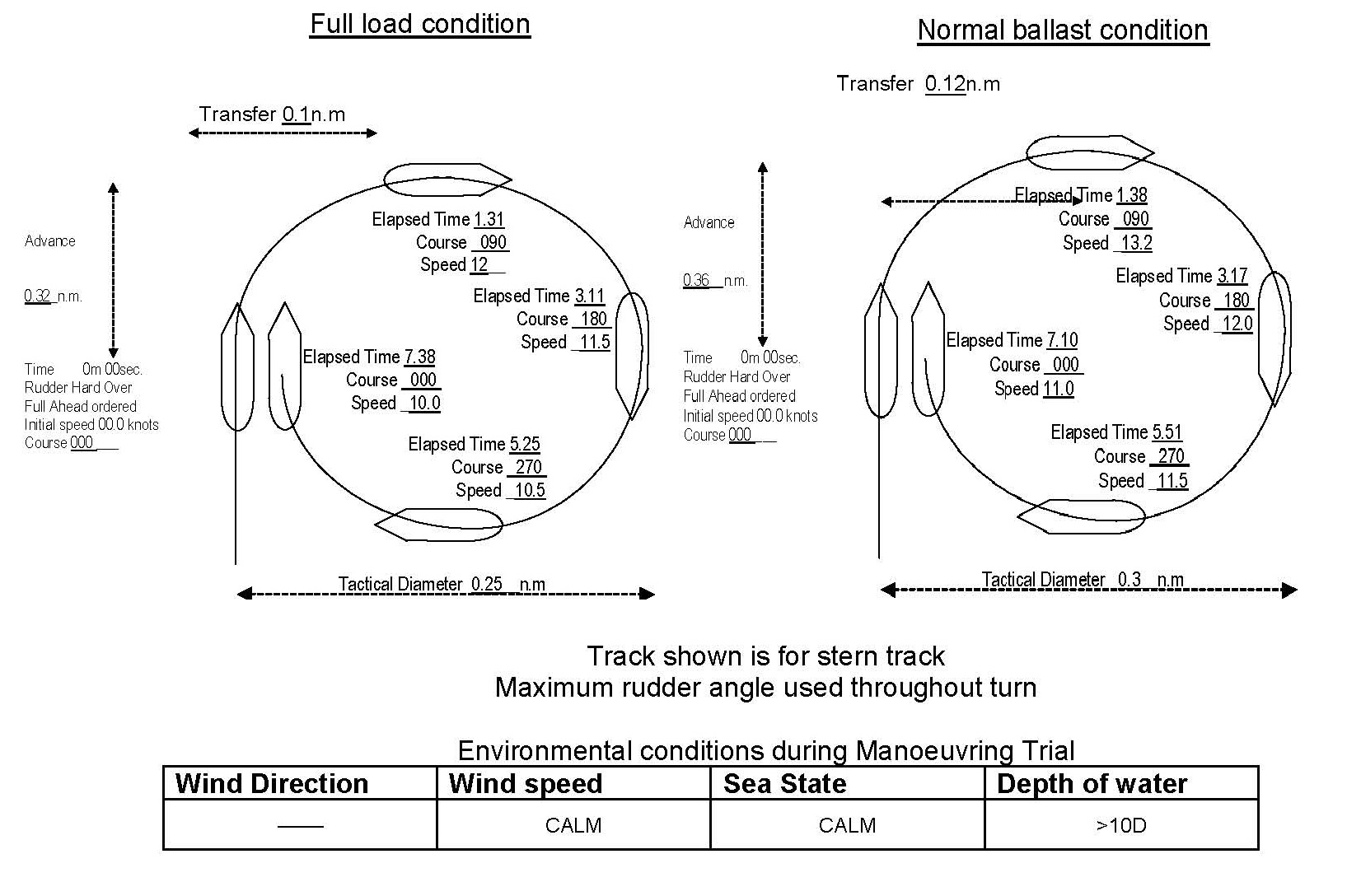
  • Turning circles in deep water
  • Accelerating turn
  • Yaw checking tests
  • Man-overboard and parallel course manoeuvring
  • Lateral thruster capabilities

3 Stopping and speed control characteristics in deep water

  • Stopping ability
  • Deceleration performance
  • Acceleration performance

4 Manoeuvring characteristics in shallow water

  • Turning circle in shallow water
  • Squat

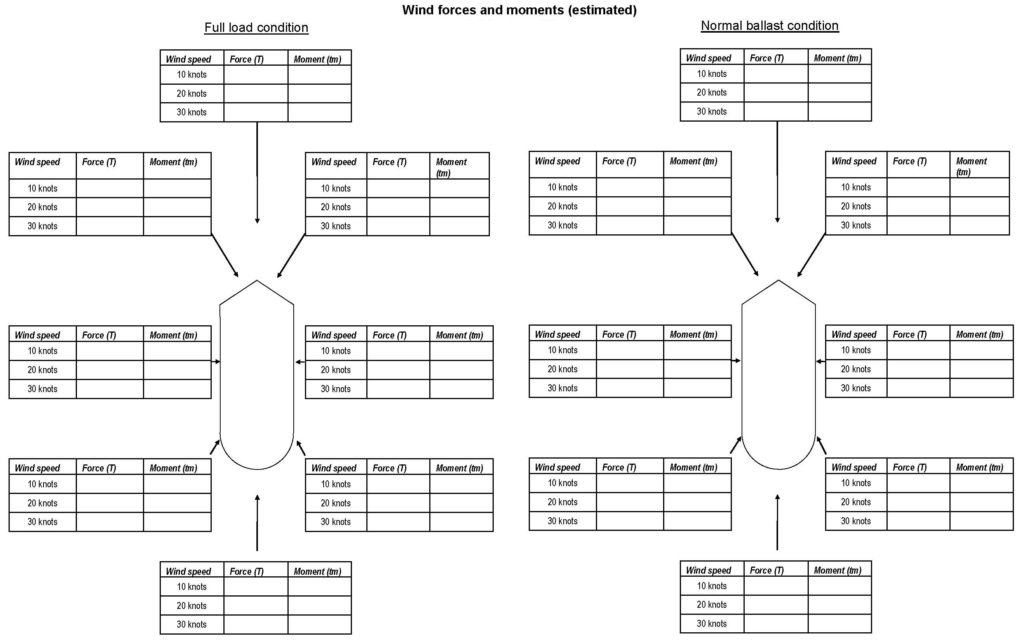
5 Manoeuvring characteristics in wind

  • Wind forces and moments
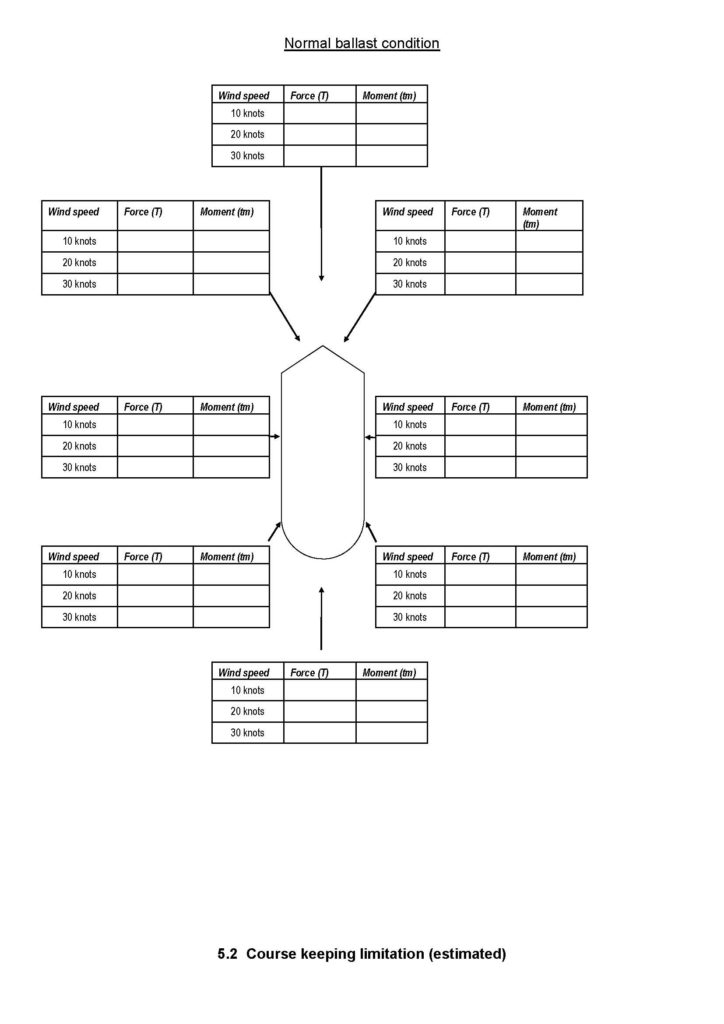
  • Course-keeping limitations
  • Drifting under wind influence

6 Manoeuvring characteristics at low speed

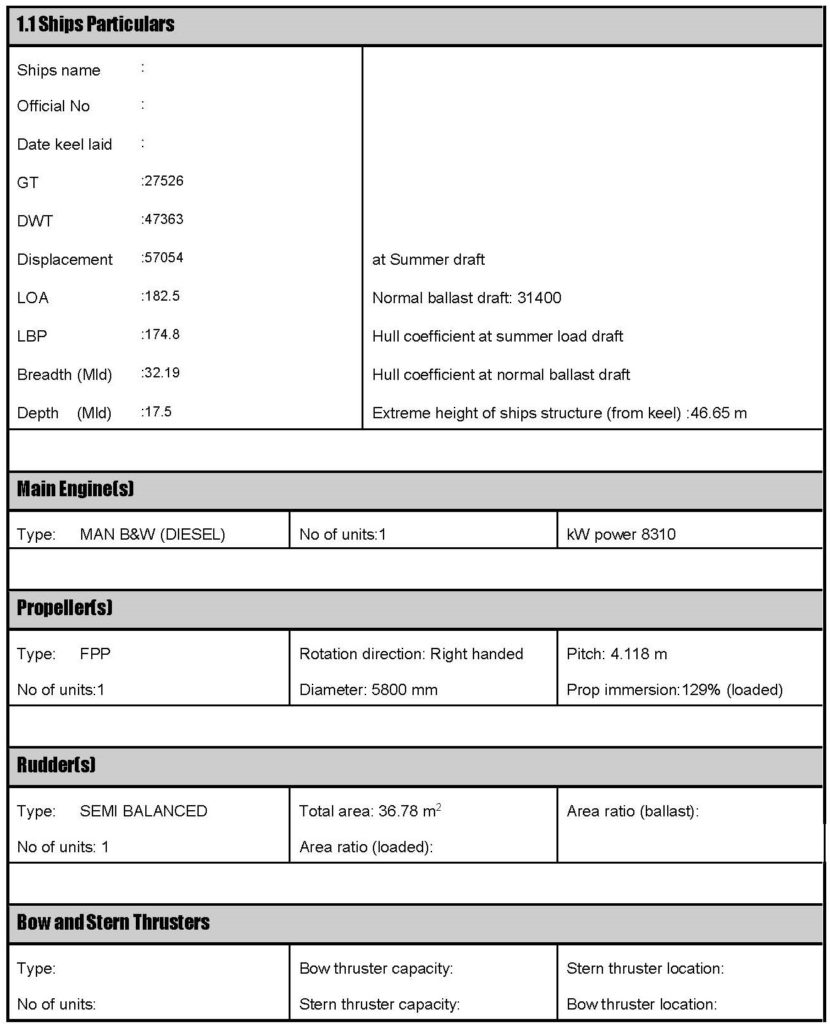
1. General Description
Manoeuvring Booklet

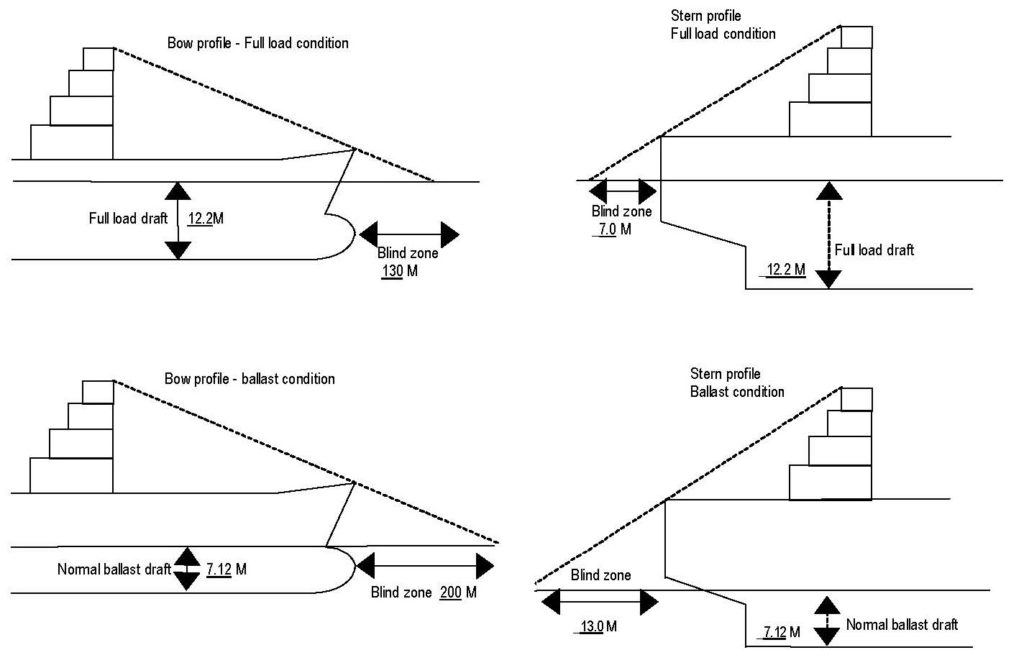
Bow & Stern Profiles

bow and stern profile

Other Hull Particulars

Manoeuvring Booklet

Main Engine Characteristics

Manoeuvring Booklet

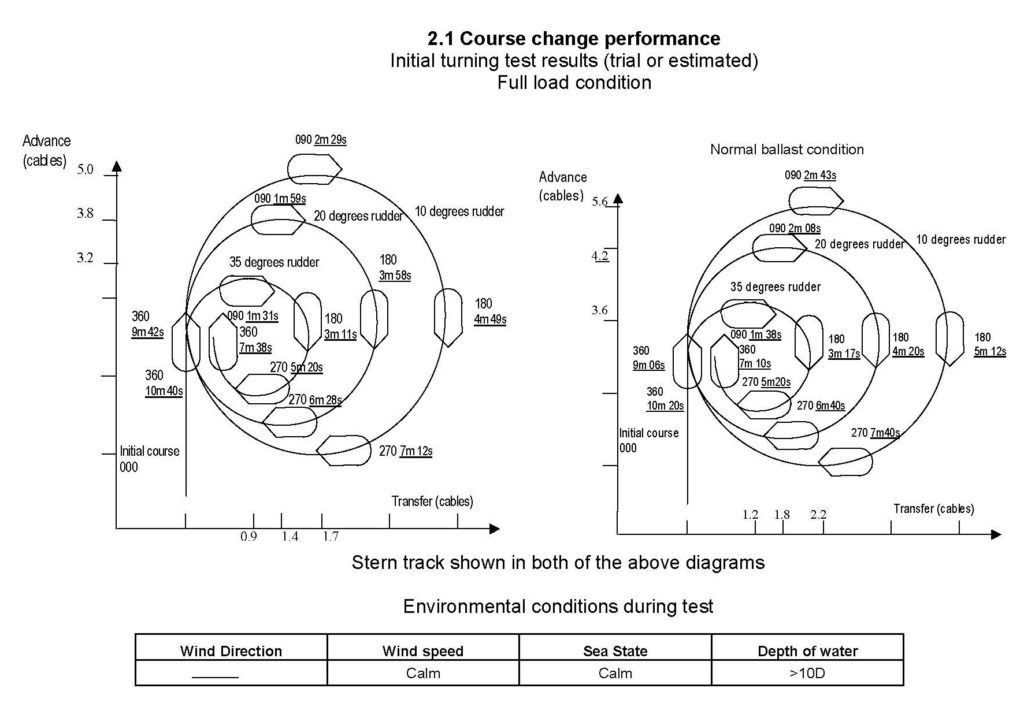
Manoeuvring Characteristics In Deep Water
Manoeuvring Booklet

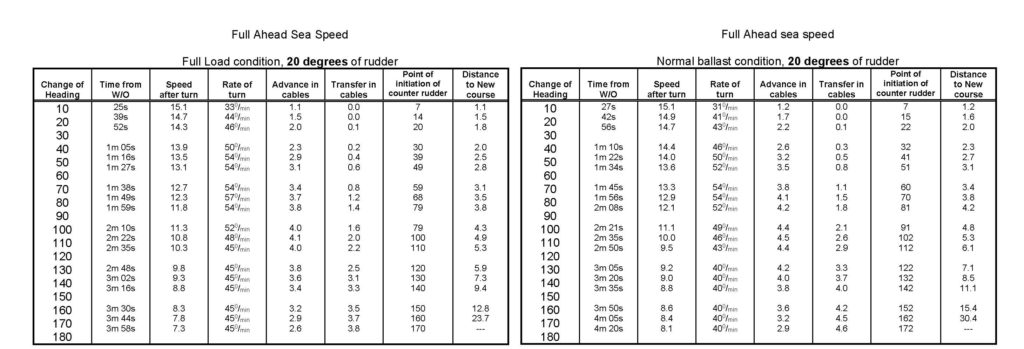
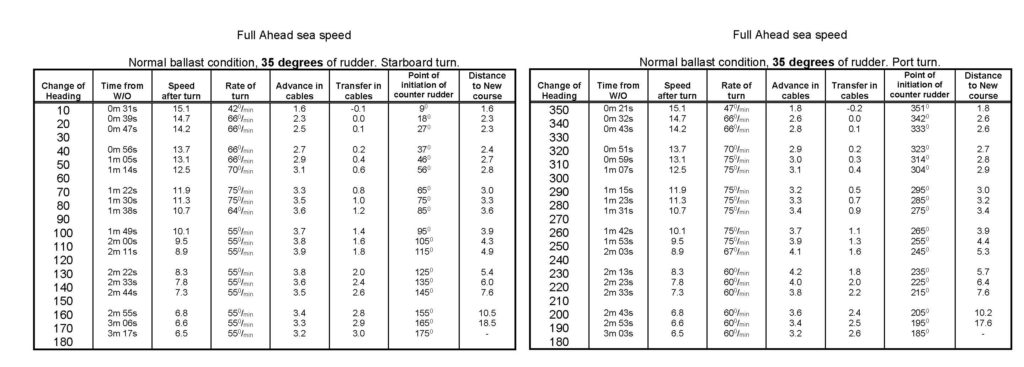
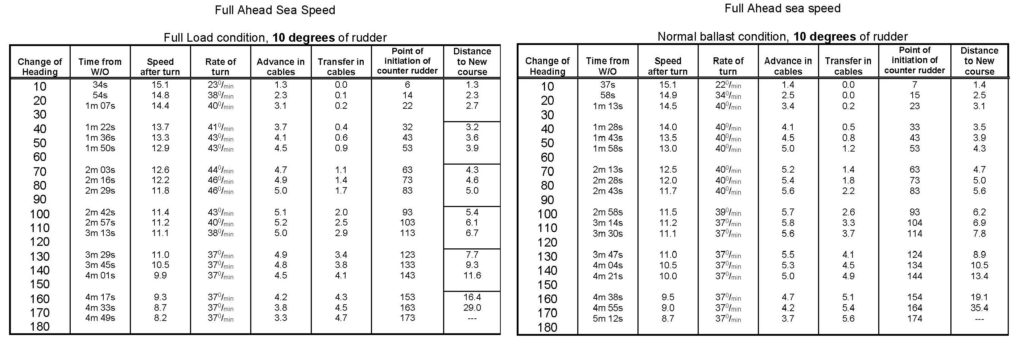
a) Table of course change test results For 10°,20° & 30°
Manoeuvring Booklet
Manoeuvring Booklet
Manoeuvring Booklet

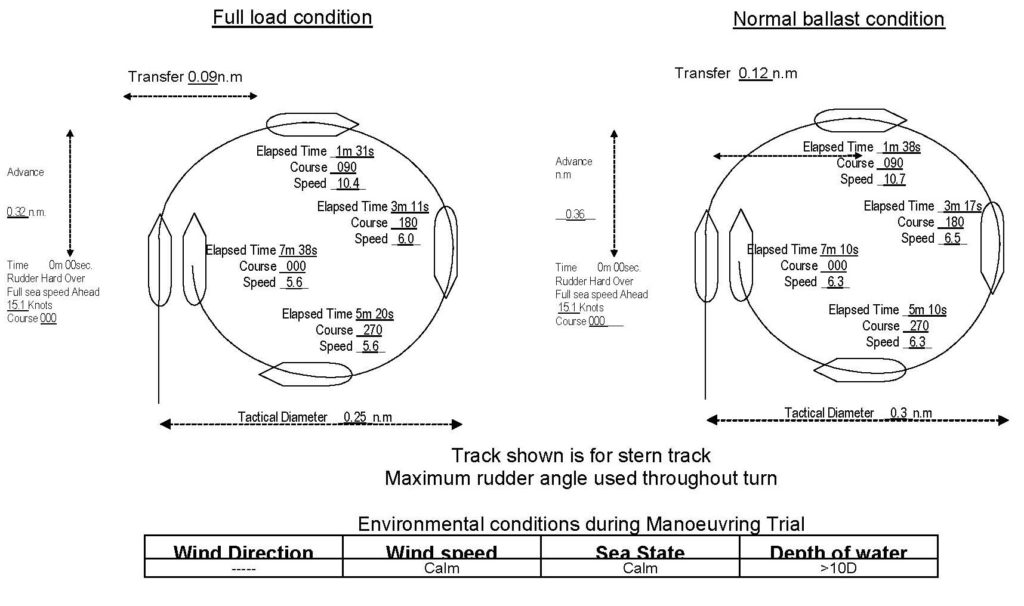
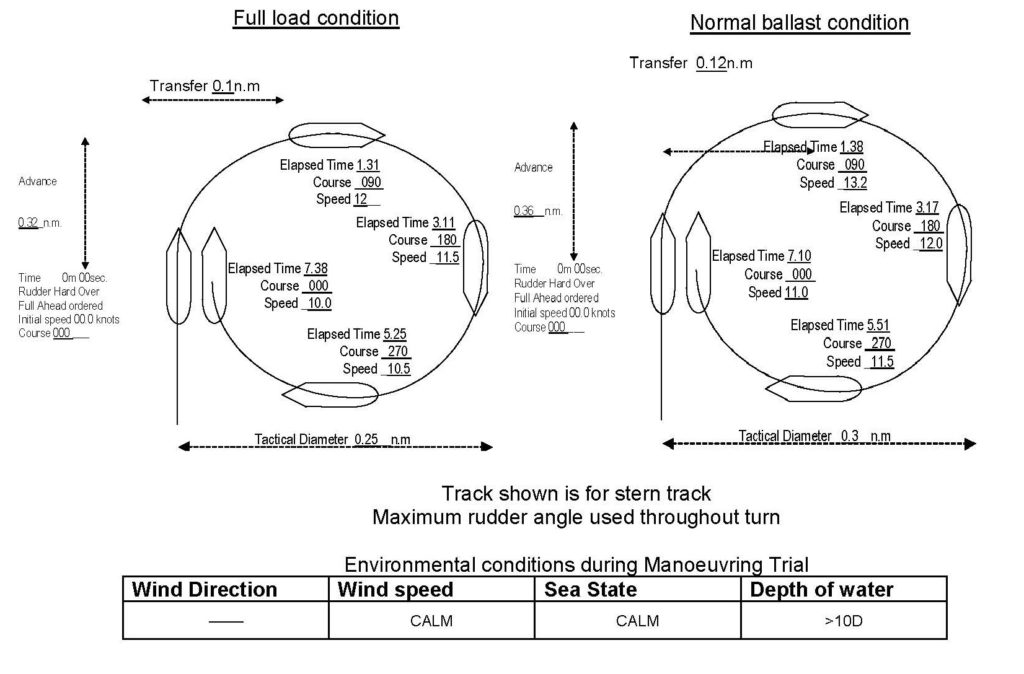
b) Turning circles in deep water

Manoeuvring Booklet

c) Accelerating turn

Manoeuvring Booklet

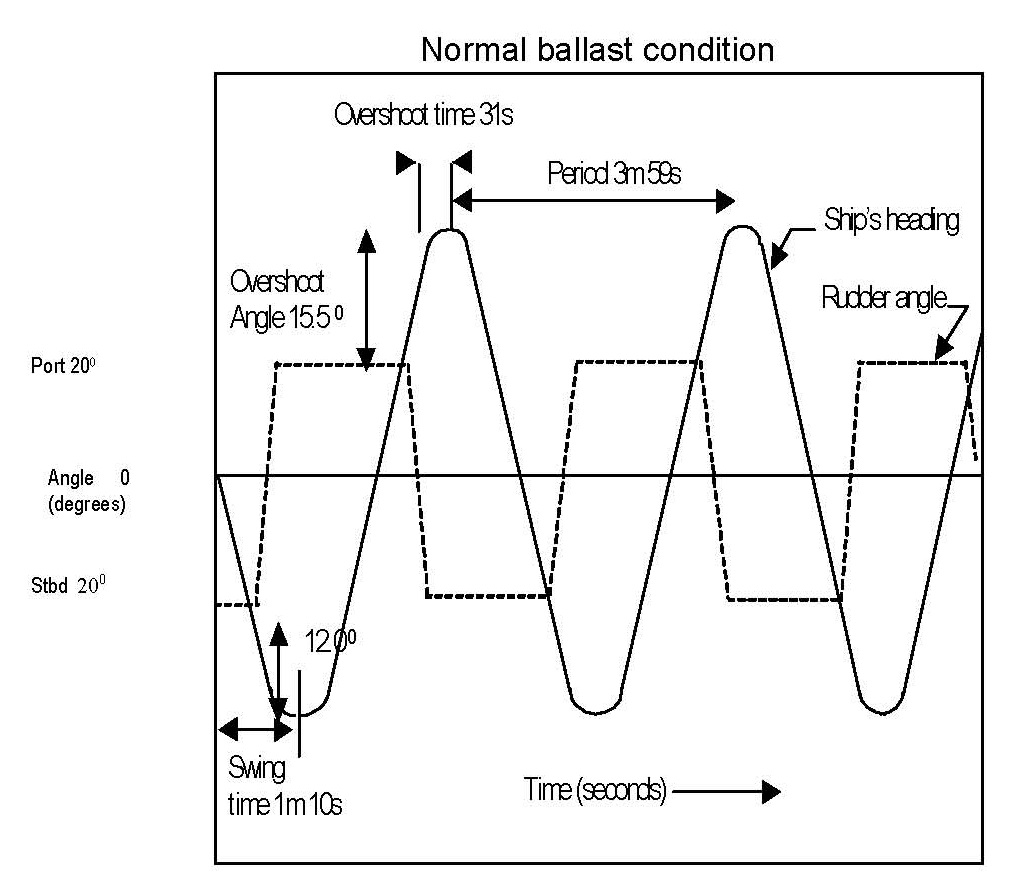
d) Zig Zag Manoeuvre

zig zag Manoeuvring

The manoeuvre provides a qualitative measure of the effectiveness of the rudder to initiate and check changes of heading.

The manoeuvre is performed in the following manner:-

With the ship steaming at a uniform speed and on a constant heading a nominal rudder angle, say 20 degrees, is applied as quickly and as smoothly as possible and held constant until the ships heading has changed by 20 degrees (check angle) from the base course. At this point 20 degrees of opposite rudder is applied and held until the ship’s heading has crossed the base course and is 20 degrees in the opposite direction, the rudder is then reversed as before. 

This procedure is repeated until the ship’s head has passed through the base course 5 times. During the manoeuvre the ship’s heading and rudder angle are recorded continuously. The usual rudder angle/check angle used is 20 degrees/20 degrees but other combinations are 5 degrees/20 degrees and 10 degrees/20 degrees. 

The main parameters used for comparison are the overshoot angle, overshoot time and the period.

e) Pull out manoeuvre
pull out Manoeuvring

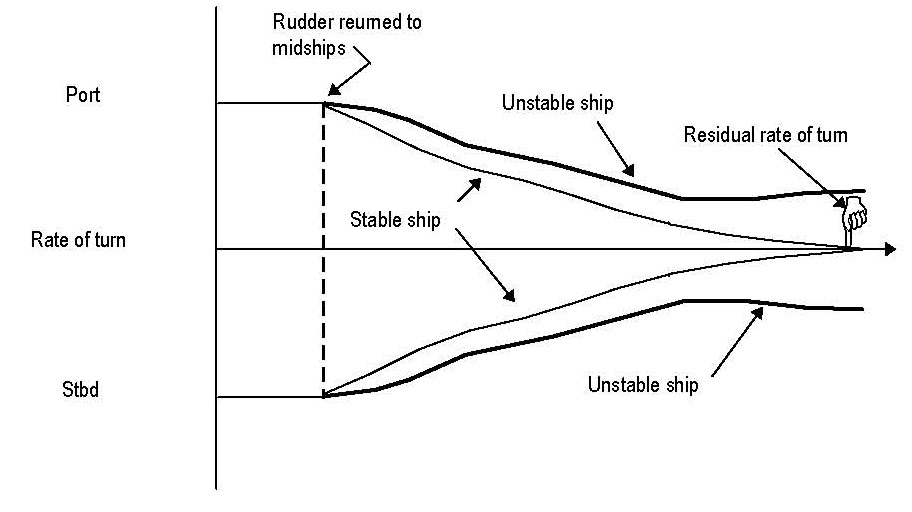
The pull out manoeuvre was developed as a simple test to give a quick indication of a ship’s course stability. 

The ship is held on a steady course and at a steady speed. A rudder angle of approximately 20 degrees is applied and the ship allowed to achieve a steady rate of turn; at this point the rudder is returned to midships. The rate of turn is now allowed to decay with the rudder held amidships. 

If the ship is stable the rate of turn will decay to zero for turns to both port and starboard. If the ship has a steering bias, then port and starboard turns will decay to the same small rate of turn on whichever hand the bias exists. If the ship is unstable then the rate of turn will reduce to some residual rate of turn as shown in the diagram.

f) Man-overboard and parallel course manoeuvres
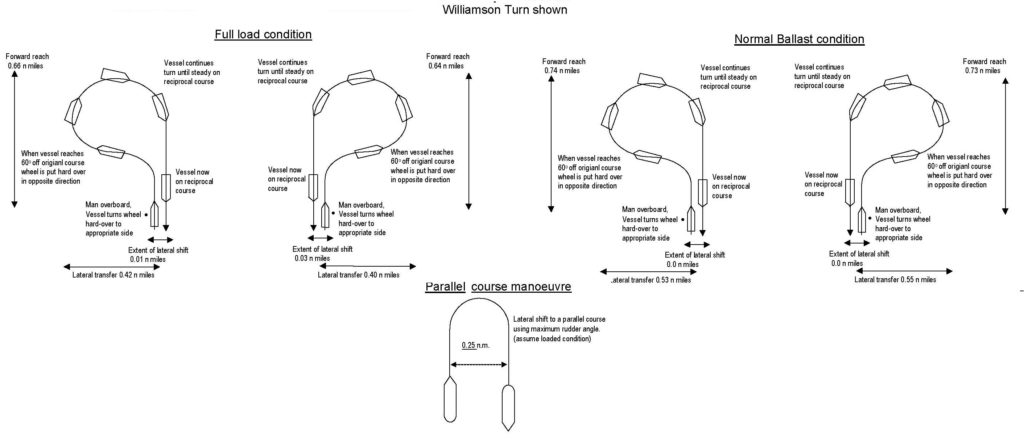
Manoeuvring Booklet

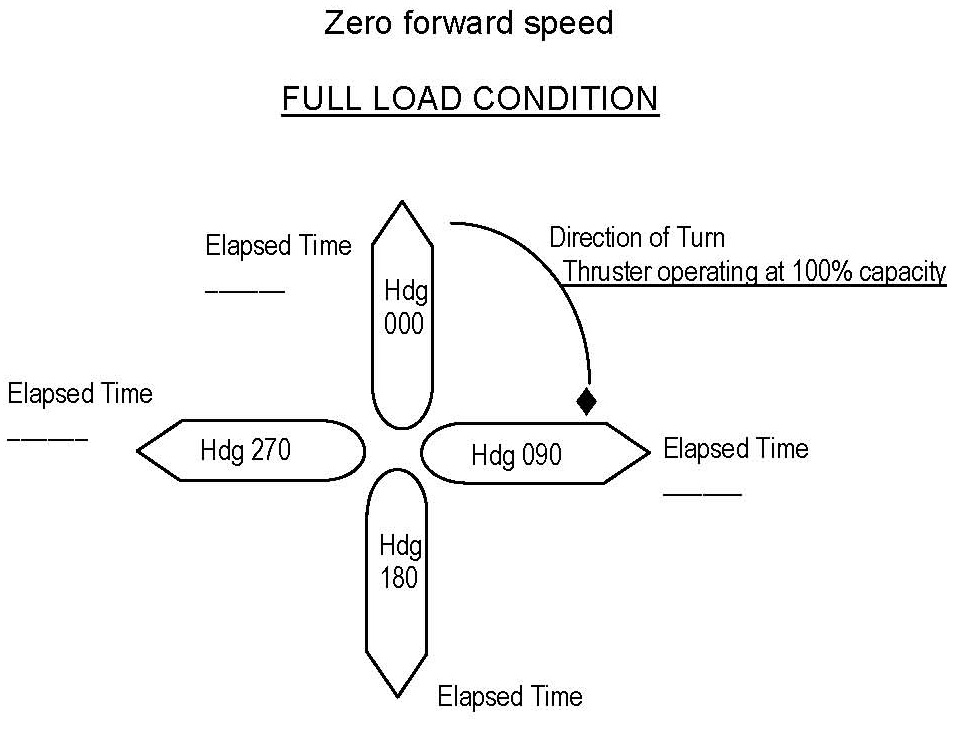
g) Lateral thruster capabilities

Manoeuvring Booklet

Stopping And Speed Control Characteristics In Deep Water
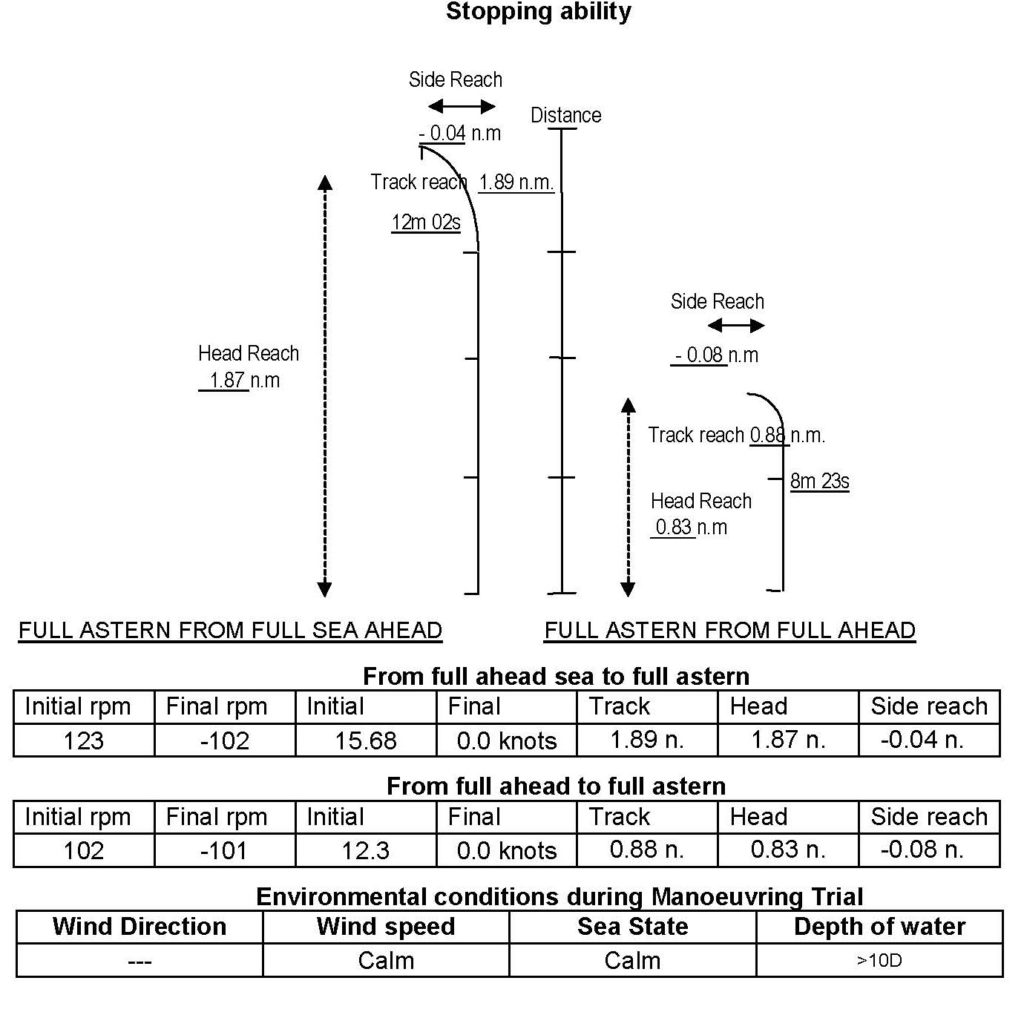
Manoeuvring Booklet

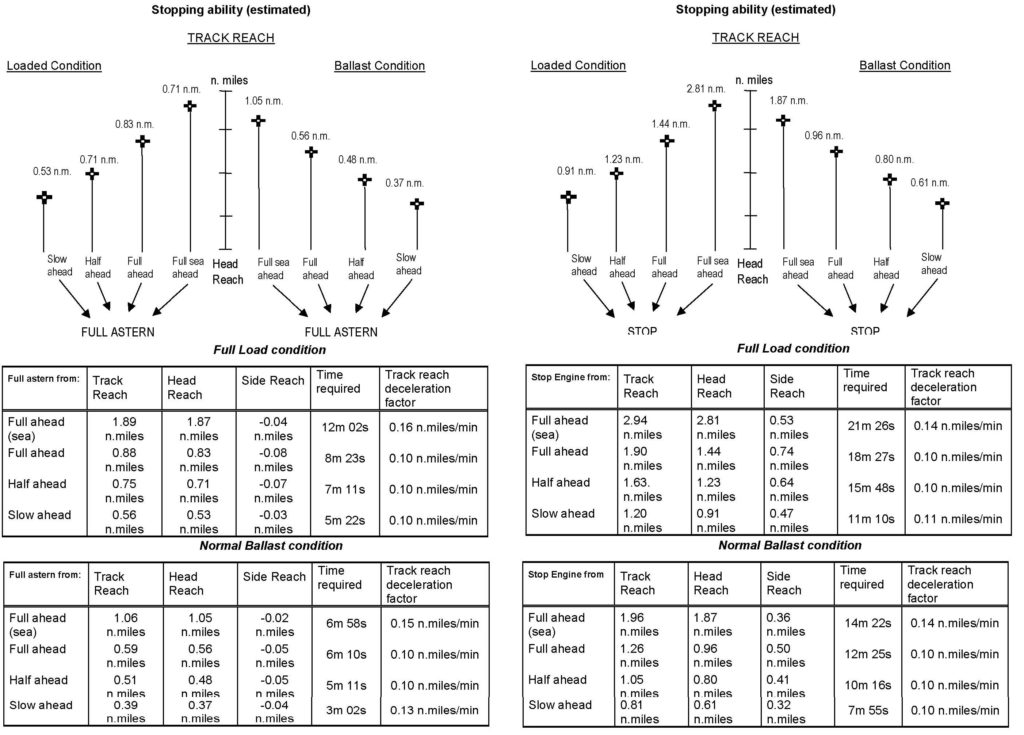
a) Stopping ability

Manoeuvring Booklet

b) Deceleration and Acceleration performance
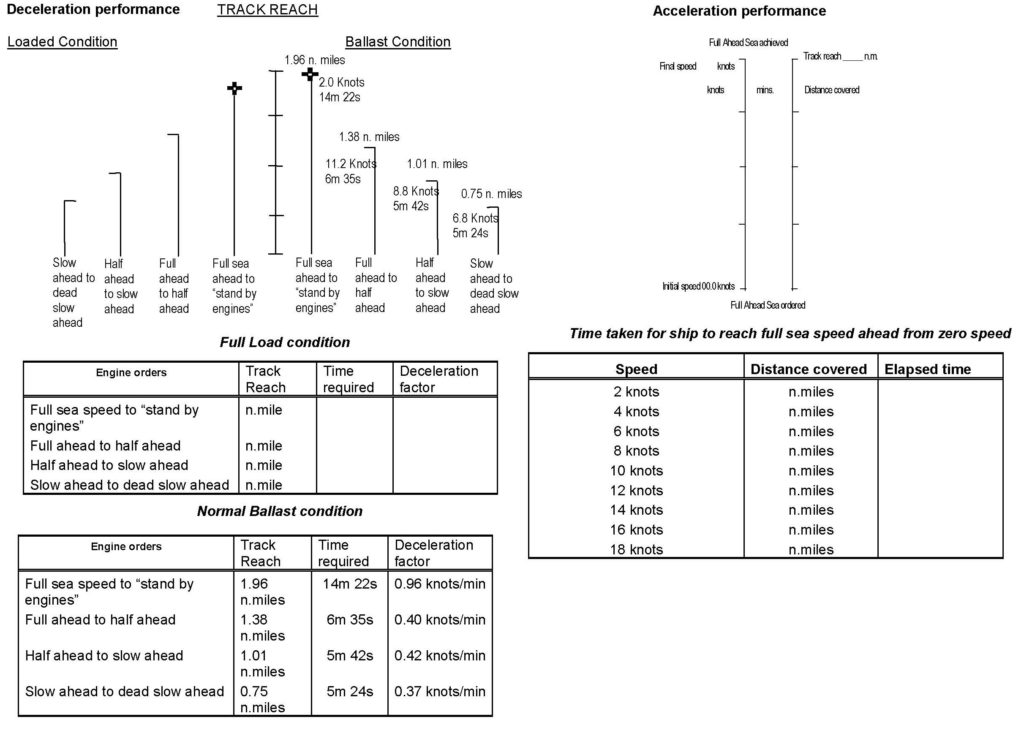
Manoeuvring Booklet

Manoeuvring Characteristics In Shallow Water
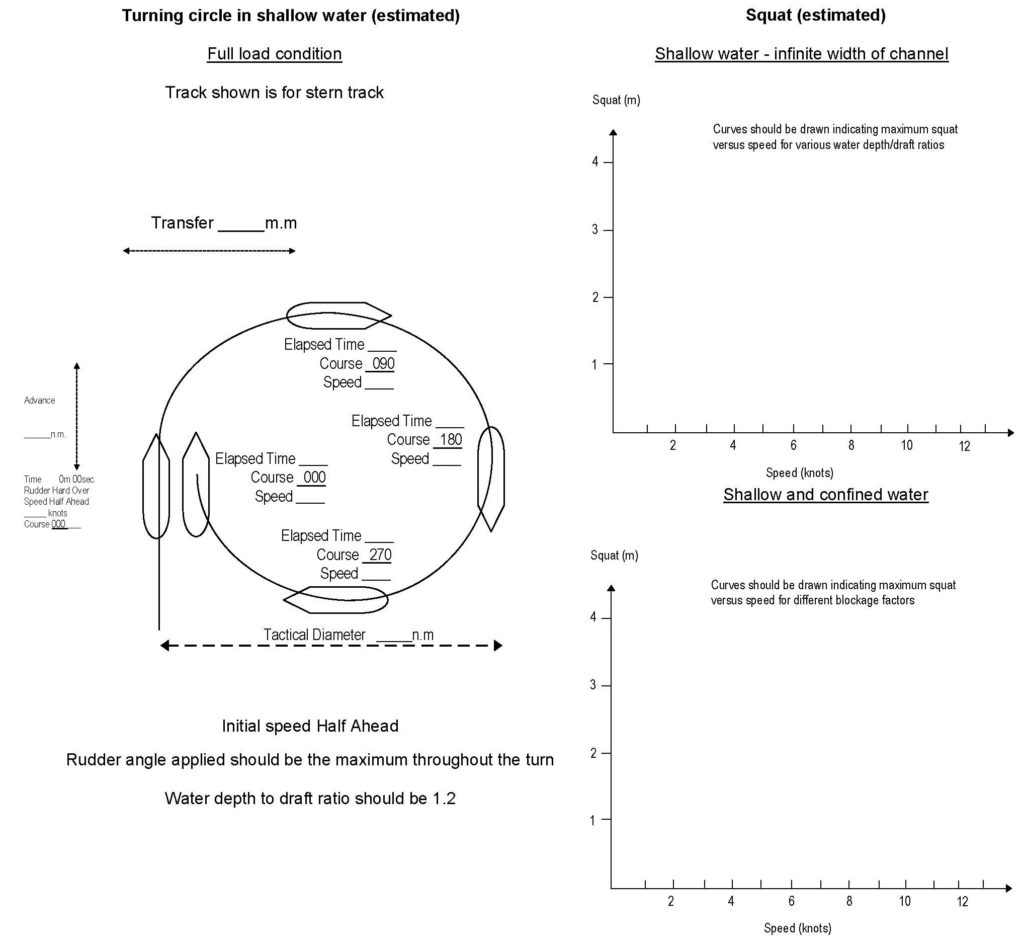
Manoeuvring Booklet

Manoeuvring Characteristics In Wind

Manoeuvring Booklet

Course keeping limitation

Manoeuvring Booklet
Navigation Tags:Accelerating turn, Acceleration performance, Characteristics of Main Engine(s), Course change performance, Course-keeping limitations, Deceleration performance, Lateral thruster capabilities, Man-overboard and parallel course manoeuvring, Manoeuvring Booklet, Squat, Stopping ability, Turning circle in shallow water, Turning circles in deep water, Wind forces and moments, Yaw checking tests

Post navigation

Previous Post: Master Night Orders
Next Post: Girting of Tug

Leave a Reply Cancel reply

Your email address will not be published. Required fields are marked *

Categories

  • Bulk Carrier
  • Cargo handling
  • Engine Room Operations
  • LSA & FFA
  • Maritime Industry
  • Maritime Law
  • Merchant Shipping
  • Navigation
  • Rules and Regulation
  • Ship Construction
  • Shipboard operation
  • Stability
  • Tanker
  • Uncategorized

Blog is primarily for candidates appearing for certificate of competency exams but such is the detail that while being equally suitable for the beginner, it is also reference work for experienced seaman, and the layout and style of blog make it suitable for shipboard training where practical experience can be allied to the theoretical approach.

Recent Comments

  • capt on Radar Best Practice -ARPA
  • admin on Dry Docking (Theory & Numericals)
  • Stelios Karamplakas on Dry Docking (Theory & Numericals)
  • Farid OMARI on Demurrage
  • admin on Tanker Cargo Calculations

Copyright © 2018 knowledge of sea – All Rights Reserved.

If you’re unsure about what type of training will work best for you, just tell us a little more about your needs. We will get back to you as soon as possible with the answers you need!

All answers will be from sailor mouth, who is practically working on board.

January 2026
S M T W T F S
 123
45678910
11121314151617
18192021222324
25262728293031
« Dec    

Copyright © 2026 Knowledge Of Sea.

Powered by PressBook WordPress theme

Go to mobile version