Skip to content

Knowledge Of Sea

We will keep you updated

  • Home
  • Video
  • Chartering Terms
  • Rule of the Road (COLREG)
    • Nautical Flags
    • Rule of the Roads – CARDS
  • Tanker Definitions
  • Downloads
  • ORAL NOTES
    • ORAL NOTES- 2ND OFFICER
    • ORAL NOTES- CHIEF MATE
    • ASM ORAL NOTES 1
    • ASM ORAL NOTES 2
  • About Me
  • Exit Exam
    • FPFF exit exam questions and answers
    • EFA exit exam questions and answers
    • BST exit exam questions and answers
    • AFF DG Shipping exit exam question and answers
  • Toggle search form

Category: Stability

Damage stability Deterministic method

Posted on August 25, 2024August 25, 2024 By admin No Comments on Damage stability Deterministic method
Damage stability Deterministic method

Deterministic Damage Stability This is a traditional method of assessment of the stability of a ship when it is flooded. In this process, the ship is divided into several subdivisions along its length with the help of transverse watertight bulkheads. Now the stability of the ship is calculated when one or more compartments get flooded…

Read More “Damage stability Deterministic method” »

Stability

Parametric & Synchronous Rolling: –

Posted on August 22, 2024August 22, 2024 By admin No Comments on Parametric & Synchronous Rolling: –
Parametric & Synchronous Rolling: –

Parametric rolling occurs when the pitching period is either equal to or half of that of the rolling period. Large roll angles may occur quickly in head or stern seas or nearly head or stern seas. The roll angle may increase from a few degrees to over 30 degrees in only a few cycles. It…

Read More “Parametric & Synchronous Rolling: –” »

Stability

The Trapezoidal Rule

Posted on April 17, 2021April 17, 2021 By admin No Comments on The Trapezoidal Rule
The Trapezoidal Rule

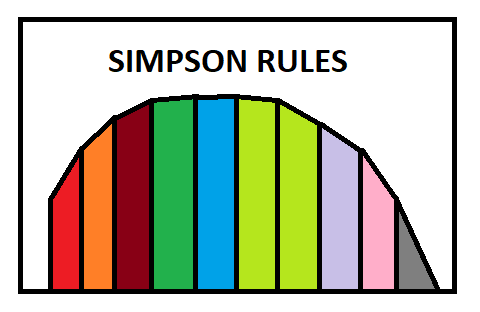
Stability is the science of calculating the ability of ship to remain upright in all Conditions of weather and seas. One of the important aspects of determining such stability is the knowledge of areas and the volumes of the ship. Even though practical stability calculations do not require us to calculate these parameters at sea,…

Read More “The Trapezoidal Rule” »

Stability

Inclining Experiment

Posted on December 31, 2019March 3, 2020 By admin No Comments on Inclining Experiment
Inclining Experiment

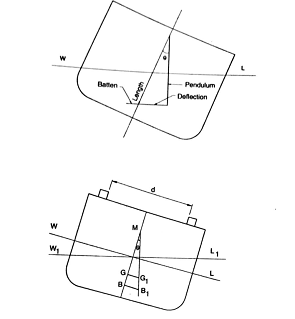
Why the vessel has to be inclined ??? To obtain the metacentric height it is necessary to determine the position of the centre of gravity `G’. This calculation consists of two parts.  a) The first is the finding of the height of the metacentre ‘M’ above the keel ‘K’. This is purely geometrical depending only…

Read More “Inclining Experiment” »

Stability

Transverse Stability

Posted on December 15, 2019December 15, 2019 By admin No Comments on Transverse Stability
Transverse Stability

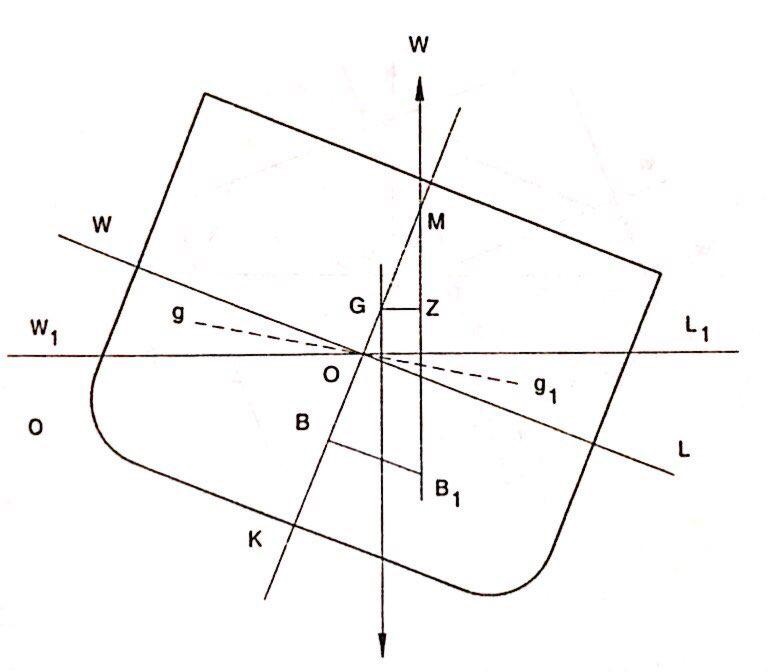
Basic Understanding In very broad terms, the ability of a vessel to maintain the true vertical can be termed as the measure of her Transverse Stability. Transverse Stability is the ability of the vessel to return to vertical when she has been heeled. The heeling could be because of an external force including the action…

Read More “Transverse Stability” »

Stability

Grounding Theory & Numericals

Posted on December 8, 2019December 8, 2019 By admin 1 Comment on Grounding Theory & Numericals
Grounding Theory & Numericals

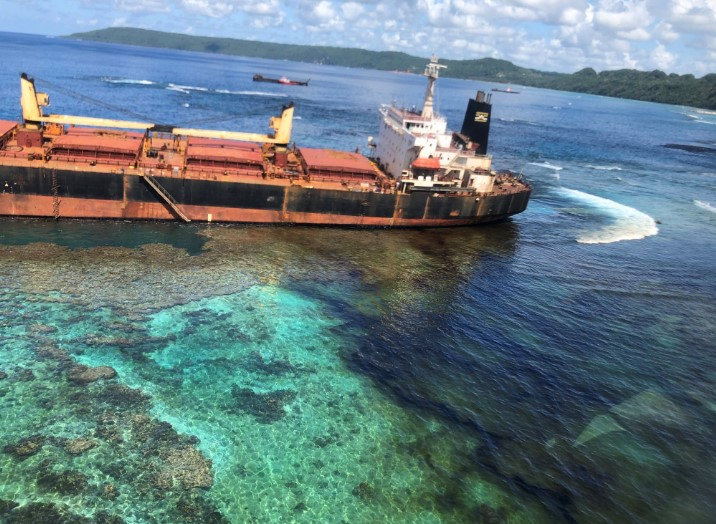
Theory 1. Grounding is similar to dry-docking, but with certain modifications as follows : a.  Ship may have any displacement. b.  Trim may be by the stern or by the head or the ship may be on even keel. c.  The point of contact on grounding may be anywhere from forward to aft. d.  Ship…

Read More “Grounding Theory & Numericals” »

Stability

Dry Docking (Theory & Numericals)

Posted on November 27, 2019November 27, 2019 By admin 2 Comments on Dry Docking (Theory & Numericals)
Dry Docking                     (Theory & Numericals)

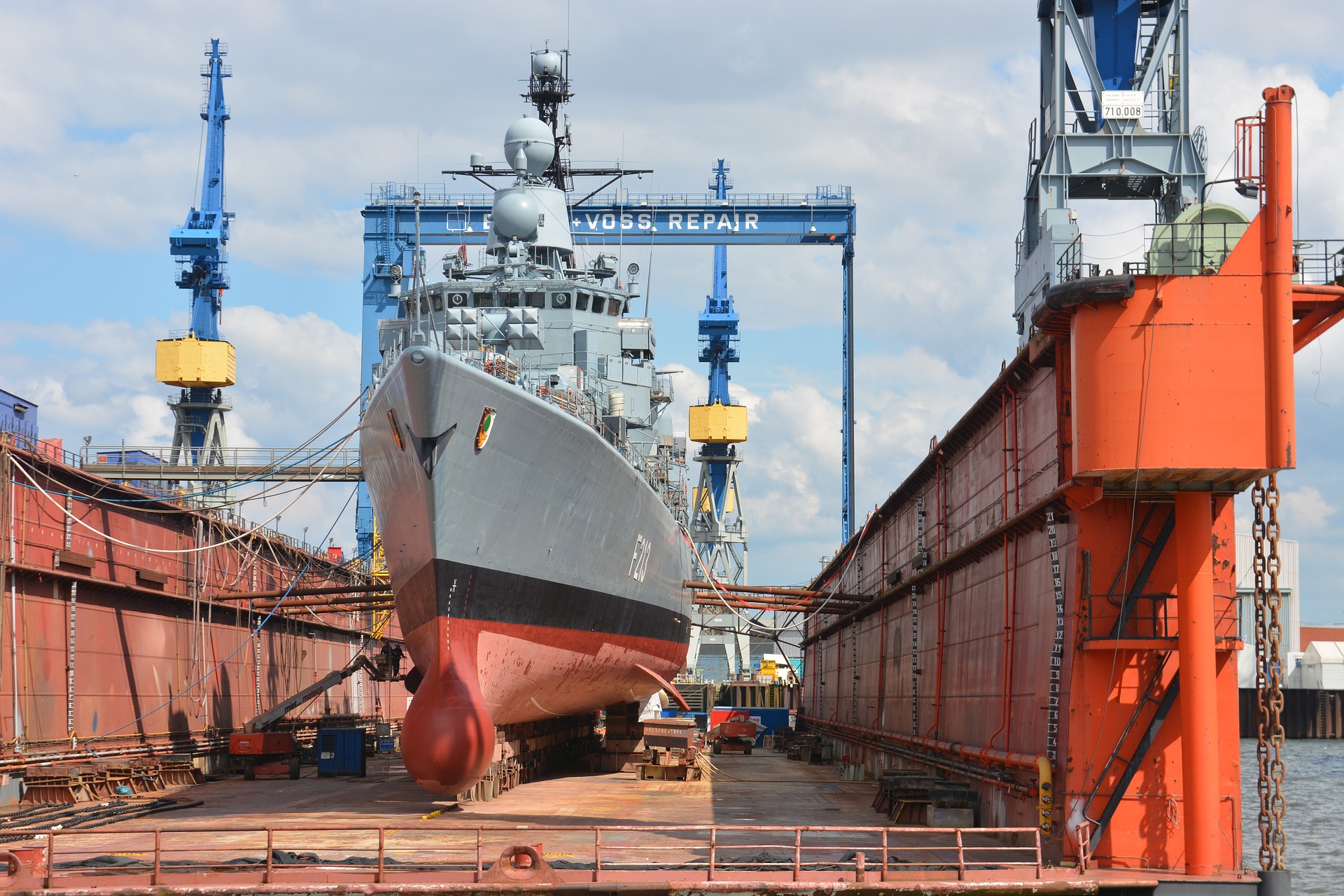
Theory 1. During dry docking the ship shall be in as light a condition as possible. 2. It shall be trimmed by the stern. 3. Minimum trim required for safe and convenient docking is prescribed by the dock authorities. 4. Chief Officer shall ensure that during the docking process the ship continues to have sufficient…

Read More “Dry Docking (Theory & Numericals)” »

Stability

Bilging (Theory & Numericals)

Posted on November 27, 2019November 27, 2019 By admin No Comments on Bilging (Theory & Numericals)
Bilging                              (Theory & Numericals)

What is Bilging Bilging is said to occur when ingress of water takes place into the vessel from a point below the waterline, such that the water is free to flow in and out of the vessel. If the water enters the vessel from above the waterline then it will not be able to flow…

Read More “Bilging (Theory & Numericals)” »

Stability

Damage Stability

Posted on November 24, 2019November 24, 2019 By admin No Comments on Damage Stability
Damage Stability

Reg. 25 Ch II – 1 of SOLAS deals with subdivision & damage stability of Cargo Ships. Reg.25-8: Master shall be supplied with such reliable information so as to have raid & simple means to obtain accurate guidance as to stability under varying conditions of service. Information to include 1. Minimum operational GM Vs Draft…

Read More “Damage Stability” »

Stability

Angle Of Loll

Posted on November 24, 2019November 24, 2019 By admin No Comments on Angle Of Loll
Angle Of Loll

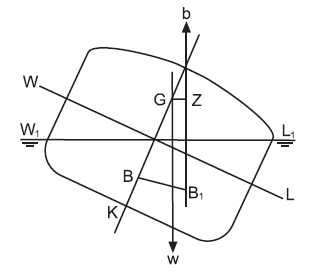
When a ship with negative initial metacentric height is inclined to a small angle, the righting lever is negative, resulting in a capsizing moment. This effect is shown in Figure and it can be seen that the ship will tend to heel still further. At a large angle of heel the centre of buoyancy will…

Read More “Angle Of Loll” »

Stability

Posts pagination

1 2 Next

Categories

  • Bulk Carrier
  • Cargo handling
  • Engine Room Operations
  • LSA & FFA
  • Maritime Industry
  • Maritime Law
  • Merchant Shipping
  • Navigation
  • Rules and Regulation
  • Ship Construction
  • Shipboard operation
  • Stability
  • Tanker
  • Uncategorized

Blog is primarily for candidates appearing for certificate of competency exams but such is the detail that while being equally suitable for the beginner, it is also reference work for experienced seaman, and the layout and style of blog make it suitable for shipboard training where practical experience can be allied to the theoretical approach.

Recent Comments

  • capt on Radar Best Practice -ARPA
  • admin on Dry Docking (Theory & Numericals)
  • Stelios Karamplakas on Dry Docking (Theory & Numericals)
  • Farid OMARI on Demurrage
  • admin on Tanker Cargo Calculations

Copyright © 2018 knowledge of sea – All Rights Reserved.

If you’re unsure about what type of training will work best for you, just tell us a little more about your needs. We will get back to you as soon as possible with the answers you need!

All answers will be from sailor mouth, who is practically working on board.

January 2026
S M T W T F S
 123
45678910
11121314151617
18192021222324
25262728293031
« Dec    

Copyright © 2026 Knowledge Of Sea.

Powered by PressBook WordPress theme