Skip to content

Knowledge Of Sea

We will keep you updated

  • Home
  • Video
  • Chartering Terms
  • Rule of the Road (COLREG)
    • Nautical Flags
    • Rule of the Roads – CARDS
  • Tanker Definitions
  • Downloads
  • ORAL NOTES
    • ORAL NOTES- 2ND OFFICER
    • ORAL NOTES- CHIEF MATE
    • ASM ORAL NOTES 1
    • ASM ORAL NOTES 2
    • ASM ORAL NOTES 3
  • About Me
  • Toggle search form

Category: Navigation

Passage Planning For Pilotage Waters

Posted on April 4, 2021April 4, 2021 By admin No Comments on Passage Planning For Pilotage Waters
Passage Planning For Pilotage Waters

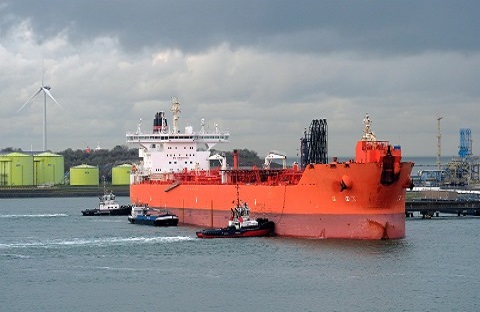
90% of all the shipping casualties occur in coastal and port areas. The coastal passages leading to ports are generally the most dangerous portions of vessel voyages and vast majorities of marine casualties occur during this passage. It is therefore imperative that the bridge team and the pilot both are totally prepared for the passage…

Read More “Passage Planning For Pilotage Waters” »

Navigation

ECDIS Route Check

Posted on April 4, 2021April 4, 2021 By admin No Comments on ECDIS Route Check
ECDIS Route Check

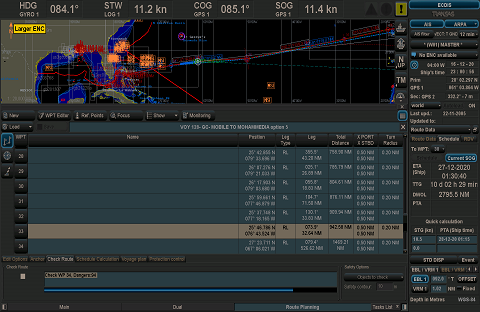
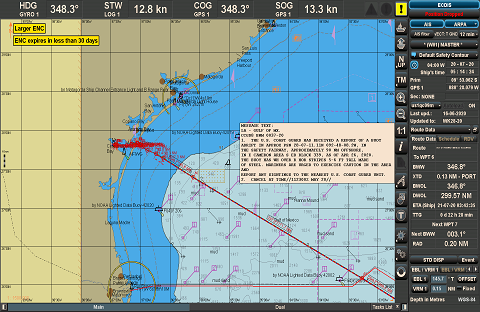
The created route must be checked for potential dangers in case any have been overlooked during route creation. The system will conduct a check for charted dangers, unsafe depths and potential hazards only within the confines of the specified XTL. The check should consider all scales of ENCs on which the XTL is located. The…

Read More “ECDIS Route Check” »

Navigation

Radar Best Practice -ARPA

Posted on April 2, 2021April 2, 2021 By admin 1 Comment on Radar Best Practice -ARPA
Radar Best Practice -ARPA

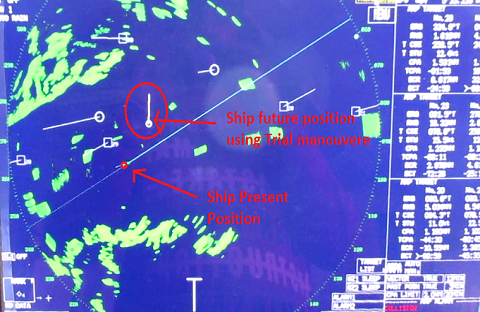
When using the ARPA the following points to be considered: For collision avoidance purposes an ARPA should be sea stabilized with a log input delivering the vessel’s speed through the water. The resulting true vectors will provide a more accurate indication of the aspects of tracked targets. IF speed through the water is set manually,…

Read More “Radar Best Practice -ARPA” »

Navigation

Sextant

Posted on March 29, 2021March 29, 2021 By admin No Comments on Sextant
Sextant

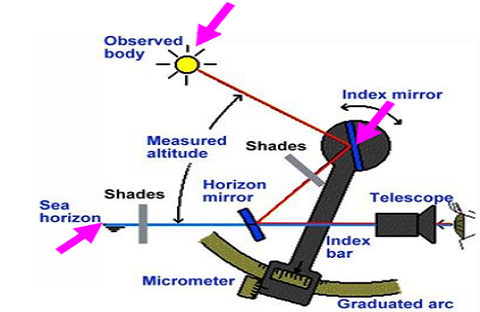
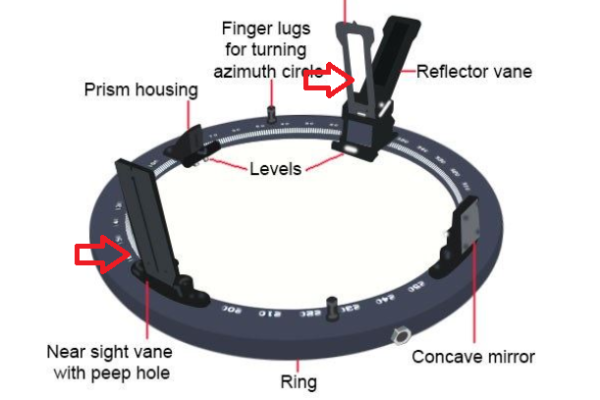
The sextant is an instrument used to measure angles. Its arc is one sixth of a circle. Hence it is called a sextant.In actual practice, the arc of the sextant is about 60°. Being an instrument of double reflection, it can measure angles up to about 120° Typically the sextant is used to measure the…

Read More “Sextant” »

Navigation

Under Keel Clearance

Posted on March 29, 2021March 29, 2021 By admin No Comments on Under Keel Clearance
Under Keel Clearance

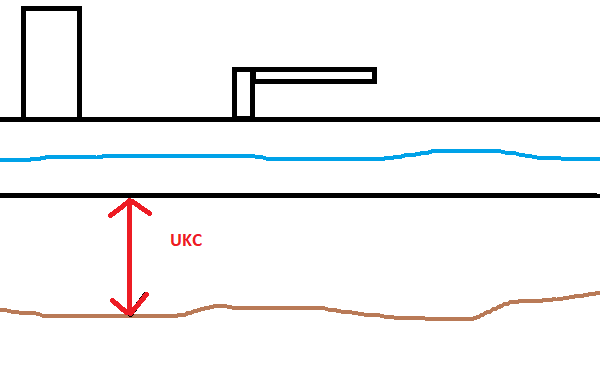
A change in draught may arise during a voyage due to factors such as cargo and ballast changes as well as sea water density, and dynamic factors such as squat, pitch /roll etc. These factors should be considered in the appraisal and appropriate figures calculated for each leg of the voyage plan. Any significant events…

Read More “Under Keel Clearance” »

Navigation

MANDATORY ECDIS ALARMS AND ALARM SETTING

Posted on March 28, 2021March 28, 2021 By admin No Comments on MANDATORY ECDIS ALARMS AND ALARM SETTING
MANDATORY ECDIS ALARMS AND ALARM SETTING

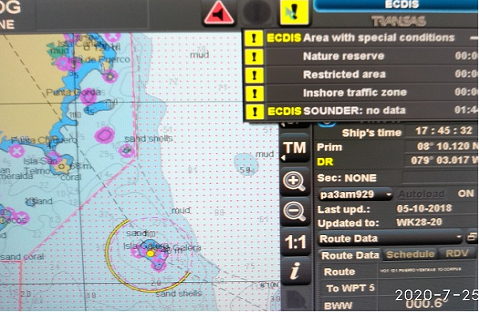
Below is the list of mandatory alarms / indication as per MSC Resolution 232(82). Alarm: An alarm or alarm system which announces by audible means, or audible and visual means, a condition requiring attention. Indicator: Visual indication giving information about the condition of a system or equipment. When using ENCs, an alert will be given…

Read More “MANDATORY ECDIS ALARMS AND ALARM SETTING” »

Navigation

ENC CHART CORRECTION

Posted on March 27, 2021March 27, 2021 By admin No Comments on ENC CHART CORRECTION
ENC CHART CORRECTION

ENCs are updated by weekly ‘Notices to Mariners’ issued by Hydrographic Offices / Regional ENC co-ordination centers ( RENC) and corrections are received on the vessel either by email or data file (AVCS DVD). The actual updating is either applied to the ECDIS chart database automatically or by the user. The ECDIS generates error message…

Read More “ENC CHART CORRECTION” »

Navigation

ECDIS – Detection Area

Posted on March 27, 2021March 27, 2021 By admin No Comments on ECDIS – Detection Area
ECDIS – Detection Area

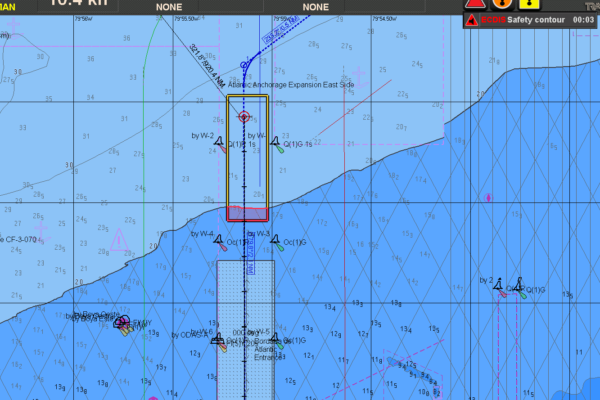
A valuable function of ECDIS is to continuously display position fixes and at the same time, monitor a detection area ahead of the ship for hazards to navigation. This detection area may have a different name depending on the manufacturer, but common terms include‘safety frame’ ‘safety cone’ ‘look ahead window’‘antigrounding cone’ and‘danger detection’ ECDIS will…

Read More “ECDIS – Detection Area” »

Navigation

Storm Navigation

Posted on March 25, 2021March 25, 2021 By admin No Comments on Storm Navigation
Storm Navigation

Finding the Quadrant – Northern Hemisphere Northern Hemisphere If the wind veers she is in the right hand semicircle (Dangerous Semicircle)If the wind backs she is in the left hand semicircle (Navigable semicircle) Navigable Semicircle Northern HemisphereProceed at maximum practical speed, alter courses as wind backs, keeping the wind between 1 and 4 points on…

Read More “Storm Navigation” »

Navigation

Weather Routeing- Planning

Posted on March 13, 2021March 13, 2021 By admin No Comments on Weather Routeing- Planning
Weather Routeing- Planning

Weather routeing is the procedure of ensuring that the ship makes an ocean passage in the least possible time conducive to the safety of the vessel. In order to do effective weather routeing the following steps must be considered⦁ Ships performance curves must be drawn⦁ Understand a wave chart⦁ Draw the shortest possible track⦁ Obtain…

Read More “Weather Routeing- Planning” »

Navigation

Posts pagination

Previous 1 … 4 5 6 … 13 Next

Categories

  • Bulk Carrier
  • Cargo handling
  • Engine Room Operations
  • LSA & FFA
  • Maritime Industry
  • Maritime Law
  • Merchant Shipping
  • Navigation
  • Rules and Regulation
  • Ship Construction
  • Shipboard operation
  • Stability
  • Tanker
  • Uncategorized

Blog is primarily for candidates appearing for certificate of competency exams but such is the detail that while being equally suitable for the beginner, it is also reference work for experienced seaman, and the layout and style of blog make it suitable for shipboard training where practical experience can be allied to the theoretical approach.

Recent Comments

  • capt on Radar Best Practice -ARPA
  • admin on Dry Docking (Theory & Numericals)
  • Stelios Karamplakas on Dry Docking (Theory & Numericals)
  • Farid OMARI on Demurrage
  • admin on Tanker Cargo Calculations

Copyright © 2018 knowledge of sea – All Rights Reserved.

If you’re unsure about what type of training will work best for you, just tell us a little more about your needs. We will get back to you as soon as possible with the answers you need!

All answers will be from sailor mouth, who is practically working on board.

February 2026
S M T W T F S
1234567
891011121314
15161718192021
22232425262728
« Jan    

Copyright © 2026 Knowledge Of Sea.

Powered by PressBook WordPress theme