Direct Reduced Iron (DRI) often concentrate on the precautions that shipowners should take when carrying this potentially hazardous cargo. Less attention on this issue is paid to charterers and the impression may be that this is a matter for shipowners and not a concern for charterers.
This is definitely not the case. Claims can and have been successfully pursued against charterers for the consequences of misdeclared cargo. DRI cargo receives special focus because there is a significant risk that it may be misdeclared .Furthermore, the consequences of misdeclared DRI cargo can be disastrous.
This blog will briefly look at:
1. What is DRI and what are the potential issues during carriage?
2. Why is there a significant risk that DRI cargo may be misdeclared?
3. What liabilities could a charterer face?
4. What can a charterer do to reduce risks?
WHAT IS THE DRI AND THE POTENTIAL ISSUES DURING CARRIAGE
The term DRI is a generic term which actually covers a variety of products and which can sometimes have rather innocuous or even misleading trade names. Confusingly, the term is also a technical description of a specific type of refined iron ore. The term DRI should not be confused with “Iron Ore Fines” which are a different type of cargo.
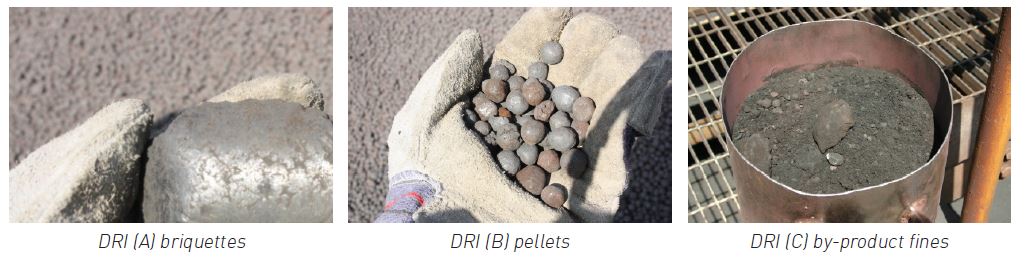
THE IMO BULK CARGO CODE DIVIDES DRI PRODUCTS INTO 3 DIFFERENT CATEGORIES:
1. DRI (A) – Briquettes, hot-moulded
2. DRI (B) – Lumps, pellets, cold-moulded briquettes
3. DRI (C) – By-product fines
In all three categories, the same potential hazards/issues exist during carriage. The main difference lies in their reactivity, the DRI (B) category being the most reactive and hence potentially the most hazardous. It is possible that some DRI (C) cargoes contain very little metallic iron and so could be regarded as “safe” [See IMSBC Code for more information].
POTENTIAL HAZARDS/ISSUES:
1. OXYGEN DEPLETION
As its name implies, DRI is produced by direct reduction. Direct reduction is a process by which the iron content of ore is increased through the removal of oxygen. The potential danger lies in the fact that this process can be reversed when DRI comes into contact with oxygen in air and/or moisture (re-oxidation). In enclosed compartments, this means almost no oxygen will be present – a clear danger to oblivious crew members or stevedores. The normal concentration of oxygen in air is 20.9%, and although humans can tolerate somewhat lower levels, many authorities recommend a minimum oxygen level of 19.5% in the work place.
In any event, entry in to enclosed spaces and / or spaces that may be deprived of Oxygen should always be done in accordance with safety guidelines and the Ship’s SMS.
2. SELF-HEATING
The re-oxidation process also produces heat, leading to self-heating. Such temperatures can potentially reach 1000°c.
3. ACCUMULATION OF HYDROGEN (EXPLOSION)
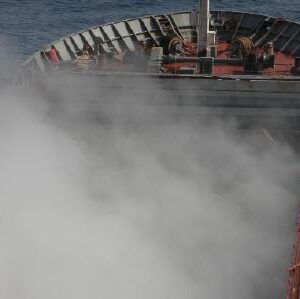
By far the greatest hazard of DRI cargo is the fact that it may explode. This occurs when there is contact with moisture
– the source of which could be the moisture content of the DRI cargo itself, the moisture in the air or contact with water (especially saline water). The reaction with moisture generates large amounts of hydrogen, which may lead to an explosion.
4. DUST EMISSION
A more minor, but also frequent issue is that dust from a DRI cargo easily dirties the vessel or hold – the dust particles can be plentiful and tend to travel. This is not easily cleaned (no sea water!) without incurring some costs. We have seen that where parties were not alert to this possibility when fixing charters, very prolonged disputes over cleaning costs can ensue.
MISDECLARATION – MISCONSTRUED, MISTAKE OR MISCHIEF?
There are many trade names and descriptions concocted for DRI cargo –
– reoxidised iron fines
– HBI fines
– processed iron ore fines
– Orinoco remet fines in bulk
– Remets
– sludge fines
– iron ore pellet chips
– pond fines
– lodos
– mill scale
… the list goes on, but as may be apparent, none of these names contain the term “DRI”.
Even when identified as DRI cargo, there is still a possibility that the cargo may have been declared as the wrong category of DRI products, e.g. DRI (A) instead of DRI (C).
In some cases, the misdeclaration is due to simple ignorance or confusion. In other cases, the reason behind the misdeclaration may be a little less innocent. Due to the strict carriage requirements for DRI (B) and DRI (C), some owners refuse to carry these categories of DRI cargo, exclude DRI from the charterparty or demand more freight/hire.
Even where the shipper is trustworthy and knowledgeable, there still exists the possibility that while the declared cargo itself is not itself a DRI product, it was stored/stockpiled near DRI cargo, resulting in some unintended comingling and contamination.
POSSIBLE LIABILITIES FOR MISDECLARED CARGO
When are charterers responsible for the misdeclared cargo and the consequences that may follow ?
Where the cargo is misdeclared, the immediate argument would be that the owners were not liable since they had no knowledge of the actual properties of that misdeclared cargo and therefore did not consent to the risk. The responsibility for the risk therefore passes to the charterers/shippers as English common law considers the charterers/ shippers to have given an implied and absolute undertaking to owners that the cargo’s particular characteristics are not a danger to the vessel.
A similar argument can also be used to pass on to charterers unexpected cleaning costs incurred where the cargo had been misdeclared. The logic would be that owners cannot be said to have agreed to have been responsible for the cleaning costs incurred (for example due to the DRI dust emission) when they had no knowledge of the actual cargo’s properties.
Can charterers pass on these liabilities to the shippers? The answer depends greatly on the contract between charterers and shippers, the law and jurisdiction which governs such a contract, as well as the practical realities of taking both legal and enforcement action. If charterers are in the wrong deal, they could face the risk of falling between two chairs. The liabilities discussed above theoretically apply to all cargo that is misdeclared, whether DRI cargo or not.
WHAT CAN A OWNER DO?
The following are prudent loss prevention steps charterers can take, although each situation needs to be assessed individually. Broadly speaking, loss prevention starts with a good understanding of the subject cargo and the terms of shipment.
Ask:
-Who is shipping the cargo?
-Are they reliable and trustworthy?
-Have you done business with them before?
What is the cargo?
-If there is suspicion or doubt about the nature of the cargo, charterers should take the step of clarifying this with shippers. In particular, ask shippers for the appropriate Bulk Cargo Shipping Name (BCSN). This is good practice for other types of cargo as well.
Obtain:
-Obtain supporting documents. This is a necessary step in any case as a prudent owner will ask charterers/shippers for these supporting documents.
-For instance, an owner may ask for a certificate from an independent testing laboratory showing the total iron content, metallic (or free) iron content, moisture content and particle size of the cargo. This is because the metallic (or free) iron content will show whether cargo is a DRI cargo and the particle size will indicate which category of DRI.
-Charterers should also have a copy of these documents – should an incident occur, charterers would want to show that they took reasonable care in ascertaining the nature of the cargo. It is also more beneficial to have evidence readily at hand as and when an incident does occur than to seek the cooperation of shippers later on.
Know:
-Know what your contracts say, precisely and exactly. For instance, is stowage the responsibility of owners or charterers? What information/documents must you contractually provide to the owners or obtain from shippers?
-Know where and when carriage is to and from – certain areas are more prone to declaring DRI cargo using innocuous names.
-It should be noted that the IMSBC Code does allow for certain competent authorities to exempt certain cargo from IMSBC Code requirements.
CONCLUSION
DRI cargo can be safely transported if the potentially hazardous factors are properly identified, understood and controlled. However, this can only be done when the right information is given and the necessary preparations are made in advance.