Introduction
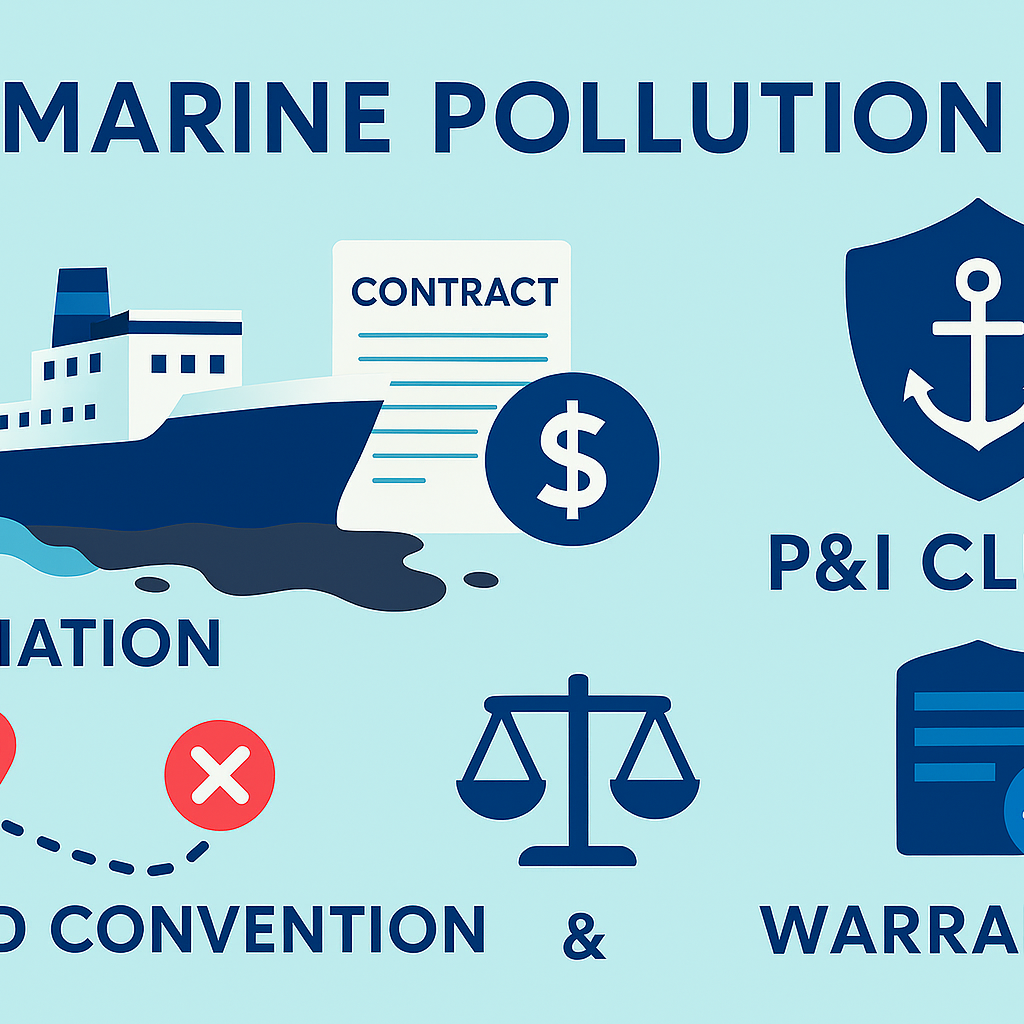
Protection of the marine environment is a major concern of modern maritime law. The Merchant Shipping Act, 1958 incorporates international conventions dealing with pollution prevention and liability for environmental damage. These provisions impose strict responsibility on shipowners and establish compensation mechanisms for victims of marine pollution.
Marine Pollution and Oil Spills
Marine pollution occurs when harmful substances, particularly oil, are discharged into the sea, causing damage to marine life, coastal areas, and human activities such as fishing and tourism. Oil pollution incidents are often caused by collisions, groundings, structural failures, or operational discharges.
The Merchant Shipping Act empowers the Central Government to take preventive and remedial measures to control pollution from ships in Indian waters and on the high seas involving Indian ships.
Civil Liability for Oil Pollution Damage
The Act incorporates the principles of the International Convention on Civil Liability for Oil Pollution Damage (CLC). Under this regime, the registered owner of a ship carrying oil in bulk as cargo is strictly liable for pollution damage caused by an oil spill.
Strict liability means that the owner is liable irrespective of fault, subject to limited defenses such as acts of war, natural phenomena of an exceptional character, or deliberate acts of third parties.
Limitation of Liability
While liability under the CLC is strict, it is not unlimited. The shipowner’s liability is capped based on the ship’s tonnage. However, the right to limit liability is lost if it is proved that the pollution damage resulted from the owner’s personal act or omission committed with intent or recklessness.
Compulsory Insurance and Certificates
Ships carrying oil in bulk must maintain compulsory insurance or financial security to cover pollution liability. A certificate attesting to the existence of such insurance must be carried on board and produced on demand.
This requirement ensures that victims of pollution damage can obtain compensation without delay.
International Oil Pollution Compensation Fund
When compensation available under the shipowner’s insurance is insufficient, additional compensation is provided through the International Oil Pollution Compensation Fund (IOPC Fund).
The Fund is financed by contributions from entities that receive oil by sea. It provides compensation to victims when the shipowner is unable to meet the full liability or when the damage exceeds the owner’s limitation amount.
Role of the Central Government
The Central Government may intervene directly in pollution incidents to prevent or minimize damage. This includes ordering clean-up operations, removal of oil, and preventive measures. Expenses incurred by the government may be recovered from the shipowner.
The government also has the power to detain ships involved in pollution incidents until adequate security is provided.
Liability for Other Forms of Pollution
In addition to oil pollution, the Act addresses pollution caused by harmful substances, garbage, sewage, and other noxious materials. Ships must comply with discharge standards and carry appropriate pollution prevention equipment.
Violations of pollution control provisions may result in heavy fines, detention of ships, and criminal liability.
Protection and Indemnity (P&I) Clubs
Protection and Indemnity Clubs are mutual insurance associations that provide coverage for liabilities not typically covered by standard hull and machinery insurance. These include pollution liability, collision liability, crew claims, wreck removal, and third-party damages.
Most shipowners are members of P&I Clubs to ensure adequate financial protection against large and unpredictable liabilities.
P&I Clubs and Statutory Compliance
Membership in a P&I Club does not absolve shipowners from statutory obligations. Claims may be rejected if the ship is operated in violation of safety or pollution regulations. Compliance with the Merchant Shipping Act and international conventions is therefore essential.
Claims and Compensation Procedure
Claims for pollution damage may be brought before designated courts. Claimants must establish the occurrence of pollution damage and a causal link to the ship involved. Compensation may include clean-up costs, environmental damage, and economic losses.