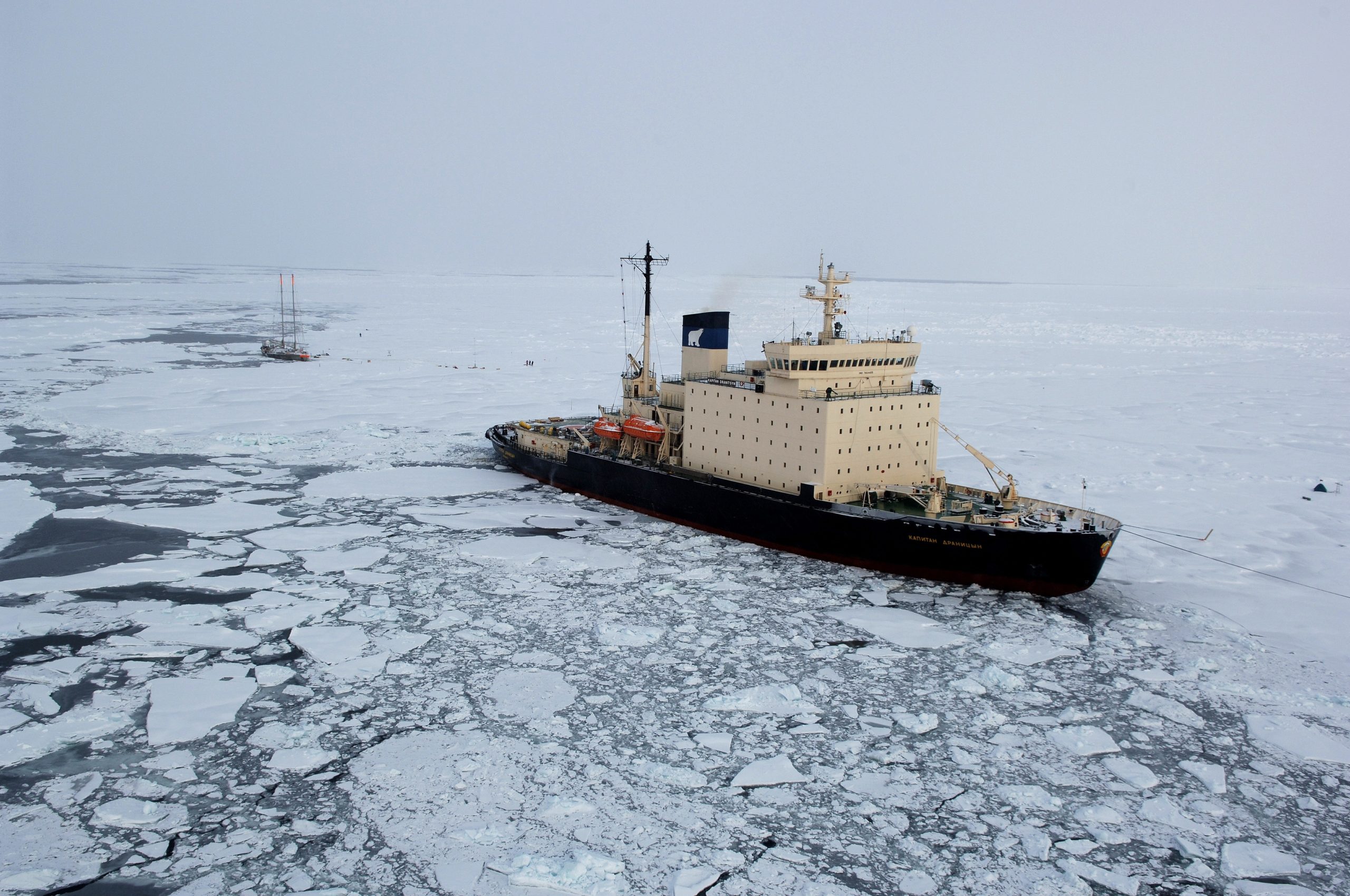

Before proceeding to ice zone, MASTER will check the following items:
1. Article of agreement and the geographical limit, expiry of article of agreement.
2. Class certificate, if ship has ice notation.
3. Check the charter party contract
4. Insurance coverage – premium may be high.
5. Polar Code is available onboard.
Polar Code:
• Aimed at ensuring:
− Safe navigation of ships in polar waters.
− Prevention of pollution in polar waters.
• It take into account the sea and glacis ice which can present serious structural hazards to ships navigating in polar waters.
• It consists of the following parts:
Part A – Construction provisions.
Part B – Equipment.
Part C – Operational;
Part D – Environmental protection and damage control.)
6. Instruct C/E:
• To check heating system for accommodation, steering gear, bridge windows;
• To check viscosity of hydraulic oil for all cranes, winches and boat engines, if necessary, renew.
• To check emergency generator fuel tank.
7. Instruct C/Off to check/ indent:
• Warm clothing for full complement
• Protective gloves
• Extra blanket
• Spare bulbs for navigation light
• Steam hoses
• De‐icing compounds
• Axe, shovels.
8. Instruct navigating officer to ensure:
• Navigational equipments in good working condition
• Sufficient charts are available
• Gather all information regarding the limits of ice, ice seasons, navigation in ice.
Actions when navigating in the vicinity of ice
Ensure the followings, when navigating in the vicinity of ice:
• Additional look out have been posted, they know their duties.
• Continuous radar watch
• Obtain as much information possible about sighting ice and other navigational warnings.
• Monitor temperature of air and sea, especially at night.
• Make obligatory reports of ice sighting as per MSA/SOLAS.
• Adjust the speed of the ship if passing through the ice, according to the type and thickness of ice.
• Inform engineers when temperature drops to about 0 to 1°C.
• Information received from ice patrol, coastal stations, shipping broadcast and meteorological observations may result in an alteration of course to avoid ice.
• Make the fullest use of navigation equipment and aids to ascertain accurate navigation.
• Ensure the deck is safe for crews to go about their normal duties. Remove ice by chipping or by sweeping.
• Do not use normal window washers. Use window heaters in stead.
Cold weather precautions
1. Provide suitable warm clothing
2. Organize and brief bridge team prior to entry into the ice regarding:
• Indications of presence of ice
• Not to be overexposed to extreme cold
• Look outs need to be rotated at short interval
• Report to master on sighting ice
• Regular radar watch in appropriate range
• Second watch keeper
• Obtain up to date ice reports and ensure that ice limits are entered in the chart, plot occasional icebergs.
• Change over to manual steering until the vessel is clear of ice region. Helmsman to report D/O if loss of steering.
3. Instruct C/E to regularly check the followings:
• Steering gear
• Heating arrangements of steering gears
• To check viscosity of hydraulic oil for all cranes, winches and boat engines, if necessary, renew.
• Keep the jockey pump running at all times.
4. Inform all departments
• Check all navigation equipments are in satisfactory conditions.
• Check navigation lights, search light and sound signaling appliances
5. Instruct C/O the followings:
• The ship has sufficient stability
• Ship should be sufficiently trimmed that propeller tips are well submerged.
• Ballast tanks, FW tanks, life boat FW tanks not to press up full, keep allowance for expansion.
• Especially above water line tanks. Calculate free surface effect.
• Drain fire lines on deck.
• All deck scuppers to be cleared to prevent water trapping on deck.
• Cover deck machinery and controls with canvas.
• If steam windlass, run slowly.
• Cranes/ derricks to be freeze, to prevent this, they should be topped/slewed at regular intervals.
• Hawse pipes/ spurling pipe covers are in position.
• Rig life lines on deck as may become slippery
• All LSA/FFA in satisfactory condition and ready for immediate use.