Purpose of VDR / S-VDR
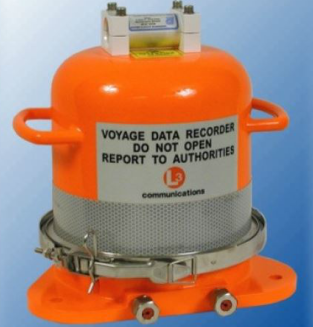
The main purpose of the VDR is to record and store ship’s critical parameters. Information is stored in a secure and retrievable form, relating to the position, movement, physical status, command and control of a ship over the period and following an incident. This captured data can be utilized for “incident scene reconstruction” for the purpose of root cause analysis.
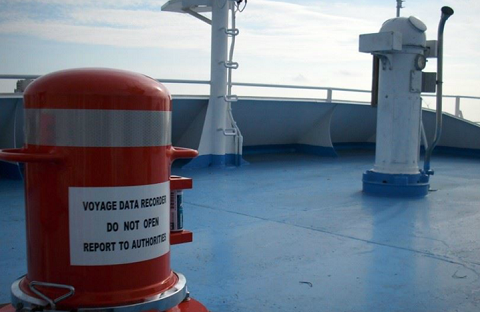
Output of such analysis contributes enormously on improving operational safety at sea. Other benefits of VDR are:
⦁ Response assessment
⦁ Training support
⦁ Promotion of best practices
⦁ Reduction in insurance cost.
Difference between a VDR and S-VDR:
There is no principle difference between a voyage data recorder (VDR) and a simplified voyage data recorder (S-VDR).
The difference is the amount of information required to be recorded. The VDR requires more data to be recorded than the S-VDR.
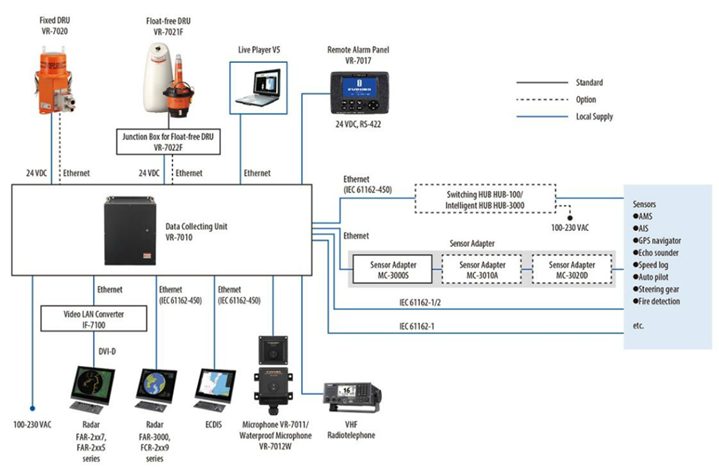
VDR Block Diagram
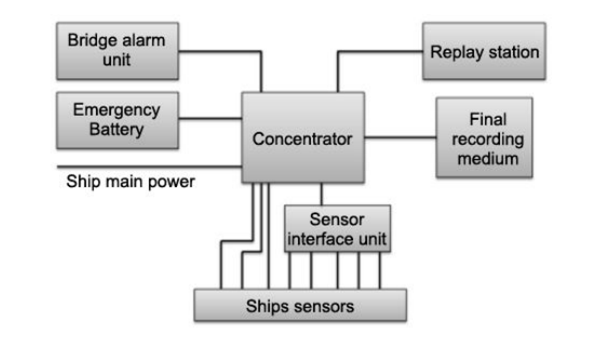
Bridge Alarm unit
It is a secluded interface to manage the voyage data recorder device. It is able to acknowledge system warnings and alarms.
Emergency Battery
Dedicated power source. It is an external battery. It is exclusively employed to turn on the VDR for at least 2 hours. This is whenever there is a loss of a main and backup source of power of the ship.
Replay stations
These are one or beyond optional computers that are used to download data. As well as, to review voyage data from the concentrator.
Final recording medium
This is the capsule utilized to keep the data. It is crafted to withstand any marine casualty. Hence, making it possible to recover the voyage data in the case of a disastrous ship loss.
Concentrator
It is usually an industrial grade computer. It Accepts data from the diverse sensors of vessel onboard. It develops encodes, and records the stream to the so-called FRM or final recording medium.
Sensor interface unit
It can be a backup instrument that provides further input lines to the concentrator.
Ships Sensors
These are all external tools from which the VDR system is able to receive information.
Date recorded by VDR & S-VDR
⦁ Date and time (S-VDR)
⦁ Ships position (S-VDR)
⦁ Speed and heading (S-VDR)
⦁ Bridge audio (S-VDR)
⦁ Communication audio (radio) (S-VDR)
⦁ Radar data (S-VDR)
⦁ ECDIS data (S-VDR)
⦁ Echo sounder
⦁ Main alarms
⦁ Rudder order and response
⦁ Hull opening (doors) status
⦁ Watertight and fire door status
⦁ Speed and acceleration
⦁ Hull stresses
⦁ Wind speed and direction
Additional important information about VDR /S-VDR
The VDR or S-VDR equipment must be designed so that, as far as is practical, it is not possible to tamper with the selection of data being input to the equipment, the data itself nor that which has already been recorded. Any attempt to interface with the integrity of the data or the recording should be recorded. The recording method should be such that each item of the recorded data is checked for integrity and an alarm given if a non- correctable error is recorded.
To ensure that the VDR or S-VDR continues to record events during an incident, it should be capable of operating from the ships emergency source of electrical power.
Additional important information about VDR / S- VDR
If the ships emergency power fails, the VDR or S-VDR should continue to record bridge audio from a dedicated reserve source of power for at least two hours.
Recording should be continuous. All stored data items should be retained for at least 12 hours. After that, older data items may be overwritten with new data.
Fitting of VDR/SVDR commenced from 1st July 2002. By 1st July 2010 all ships were fitted with VDR/ SVDR.