Skip to content

Knowledge Of Sea

We will keep you updated

  • Home
  • Video
  • Chartering Terms
  • Rule of the Road (COLREG)
    • Nautical Flags
    • Rule of the Roads – CARDS
  • Tanker Definitions
  • Downloads
  • ORAL NOTES
    • ORAL NOTES- 2ND OFFICER
    • ORAL NOTES- CHIEF MATE
    • ASM ORAL NOTES 1
    • ASM ORAL NOTES 2
    • ASM ORAL NOTES 3
  • About Me
  • Toggle search form

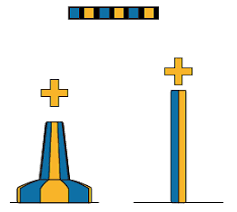
Emergency wreck marking buoy

Posted on November 22, 2019February 19, 2020 By admin No Comments on Emergency wreck marking buoy

Emergency wreck marking buoy

• IALA has introduced on trial basis.

• For temporary response.

• Typically to be used for first 24‐72 hrs.

• Deployment to be promulgated through usual maritime safety information system.

• Designed to provide a prominent aid to navigation.

• To be placed as close of wreck as possible.

It will maintain a position until:

• The wreck is well known and has been promulgated in nautical publications eg notices to mariners.

• The wreck is fully surveyed and exact details such as position and least depth above the wreck is known.

• A permanent form of marking of the wreck has been carried out.

Characteristics:

Shape: Pillar or spar buoy, size dependent on location.

Color: Equal number and dimensions of blue and yellow vertical stripes.

Light:

• Altering blue and yellow flashing light.

• Nominal range: 4 nm, may be altered depending on local condition.

• Blue and yellow 1s flashes altered at interval of 0.5s.

• If multiple buoys deployed, their lights will be synchronized.

Racon: 

May be fitted with Racon‐D and/or AIS transponder.

Topmark: 

If fitted, straight yellow cross.

Navigation Tags:BUOY, EMERGENCY WRECK MARKING BUOY, IALA, wreck

Post navigation

Previous Post: ECDIS
Next Post: COLREG In Easy Language (Rule 2,5,7 & 8)

Leave a Reply Cancel reply

Your email address will not be published. Required fields are marked *

Categories

  • Bulk Carrier
  • Cargo handling
  • Engine Room Operations
  • LSA & FFA
  • Maritime Industry
  • Maritime Law
  • Merchant Shipping
  • Navigation
  • Rules and Regulation
  • Ship Construction
  • Shipboard operation
  • Stability
  • Tanker
  • Uncategorized

Blog is primarily for candidates appearing for certificate of competency exams but such is the detail that while being equally suitable for the beginner, it is also reference work for experienced seaman, and the layout and style of blog make it suitable for shipboard training where practical experience can be allied to the theoretical approach.

Recent Comments

  • capt on Radar Best Practice -ARPA
  • admin on Dry Docking (Theory & Numericals)
  • Stelios Karamplakas on Dry Docking (Theory & Numericals)
  • Farid OMARI on Demurrage
  • admin on Tanker Cargo Calculations

Copyright © 2018 knowledge of sea – All Rights Reserved.

If you’re unsure about what type of training will work best for you, just tell us a little more about your needs. We will get back to you as soon as possible with the answers you need!

All answers will be from sailor mouth, who is practically working on board.

February 2026
S M T W T F S
1234567
891011121314
15161718192021
22232425262728
« Jan    

Copyright © 2026 Knowledge Of Sea.

Powered by PressBook WordPress theme