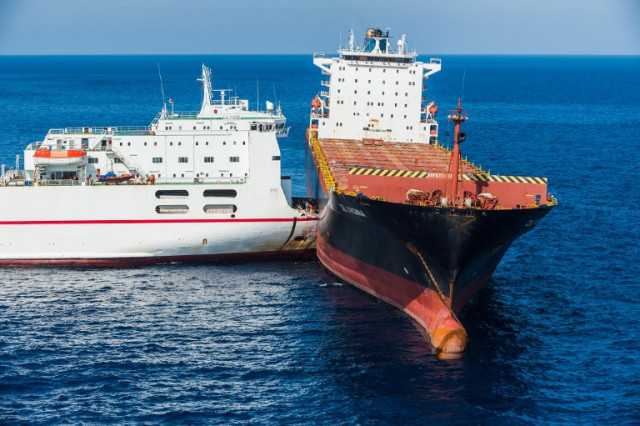
Immediate actions:
Follow emergency procedure as per company emergency procedure manual, which should include:
• Sound general emergency alarm.
• Stop Engines.
• Announce by PA.
• Head count, look for casualty and establish communication.
• Close watertight doors.
Activate SOPEP and take preventive actions in case of any oil pollution
Order chief officer for damage assessment.
• Water tight integrity of hull and subsequent breaches of same.
• Assess rate of flooding
• Condition of machinery space.
• Check hull for damage in relation to the waterline and whether can be raised by changing trim.
• Check sounding of all tanks and bilges.
• Visually inspect compartments where possible
• Prepare lifeboats, life rafts and all LSA for immediate launching in case of subsequent Abandonment.
Obtain following information from emergency teams:
• Details casualties.
• Any risk of fire, explosion or emission of toxic gases.
• Any other information regarding associate problems.
On the bridge, the command team will do the followings:
• Maintained VHF watch.
• Exhibit light / shapes and any appropriate sound signals.
• Switch on deck lighting at night.
• Determine the vessel’s position.
• Broadcast urgency or distress massage as required.
• Save the VDR data.
• Inform the accident with positions and time to the following parties:
− Local authorities.
− Owners, charterers.
− P & I club.
− Under‐writer
− Next port agent.
− Class. (Emergency Technical Assistance Service)
− Make an accident report
Obligatory Actions
• Once I am sure that my vessel is not in imminent and grave danger; it is my obligation to provide all possible assistance to other ship if they are in need;
• Standby other vessel until no further assistance is required.
• It is also my obligation to provide the following information to the other vessel and get the same from the other.
− Name of Ship
− Port of registry
− Last port of call
− Next port of call
• Exchange ship’s particulars.
• Lodge note of protest holding the other vessel responsible, reserving the right to extent on a later date and time.
• Accept the note of protest from the other vessel, for receipt only.
Subsequent, legal and commercial actions:
Try to minimize immediate danger such as pollution, fire etc.
Consider actions to be taken to minimize extent of damage and prevent the vessel from sinking or capsizing, such as:
• Using bilge and/or ballast pumps to cope up with the rate of ingress.
• Trimming the vessel to raise the damage area above the waterline.
• Plugging of any hole to reduce the ingress of water.
While taking tug assistance, consider:
• LOF, if the danger imminent.
• Salvage contract if the situation permits.
Keep all records of incidents and actions. Appropriate records to be entered in:
• Deck log book
• Movement book
• Engine log book
• Telegraph recorder
• Echo sounder graph.
• Used chart
• Entry to be made in official log book.
• Record of all damage and subsequent actions.
• Prepare a statement of fact of all the happenings.
• Prepare a note of protest, stating the facts only.