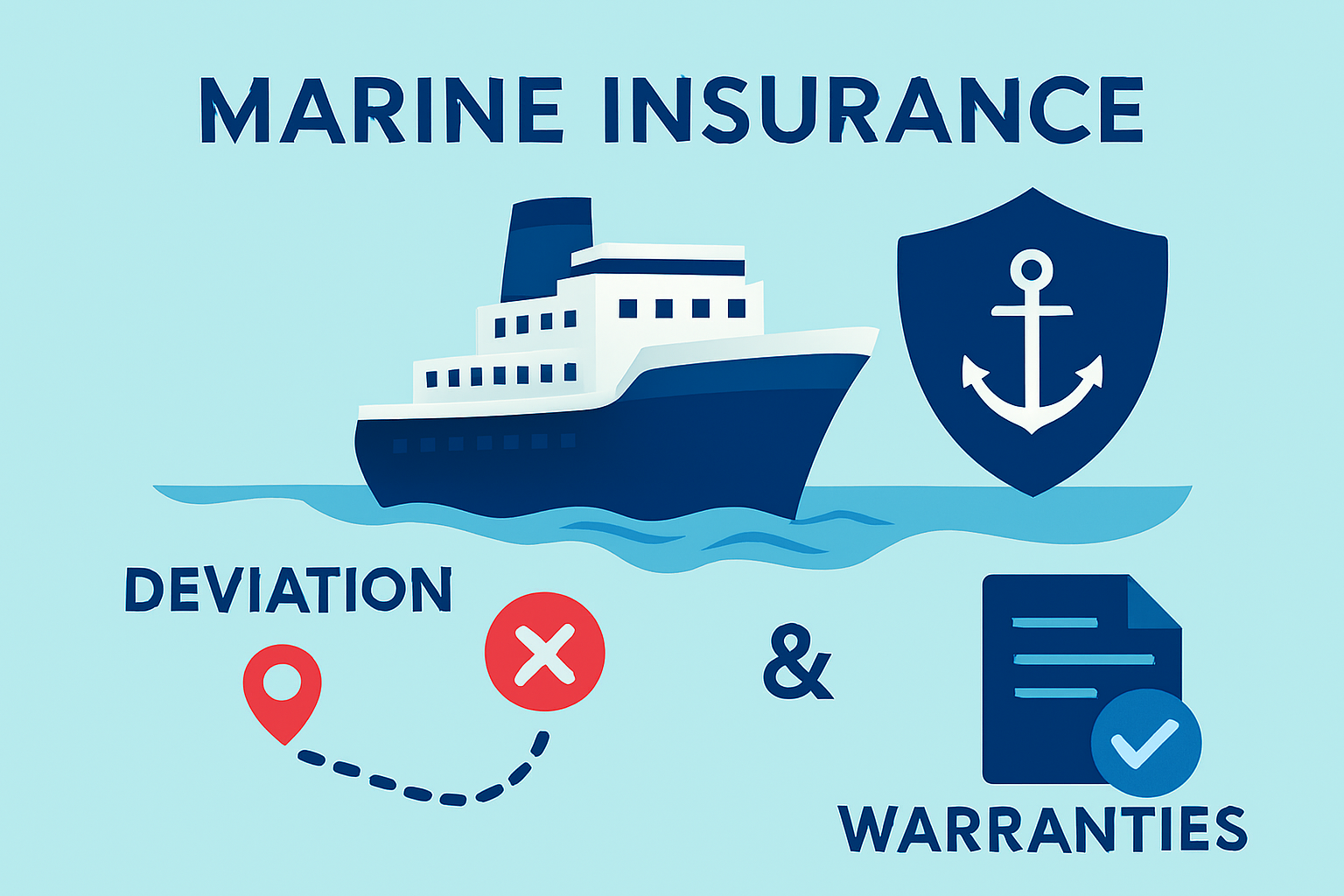
Introduction
Marine insurance plays a vital role in maritime التجارة by protecting shipowners, cargo owners, and other maritime interests against financial loss. The Merchant Shipping Act, 1958, read alongside principles of marine insurance law, outlines the obligations of shipowners and masters concerning seaworthiness, deviation, and compliance with warranties. These principles directly affect the validity of insurance cover.
Concept of Marine Insurance
Marine insurance is a contract whereby the insurer undertakes to indemnify the assured against marine losses. Such losses may include damage to the ship, loss of cargo, freight loss, or liability arising from maritime accidents.
Although marine insurance is governed primarily by insurance law, its application in shipping is closely linked to statutory duties under the Merchant Shipping Act, particularly those relating to seaworthiness and safe navigation.
Implied Warranty of Seaworthiness
One of the most important principles in marine insurance is the implied warranty of seaworthiness. This means that the ship must be reasonably fit in all respects to encounter the ordinary perils of the intended voyage at the time of sailing.
If a ship is unseaworthy at the commencement of the voyage and the loss is attributable to that condition, the insurer is entitled to avoid liability, even if the owner was unaware of the defect.
Seaworthiness and the Merchant Shipping Act
The statutory obligation to maintain seaworthiness under the Merchant Shipping Act reinforces the insurance warranty. Failure to comply with safety standards, surveys, or certification requirements may render a ship unseaworthy for insurance purposes, exposing the owner to uninsured losses.
Deviation: Meaning and Effect
Deviation refers to a departure from the agreed or customary route of the voyage without lawful excuse. Under marine insurance principles, unjustified deviation discharges the insurer from liability from the time of deviation.
Deviation increases the risk beyond what the insurer agreed to cover, which is why it is treated strictly.
Lawful Deviation
Not all deviations invalidate insurance. Certain deviations are considered lawful and justified. These include deviation to save human life, avoid danger, obtain medical assistance, or comply with legal or statutory obligations.
Deviation may also be justified by necessity, such as severe weather or mechanical failure, provided the master acts reasonably and in good faith.
Deviation and Duties of the Master
The master must exercise sound judgment when deciding to deviate. All deviations and reasons must be properly recorded in the Official Log Book. Failure to justify or record deviation may lead to disputes over insurance claims and liability.
Warranties in Marine Insurance
A warranty in marine insurance is a promise by the assured that certain conditions will be fulfilled. Warranties may be express or implied. Common warranties include warranties of seaworthiness, legality of voyage, and compliance with trading limits.
Breach of warranty, even if unrelated to the loss, generally discharges the insurer from liability from the date of breach.
Trading Limits and Classification Warranties
Insurance policies often contain warranties restricting the geographical limits within which a ship may trade. Sailing outside these limits without insurer consent constitutes a breach of warranty.
Similarly, many policies require the ship to maintain class with a recognized classification society. Loss of class without approval may void insurance coverage.
Effect of Breach on Insurance Claims
When a warranty is breached or an unjustified deviation occurs, insurers may reject claims even if the loss was caused by an unrelated peril. This highlights the importance of strict compliance with statutory and contractual obligations.
Shipowners must ensure that masters and officers are fully aware of insurance-related obligations.
Relationship Between Insurance and Statutory Compliance
Compliance with the Merchant Shipping Act, safety regulations, certification requirements, and international conventions strengthens the shipowner’s position in insurance claims. Non-compliance often becomes a decisive factor in claim disputes.