Skip to content

Knowledge Of Sea

We will keep you updated

  • Home
  • Video
  • Chartering Terms
  • Rule of the Road (COLREG)
    • Nautical Flags
    • Rule of the Roads – CARDS
  • Tanker Definitions
  • Downloads
  • ORAL NOTES
    • ORAL NOTES- 2ND OFFICER
    • ORAL NOTES- CHIEF MATE
    • ASM ORAL NOTES 1
    • ASM ORAL NOTES 2
  • About Me
  • Exit Exam
    • FPFF exit exam questions and answers
    • EFA exit exam questions and answers
    • BST exit exam questions and answers
    • AFF DG Shipping exit exam question and answers
  • Toggle search form
Inert gas system

Inert gas System

Posted on December 2, 2019December 2, 2019 By admin No Comments on Inert gas System
Inert gas system

What is Inert Gas ?

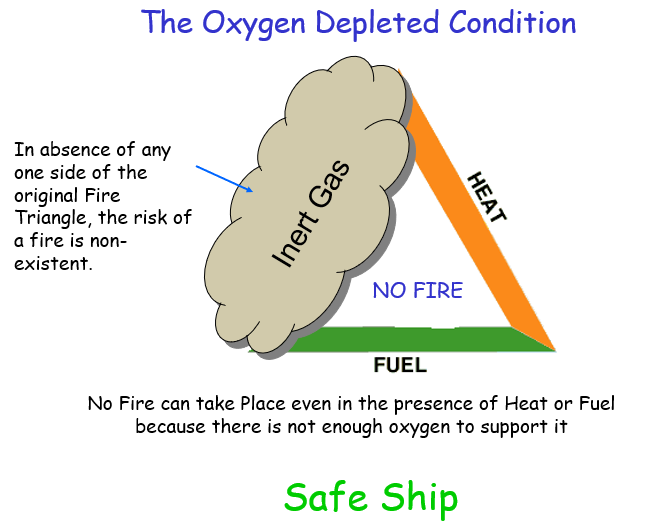
It is a gas which contains insufficient Oxygen to support combustion.

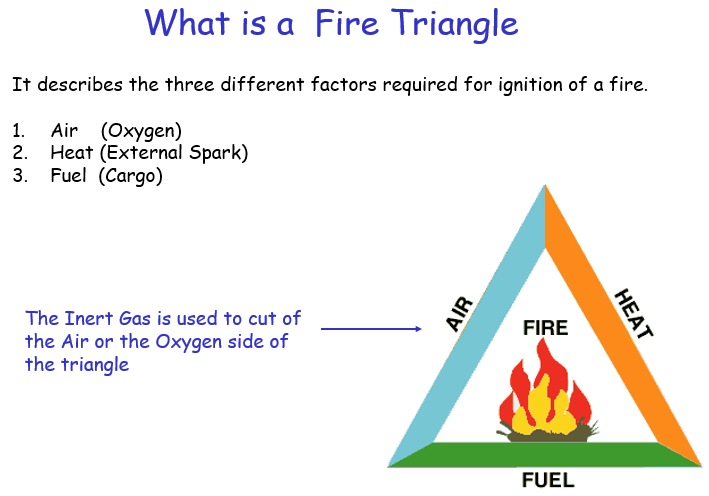
Keeping tanks inerted means cutting one side of the fire triangle and hence avoiding any chances or Fire or Explosion.

 Why do we need Inert Gas ?

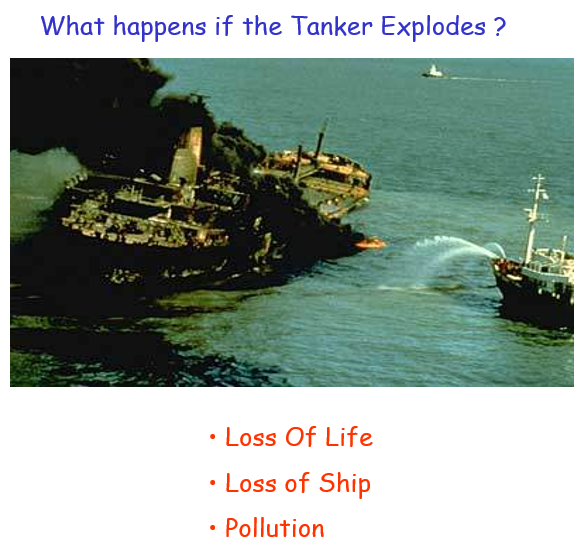
An Oil Tanker carries petrolieum cargo, which give out flammable vapors . 

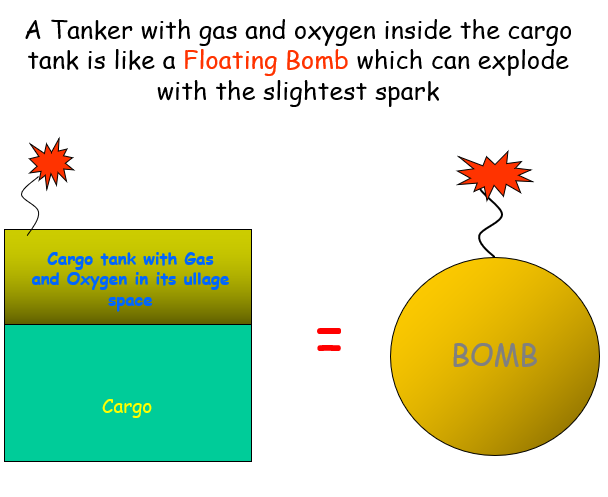
In the absence of Inert gas, any source of ignition will cause the atmosphere within a tank on the tanker to explode. 
Inert gas system
Inert gas system

What is the percentage of oxygen required to sustain combustion ?

More than 11 %

What percentage of oxygen are we required to maintain in the cargo tanks ?

By law less than 8 %. Some ports require a vessel to maintain less than 5 %. 

A Cargo tank is considered “Inerted” when the oxygen content in the tank is less than 8 % by volume
Inert gas system

How can we produce such Inert Gas (oxygen depleted gas) on board a ship ?

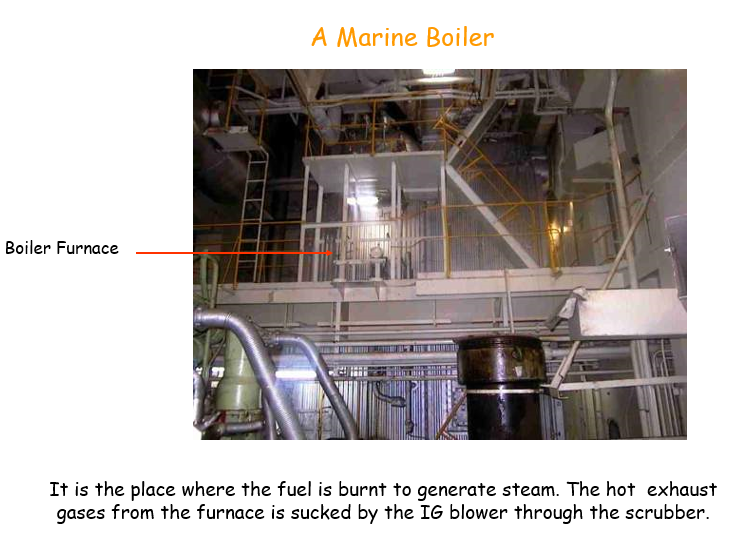
From the Exhaust Gases (Flue gas) of a boiler. The combustion of the Boiler can be controlled to reduce the oxygen to less than 5 % in its exhaust.

Why can’t we use the Exhaust from the Ships Main Engine or Auxiliary Engine?

Engines are designed to work with higher percentage of oxygen for better combustion and efficiency.These exhaust gases are rich in oxygen and much above 11 %. Hence not suitable for use as IG

How much does it cost us to make Inert Gas on board ?

It is almost free of charge because

1.Inert gas is mainly used during the discharge of the vessel. 

2.The Boiler is anyway running during the discharge of cargo to power the turbines of the cargo oil pumps.  

Hence just by treating the exhaust gas of this boiler would generate the Inert Gas

When Is Inert Gas Plant Used

  • During Discharging to replace the volume of the Liquid in the tank.
  • For Purging, so as to replace the atmosphere in the tank. 
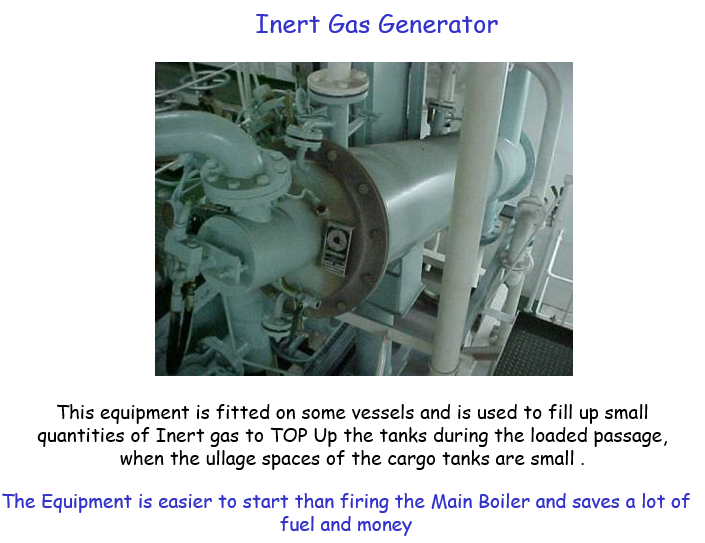
  • To Top up cargo tanks in loaded voyages.  

Can the Exhaust gases of the boiler sent straight to the cargo tanks ?

NO,

Due to the following reasons

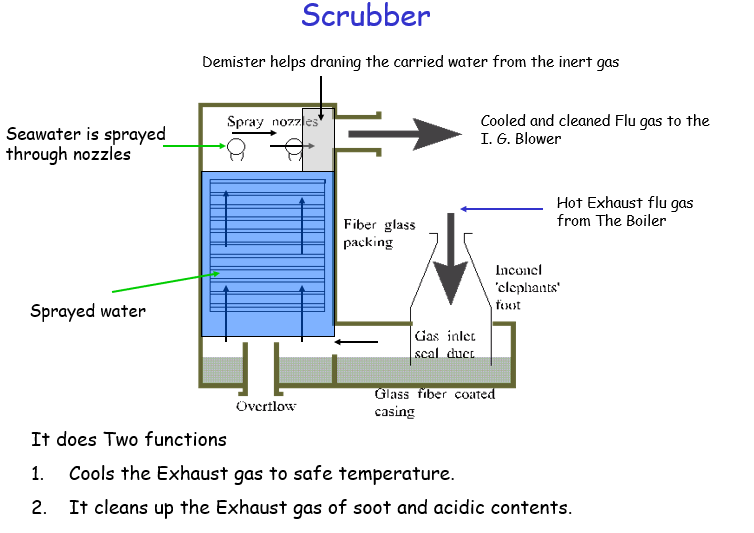
  • The Exhaust gases of the boiler are very hot and dirty and requires treatment prior they are sent to the cargo tanks. 
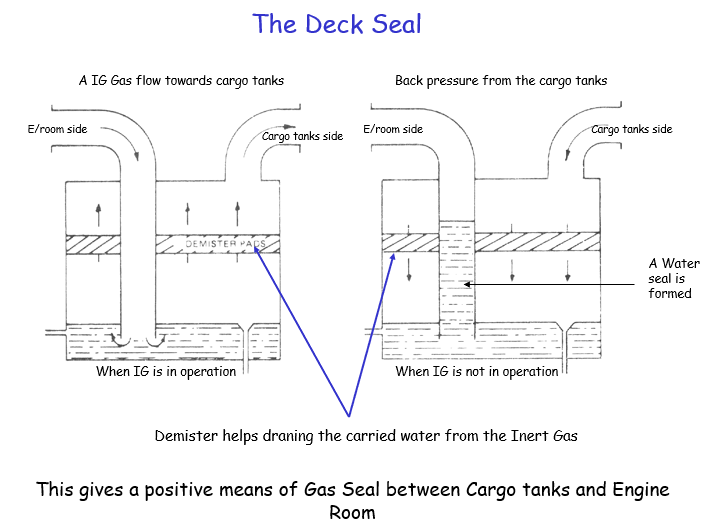
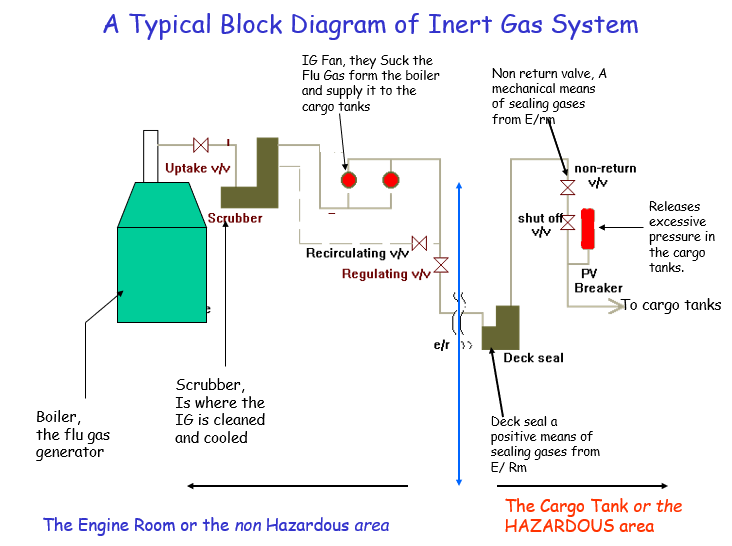
  • Any connection between the Non hazardous area (Engine room) and the Hazardous area(Cargo Tanks) calls for safety barriers between the two areas so as to prevent back flow of flammable gases to the boiler from the cargo tanks.  

Block Diagram of Inert Gas System
Inert gas system

Various components of IGS
Marine Boiler
Scrubber
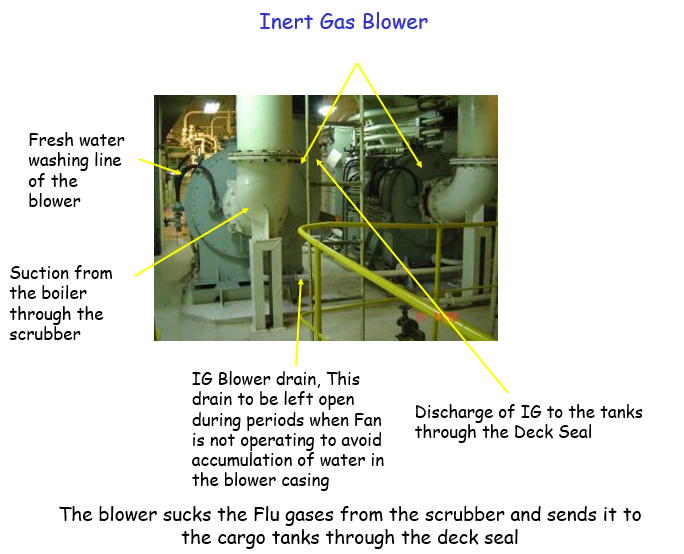
Inert Gas Blower
Deck seal
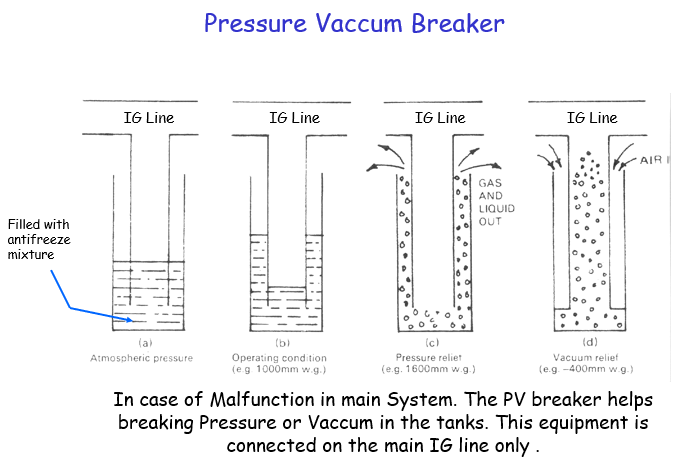
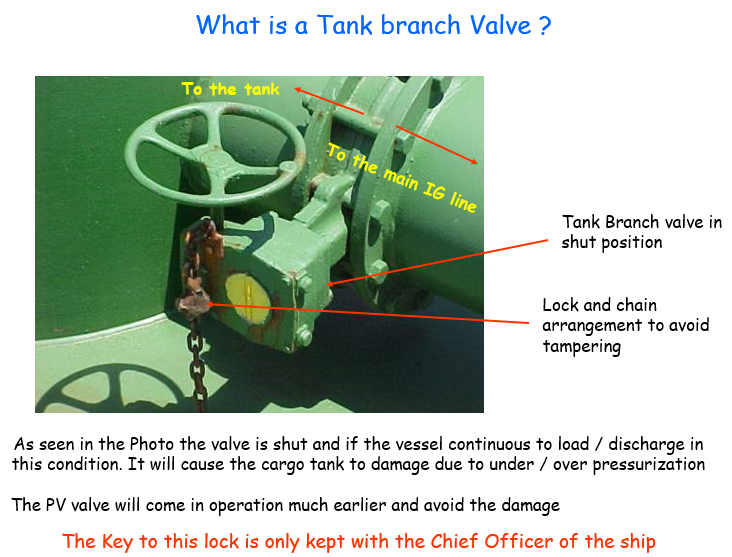
Pressure Vacuum Breaker
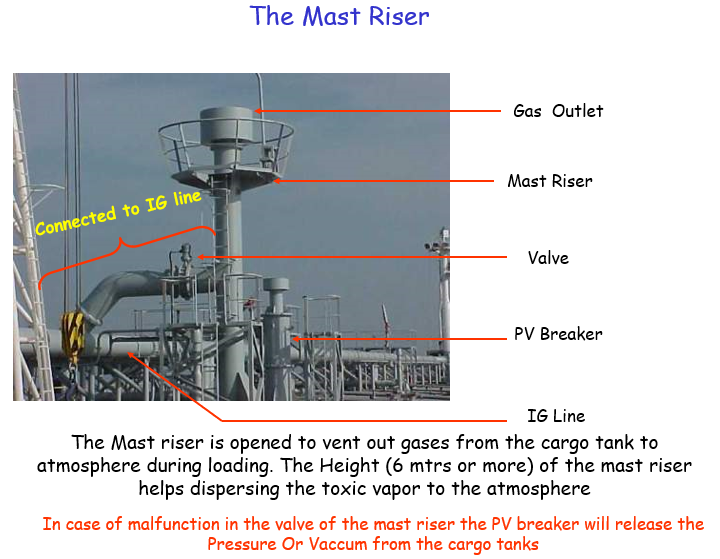
Mast riser
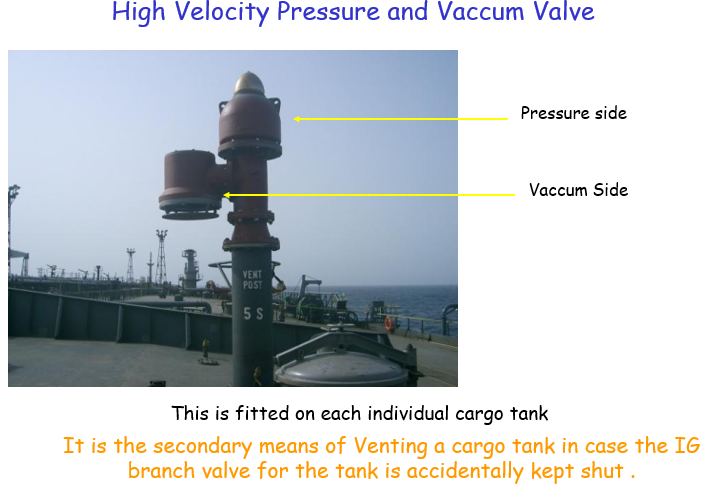
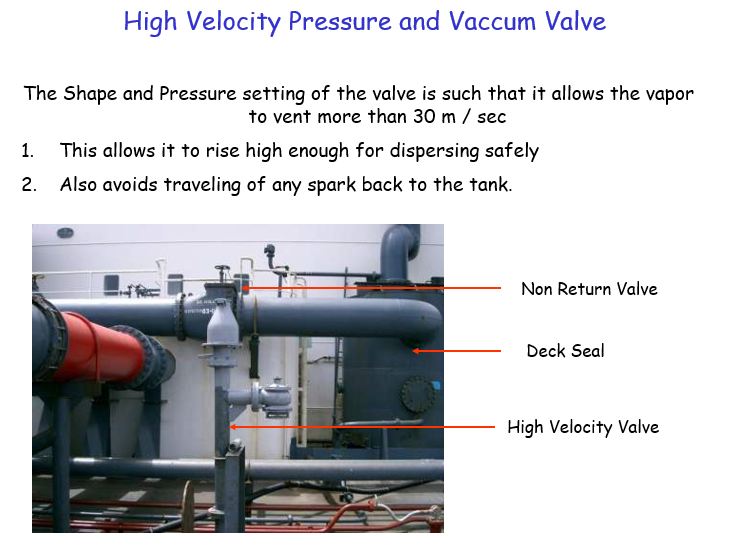
High Velocity pressure and vaccum valve
Inert gas system
PV Valve
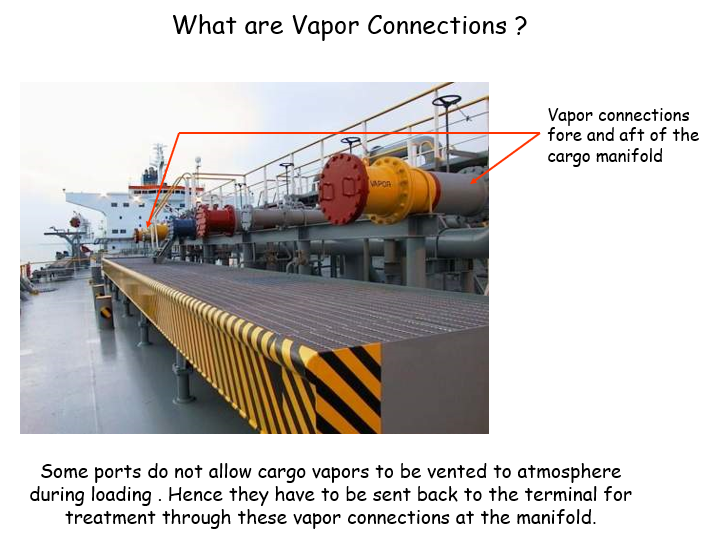
Vapour connectio
inert gas generator
Tanker Tags:deck seal, high velocity pressure and vacuum valve, inert gas blower, inert gas generator, Inert gas system, Inert gas system block diagram, marine boiler, mast riser, pressure vacuum breaker, scrubber, vapour manifold

Post navigation

Previous Post: Slow Speed Control
Next Post: Oil Tanker Cargo Tank Atmosphere Control

Leave a Reply Cancel reply

Your email address will not be published. Required fields are marked *

Categories

  • Bulk Carrier
  • Cargo handling
  • Engine Room Operations
  • LSA & FFA
  • Maritime Industry
  • Maritime Law
  • Merchant Shipping
  • Navigation
  • Rules and Regulation
  • Ship Construction
  • Shipboard operation
  • Stability
  • Tanker
  • Uncategorized

Blog is primarily for candidates appearing for certificate of competency exams but such is the detail that while being equally suitable for the beginner, it is also reference work for experienced seaman, and the layout and style of blog make it suitable for shipboard training where practical experience can be allied to the theoretical approach.

Recent Comments

  • capt on Radar Best Practice -ARPA
  • admin on Dry Docking (Theory & Numericals)
  • Stelios Karamplakas on Dry Docking (Theory & Numericals)
  • Farid OMARI on Demurrage
  • admin on Tanker Cargo Calculations

Copyright © 2018 knowledge of sea – All Rights Reserved.

If you’re unsure about what type of training will work best for you, just tell us a little more about your needs. We will get back to you as soon as possible with the answers you need!

All answers will be from sailor mouth, who is practically working on board.

January 2026
S M T W T F S
 123
45678910
11121314151617
18192021222324
25262728293031
« Dec    

Copyright © 2026 Knowledge Of Sea.

Powered by PressBook WordPress theme

Go to mobile version