Introduction
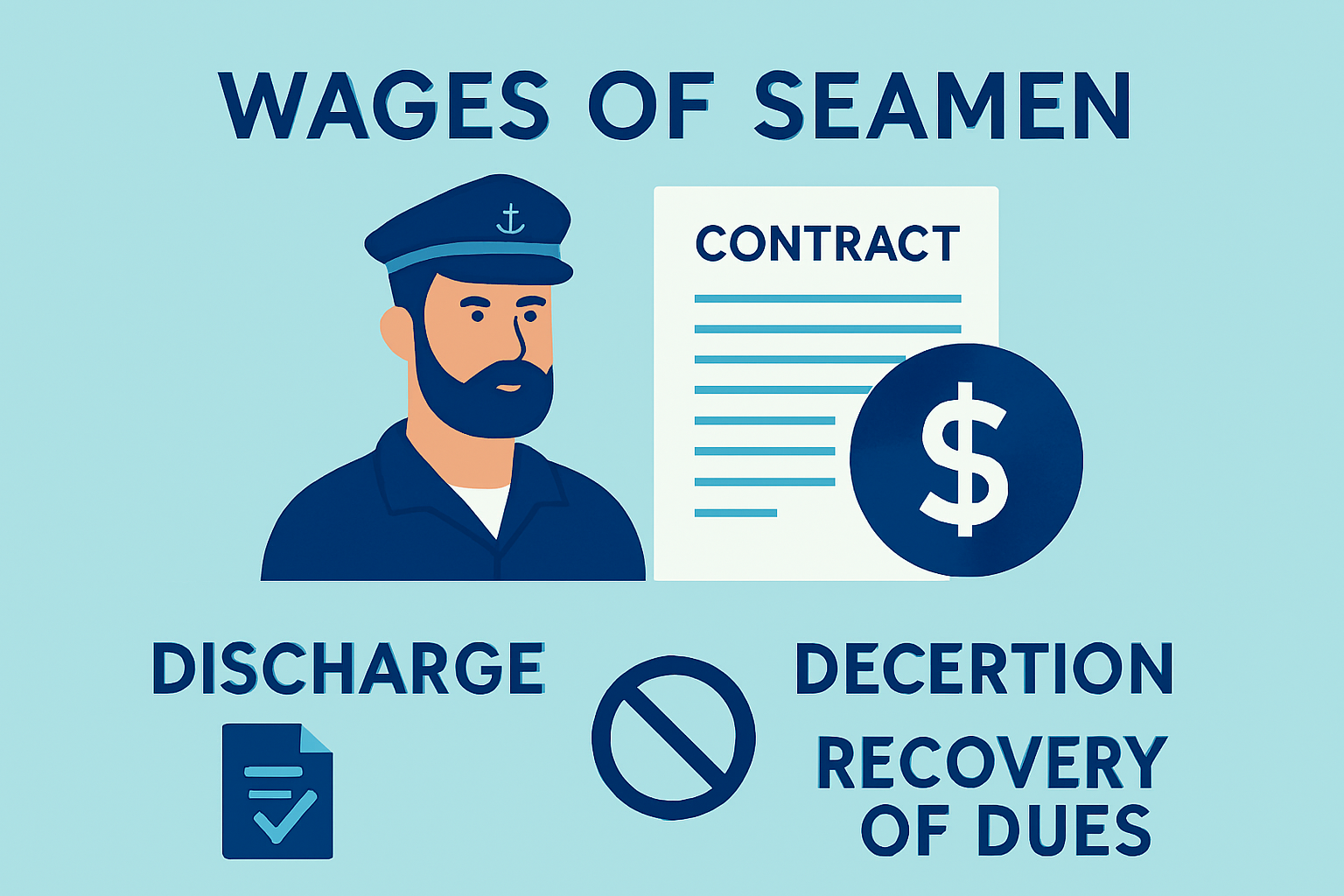
The Merchant Shipping Act, 1958 places strong legal protection around the wages and employment rights of seamen. Given the unique nature of maritime service—often involving long voyages, foreign ports, and personal risk—the Act ensures that seafarers are paid fairly, discharged lawfully, and protected against unjust forfeiture of wages.
Right of Seamen to Wages
A seaman’s right to wages begins from the time he actually commences work on board or from the time stated in the Articles of Agreement. This right continues throughout the agreed period of service and cannot be waived by private agreement.
Importantly, wages are payable even if freight is not earned. Any agreement that attempts to deprive a seaman of his right to wages or his lien on the ship for recovery of wages is void under the Act.
Wages in Case of Loss or Premature Termination of Voyage
If a ship is wrecked, lost, or abandoned before the completion of the voyage, the seaman is still entitled to wages for a specified period. In the case of ships engaged in home trade, wages are payable up to the date of loss. For ships engaged in foreign trade, wages may continue for up to two months after termination of service.
If a seaman is left behind at a foreign port due to illness, injury, or inability to continue the voyage, he is entitled to wages until he reaches a proper return port or until the voyage ends.
Advances and Allotment of Wages
The Act regulates advances and allotment of wages to prevent exploitation of seamen. Advances are permitted only under prescribed conditions and within statutory limits. A portion of a seaman’s wages may be allotted to a nominated person, such as a family member, through an allotment note approved by the Shipping Master.
Unauthorized deductions or improper handling of allotment payments constitute offences under the Act.
Discharge of Seamen
A seaman may be discharged upon completion of the voyage, expiration of the agreement, or for other lawful reasons such as illness, injury, or misconduct.
When discharge takes place in India, it must occur in the presence of a Shipping Master. The master must issue a certificate of discharge specifying the period of service and the port of discharge. In the case of certificated officers, certificates of competency must be returned at the time of discharge.
Discharge at Foreign Ports
If a seaman is discharged at a foreign port, the discharge must be carried out before an Indian consular officer or, where unavailable, in accordance with local regulations recognized by Indian law. The consular officer ensures that the seaman’s wages, property, and repatriation arrangements are properly handled.
Desertion and Absence Without Leave
Desertion occurs when a seaman abandons the ship or refuses to sail without reasonable cause. Absence without leave includes failing to join the ship at the appointed time or leaving without permission.
Desertion is treated as a serious offence and may result in forfeiture of wages, recovery of expenses incurred by the owner, and disciplinary action. However, unseaworthiness of the ship is recognized as a valid defense if the seaman has first reported the matter to the appropriate authority.
Consequences of Desertion
When desertion occurs, the master must record the facts in the Official Log Book and report the matter to the Shipping Master or Director General of Shipping. The Continuous Discharge Certificate of the seaman may be withheld for a prescribed period.
Courts may also direct that expenses incurred in recovering or repatriating the seaman be deducted from his wages.
Recovery of Wages and Dues
If wages are not paid when due, a seaman or apprentice may apply to a Judicial Magistrate of the First Class or a Metropolitan Magistrate. These cases are tried summarily, and the magistrate may order payment of wages, costs, and compensation.
Civil courts may be approached only in limited circumstances, such as when the ship is under arrest, the owner is insolvent, or the magistrate refers the matter to a civil court.
Protection Against Improper Deductions
The Act restricts deductions from wages to those expressly permitted by law, such as fines imposed by a court or Shipping Master. Any unauthorized deduction is illegal and recoverable.
Seamen are also protected from agreements that attempt to reduce wages through indirect means, ensuring fairness and transparency in employment.