Occasionally the power of the windlass may be insufficient to recover the anchor, even in moderate weather.
This can be due to mechanical inefficiency in the windlass due to excessive friction in gears for example, or to a reduction in power of the windlass motors, perhaps as a result of overhead oil, worn internal components.
An anchor can also become fast on an obstruction in any depth of water, to the extent that the windlass is unable to free it. There are three methods of recovering an anchor.
- Deep water recovery
- Shallow water recovery
- Slip and abandon the cable
Deep Water
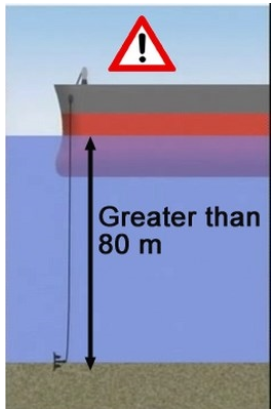
If the vessel is in deep water and the windlass in unable to recover the cable, the vessel may be carefully moved towards shallower water using the engines to drag the anchor and cable along the seabed.
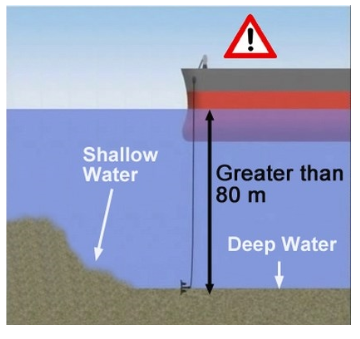
The windlass should always be taken out of gear and the chain firmly secured using the chain stopper, if fitted, before attempting this manoeuvre to avoid the windlass being damaged.
Personnel should be kept well clear of the chain under tension.
This technique has been used with success, particularly in deep water anchorages used by larger vessels. Consideration should be given to the nature of the seabed, the associated ease of dragging the anchor and the possibility of the anchor fouling on underwater obstructions or installations such as pipelines or cables.
Shallow water
If the vessel is in relatively shallow water and a fully operational windlass is unable to recover the cable, it may be assumed that the anchor is fast on an obstruction.
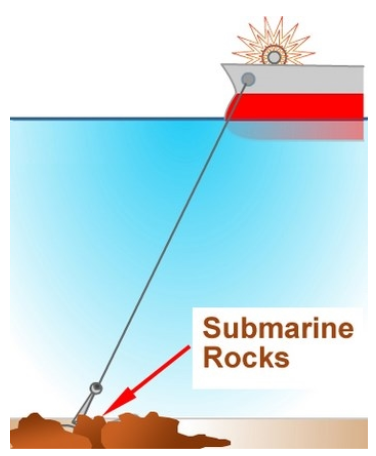
The vessel can attempt to pull the anchor free from the obstruction by use of engines.
The windlass should be out of gear and the anchor chain firmly secured using the chain stopper, while steaming to free the anchor.
Personnel should be kept well clear of the chain under tension.
The vessel may be steamed over or around the anchor position until it comes free.
Final Option, slip and abandon the cable
Should either of these techniques fail, the vessel should buoy, slip and abandon the cable, or remain at anchor and engage the assistance of professional salvors.
Slipping anchor
In an emergency when a ship is unable to heave the anchor, the ship may be obliged to slip the cable or cables and proceed to sea.
Procedure for slipping anchor
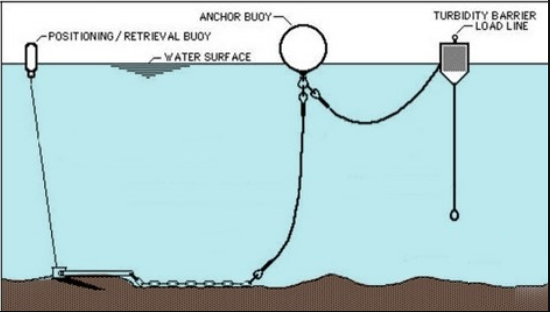
When slipping a cable, the end is connected to a buoy to enable the cable and the anchor to be recovered, and the wire rope buoy pendant used is of sufficient strength to recover the cable.
Reporting to authorities
Note the position of the lost anchor and if possible mark the position with a temporary buoy system.
Advise managers and thereafter other vessels in the vicinity, port authorities, agents and owners.
Ascertain the extent of loss and damage to the vessels structure and equipment.