Skip to content

Knowledge Of Sea

We will keep you updated

  • Home
  • Video
  • Chartering Terms
  • Rule of the Road (COLREG)
    • Nautical Flags
    • Rule of the Roads – CARDS
  • Tanker Definitions
  • Downloads
  • ORAL NOTES
    • ORAL NOTES- 2ND OFFICER
    • ORAL NOTES- CHIEF MATE
    • ASM ORAL NOTES 1
    • ASM ORAL NOTES 2
  • About Me
  • Exit Exam
    • FPFF exit exam questions and answers
    • EFA exit exam questions and answers
    • BST exit exam questions and answers
    • AFF DG Shipping exit exam question and answers
  • Toggle search form

COLREG in easy language (Rule 13)

Posted on November 22, 2019February 19, 2020 By admin No Comments on COLREG in easy language (Rule 13)

Rule 13 

Overtaking

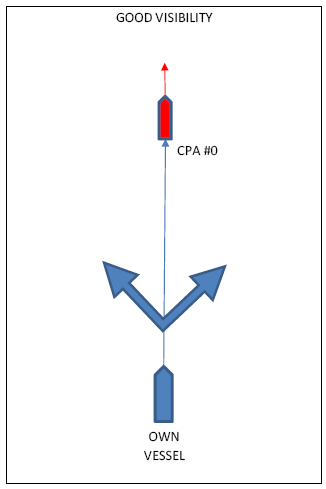
(a). Notwithstanding anything contained in the Rules of part B, sections I and II, any vessel overtaking any other shall keep out of the way of the vessel being overtaken.

Rule 13: OVERTAKING 

Rule 13 has no exceptions; the overtaking vessel always keeps out of the way. If you are not sure whether you are overtaking another vessel, then Rule 13 says that you are. Once you are an overtaking vessel, you’ll remain an overtaking vessel until the other vessel will be clear. Remember:

a) Always presume the other ship does not know you are there.

b) If possible avoid crossing ahead – it is always safer to cross astern.

c) Do not pass close – overtaking always takes time, so make sure both ships have plenty of room to maneuver. Never assume that the other ship will maintain its course and speed.

d) Even the rule allows you to choose the side, if possible try to overtake the other vessel in her starboard side, in this way you will keep your starboard side clear for future maneuvers (most of the COLREGs are involving an alteration of course to starboard).

e) Beware of interaction – if you are forced to pass close, be very careful of interaction between the two vessels.

Navigation Tags:COLLISION, COLREG RULE 13, OVERTAKING, RISK OF COLLISION, ROR, ROR RULE 13

Post navigation

Previous Post: COLREG in easy language (Rule 10)
Next Post: COLREG in easy language (Rule 14)

Leave a Reply Cancel reply

Your email address will not be published. Required fields are marked *

Categories

  • Bulk Carrier
  • Cargo handling
  • Engine Room Operations
  • LSA & FFA
  • Maritime Industry
  • Maritime Law
  • Merchant Shipping
  • Navigation
  • Rules and Regulation
  • Ship Construction
  • Shipboard operation
  • Stability
  • Tanker
  • Uncategorized

Blog is primarily for candidates appearing for certificate of competency exams but such is the detail that while being equally suitable for the beginner, it is also reference work for experienced seaman, and the layout and style of blog make it suitable for shipboard training where practical experience can be allied to the theoretical approach.

Recent Comments

  • capt on Radar Best Practice -ARPA
  • admin on Dry Docking (Theory & Numericals)
  • Stelios Karamplakas on Dry Docking (Theory & Numericals)
  • Farid OMARI on Demurrage
  • admin on Tanker Cargo Calculations

Copyright © 2018 knowledge of sea – All Rights Reserved.

If you’re unsure about what type of training will work best for you, just tell us a little more about your needs. We will get back to you as soon as possible with the answers you need!

All answers will be from sailor mouth, who is practically working on board.

January 2026
S M T W T F S
 123
45678910
11121314151617
18192021222324
25262728293031
« Dec    

Copyright © 2026 Knowledge Of Sea.

Powered by PressBook WordPress theme

Go to mobile version