International Tonnage Certificate (1969)
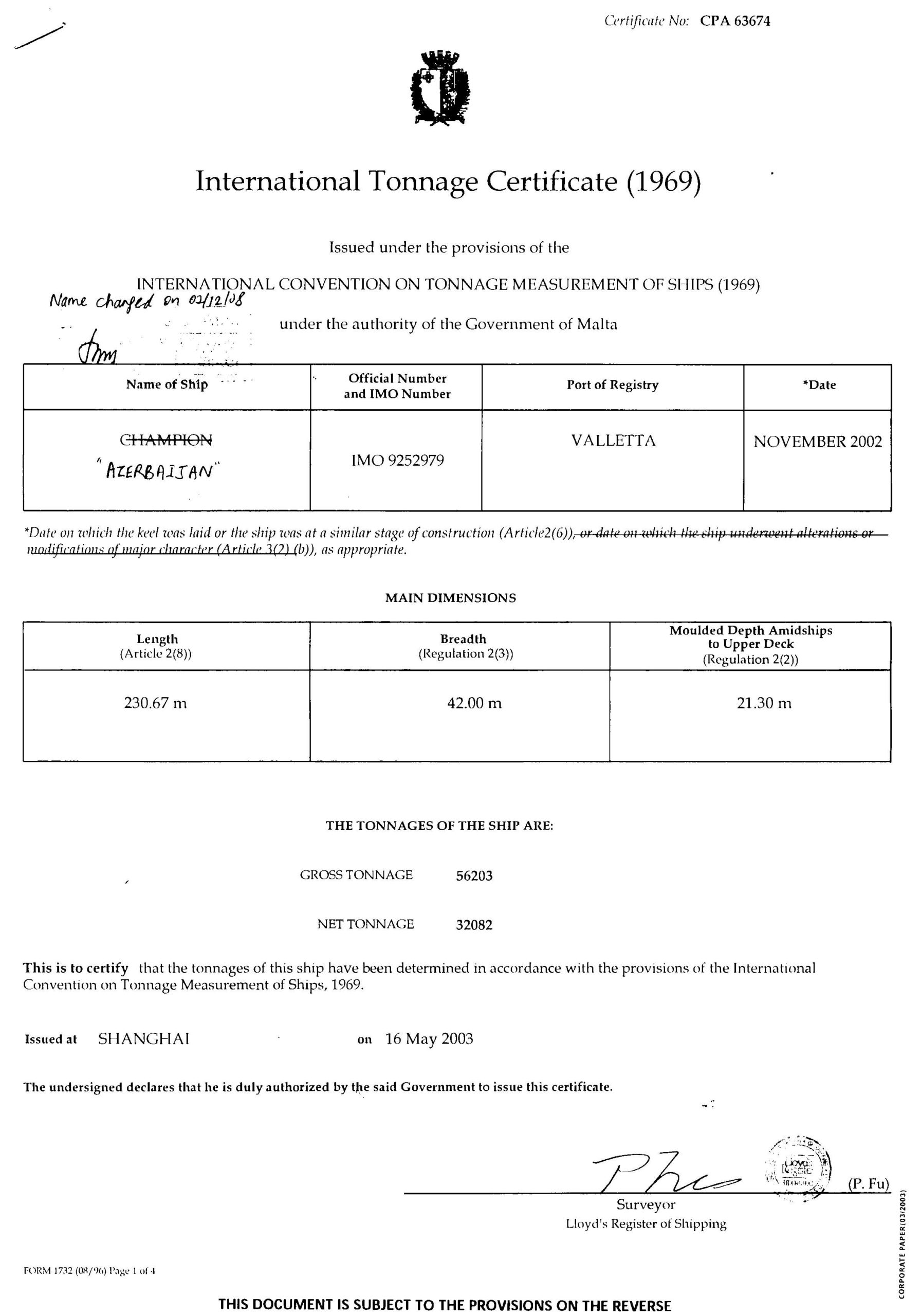
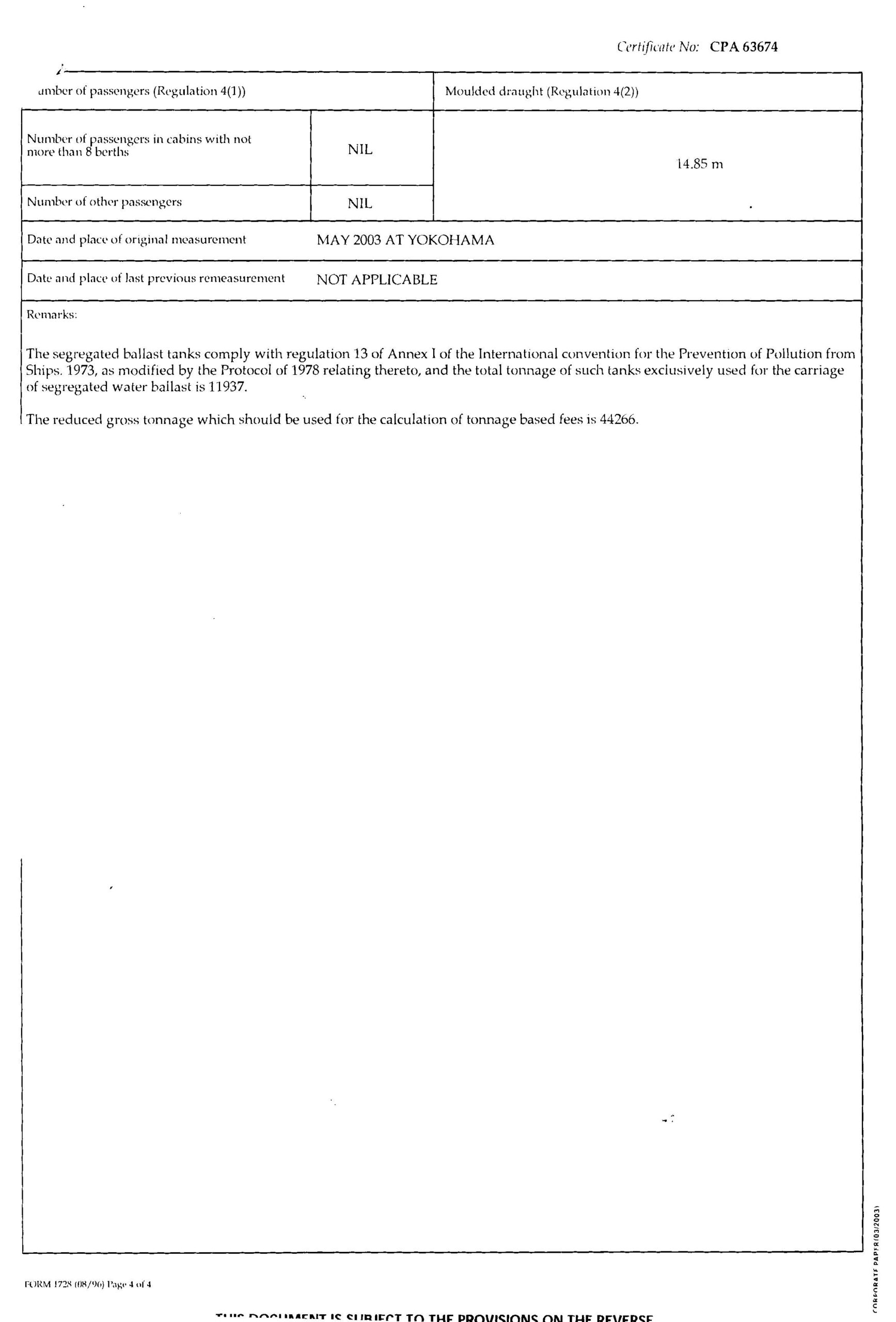
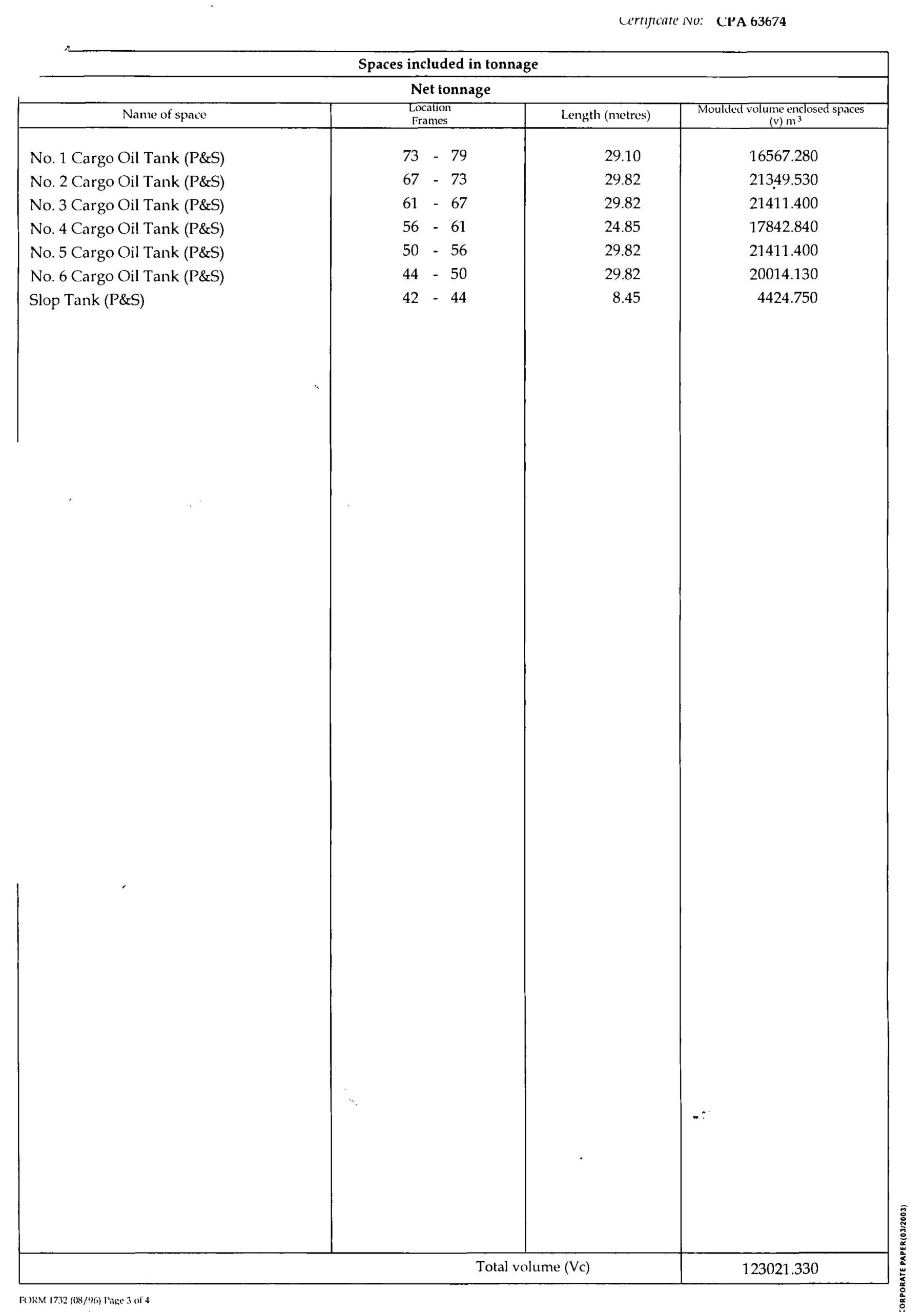
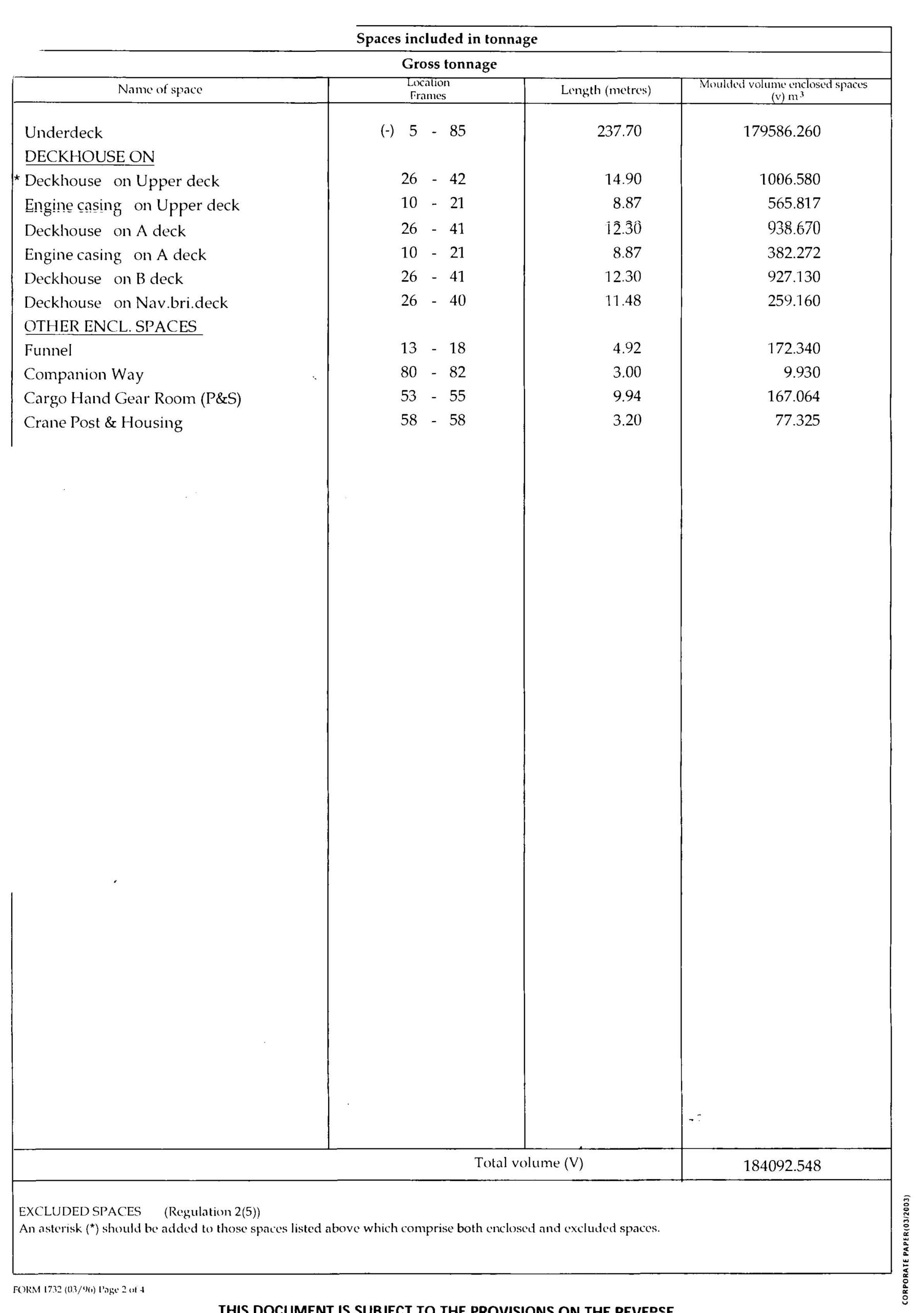
International Load line Certificate
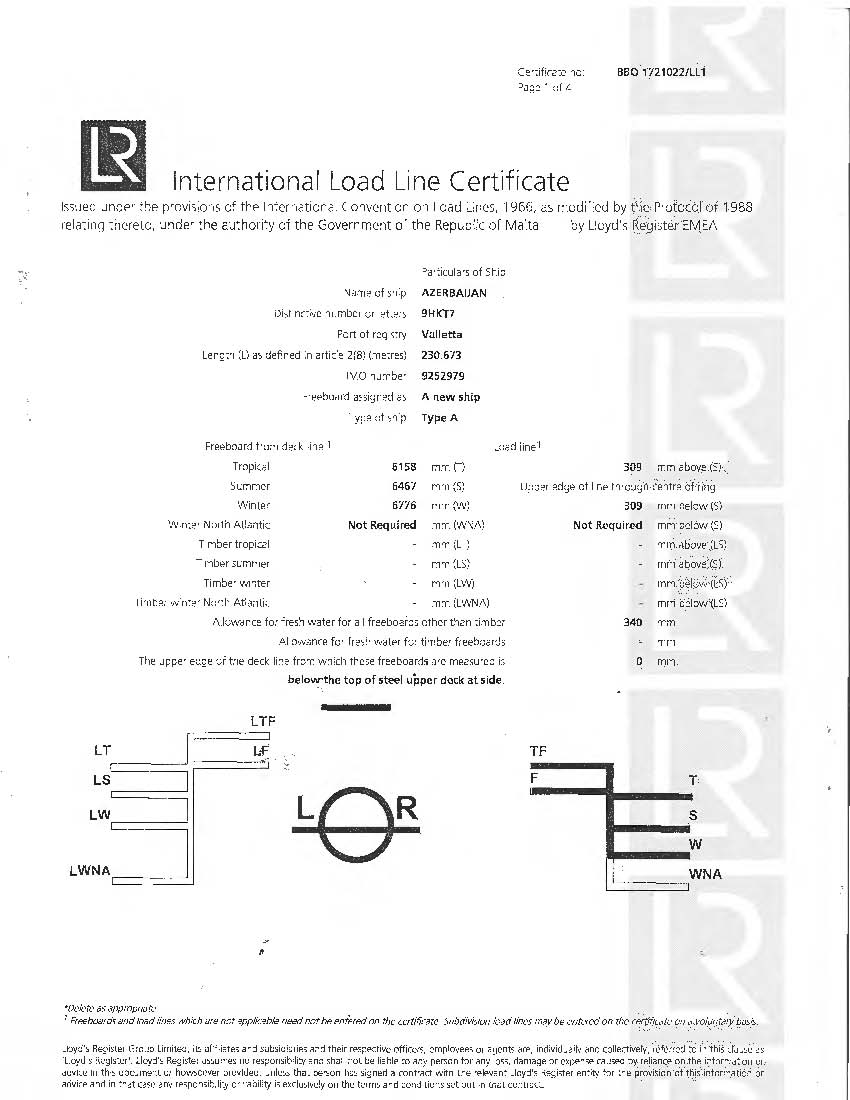
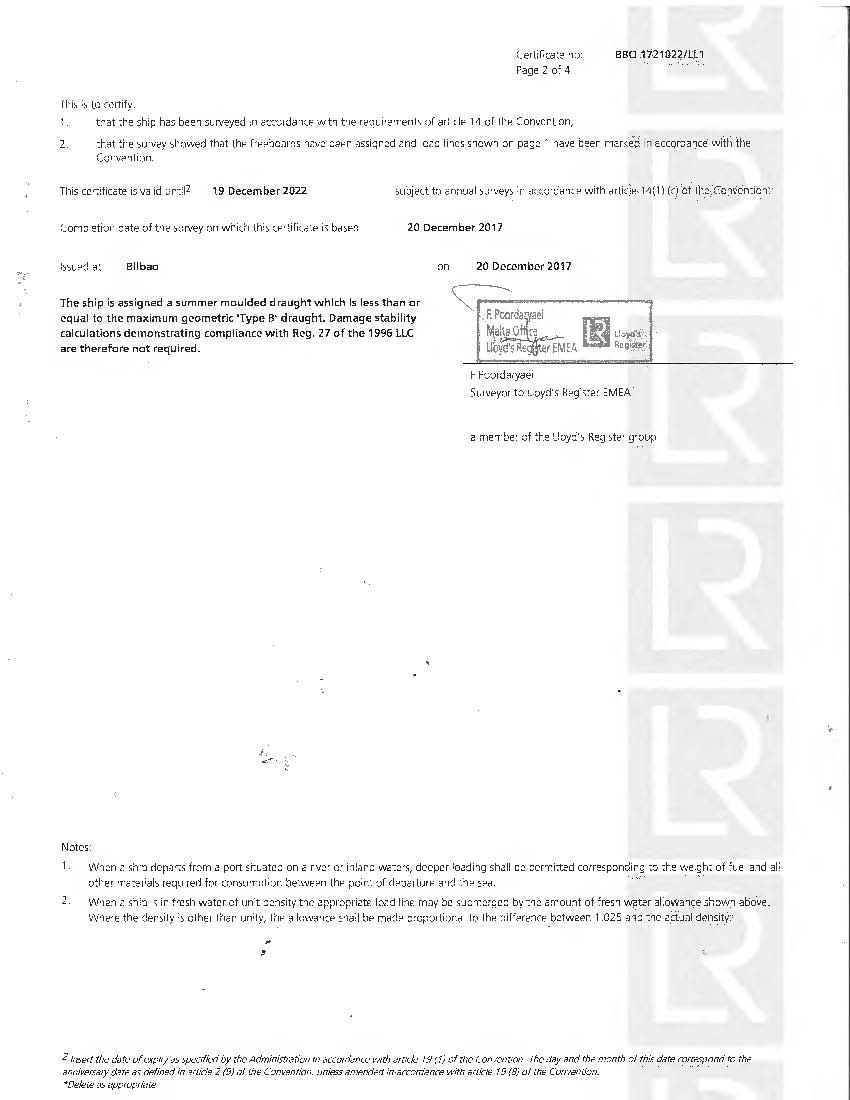
International Load line Exemption Certificate

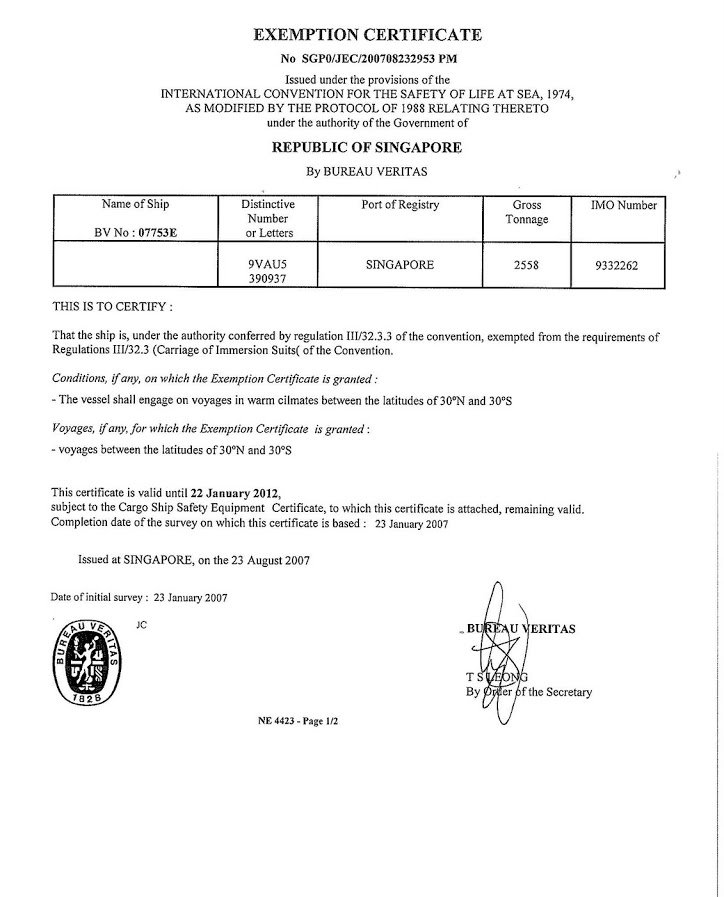
Exemption Certificate
Coating Technical File
A Coating Technical File, containing specifications of the coating system applied, where applicable, to dedicated seawater ballast tanks in all types of ships and double-side skin spaces of bulk carriers of 150 m in length and upwards and cargo oil tanks of crude oil tankers, record of the shipyard’s and shipowner’s coating work, detailed criteria for coating sections, job specifications, inspection, maintenance and repair, shall be kept on board and maintained throughout the life of the ship.Emergency Towing Procedure
All ships shall be provided with a ship-specific emergency towing procedure. Such a procedure shall be carried on board the ship for use in emergency situations and shall be developed based on the guidelines developed by the Organization.Construction Drawings
A set of as-built construction drawings and other plans showing any subsequent structural alterations shall be kept on board a ship constructed on or after 1 January 2007.Ship Construction File
A Ship Construction File with specific information should be kept on board oil tankers of 150 m in length and above and bulk carriers of 150 m in length and above, constructed with single deck, top-side tanks and hopper side tanks in cargo spaces, excluding ore carriers and combination carriers: .1 for which the building contract is placed on or after 1 July 2016; .2 in the absence of a building contract, the keels of which are laid or which are at a similar stage of construction on or after 1 July 2017; or .3 the delivery of which is on or after 1 July 2020 shall carry a Ship Construction File containing information in accordance with regulations and guidelines, and updated as appropriate throughout the ship’s life in order to facilitate safe operation, maintenance, survey, repair and emergency measures.Noise Survey Report
Applicable to new ships of 1,600 gross tonnage and above, excluding dynamically supported crafts, high-speed crafts, fishing vessels, pipe-laying barges, crane barges, mobile offshore drilling units, pleasure yachts not engaged in trade, ships of war and troopships, ships not propelled by mechanical means, pile driving vessels and dredgers. A noise survey report shall always be carried on board and be accessible for the crew. For existing ships, refer to section “Other certificates and documents which are not mandatory – Noise Survey Report” (resolution A.468(XII).Stability Information

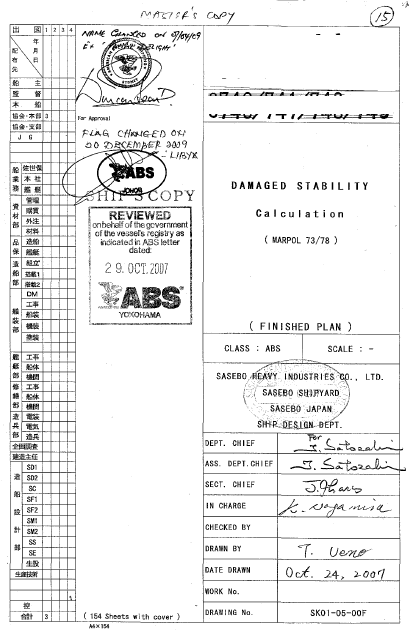
Damage Control Plan and Booklets
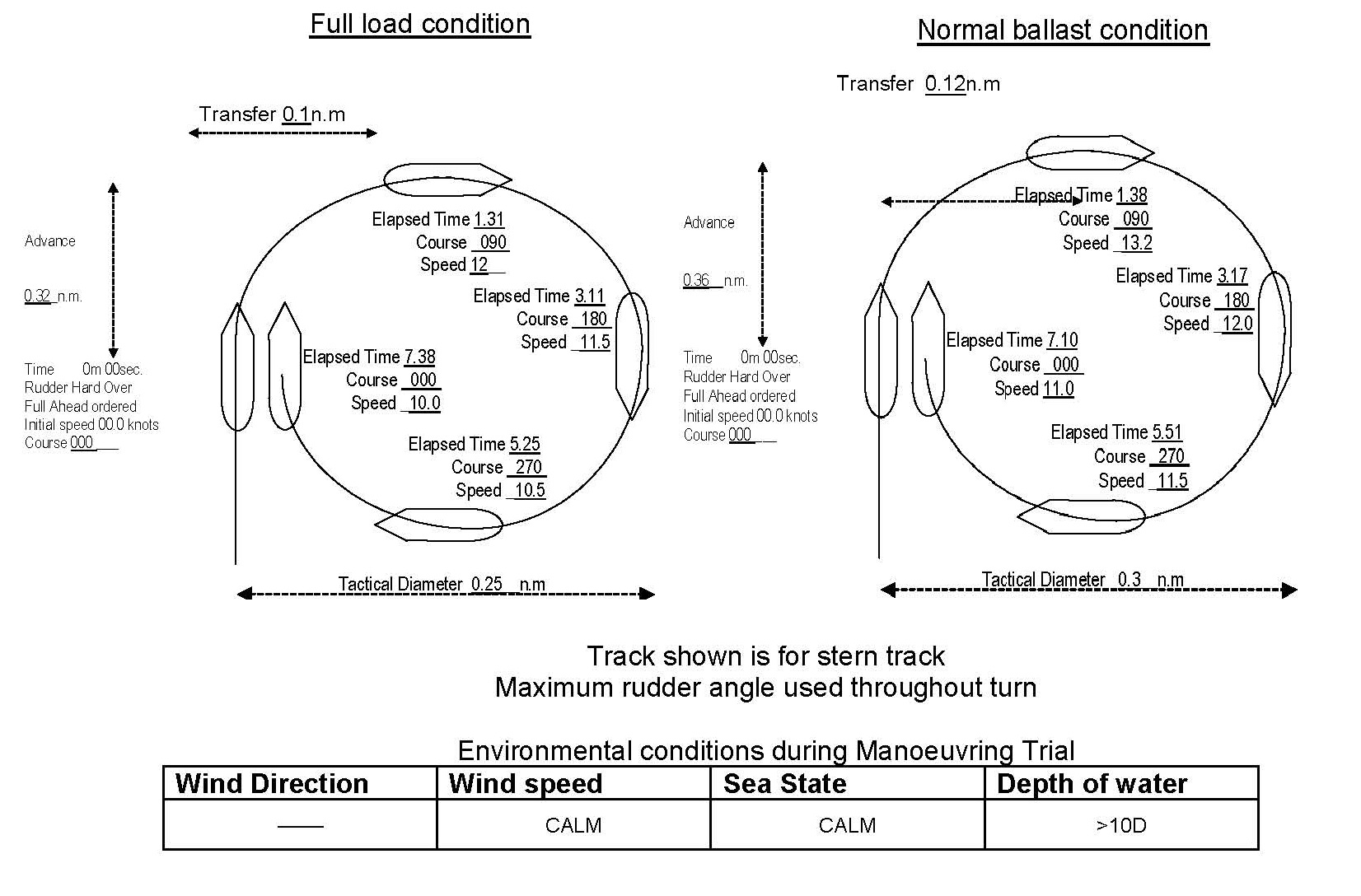
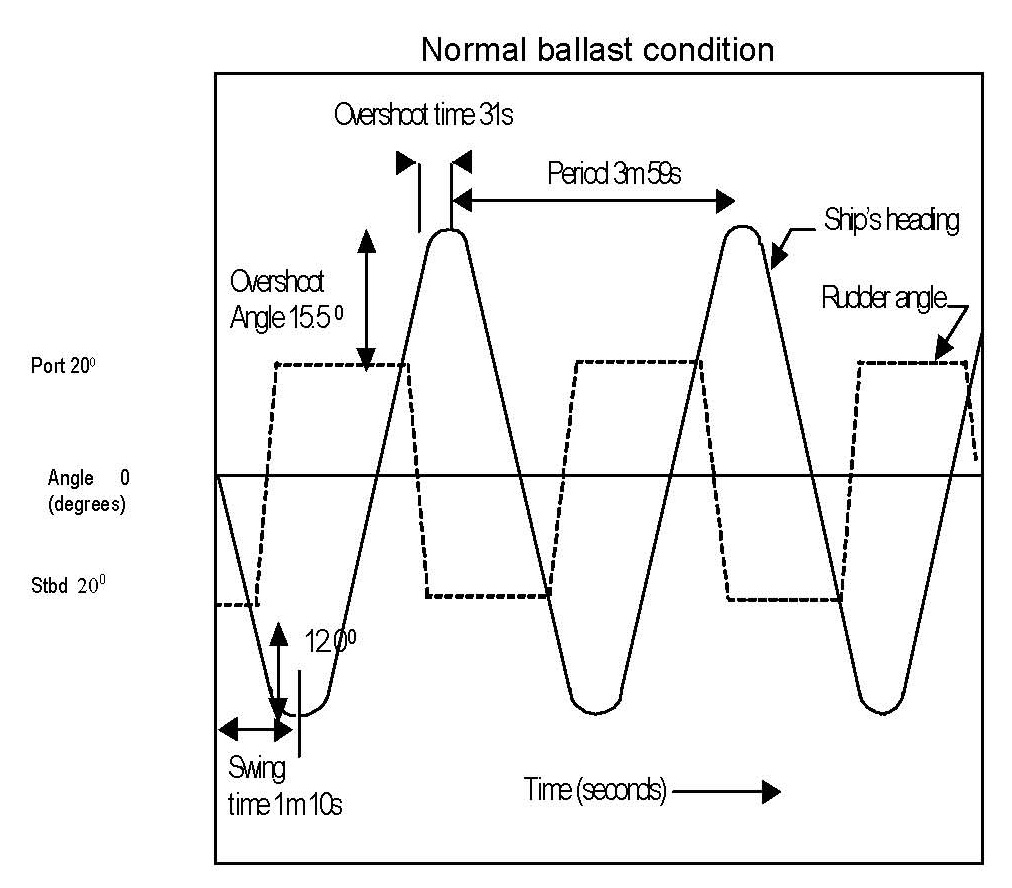
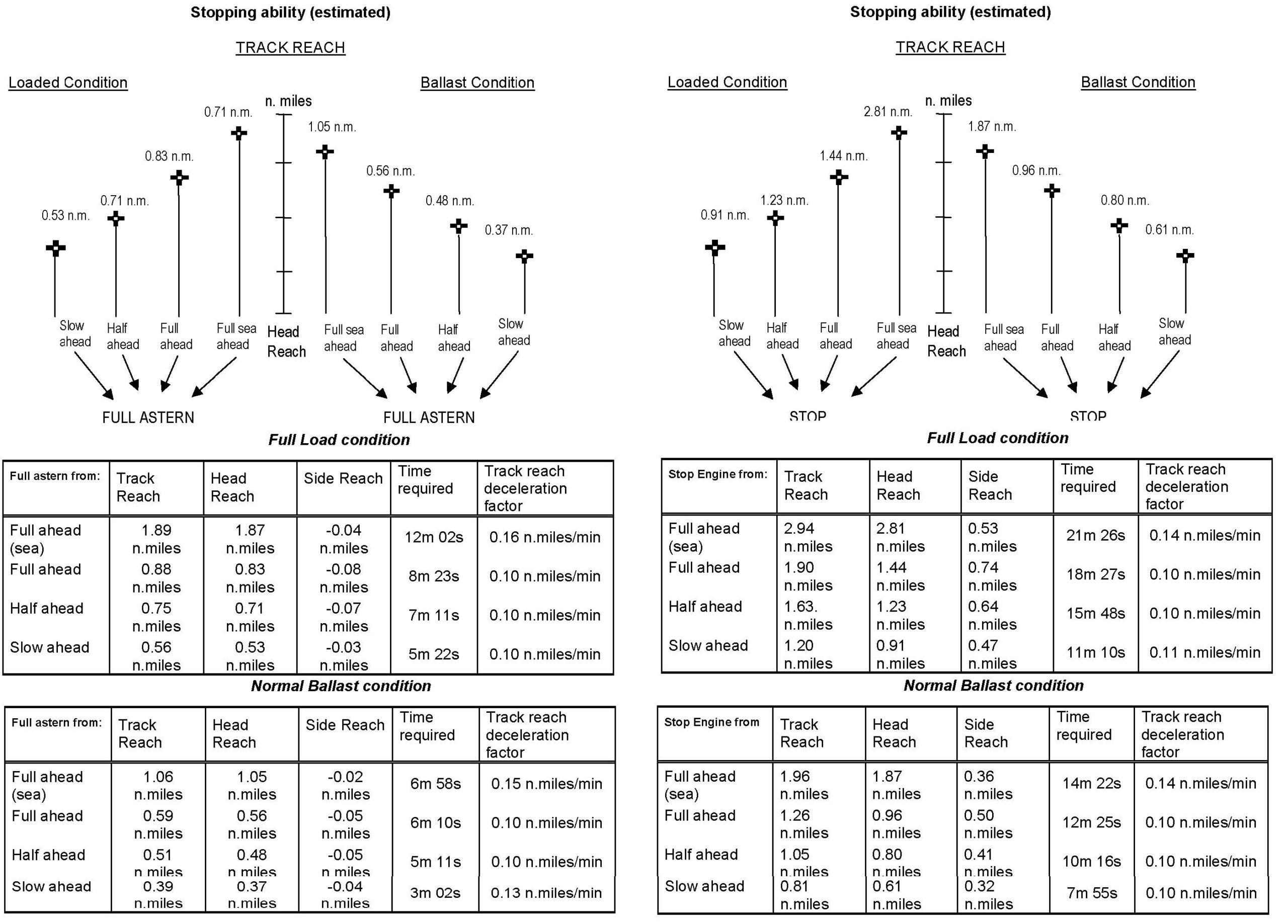
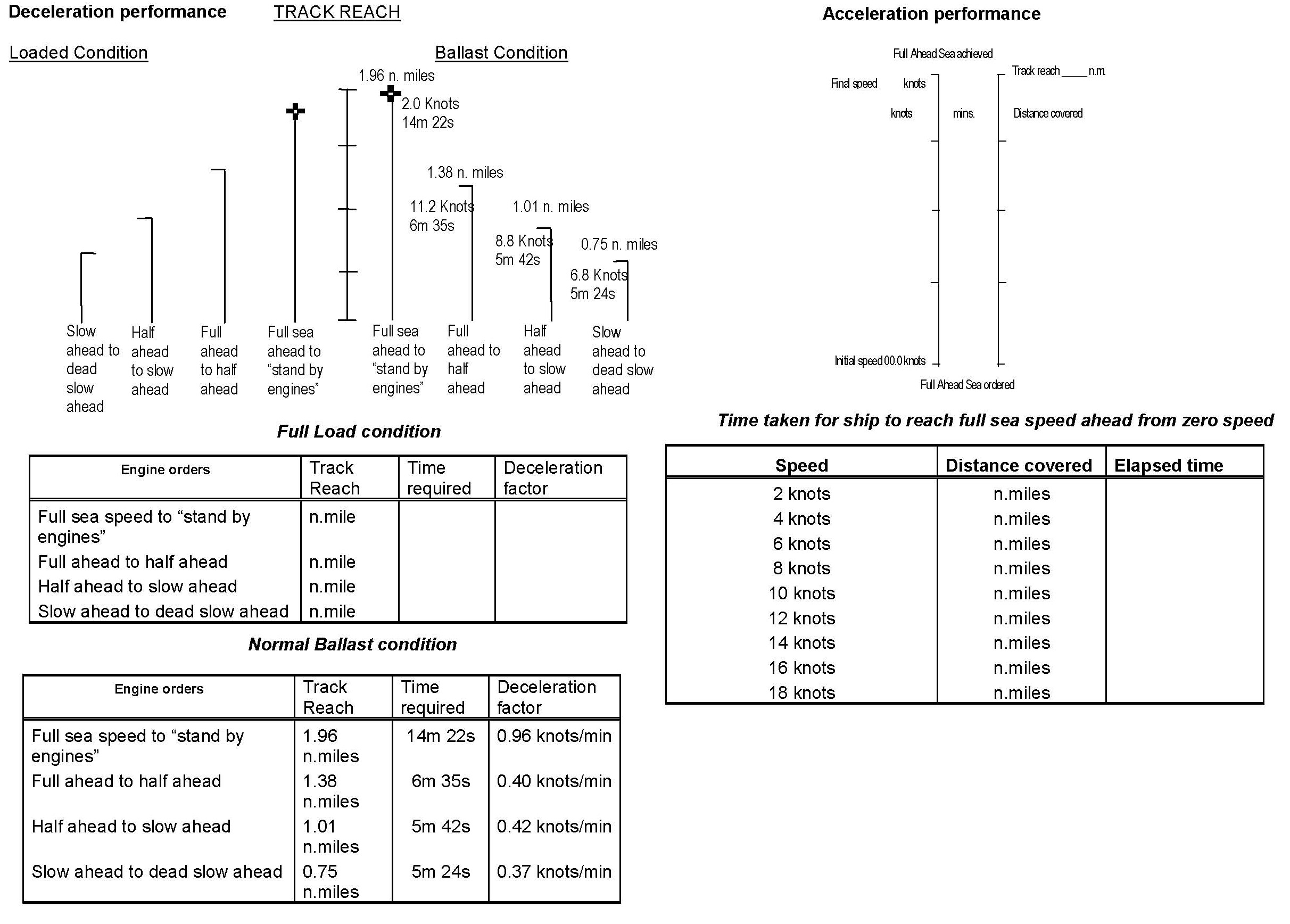
Manoeuvring Booklet
Evaluation of alternative design and arrangements
Where applicable, a copy of the documentation, as approved by the Administration, indicating that the alternative design and arrangements comply with this regulation shall be carried onboard the ship.Maintenance Plans
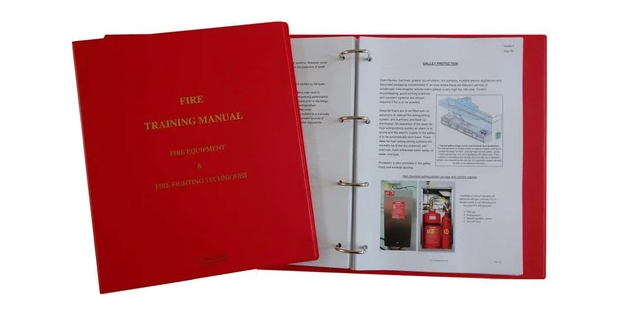
The maintenance plan shall include the necessary information about fire protection systems and fire-fighting systems and appliances as required by regulation II-2/14.2.2. For tankers, additional requirements are referred to in regulation II-2/14.4. For passenger ships carrying more than 36 Passengers, the maintenance plan should include low-location lighting and public address system as required by SOLAS regulation II-2/14.3.Fire safety training manual.
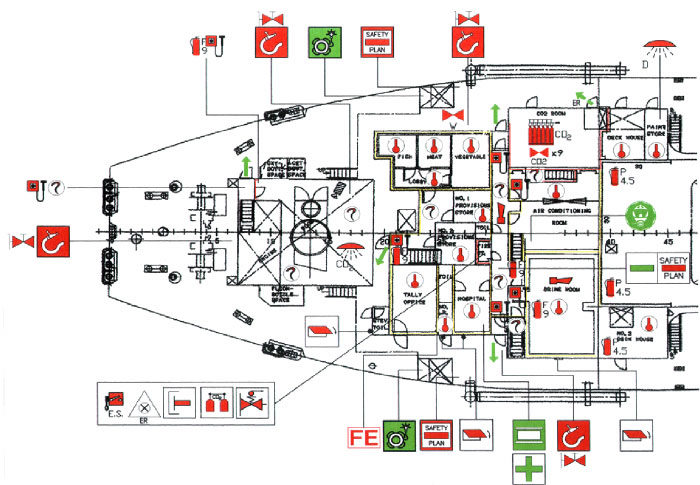
Fire control plan & booklet
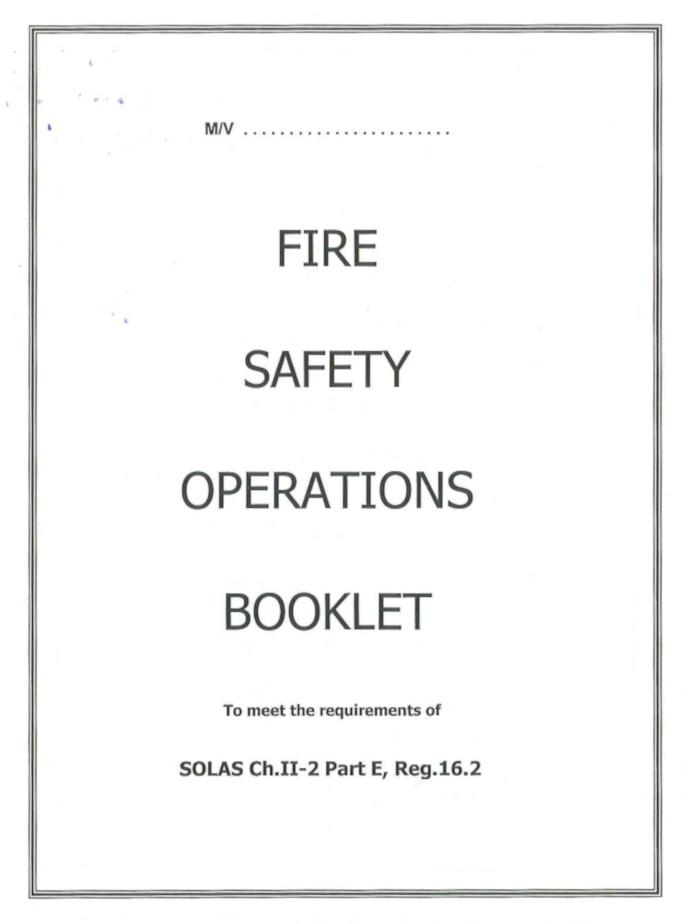
Fire safety operation booklet
Operations manual for helicopter facility
Each helicopter facility, if fitted, shall have an operations manual, including a description and a checklist of safety precautions, procedures and equipment requirements. This manual may be part of the ship’s emergency response proceduresStatement of acceptance of the installation of replacement release and retrieval system to an existing lifeboat
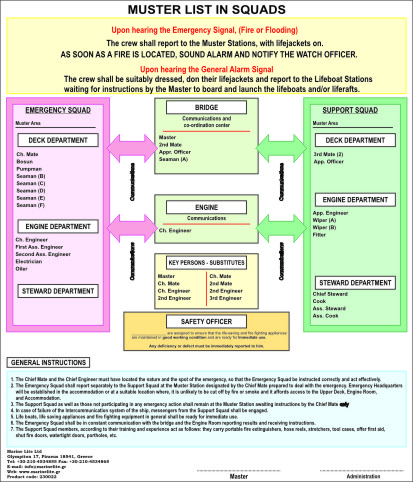
For all ships, no later than the first scheduled dry-docking after 1 July 2014, but no later than 1 July 2019, lifeboat on-load release mechanisms not complying with paragraphs 4.4.7.6.4 to 4.4.7.6.6 of the LSA Code shall be replaced with equipment that complies with the Code.Muster list and emergency instructions
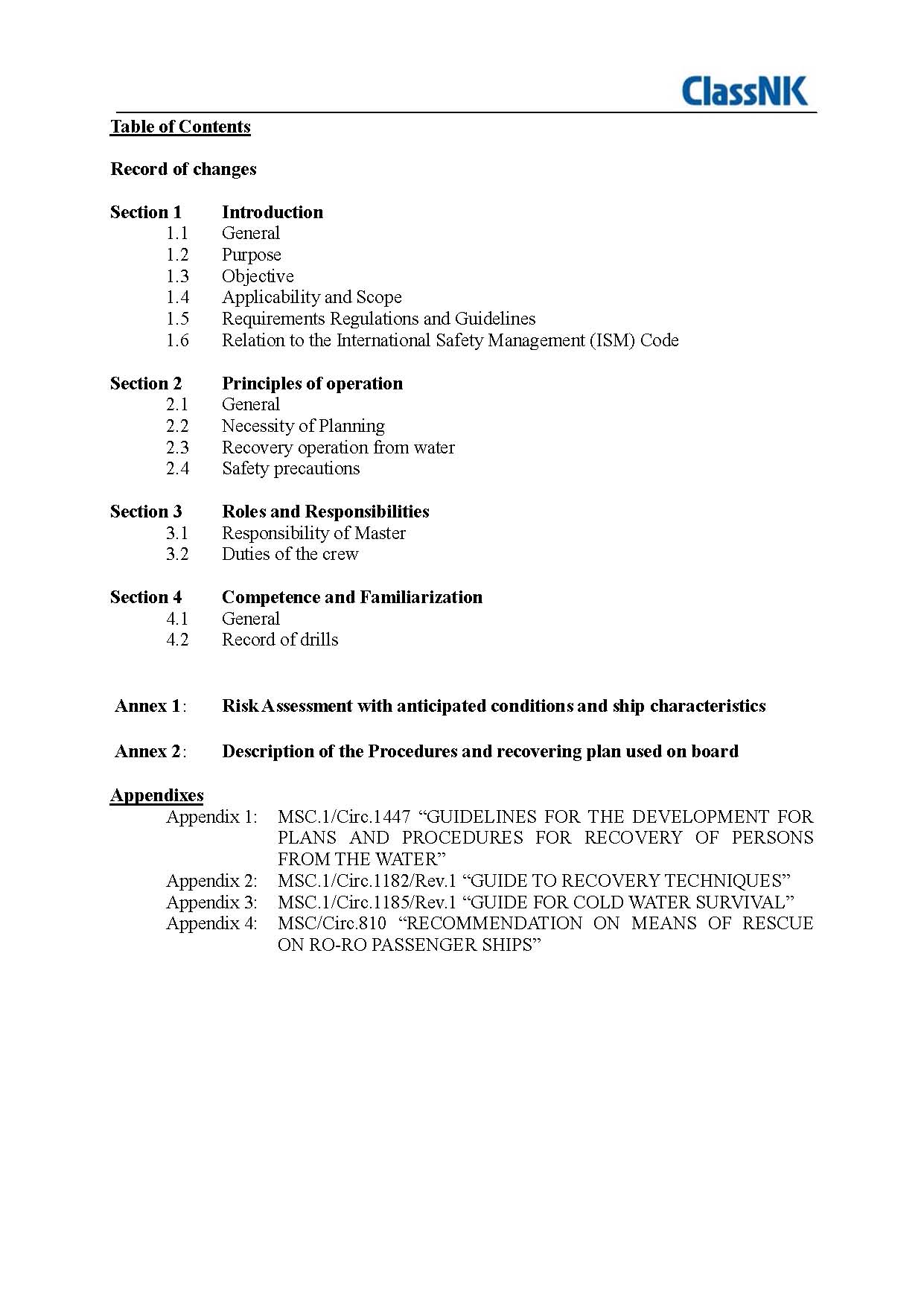
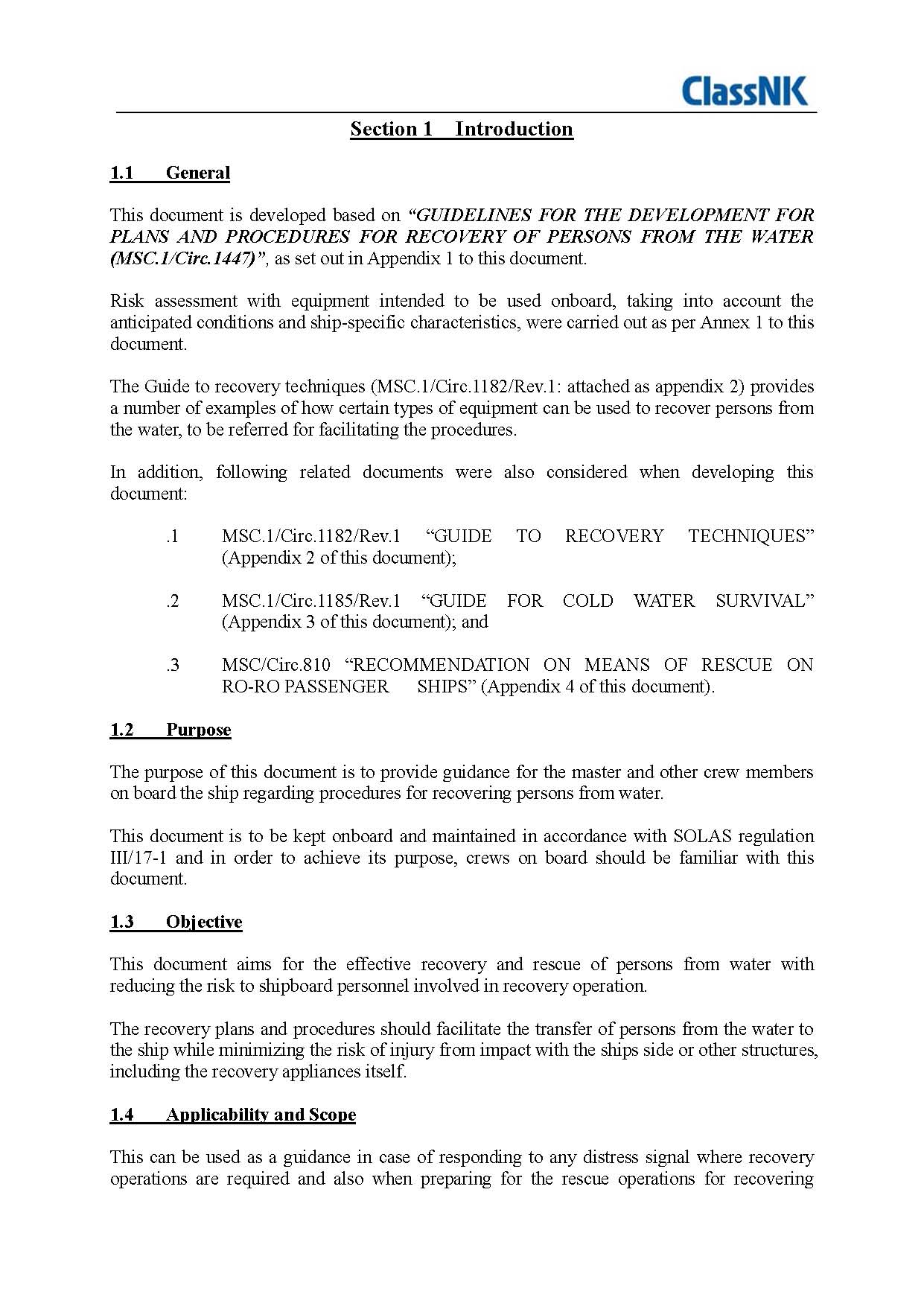
Ship specific plans and procedures for Recovery of Persons from the Water
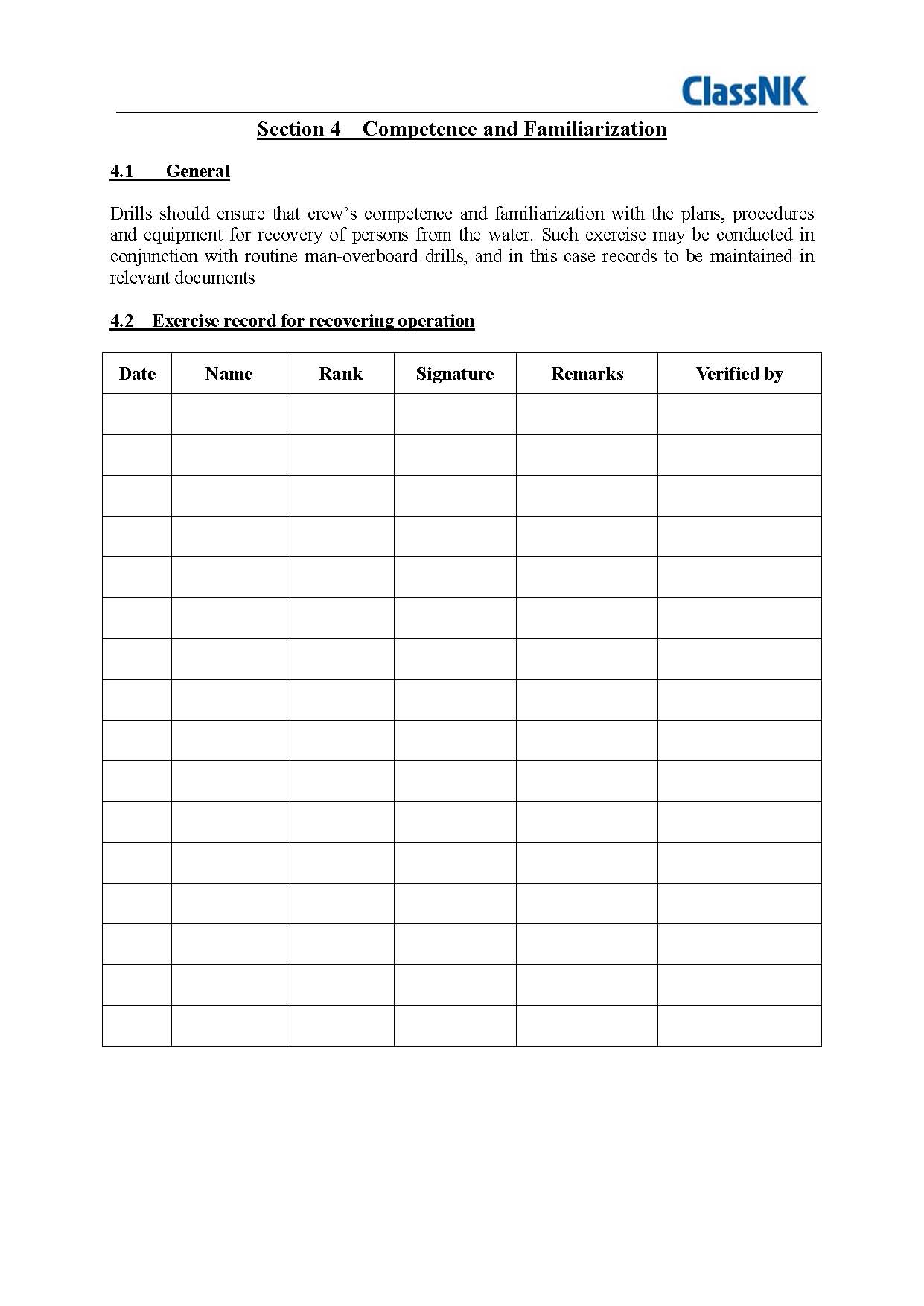
Life Saving Training Manual

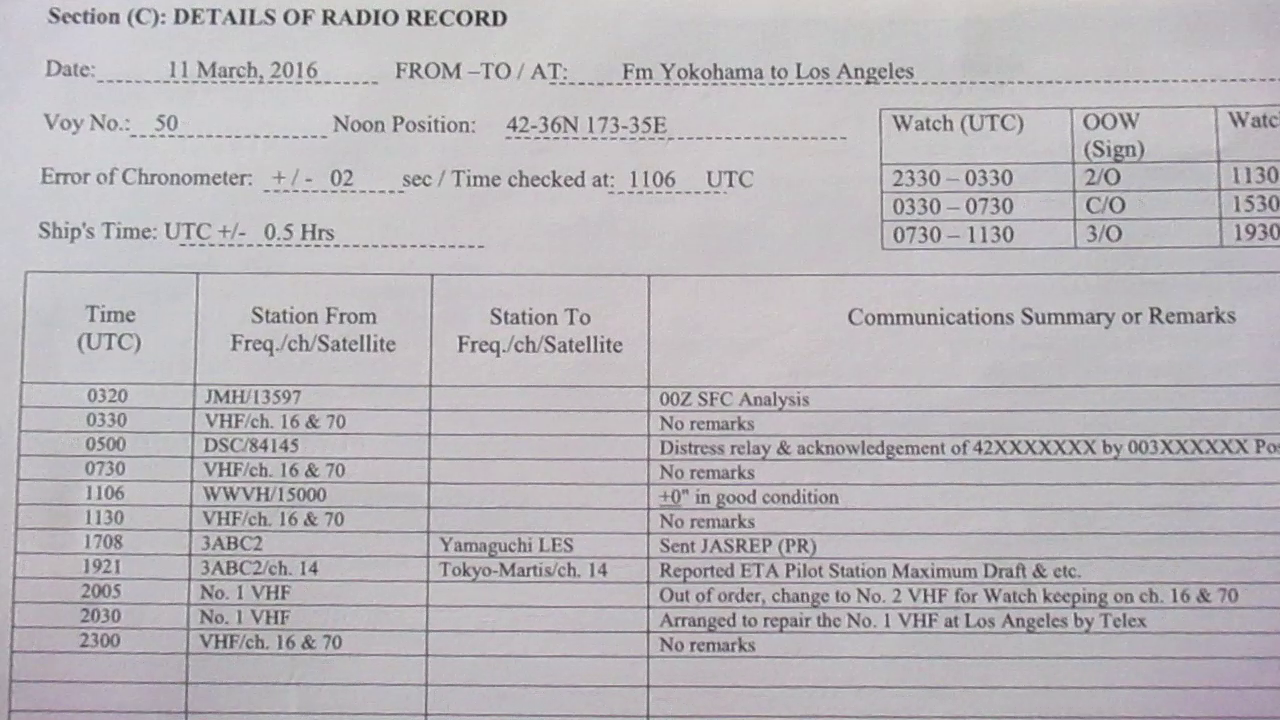
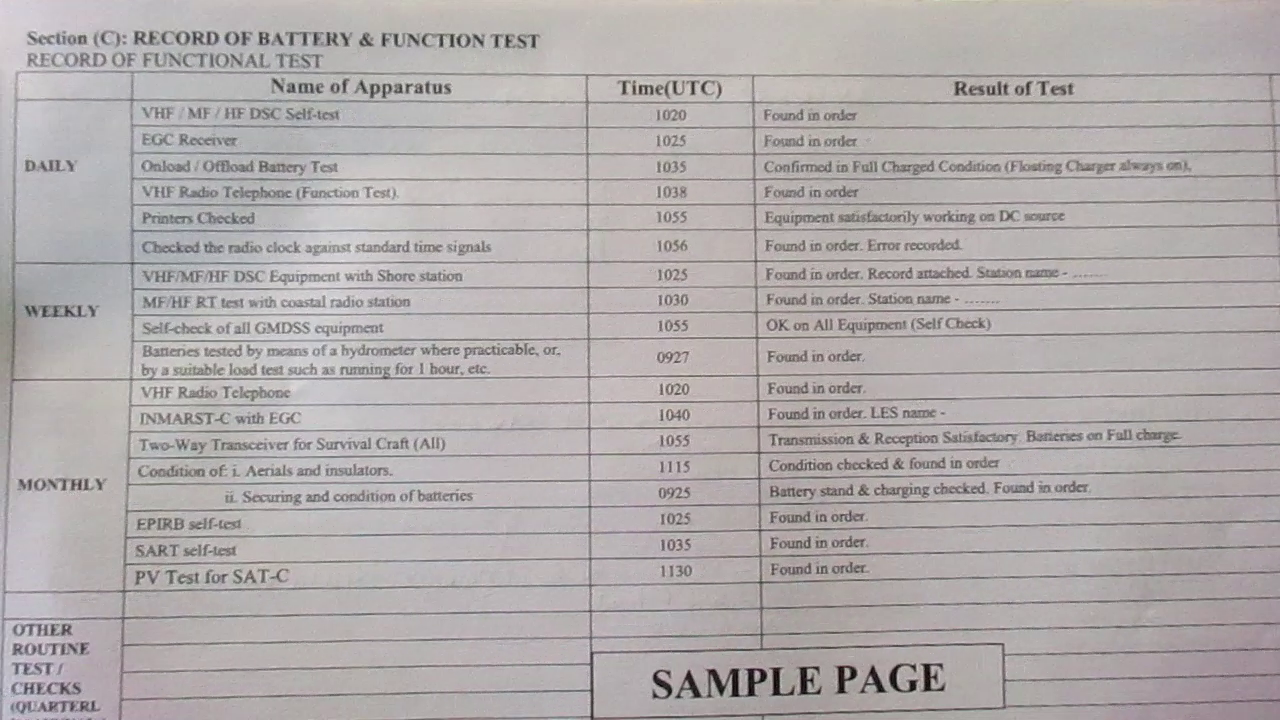
Radio Record
Minimum Safe Manning Document

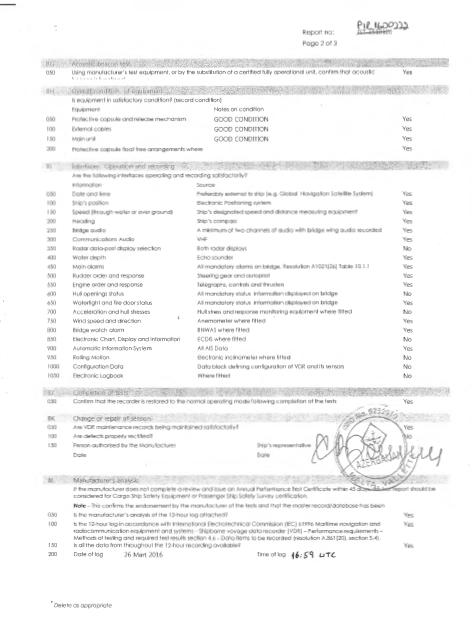
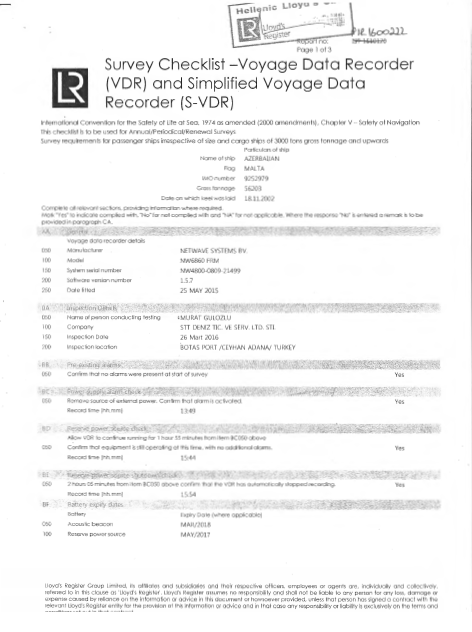
Voyage data recorder system – certificate of compliance

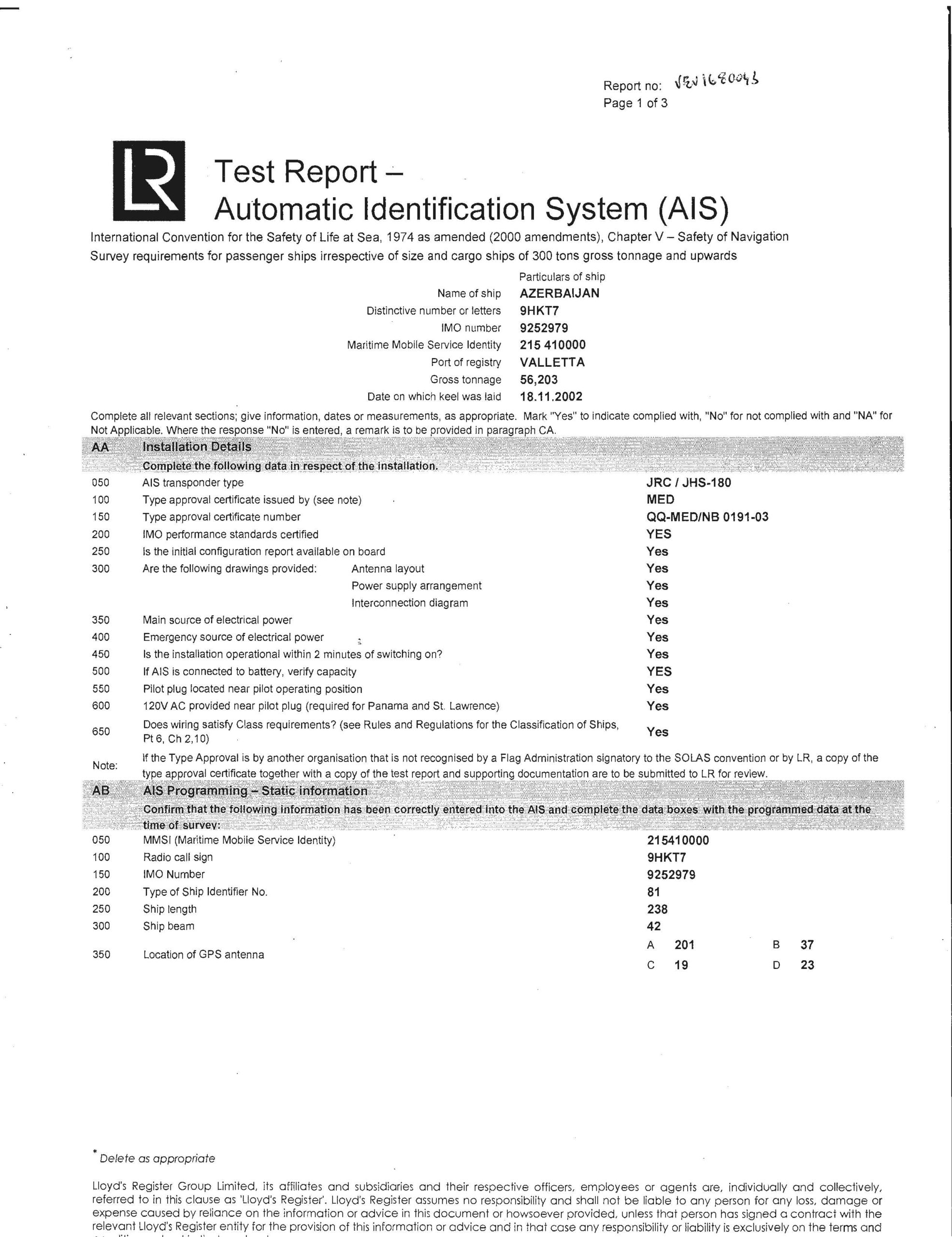
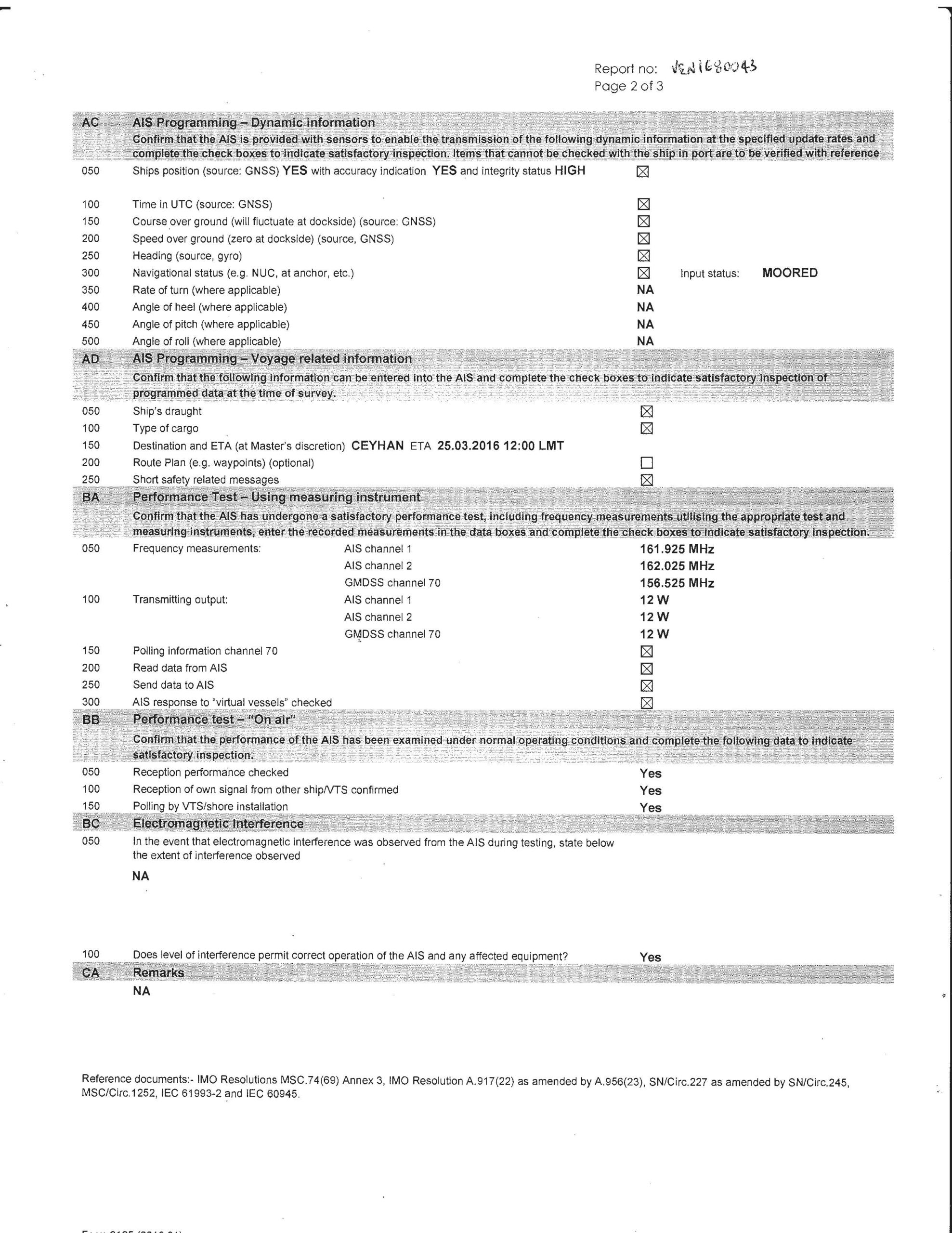
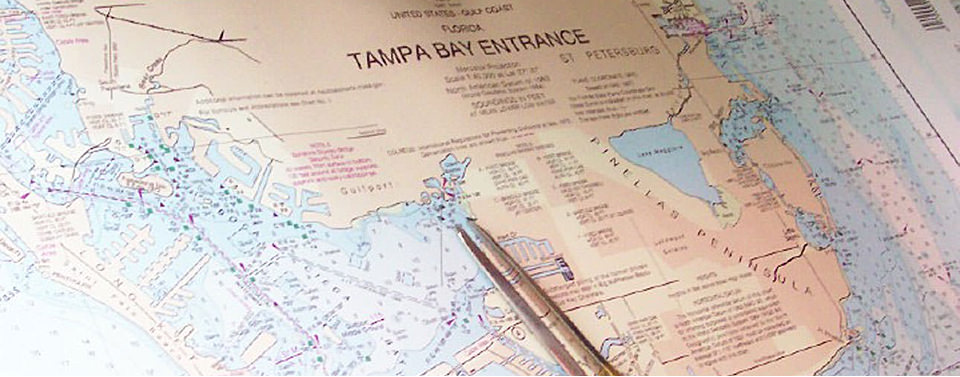
AIS Test Report
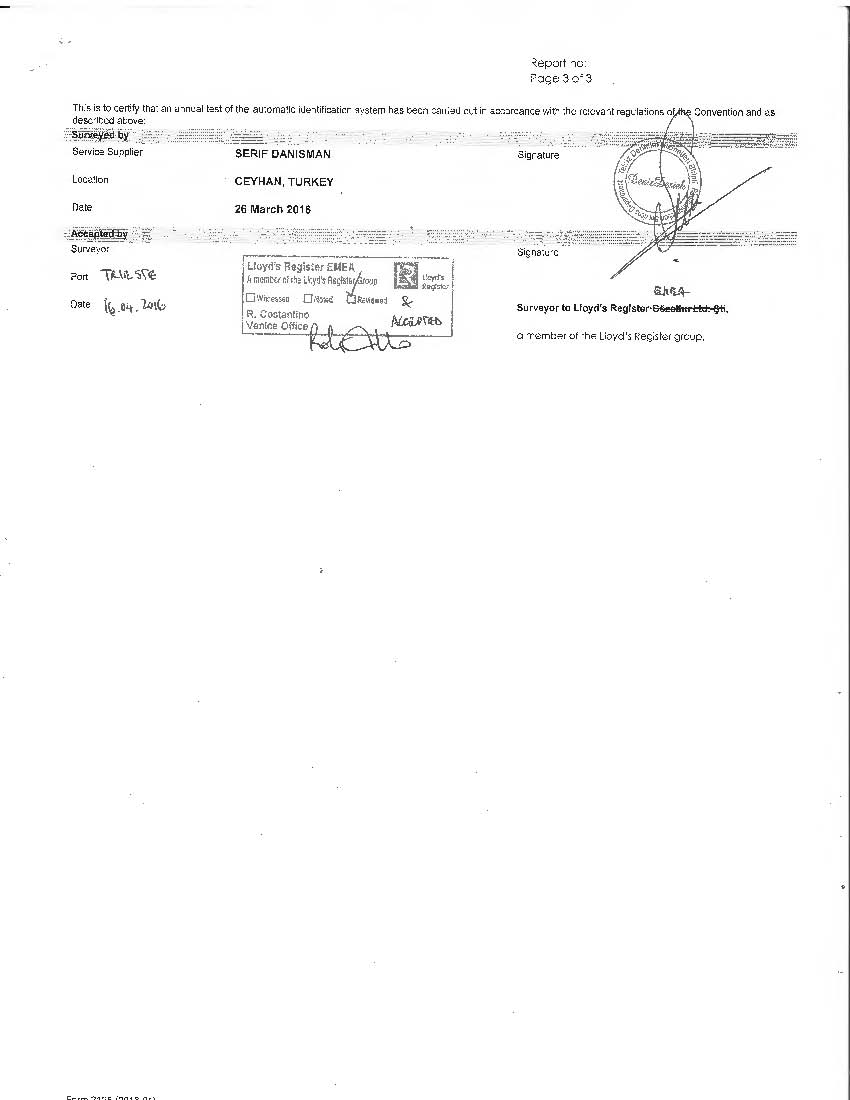
Nautical Charts and Publications
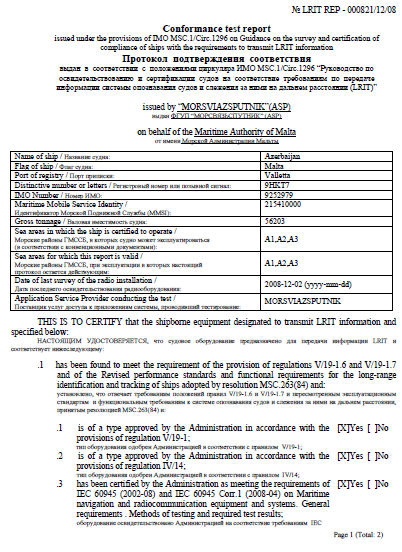
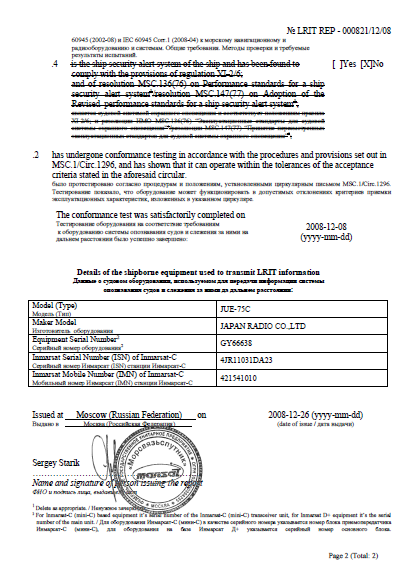
LRIT Conformance test report
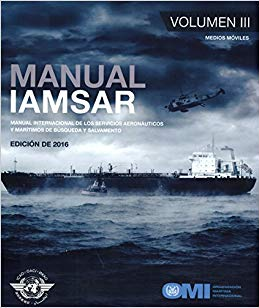
International Code of Signals and a copy of Volume III of IAMSAR Manual
Records for pilot ladders used for pilot transfer
All pilot ladders used for pilot transfer shall be clearly identified with tags or other permanent marking so as to enable identification of each appliance for the purposes of survey, inspection and record keeping. A record shall be kept on the ship as to the date the identified ladder is placed into service and any repairs effected.Record of navigational activities
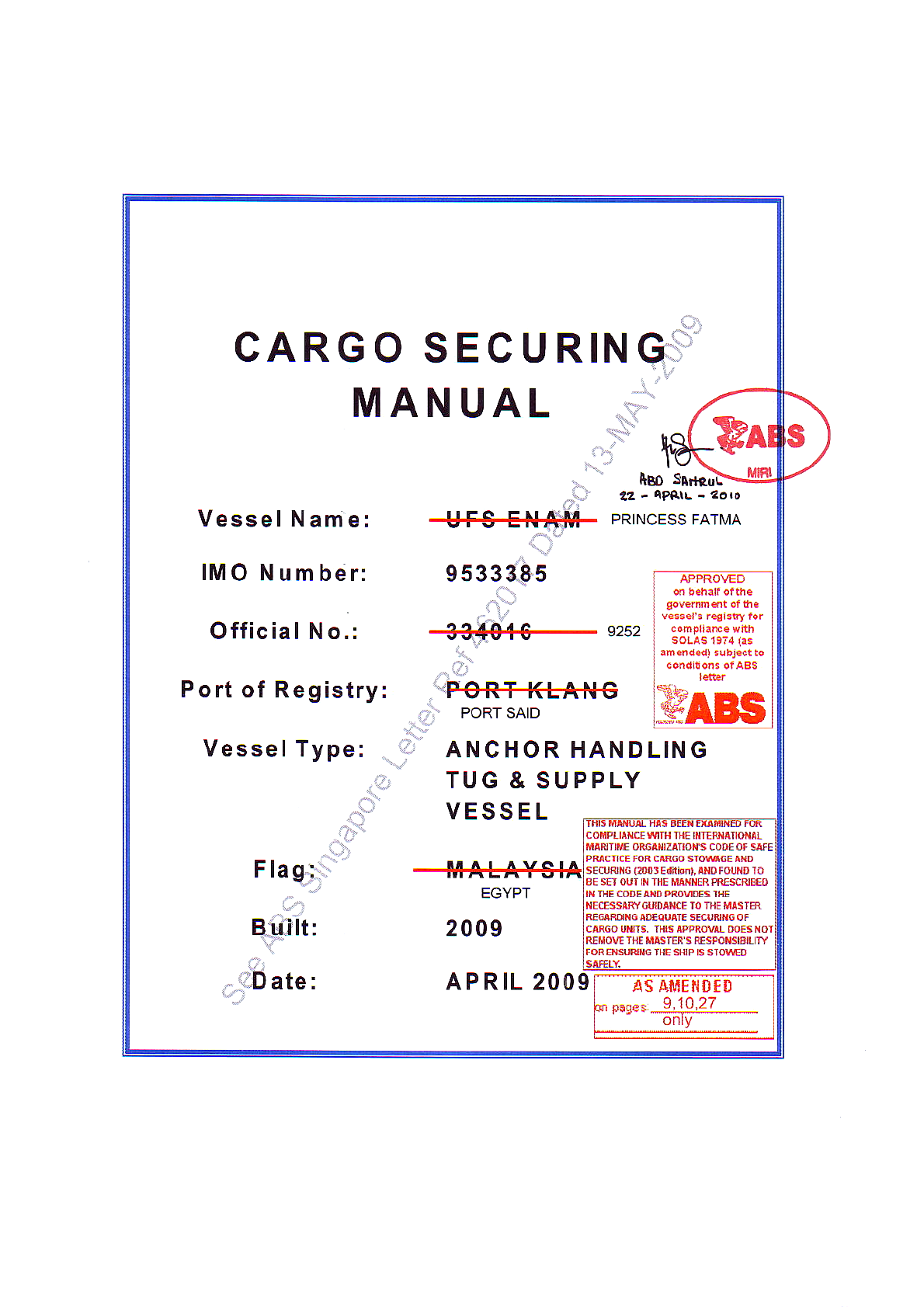
All ships engaged on international voyages shall keep on board a record of navigational activities and incidents including drills and pre-departure tests. When such information is not maintained in the ship’s logbook, it shall be maintained in another form approved by the Administration.Cargo Securing Manual
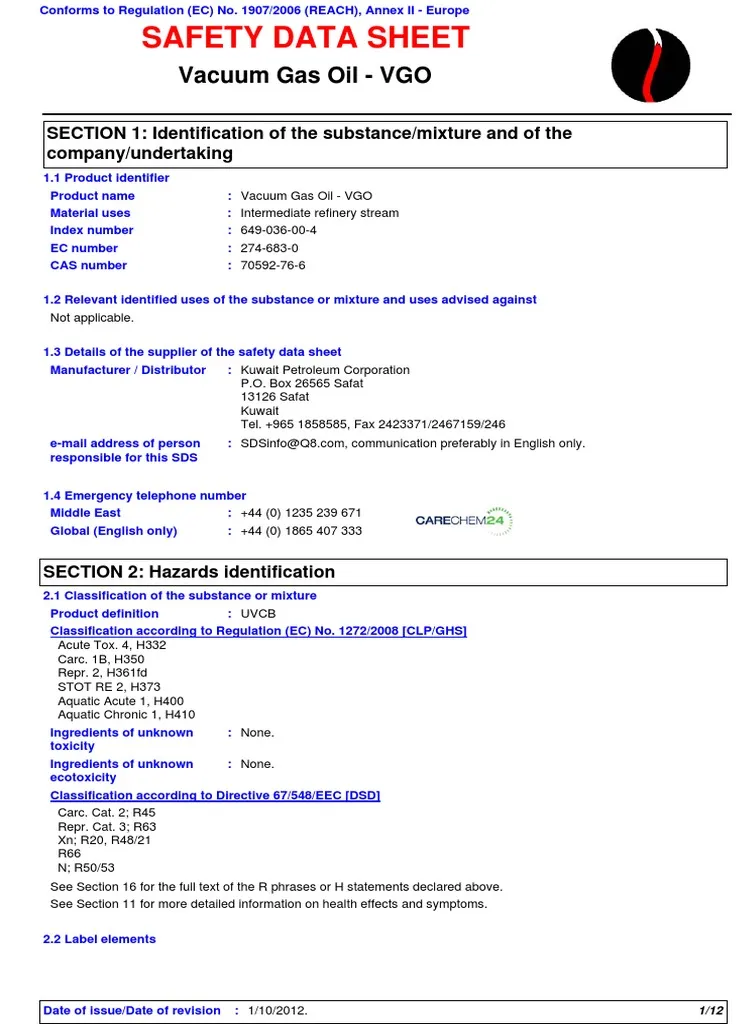
Material Safety Data Sheet (MSDS)
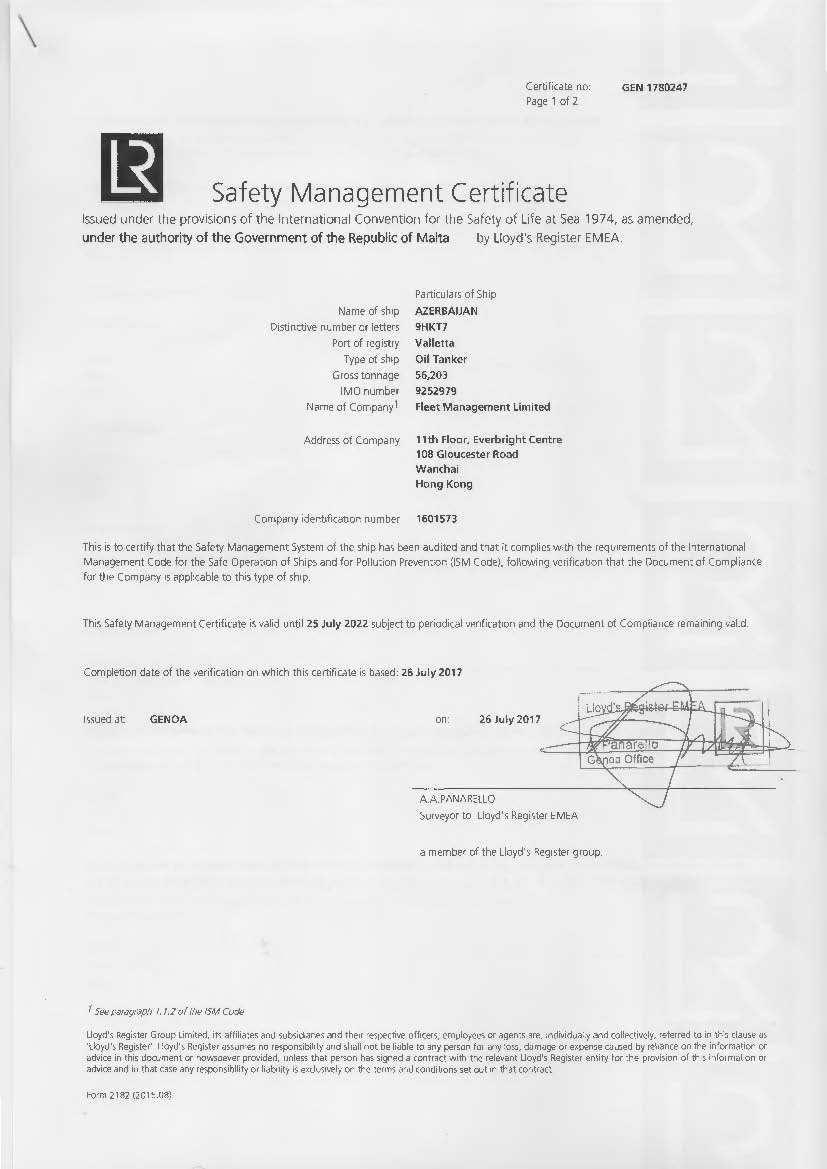
Safety Management Certificate

Document of Compliance


Continuous Synopsis Record (CSR)

Ship Security Plan and associated Records
Each ship shall carry on board a ship security plan approved by the Administration. The plan shall make provisions for the three security levels as defined in part A of the ISPS Code. Records of the following activities addressed in the ship security plan shall be kept on board for at least the minimum period specified by the Administration: .1 training, drills and exercises; .2 security threats and security incidents; .3 breaches of security; .4 changes in security level; .5 communications relating to the direct security of the ship such as specific threats to the ship or to port facilities the ship is, or has been, in; .6 internal audits and reviews of security activities; .7 periodic review of the ship security assessment; .8 periodic review of the ship security plan; .9 implementation of any amendments to the plan; and .10 maintenance, calibration and testing of any security equipment provided on board, including testing of the ship security alert system.International Ship Security Certificate (ISSC) or Interim International Ship Security Certificate
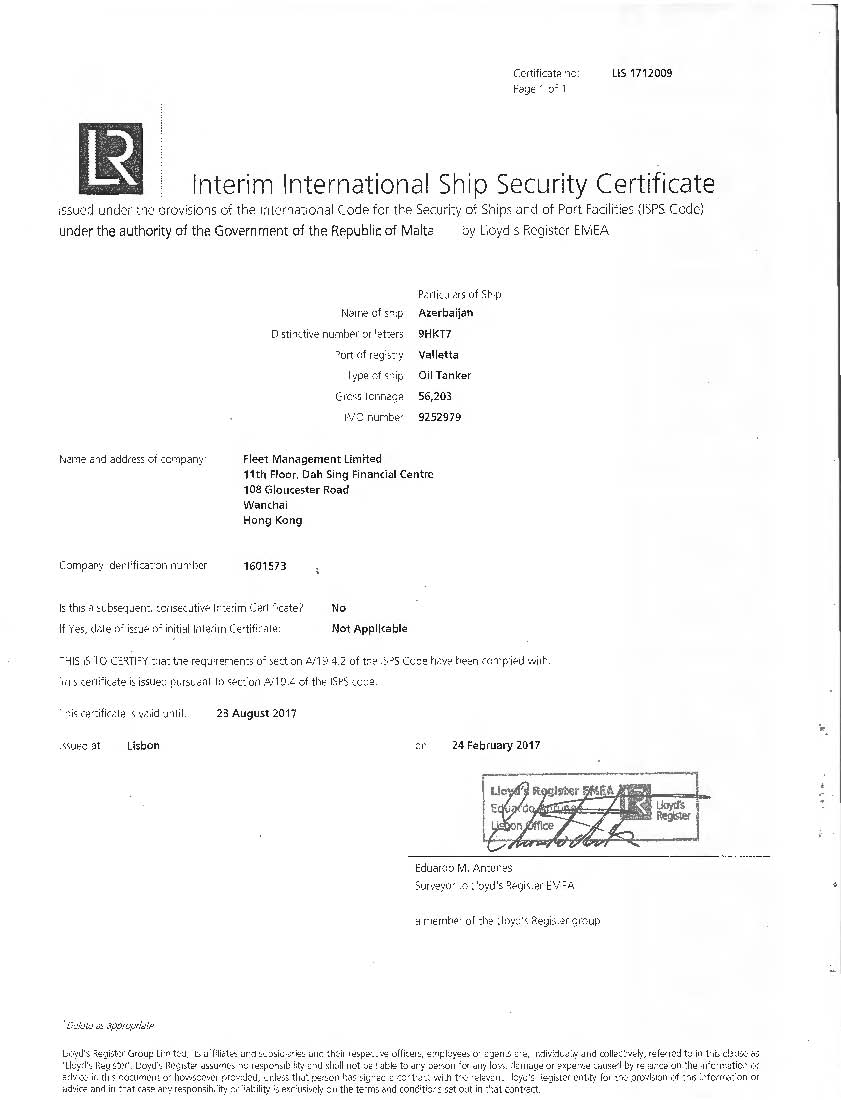
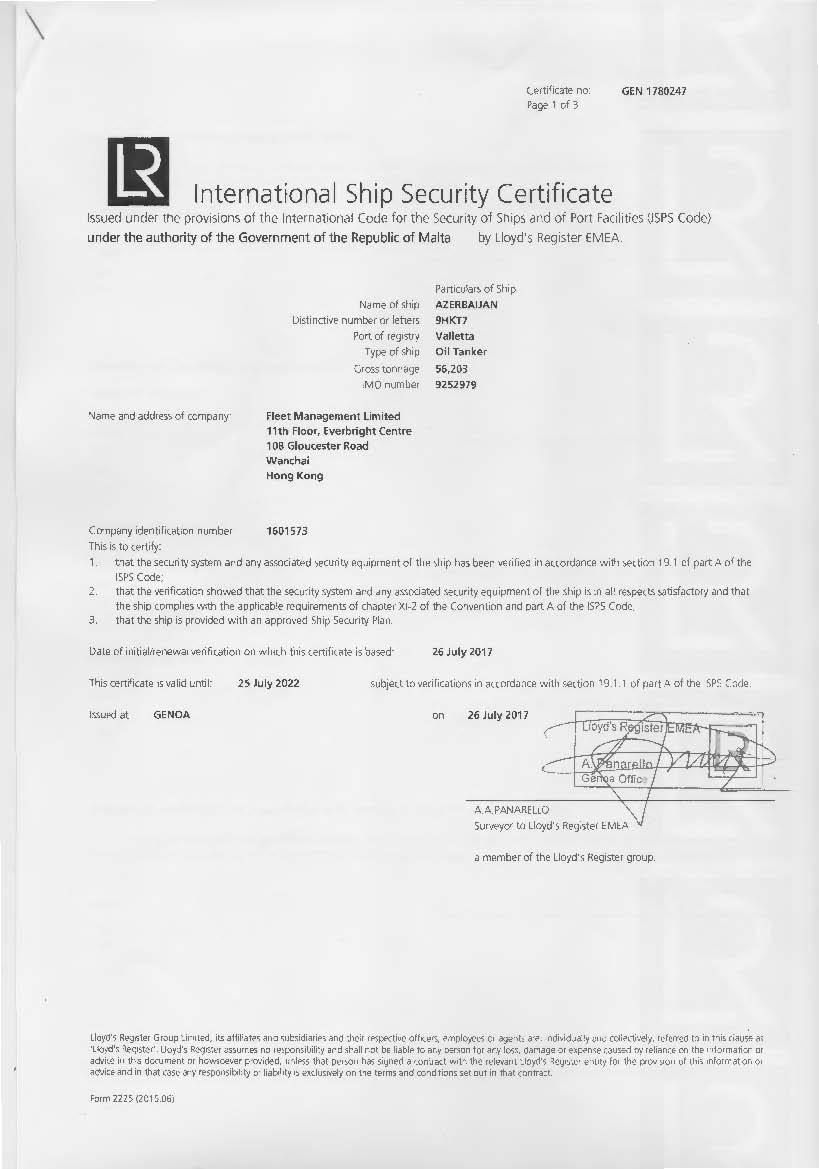
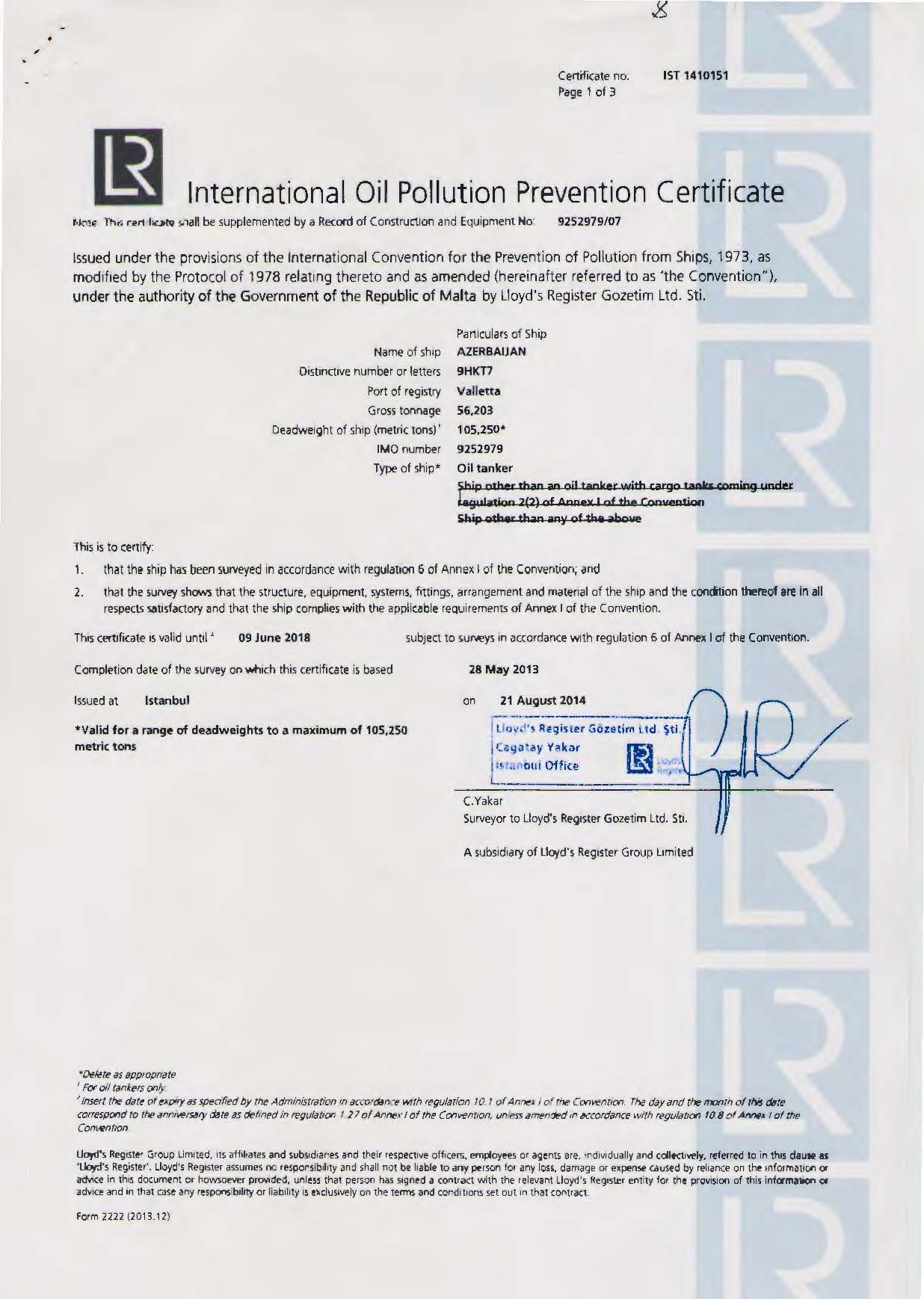
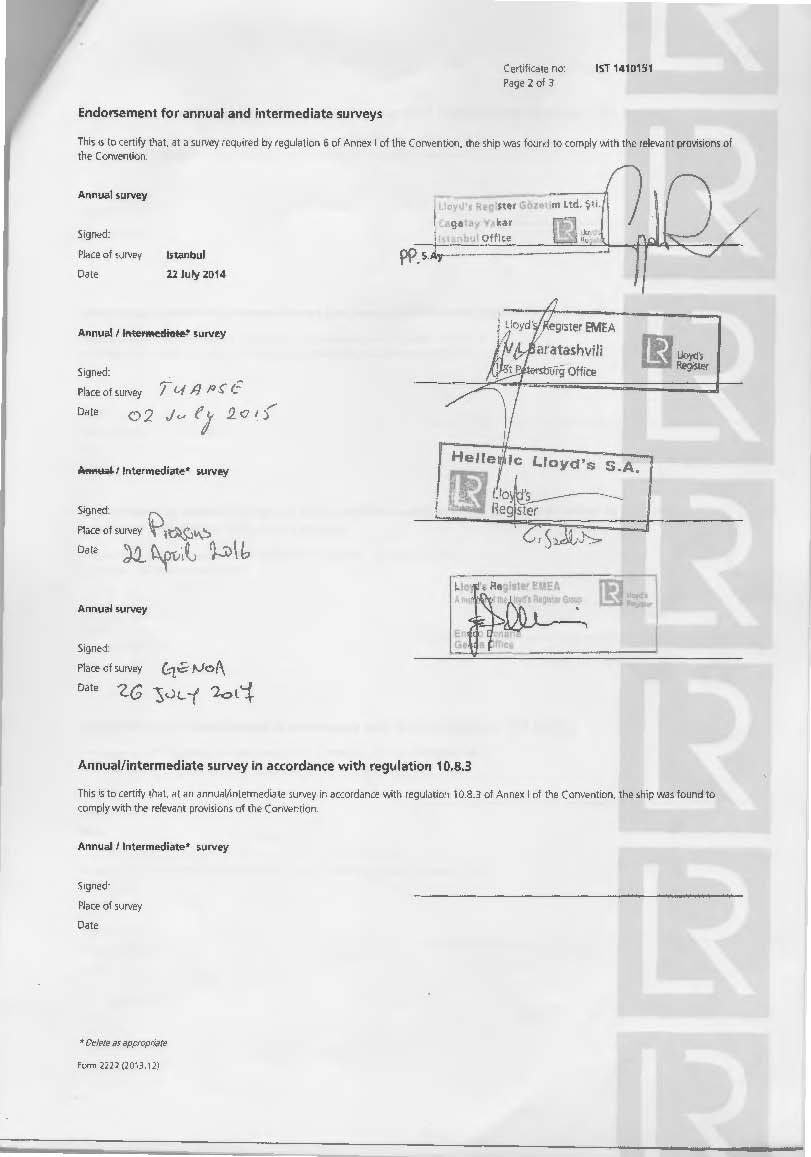
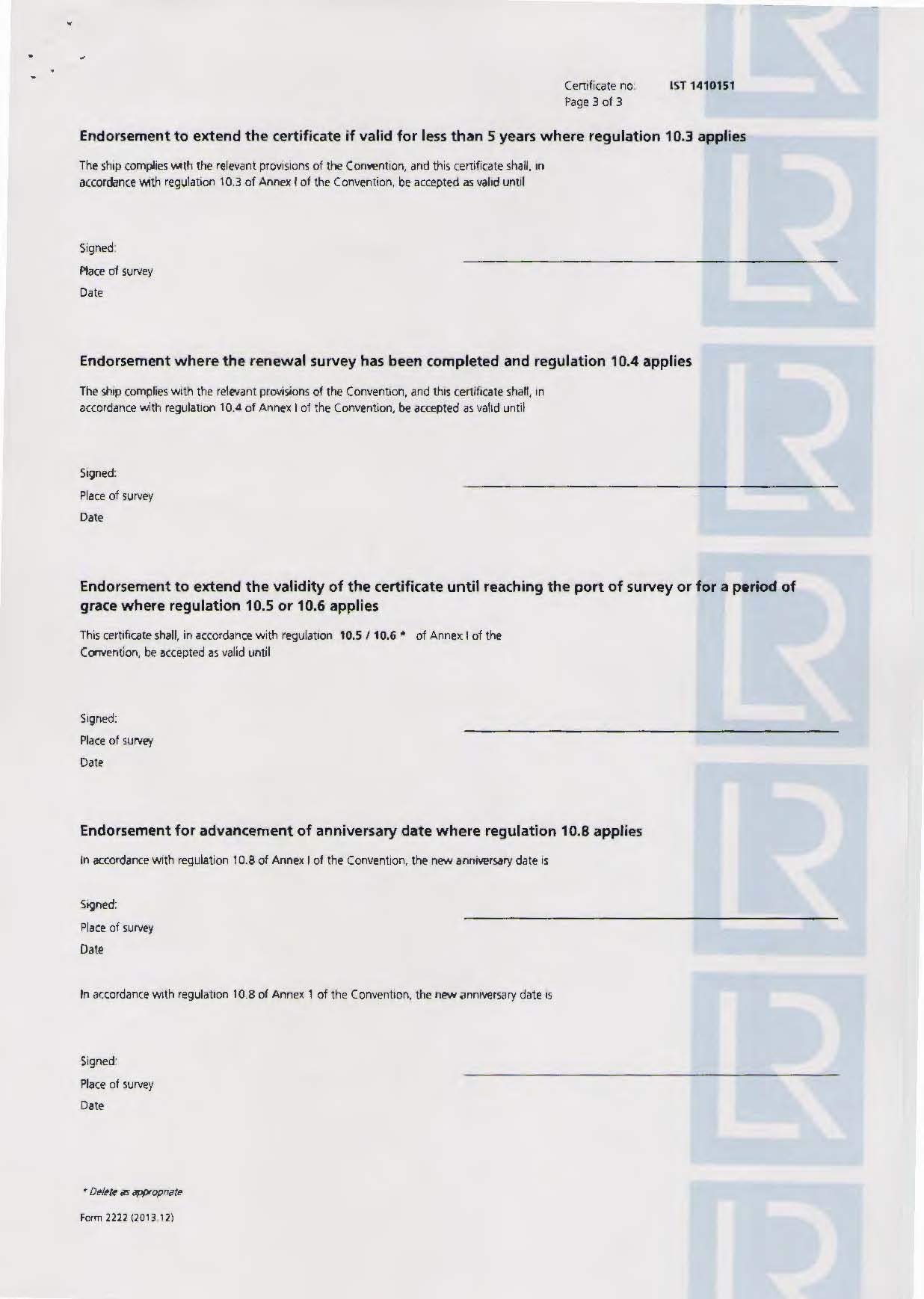
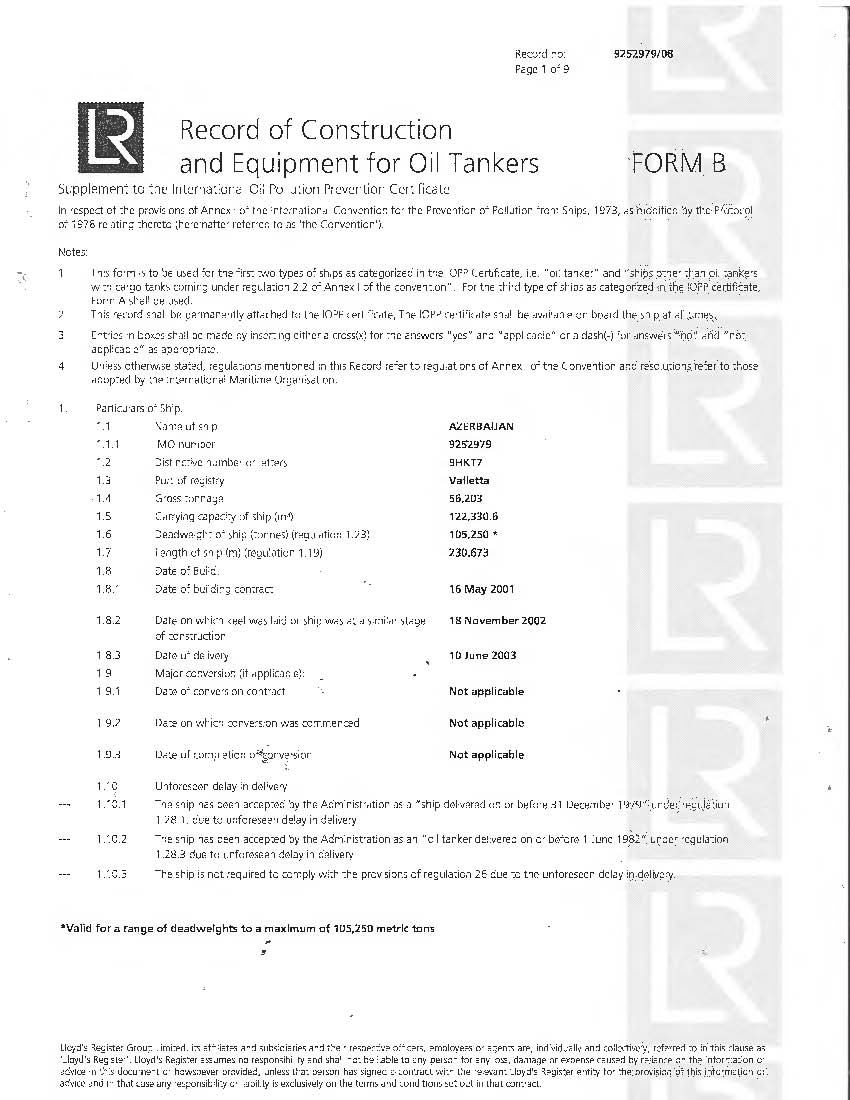
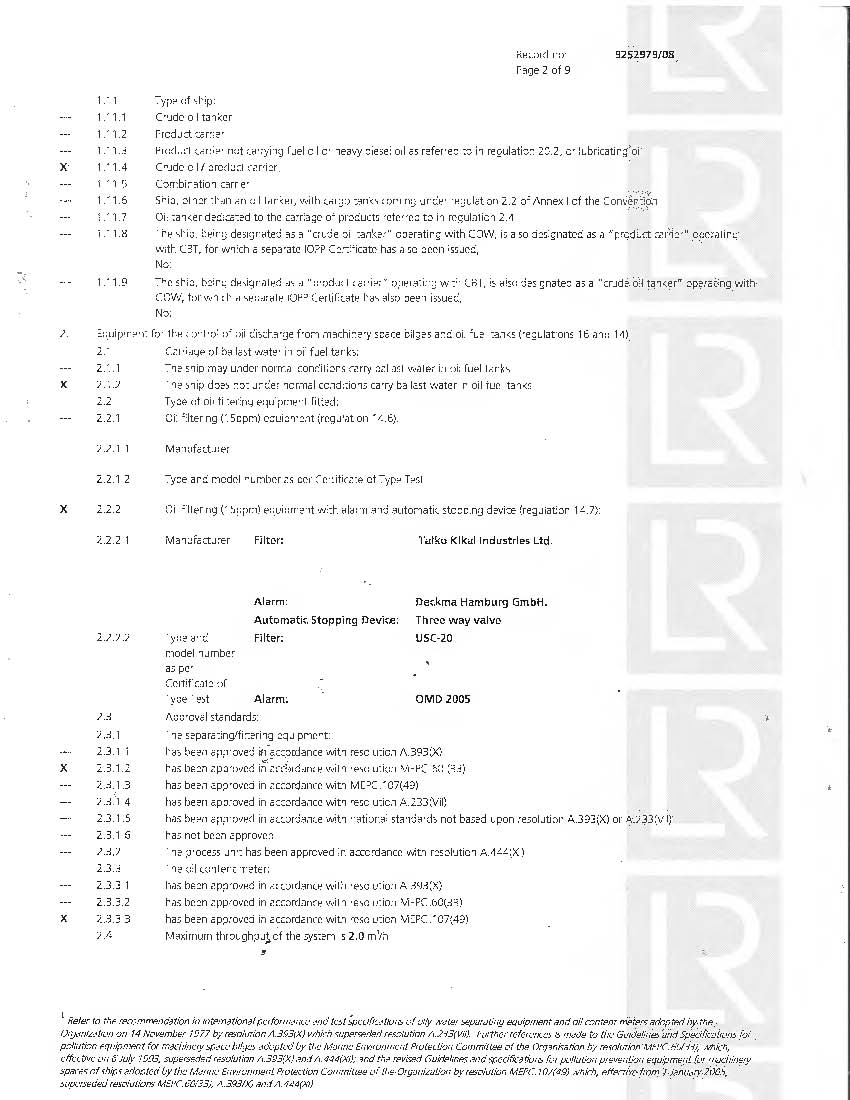
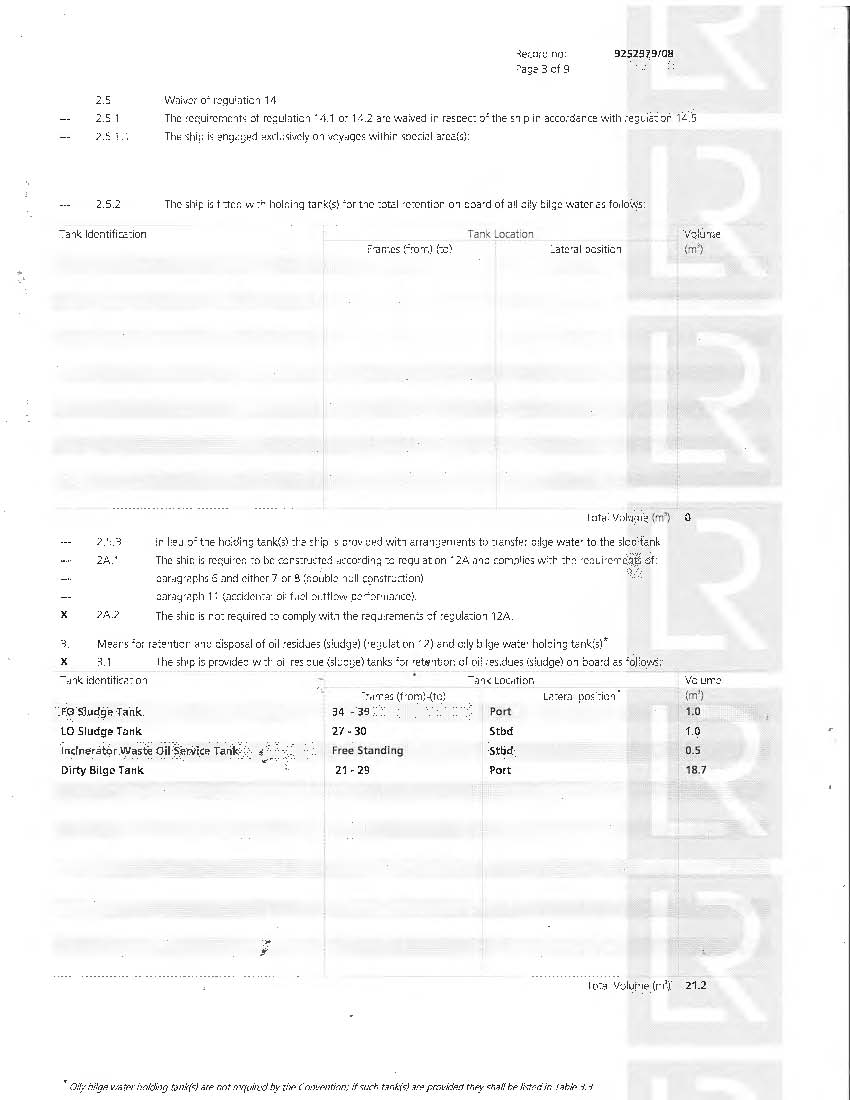
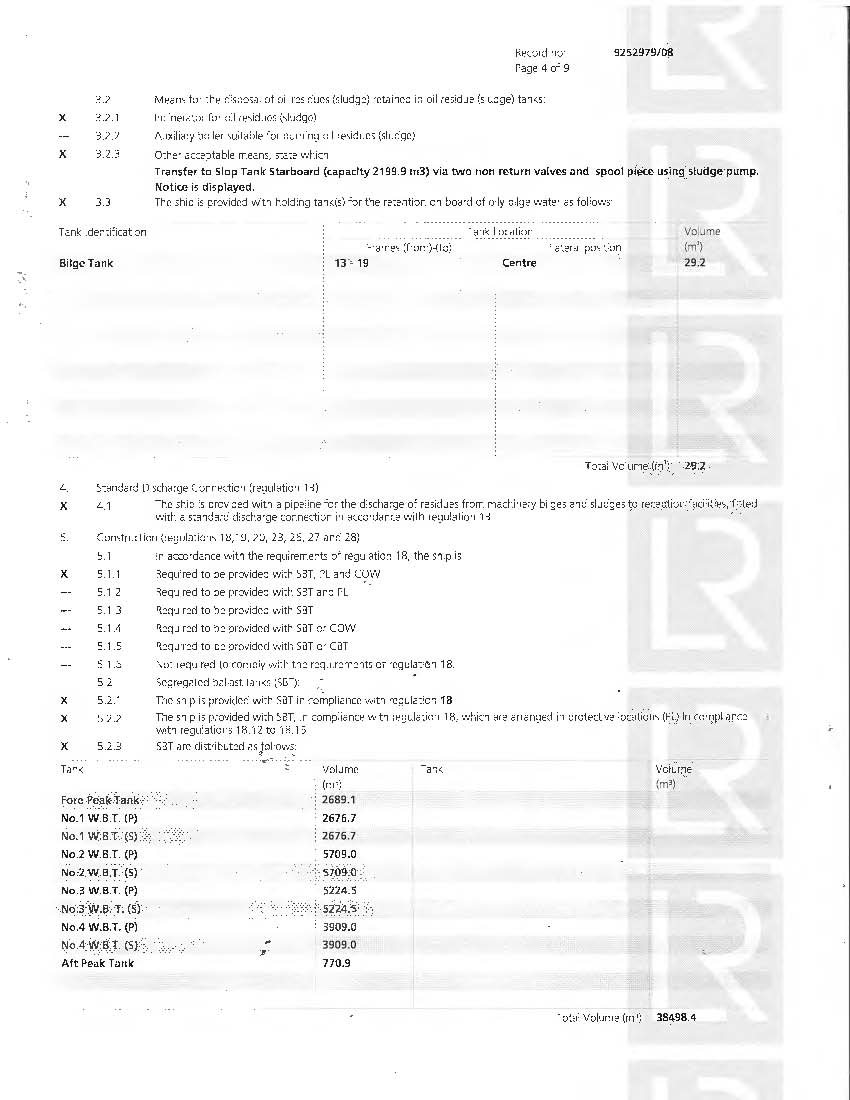
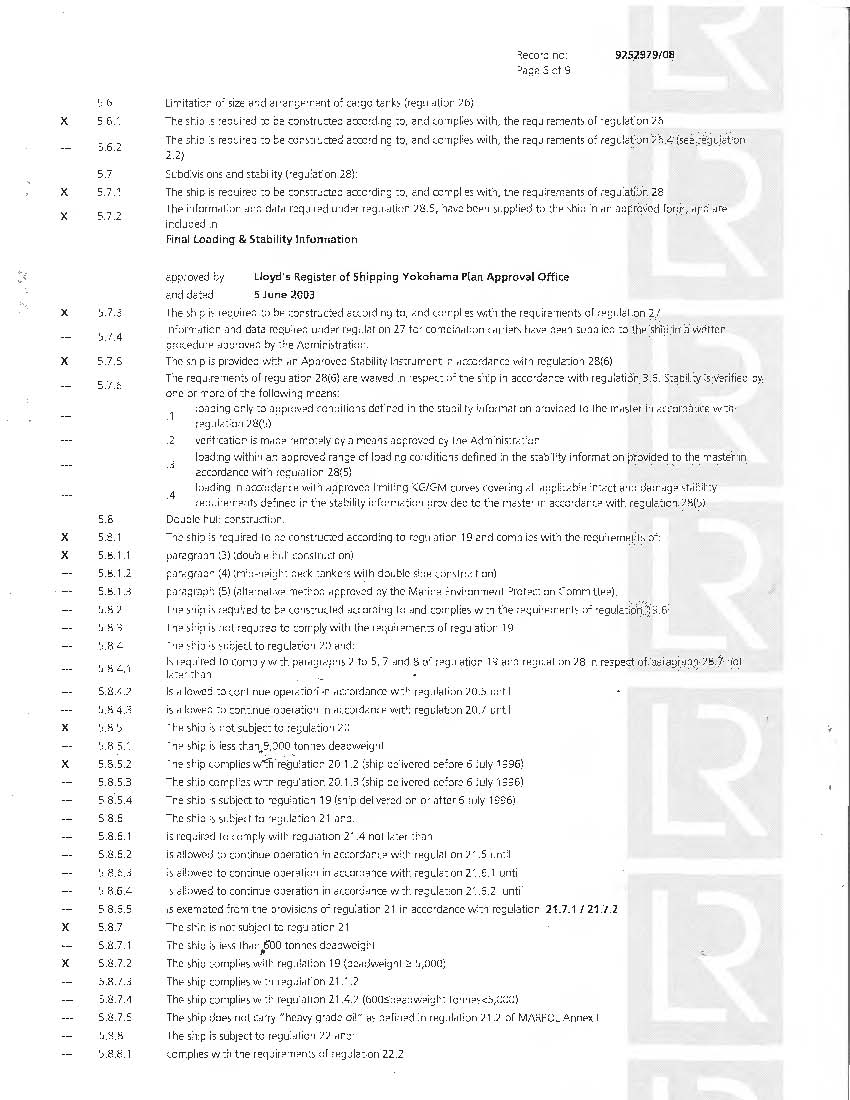
International Oil Pollution Prevention Certificate

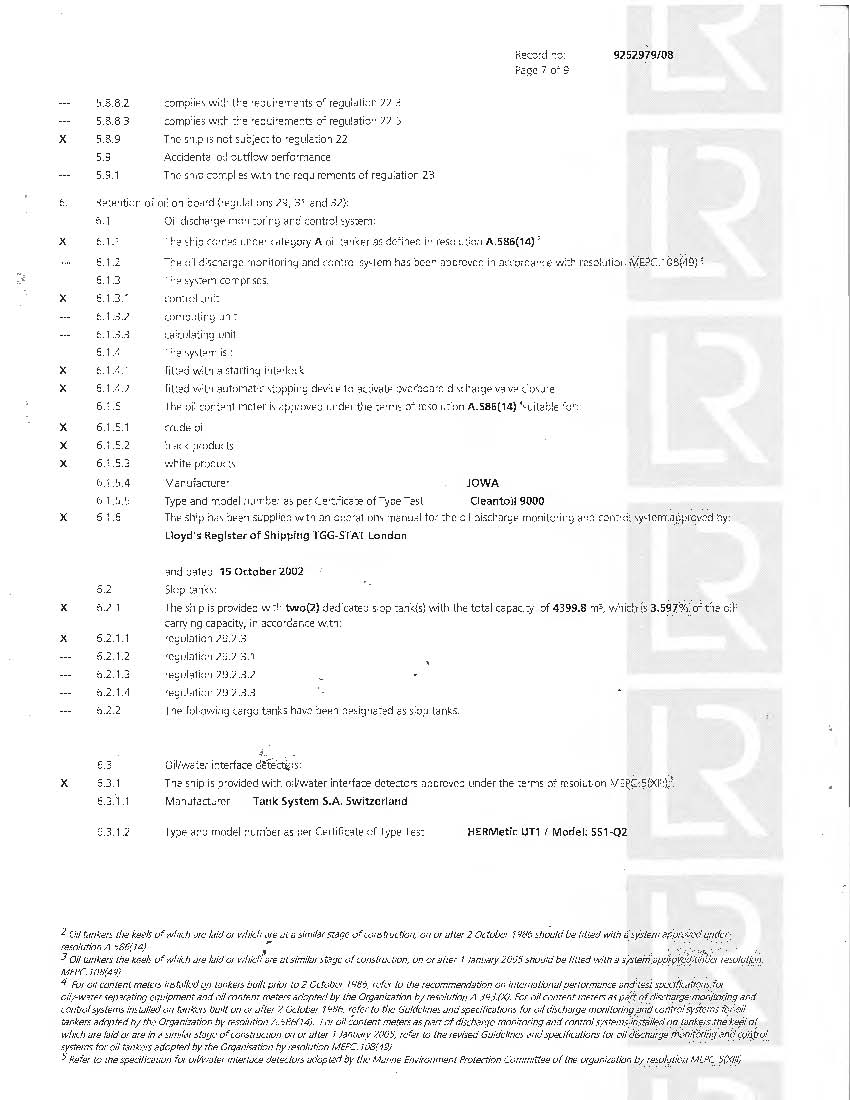
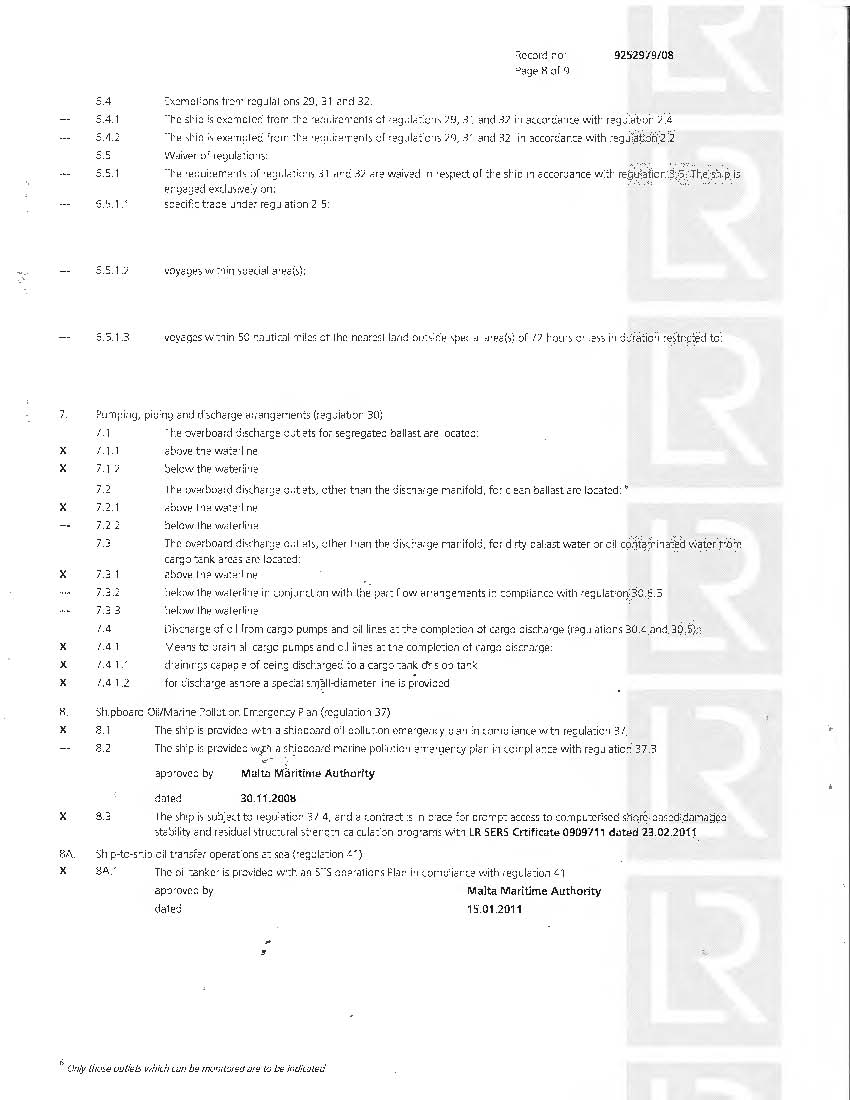
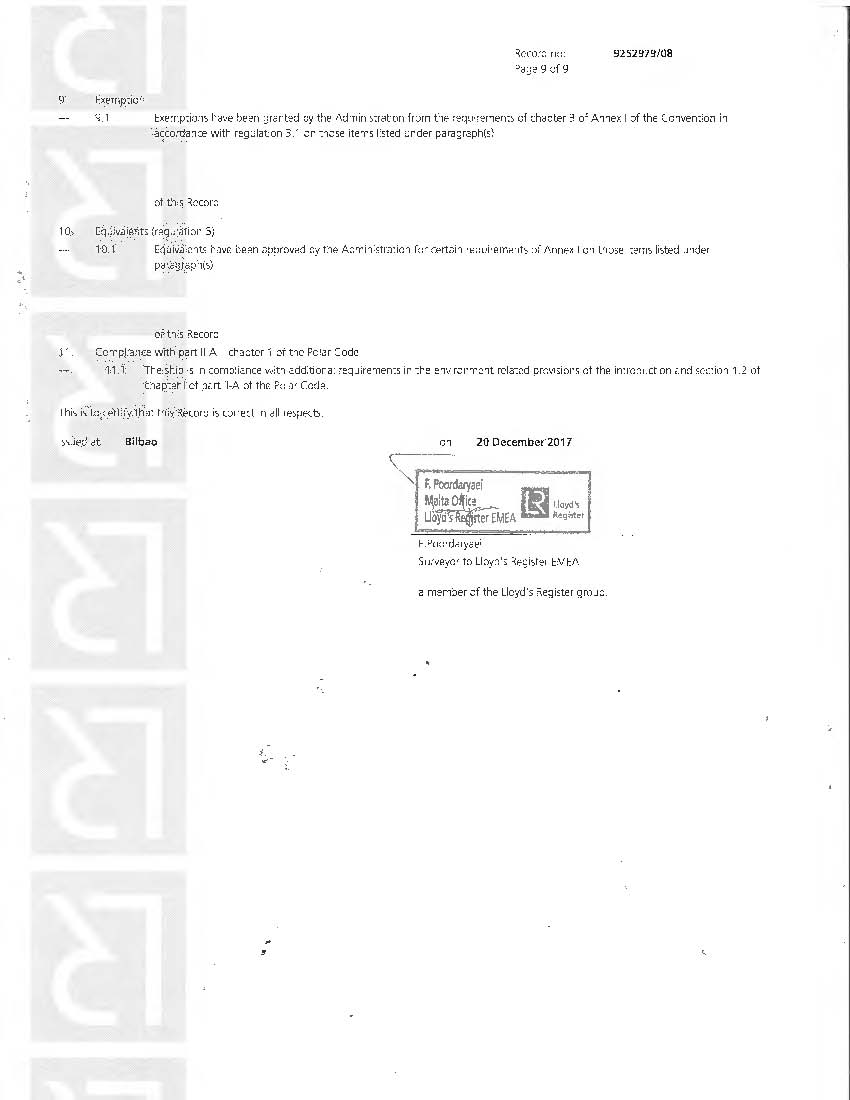
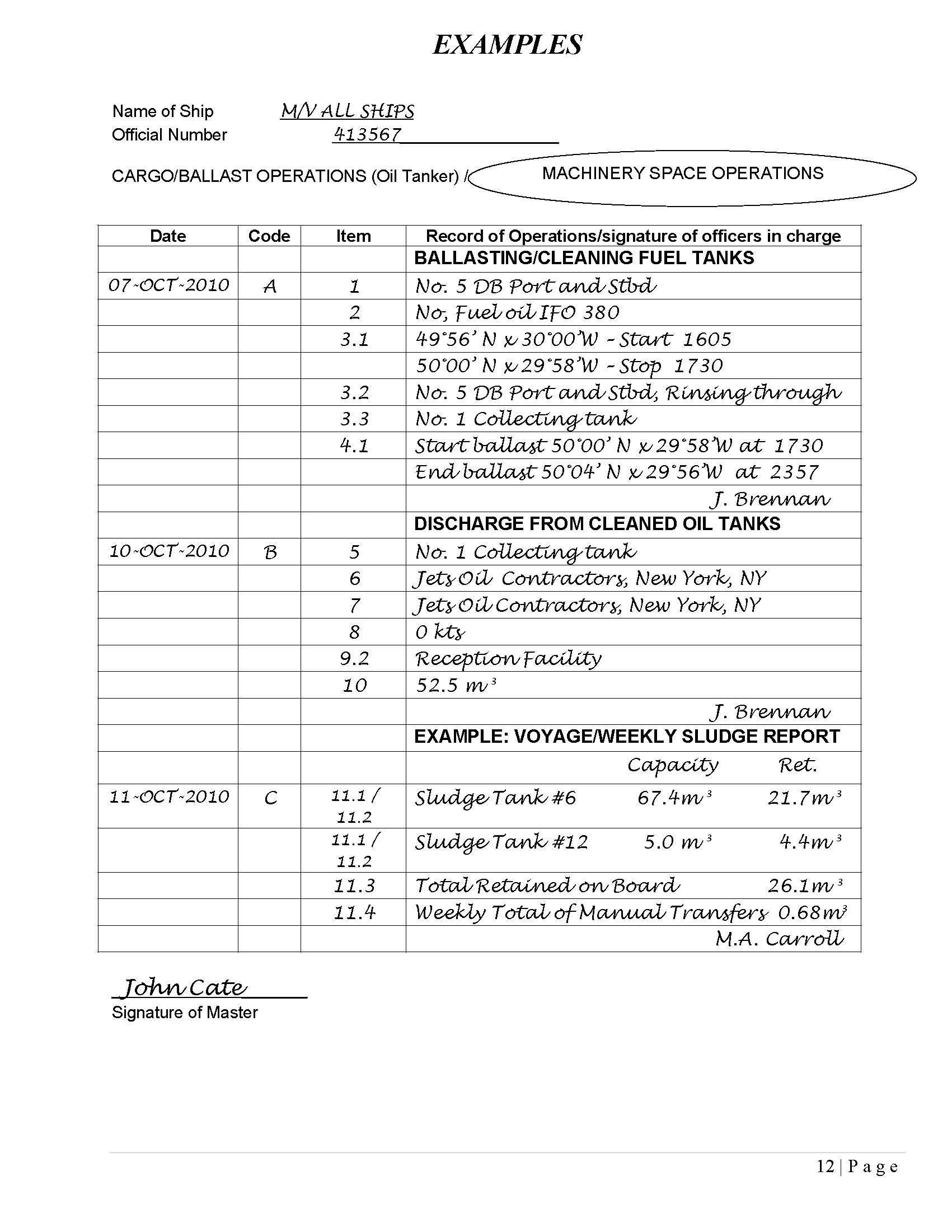
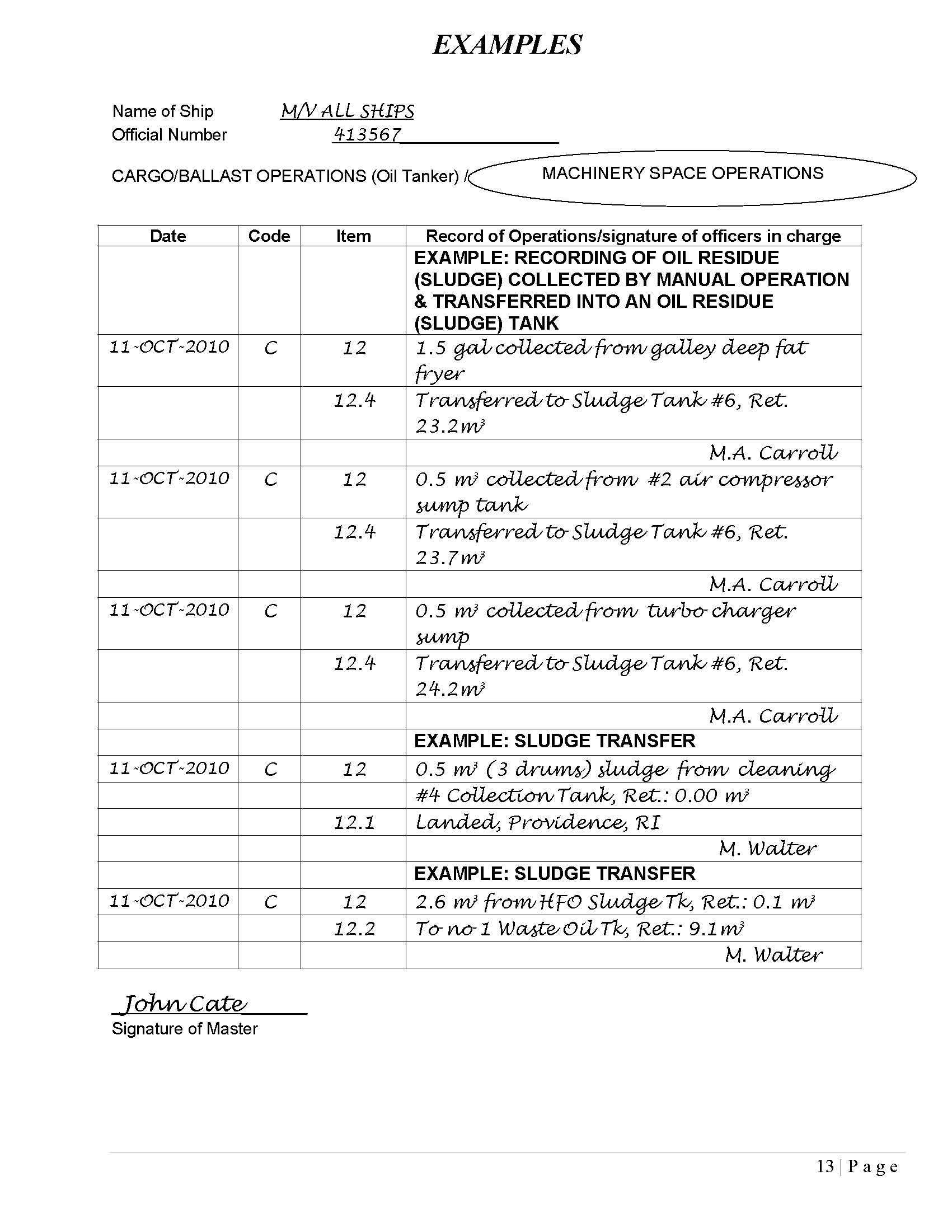
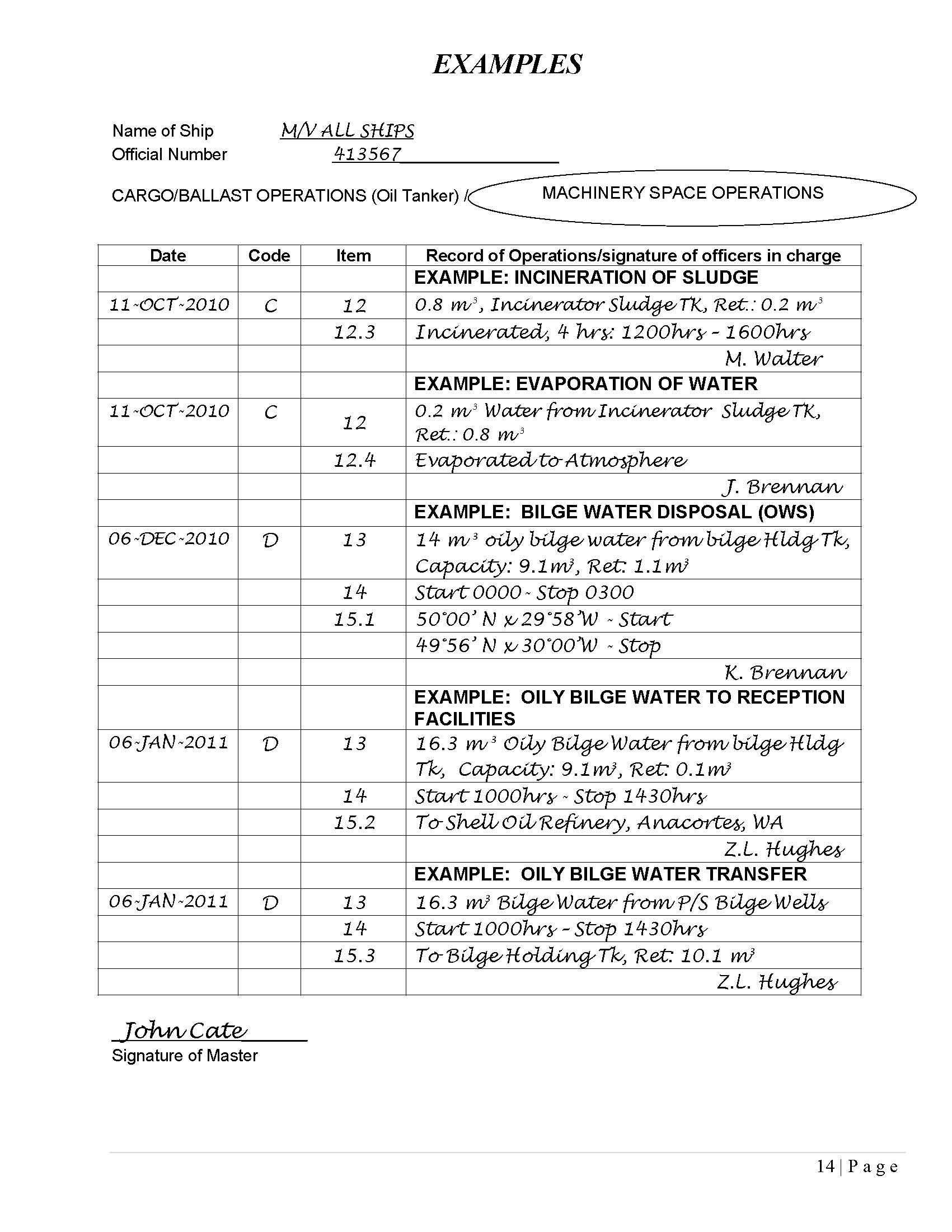
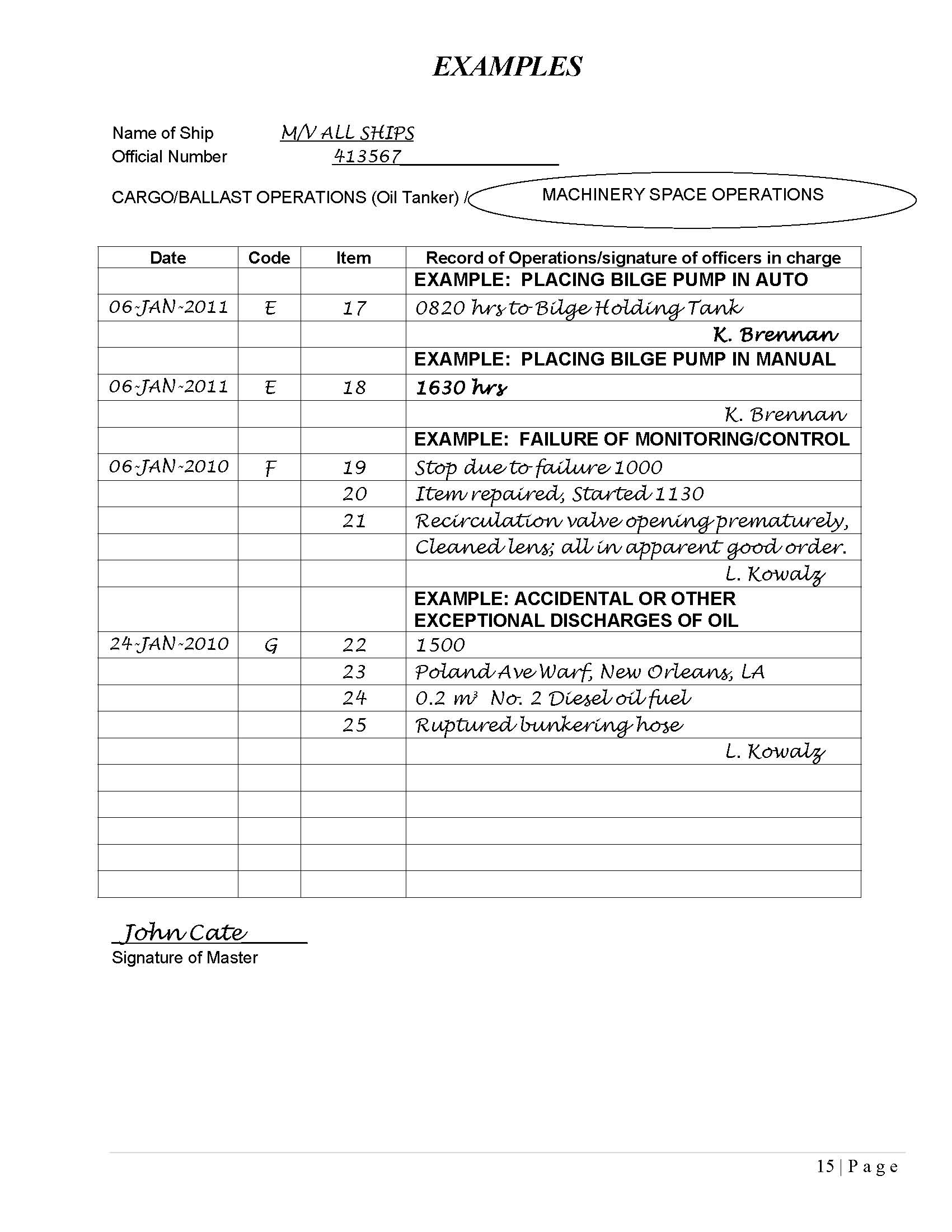
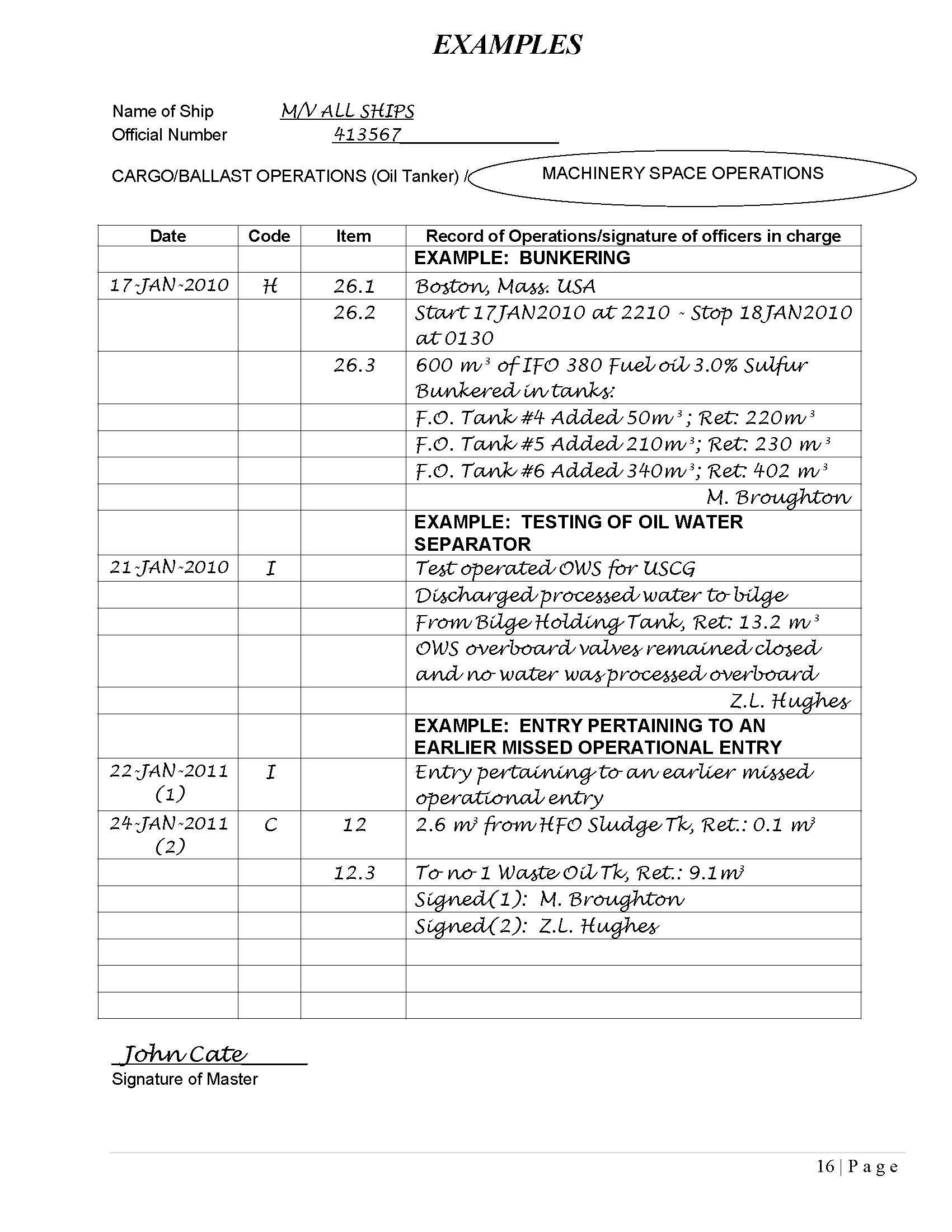
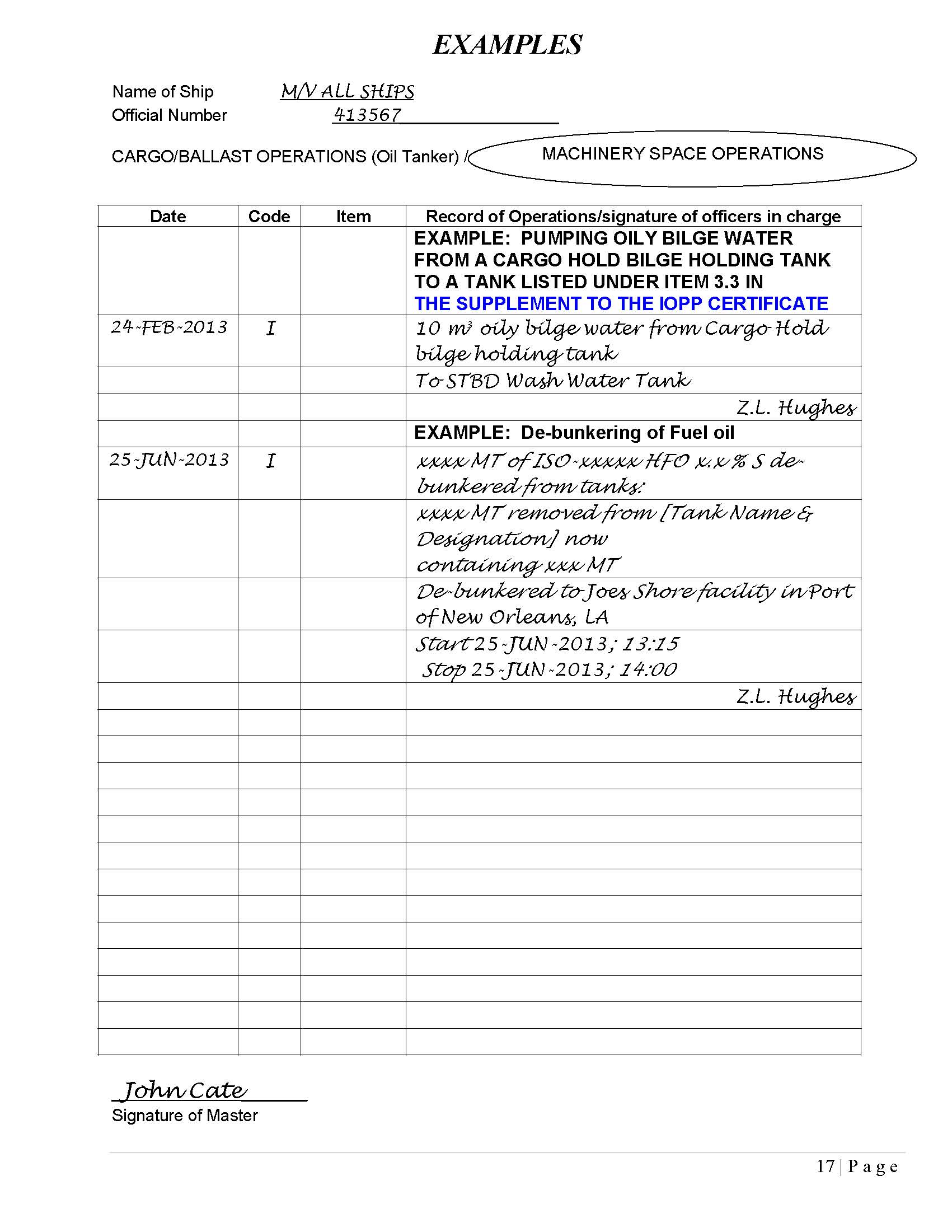
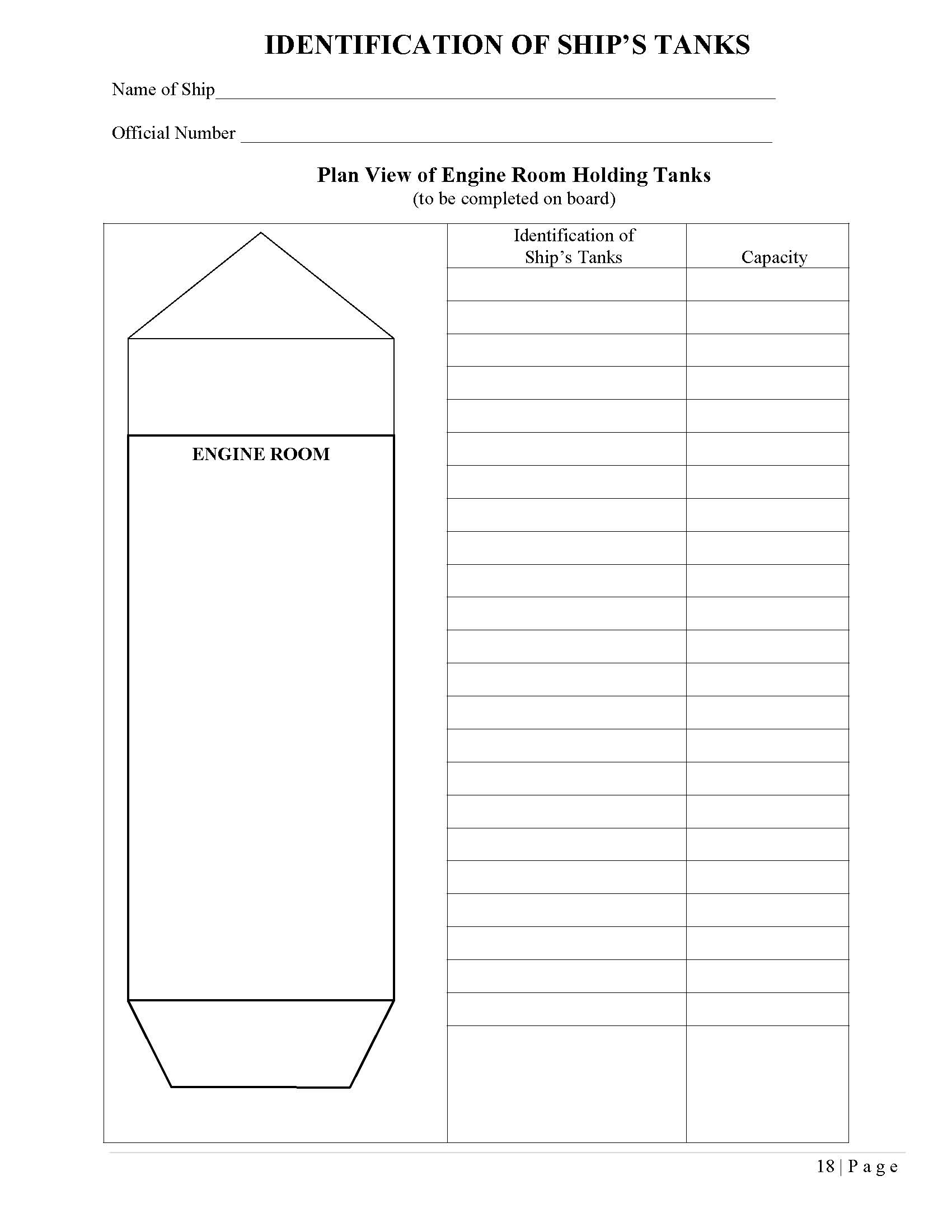
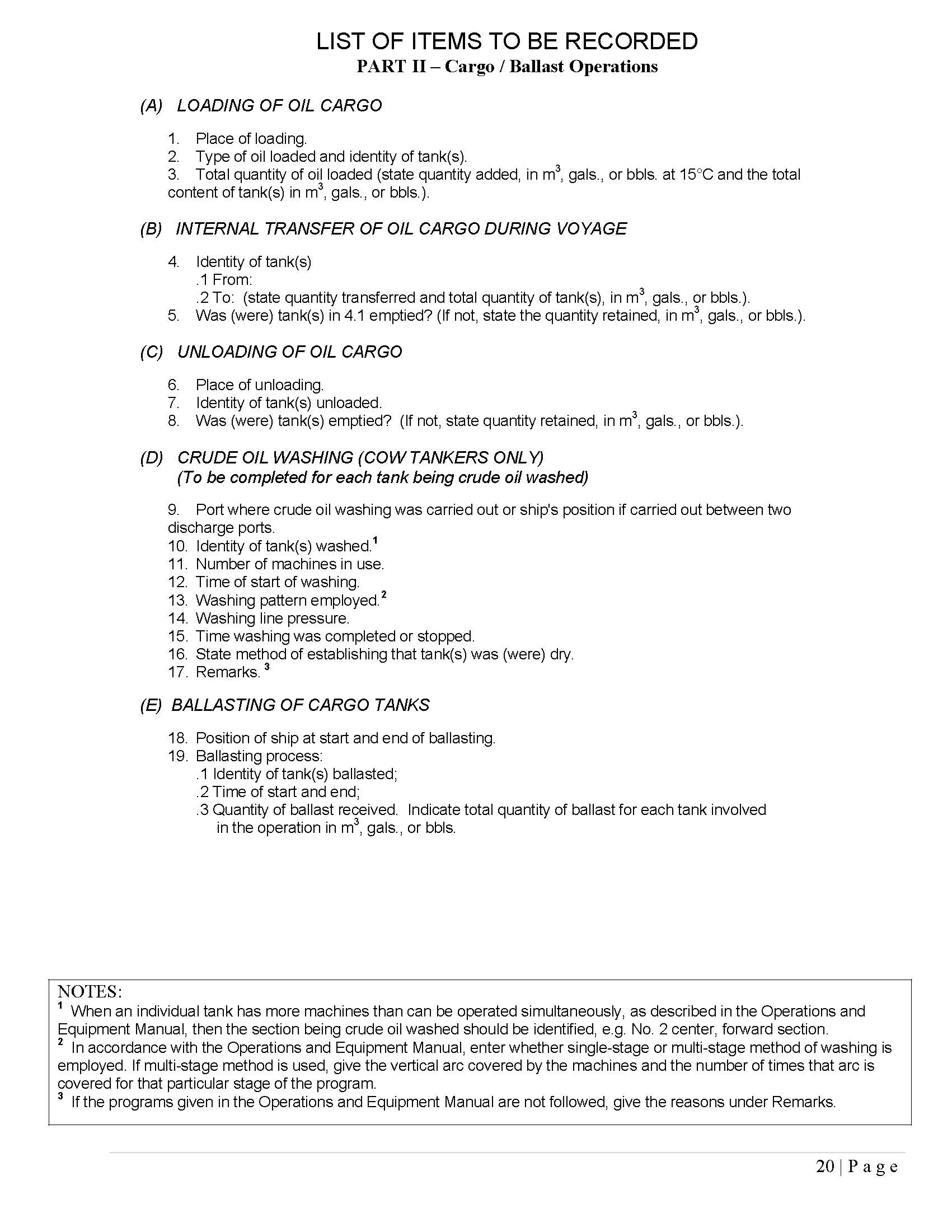
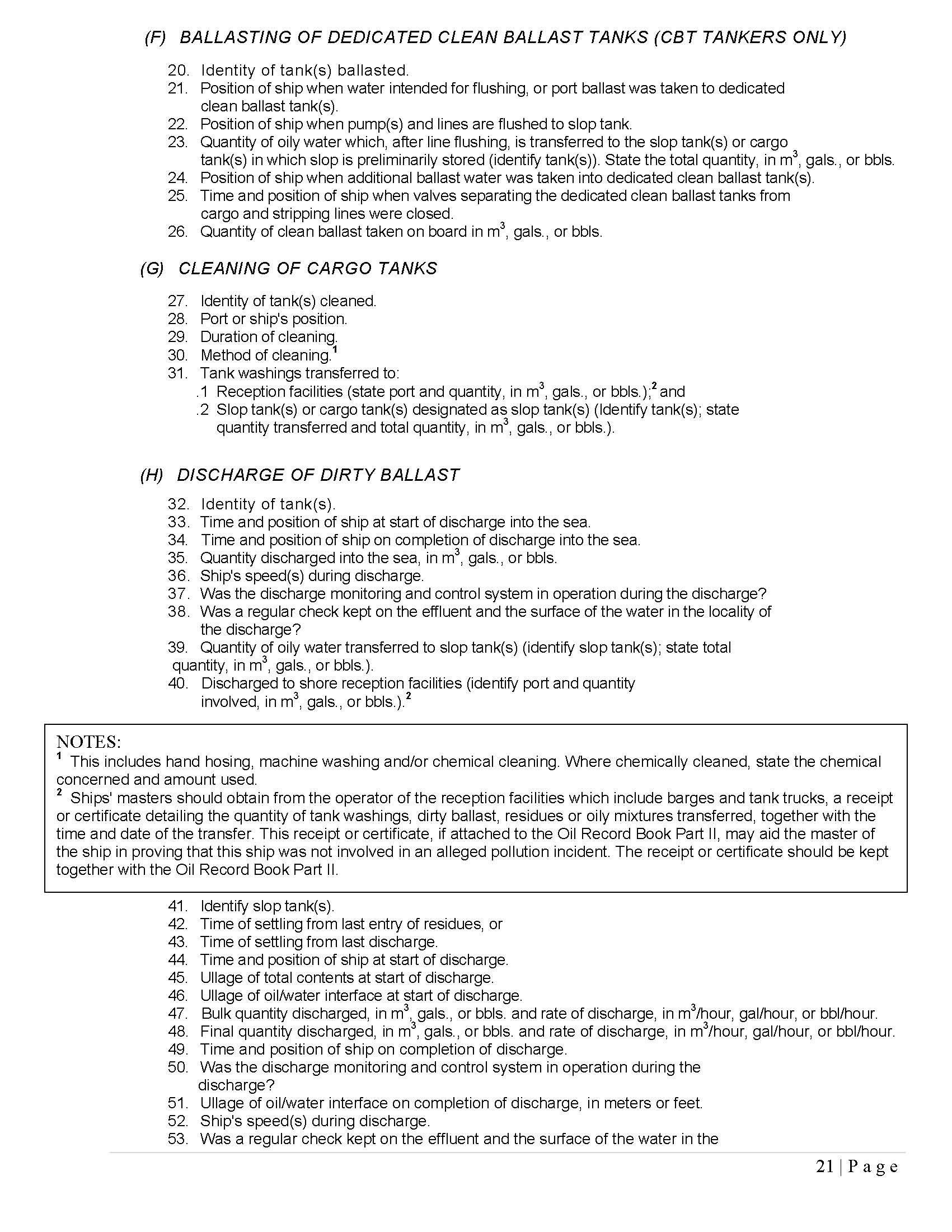
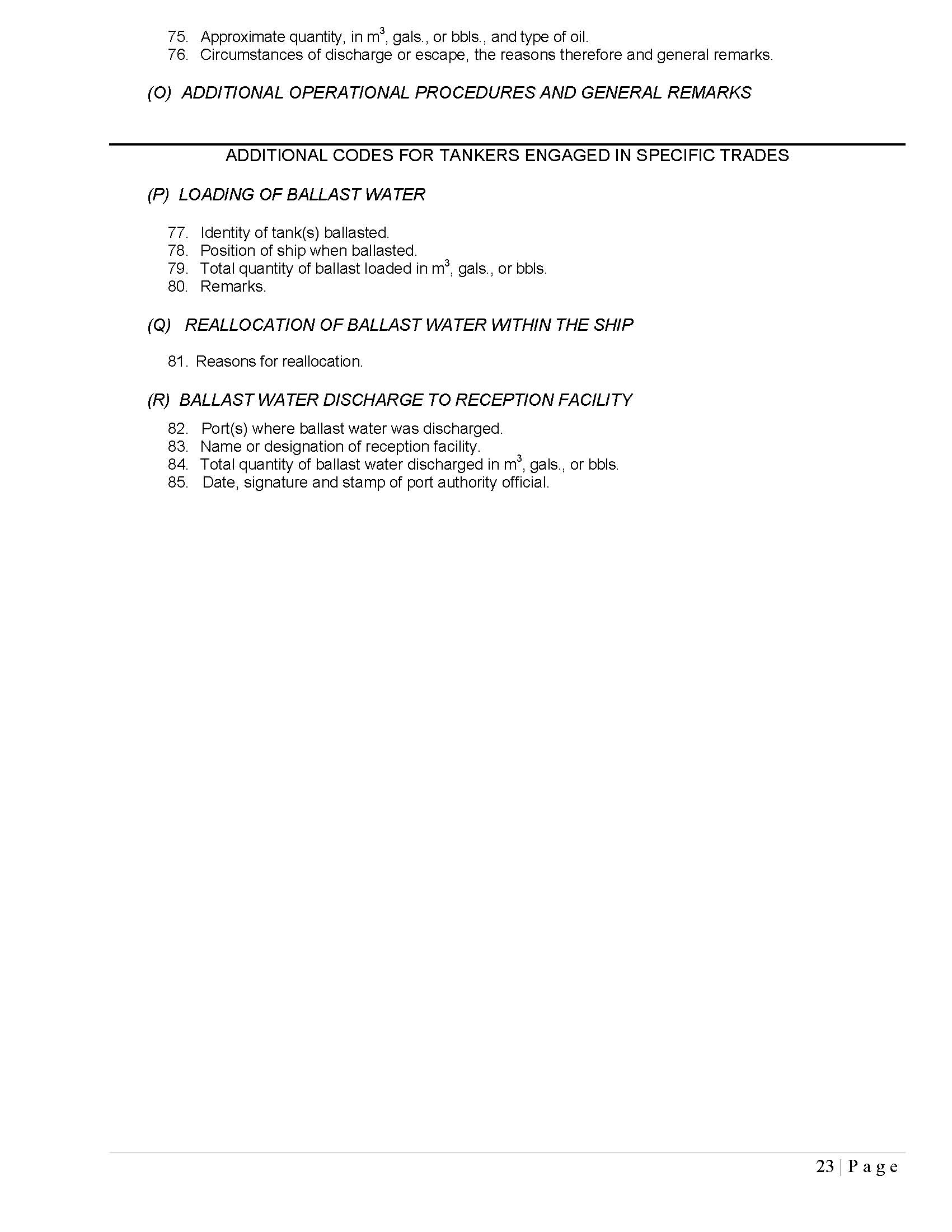
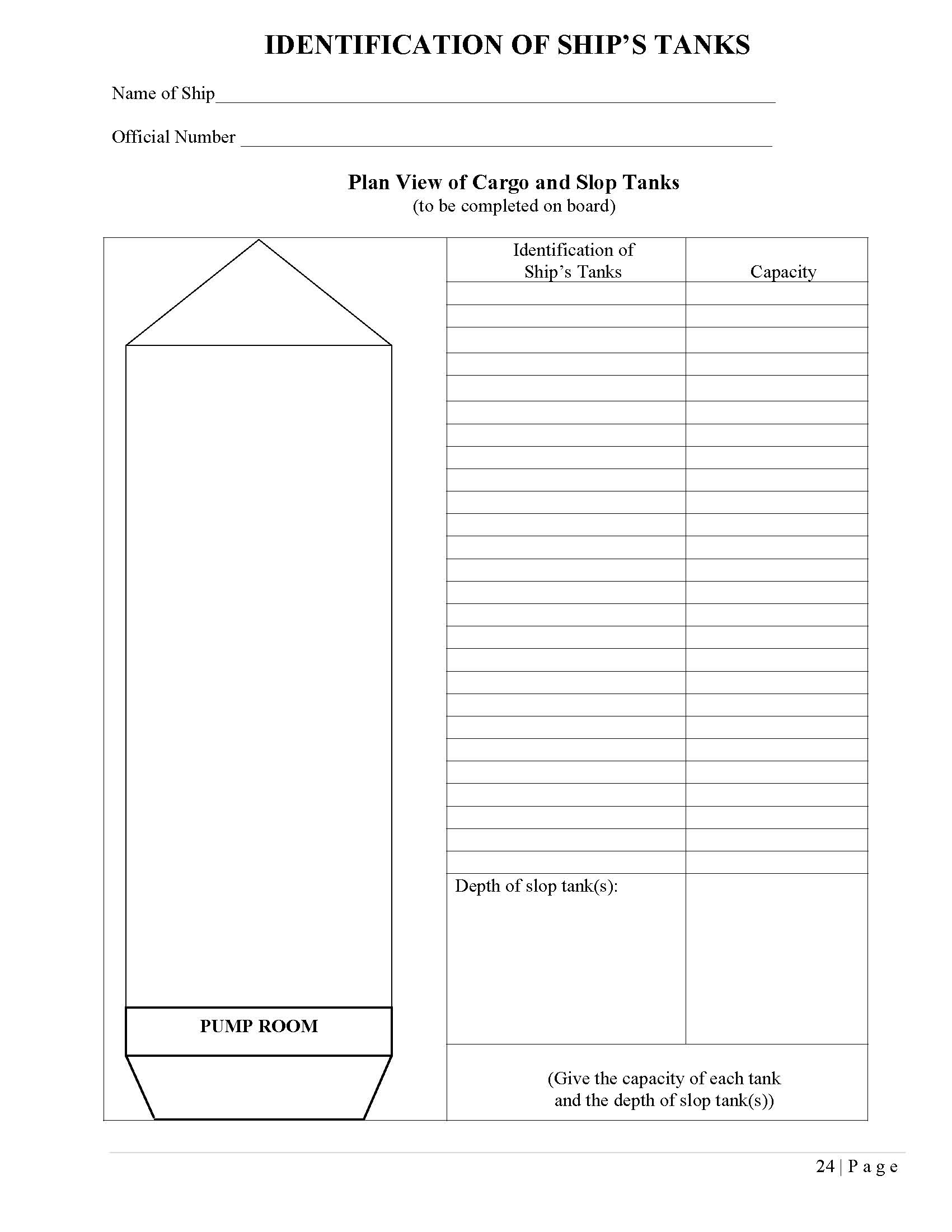
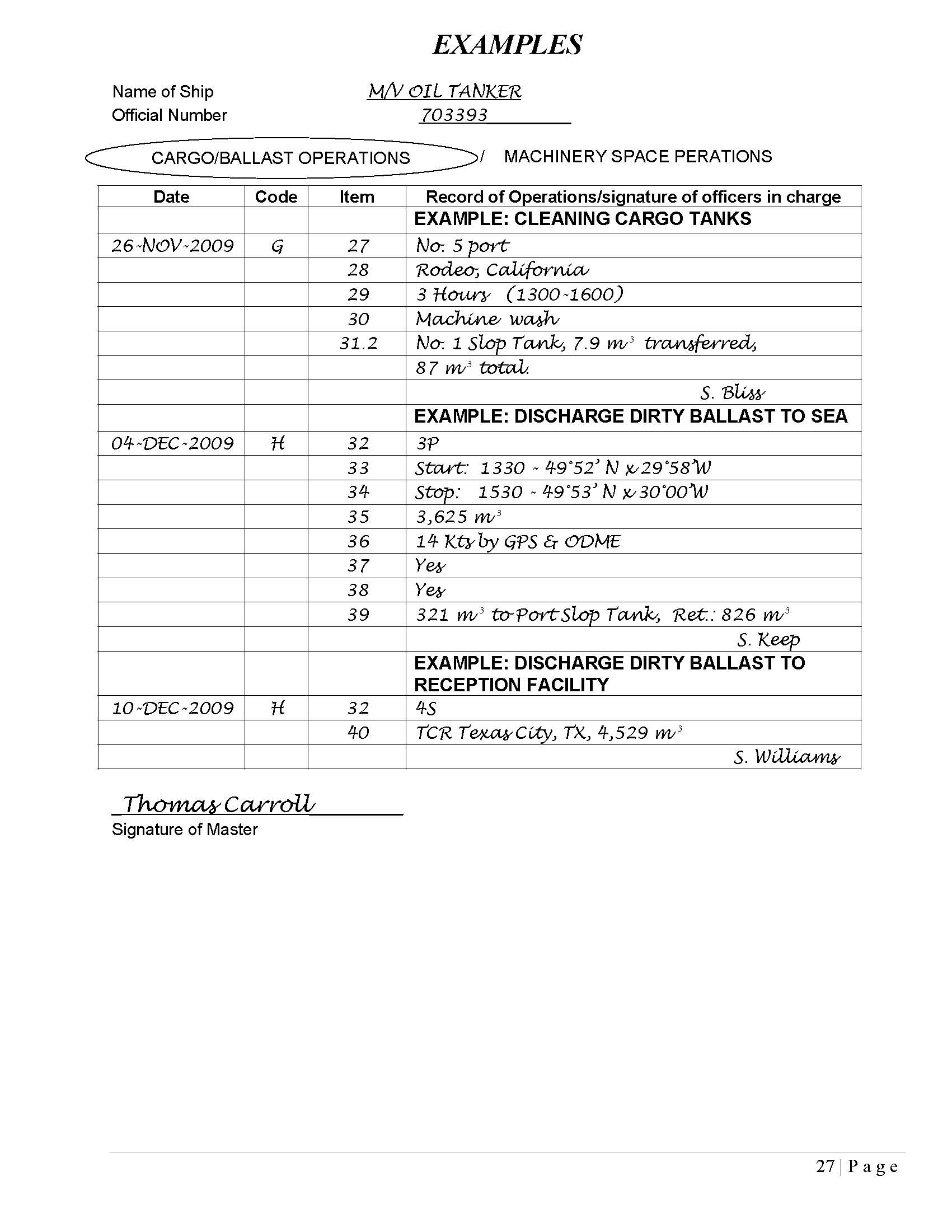
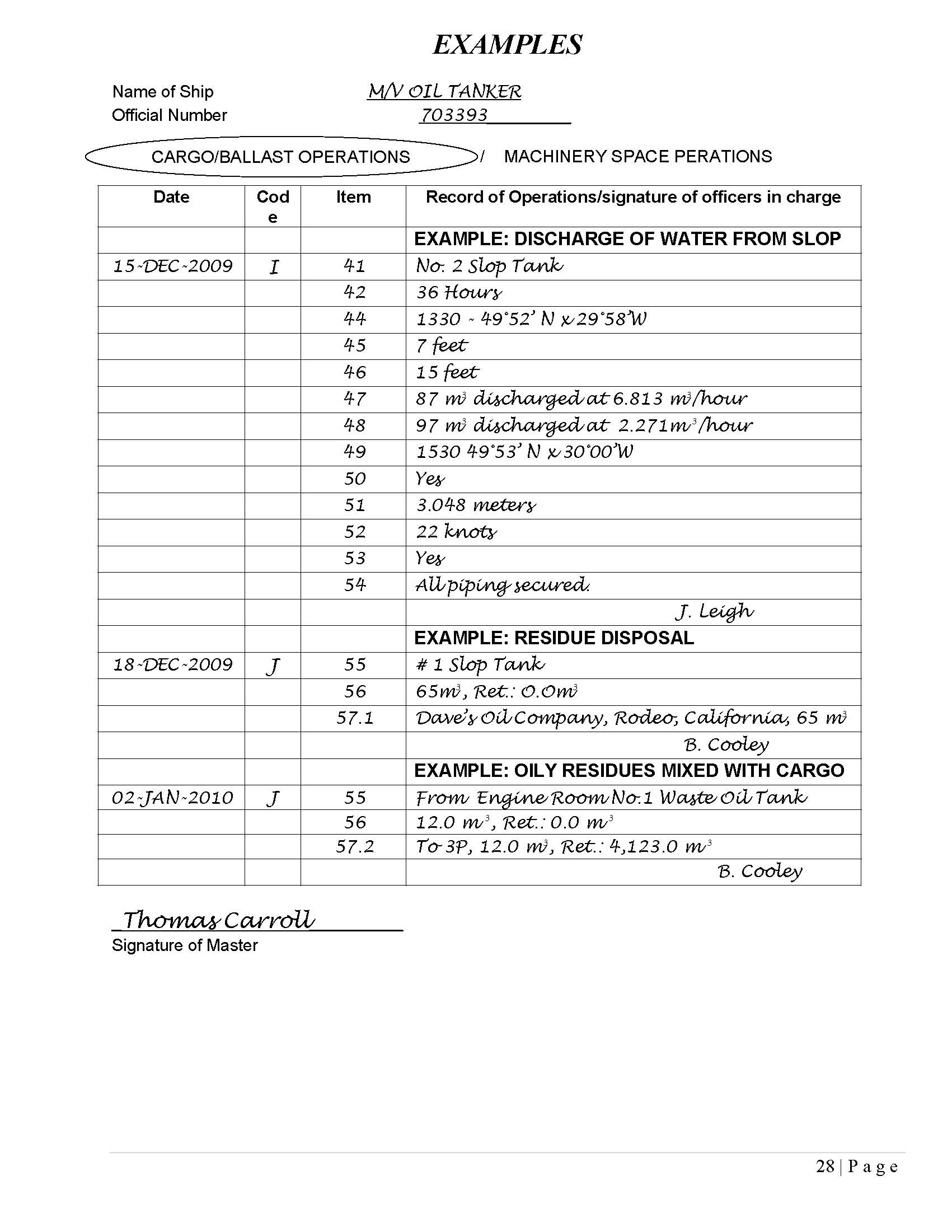
Oil Record Book






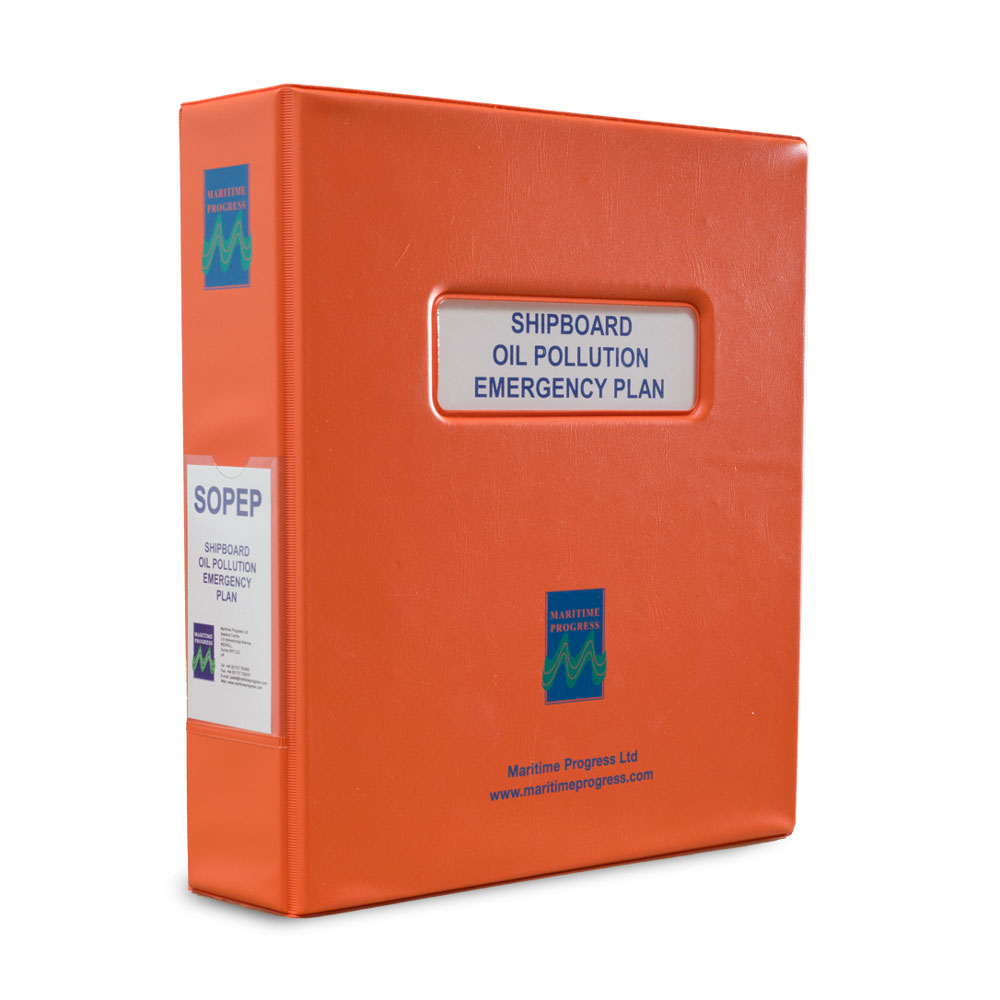
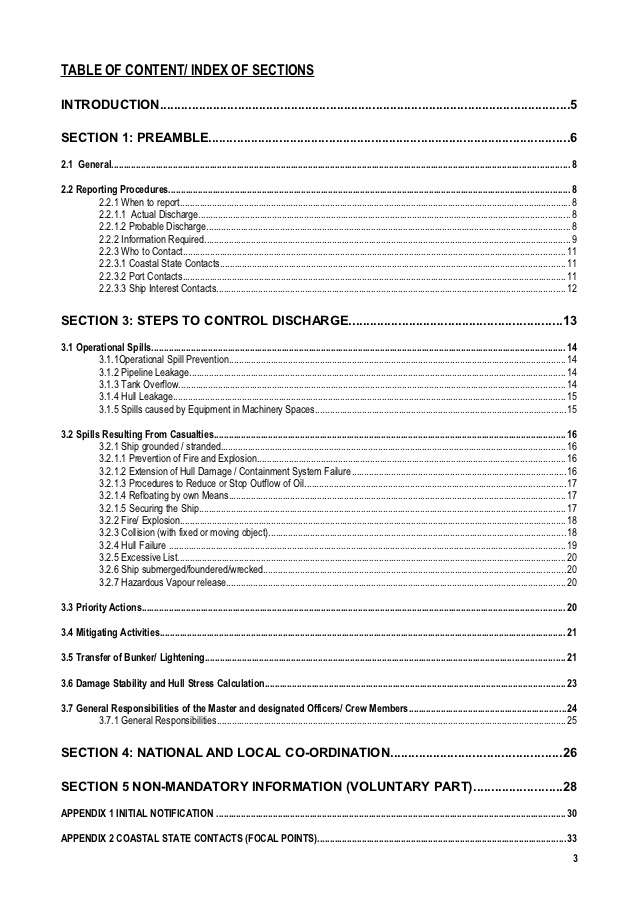
Shipboard Oil Pollution Emergency Plan
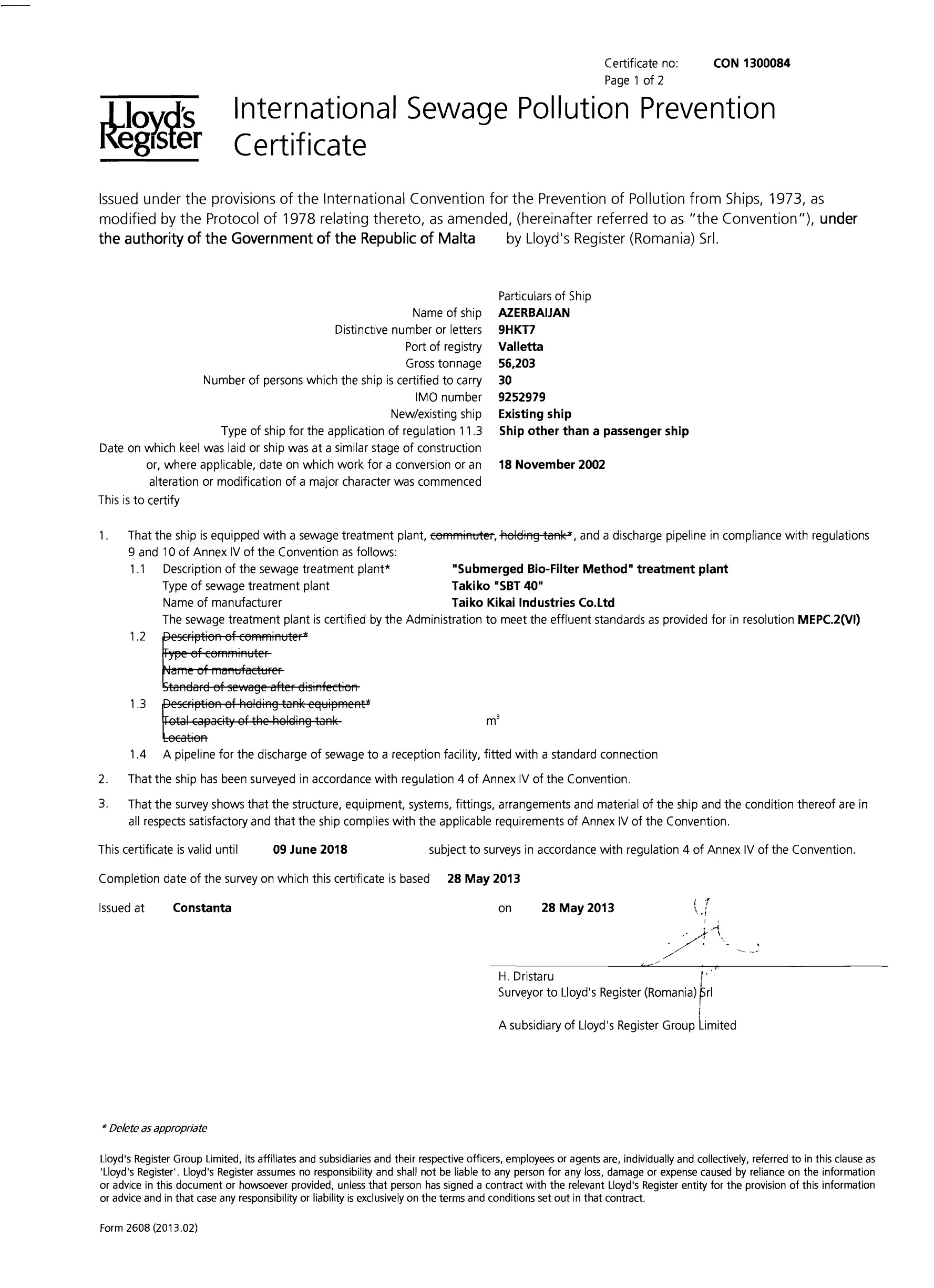
International Sewage Pollution Prevention Certificate

Document of approval for the rate of sewage discharge

Garbage Management Plan
Every ship of 100 gross tonnage and above and every ship which is certified to carry 15 persons or more shall carry a garbage management plan which the crew shall follow.Garbage Record Book
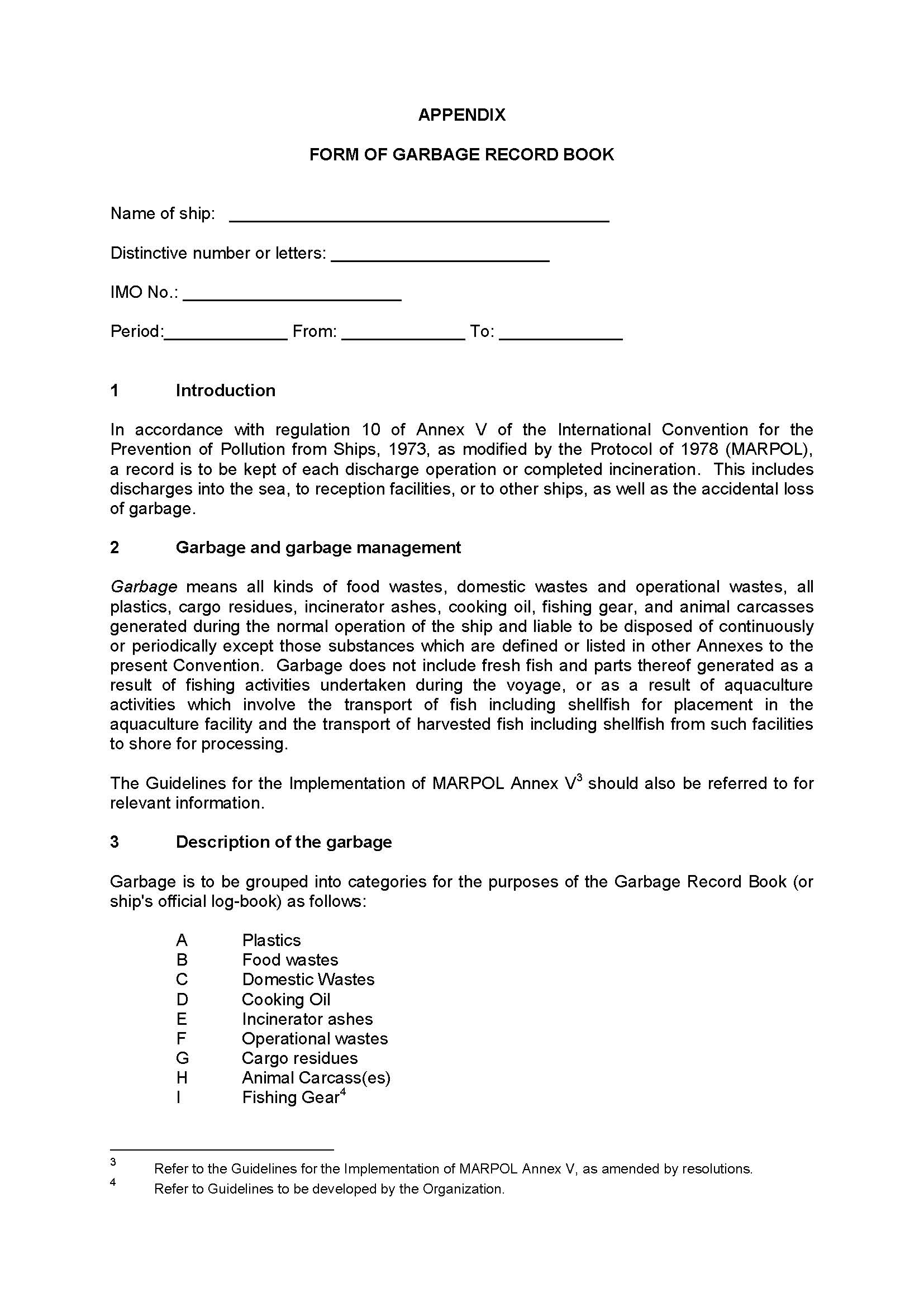
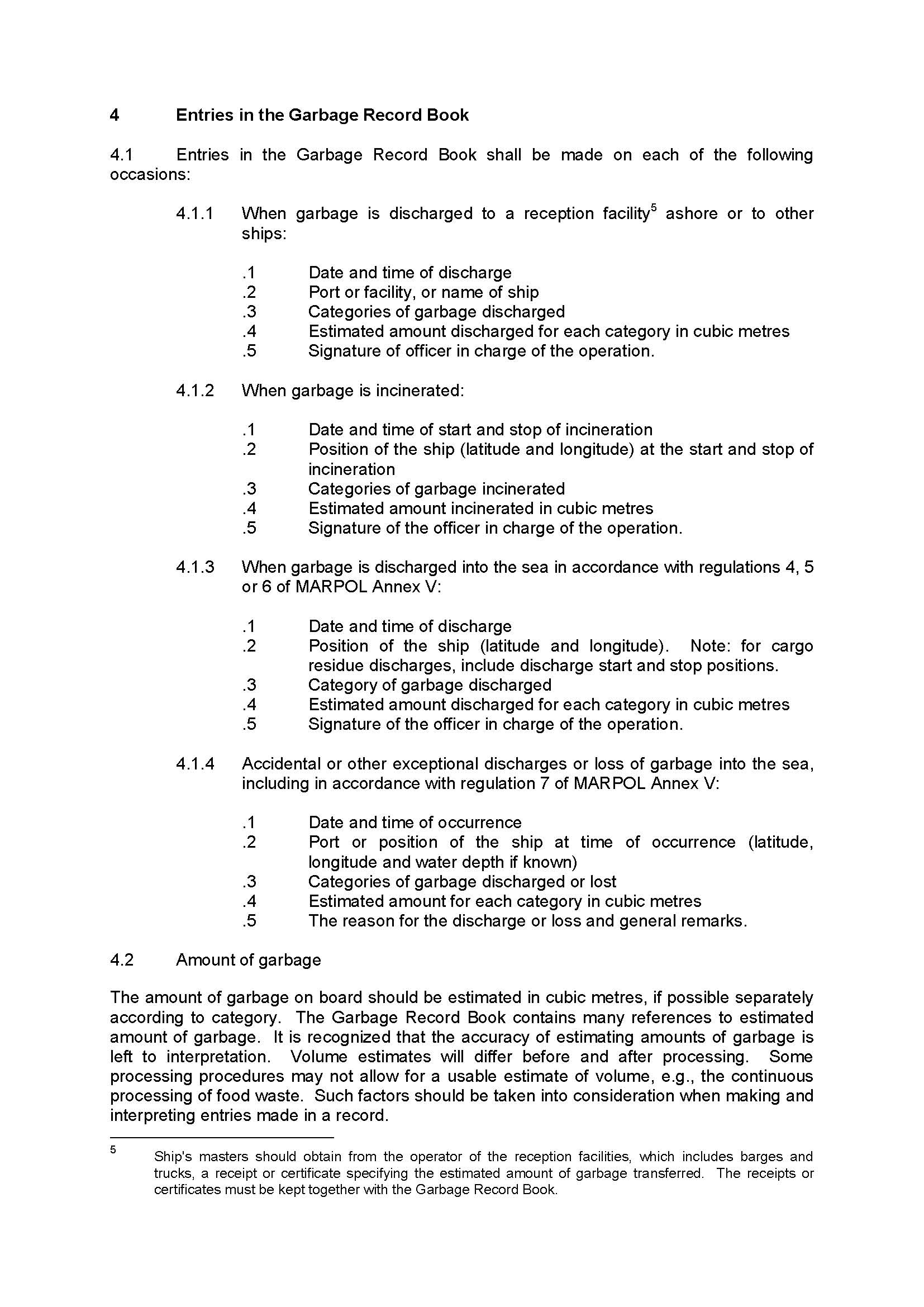
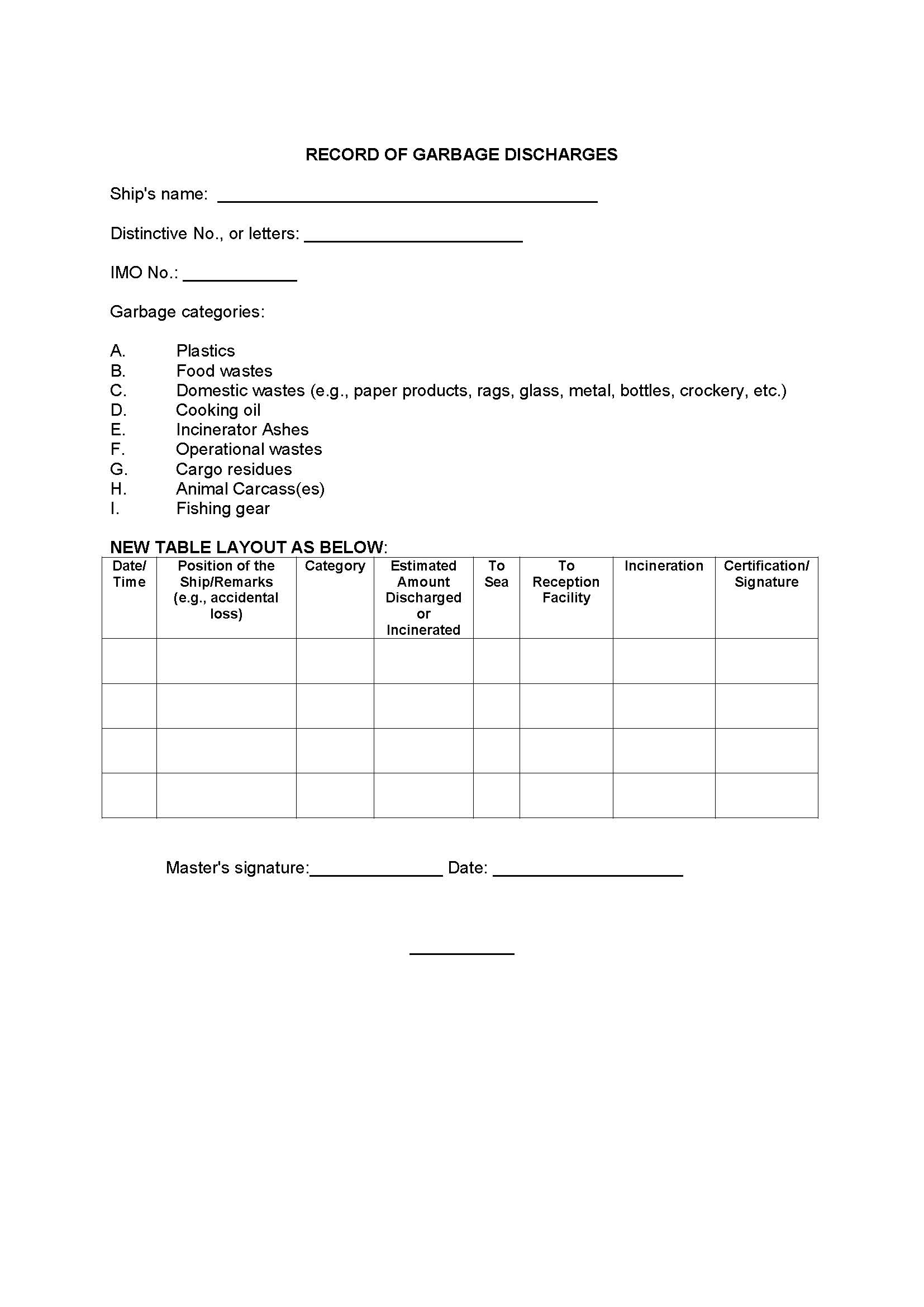
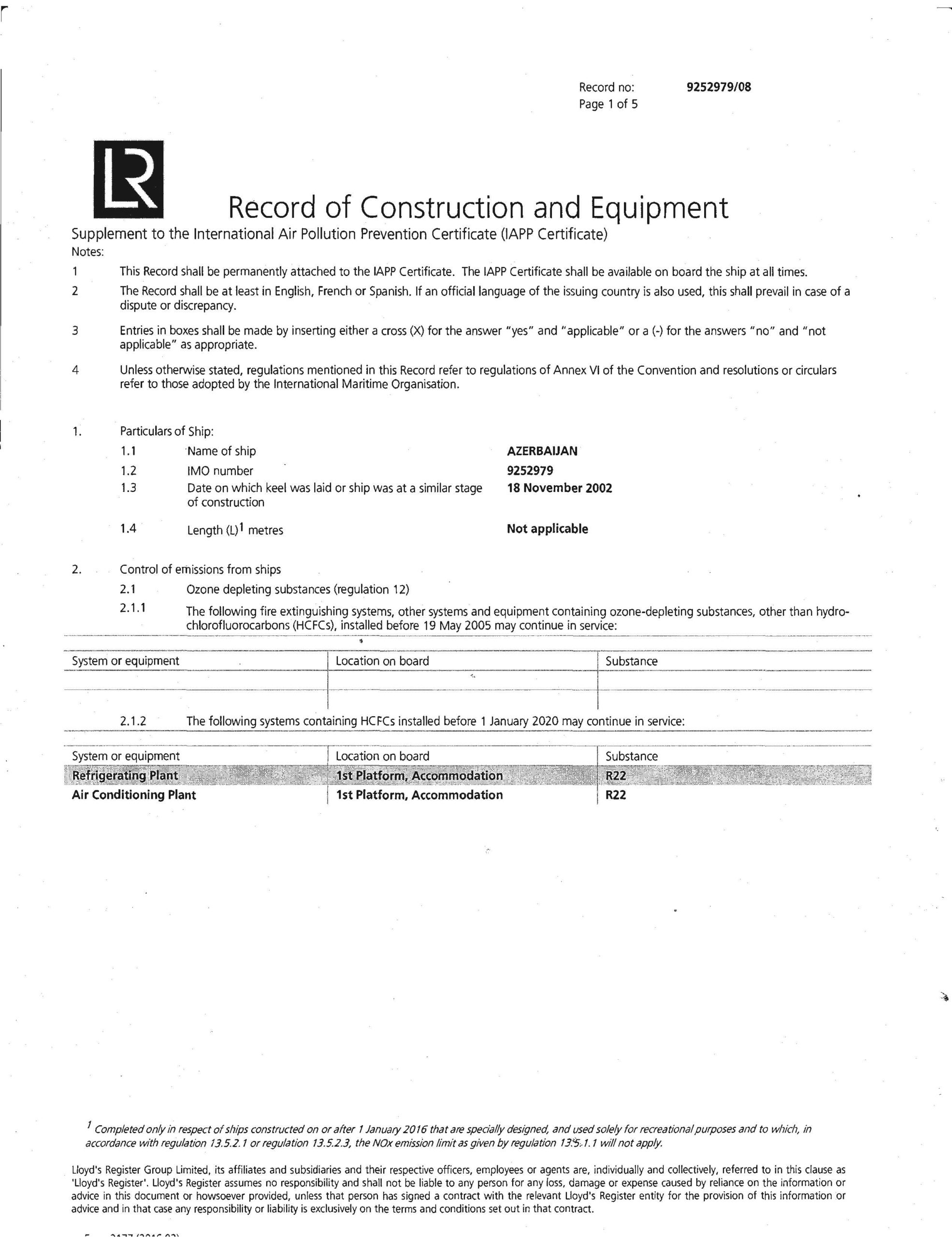
International Air Pollution Prevention Certificate

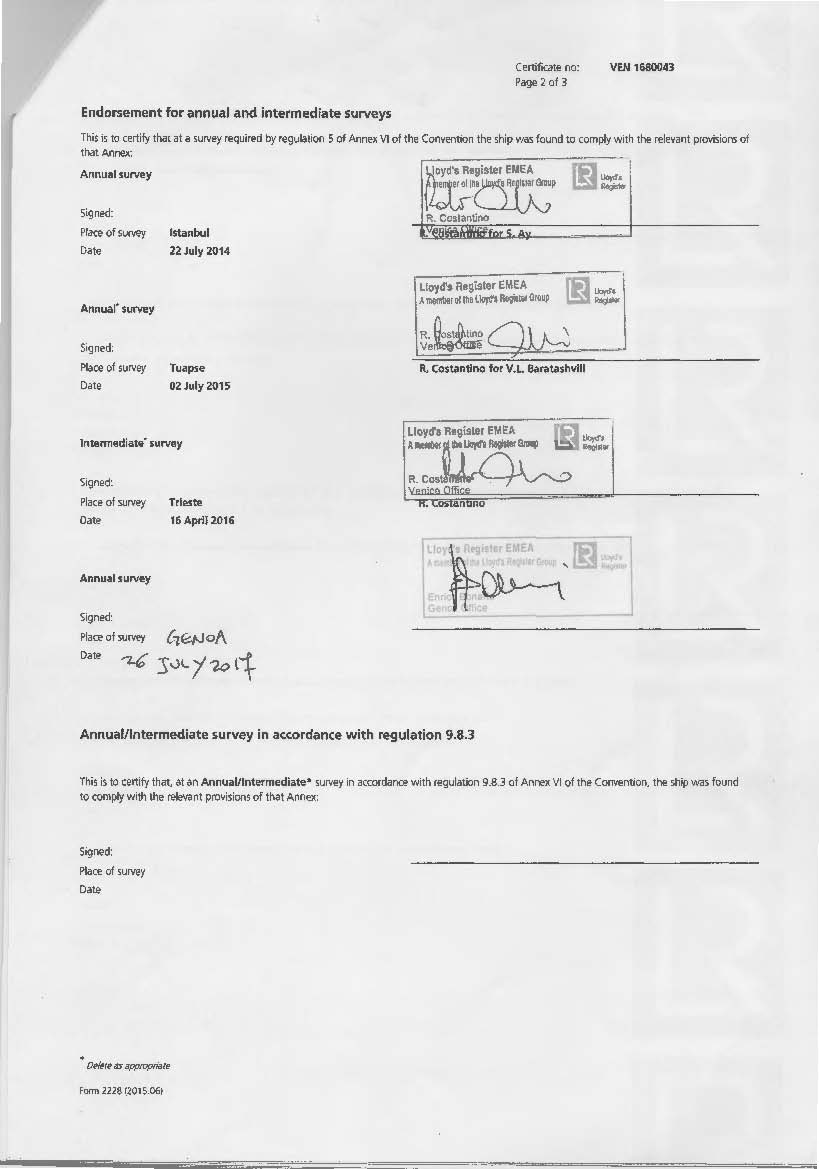
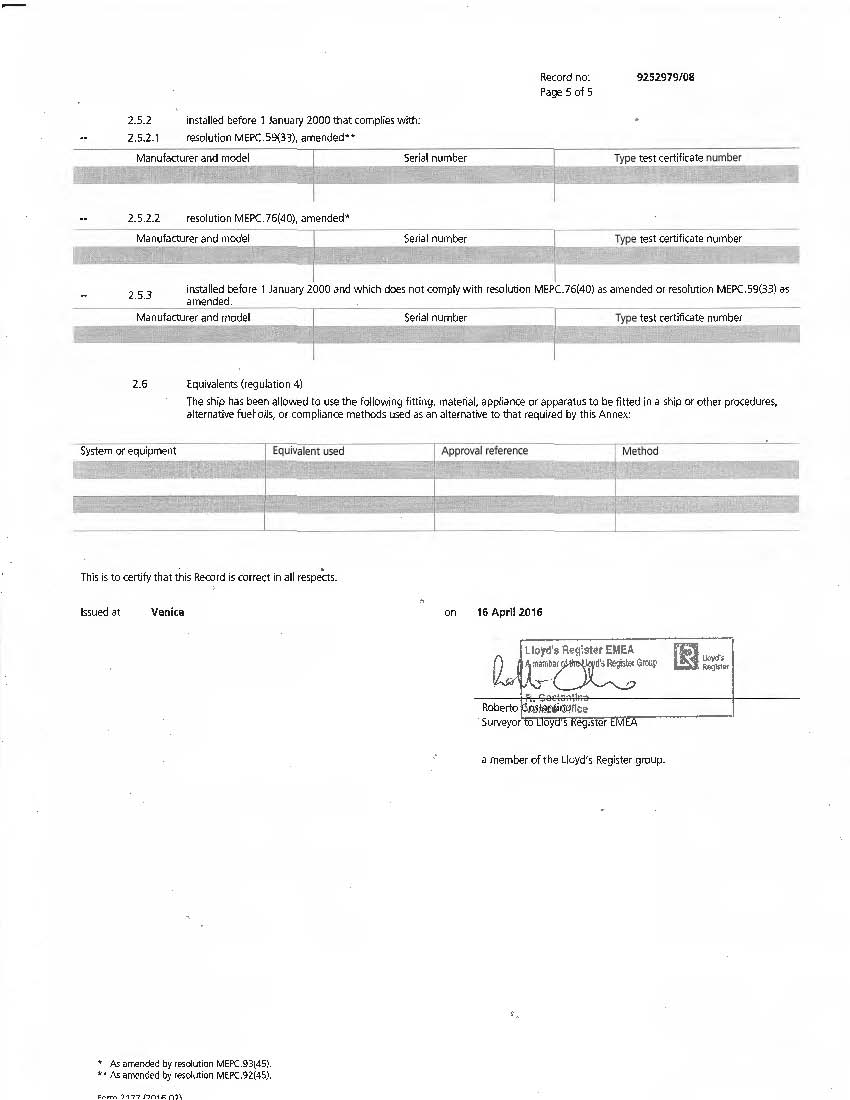
International Energy Efficiency Certificate

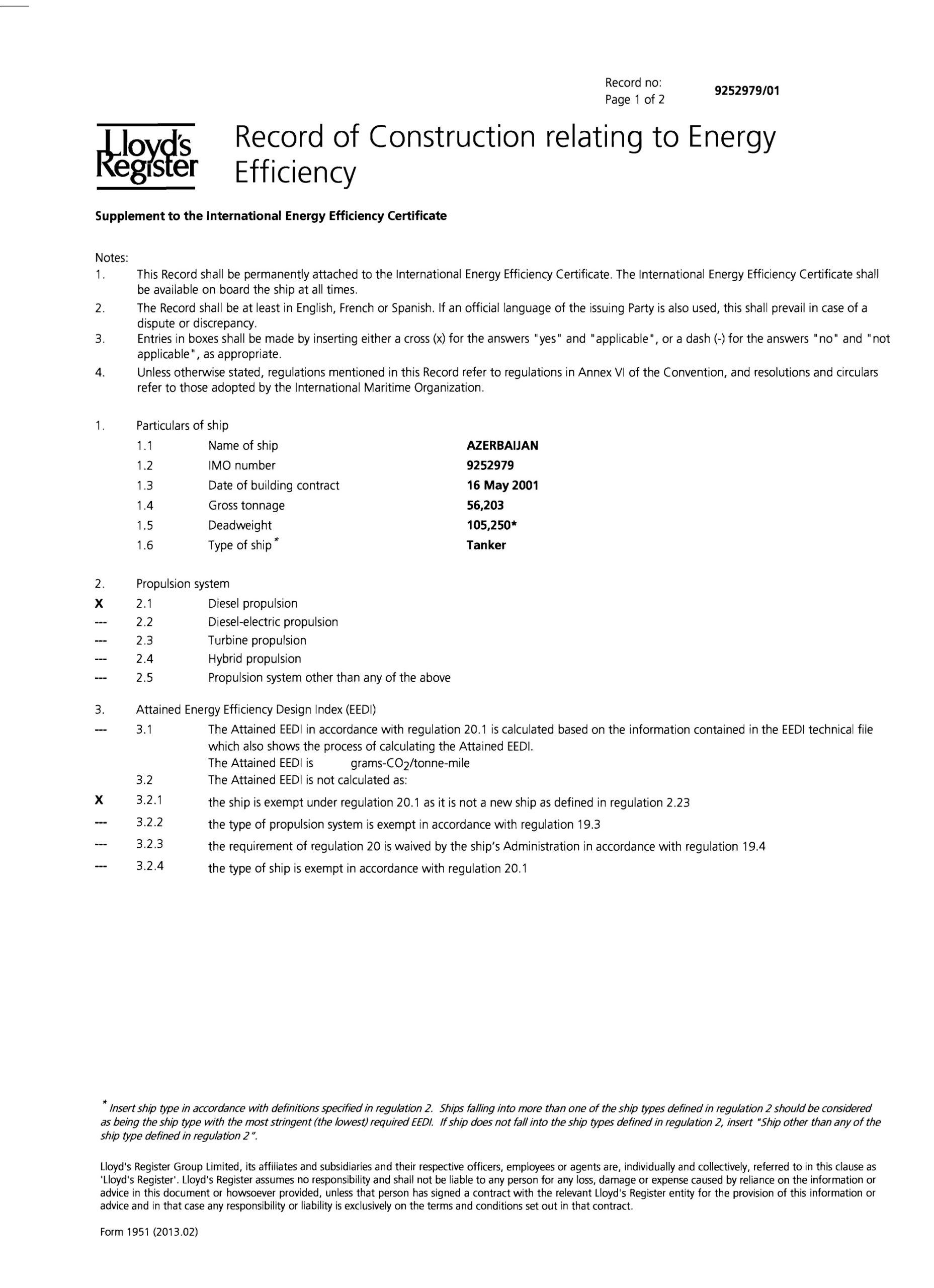

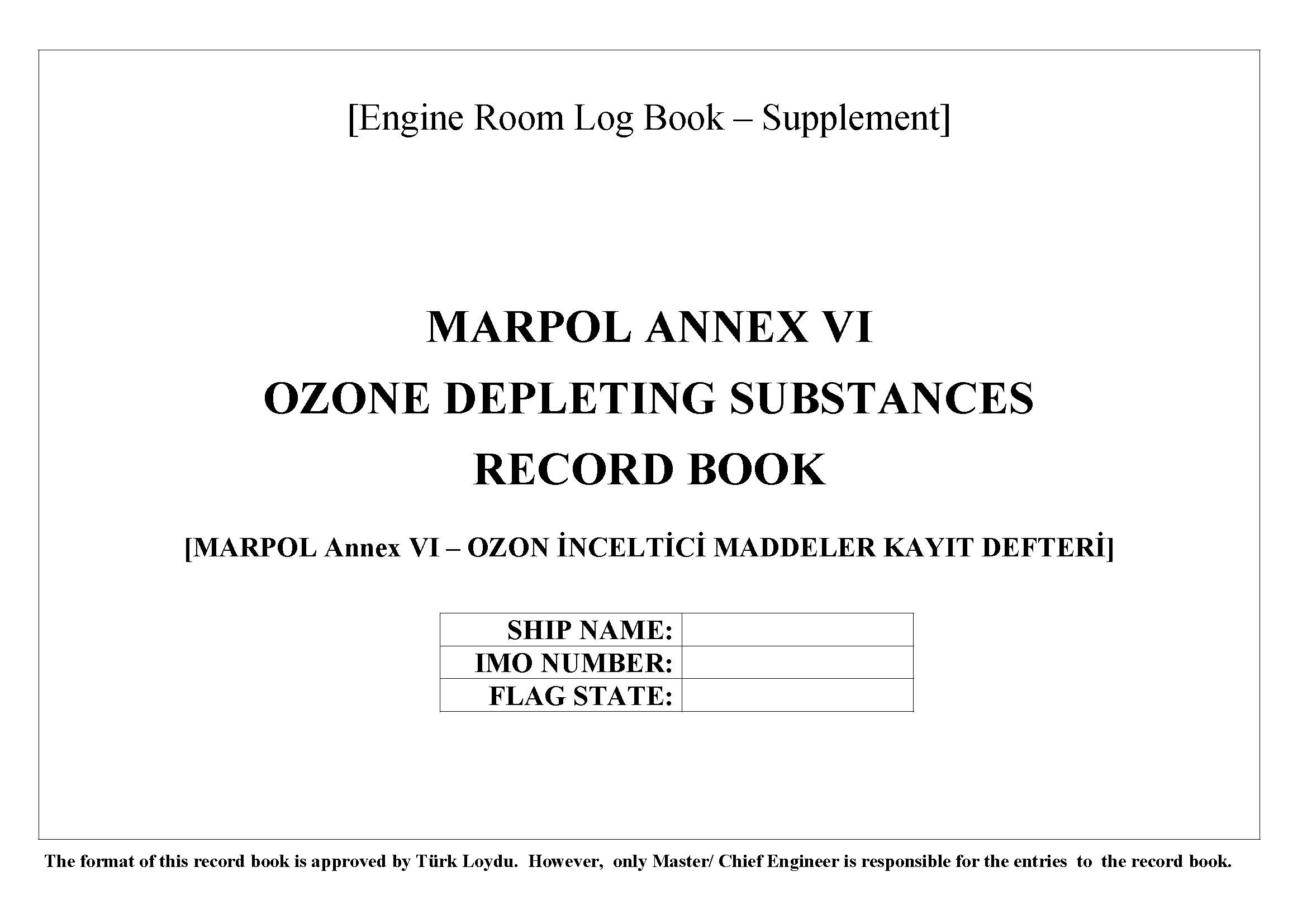
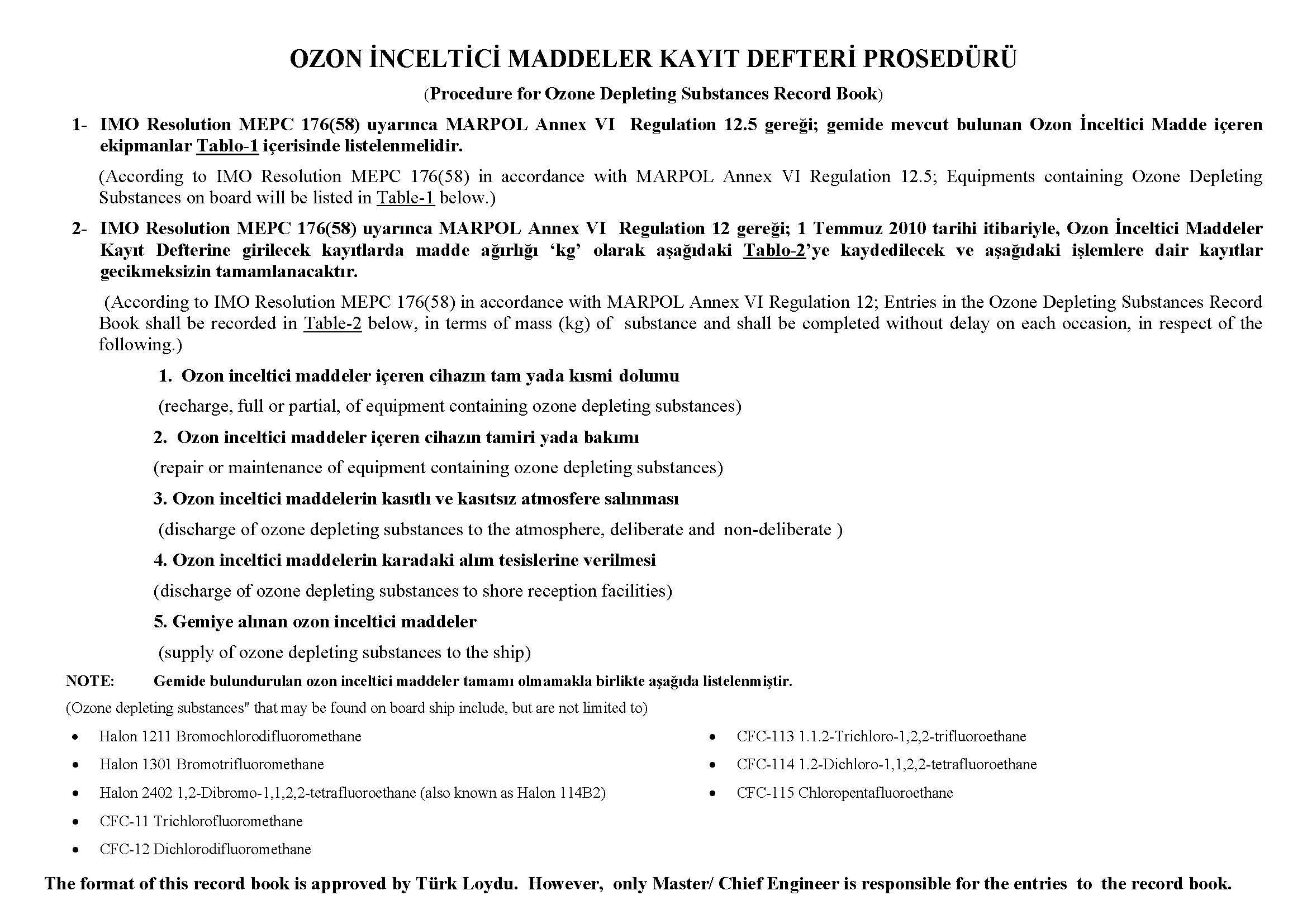
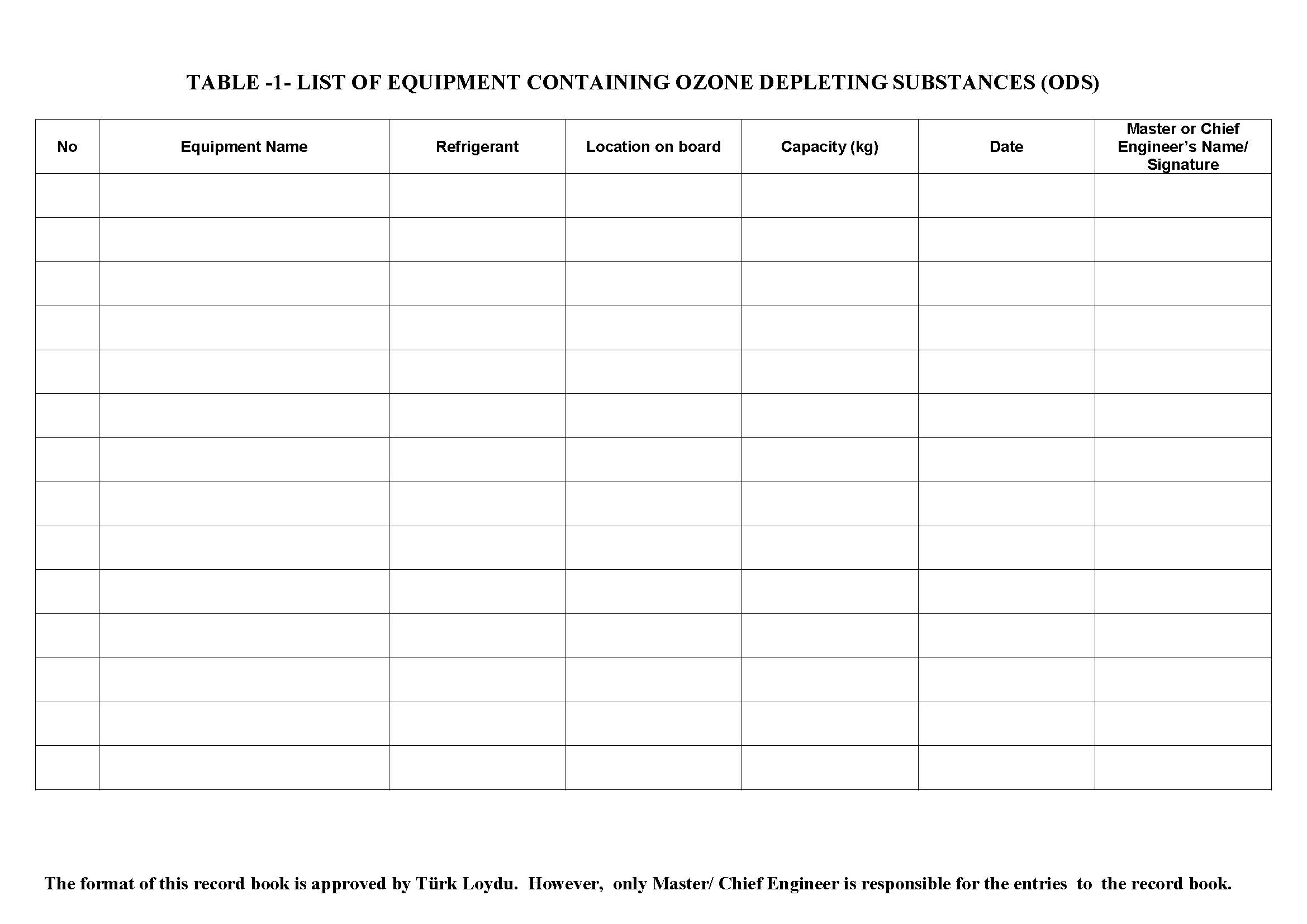
Ozone depleting Substance Record Book
Fuel Oil Changeover Procedure and Logbook (Record of fuel changeover)
Those ships using separate fuel oils to comply with MARPOL Annex VI, regulation 14.3 and entering or leaving an emission control area shall carry a written procedure showing how the fuel oil changeover is to be done. The volume of low-sulphur fuel oils in each tank as well as the date, time and position of the ship when any fuel oil changeover operation is completed prior to the entry into an emission control area or commenced after exit from such an area shall be recorded in such logbook as prescribed by the Administration.Manufacturer’s Operating Manual for Incinerators
Incinerators installed in accordance with the requirements of MARPOL Annex VI, regulation 16.6.1 shall be provided with a Manufacturer’s Operating Manual, which is to be retained with the unit.Bunker Delivery Note and Representative Sample

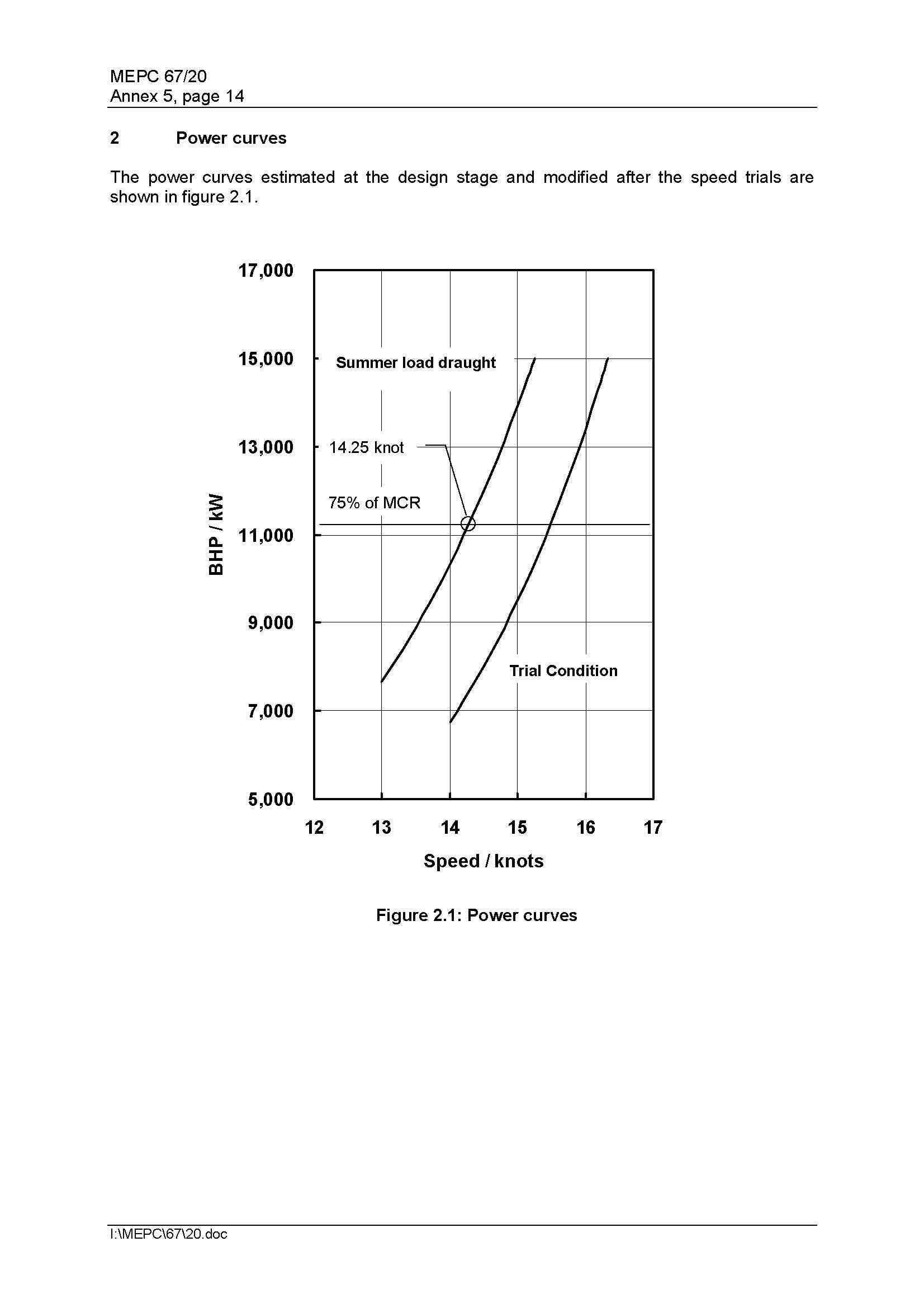
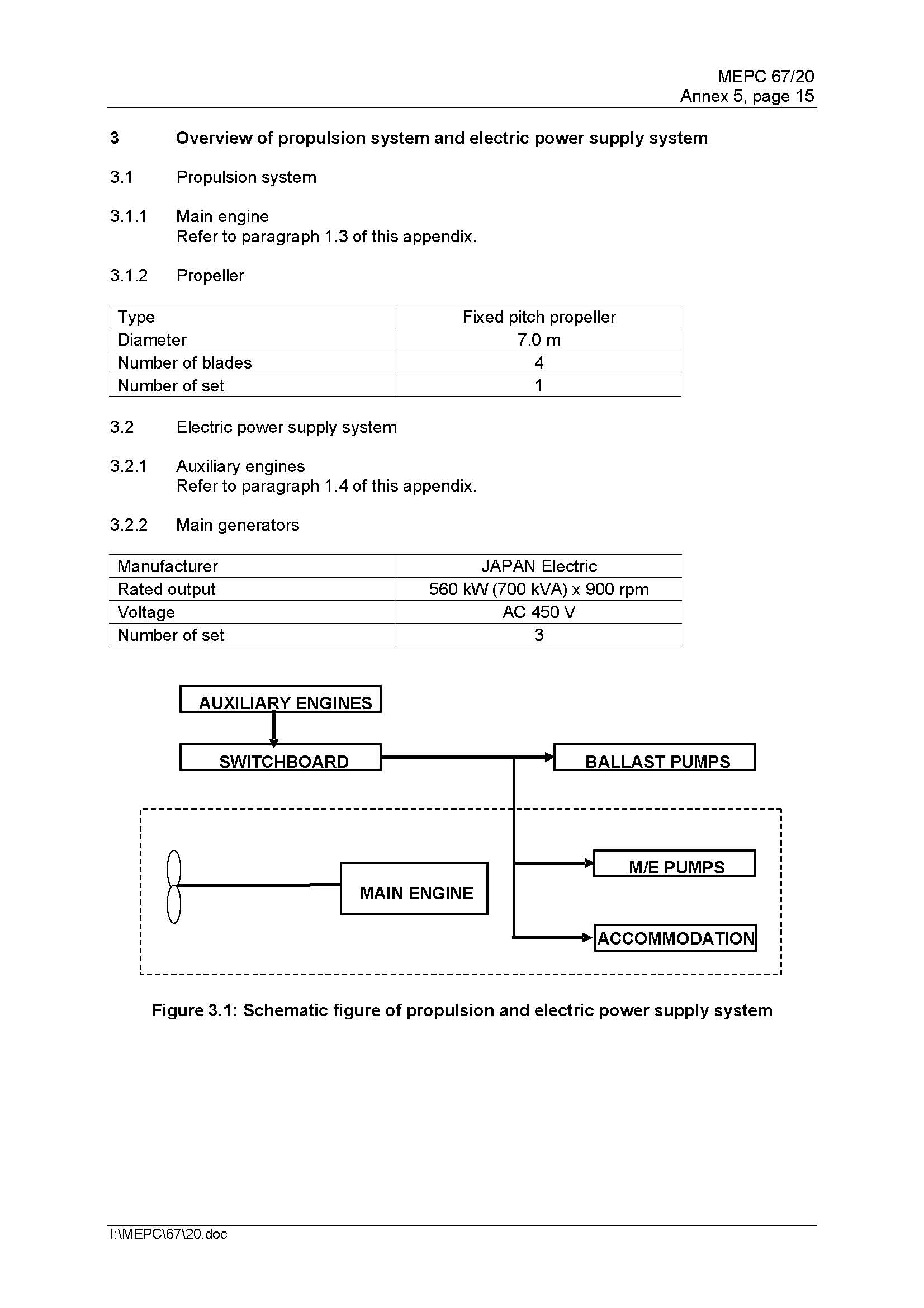
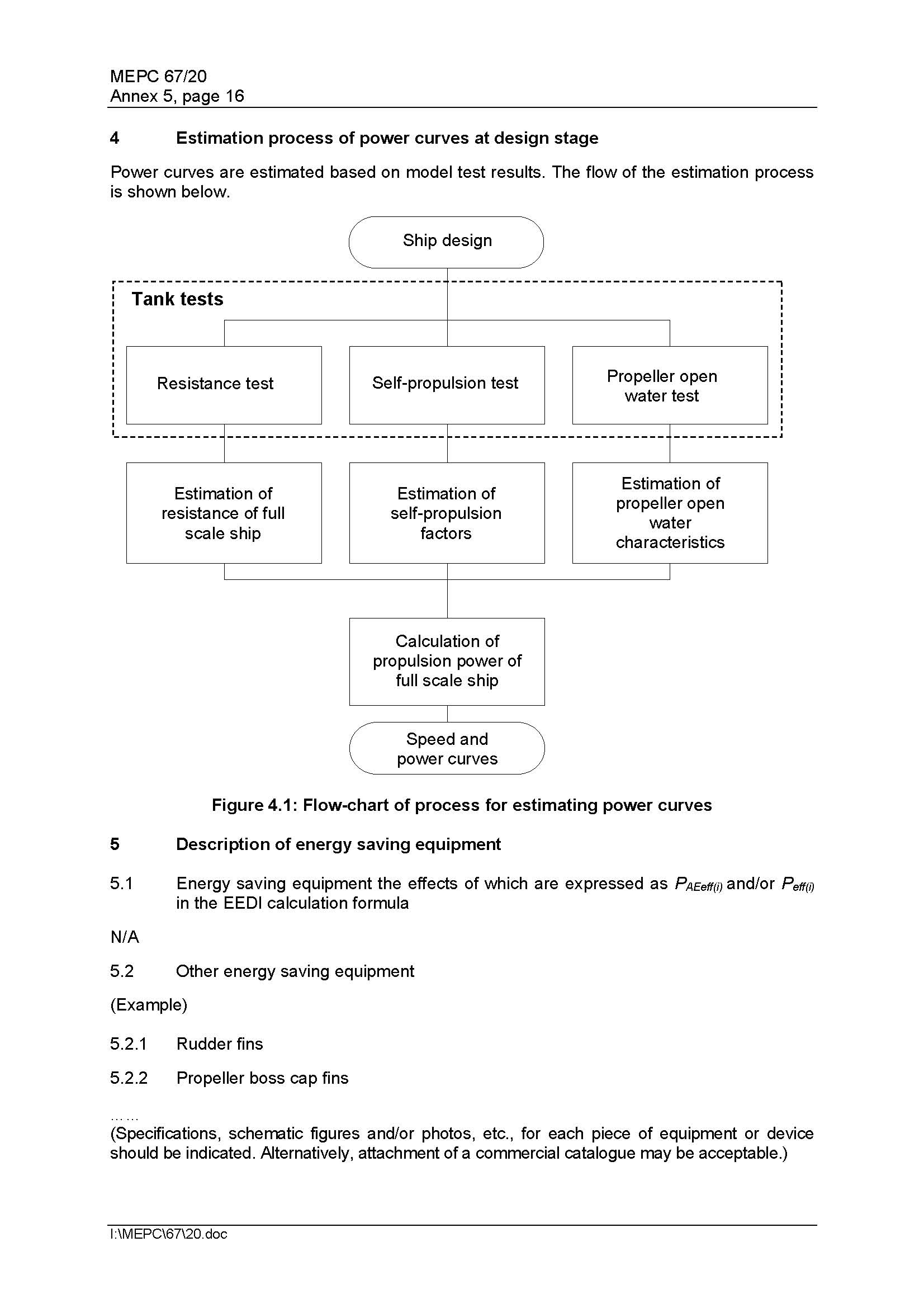
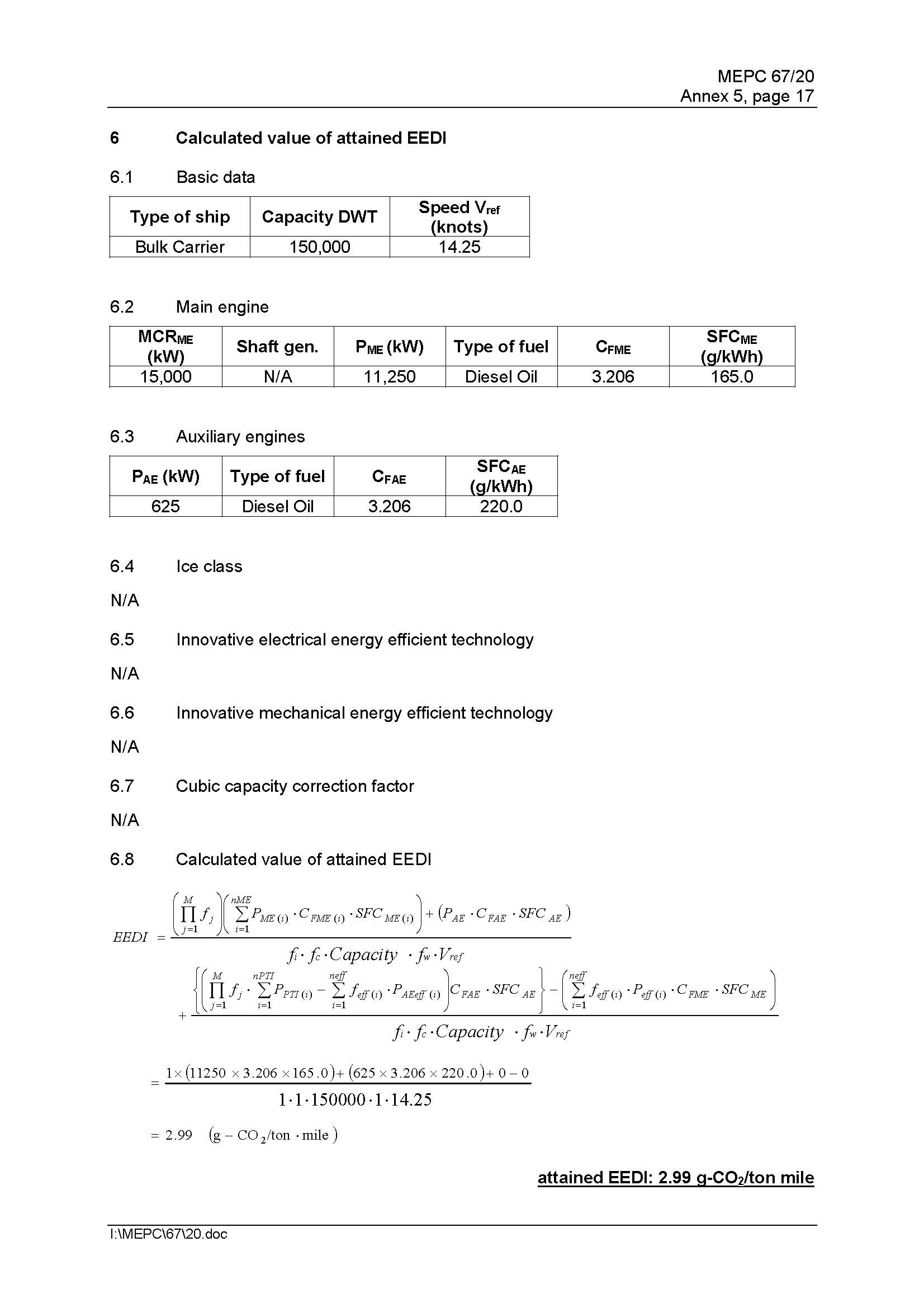
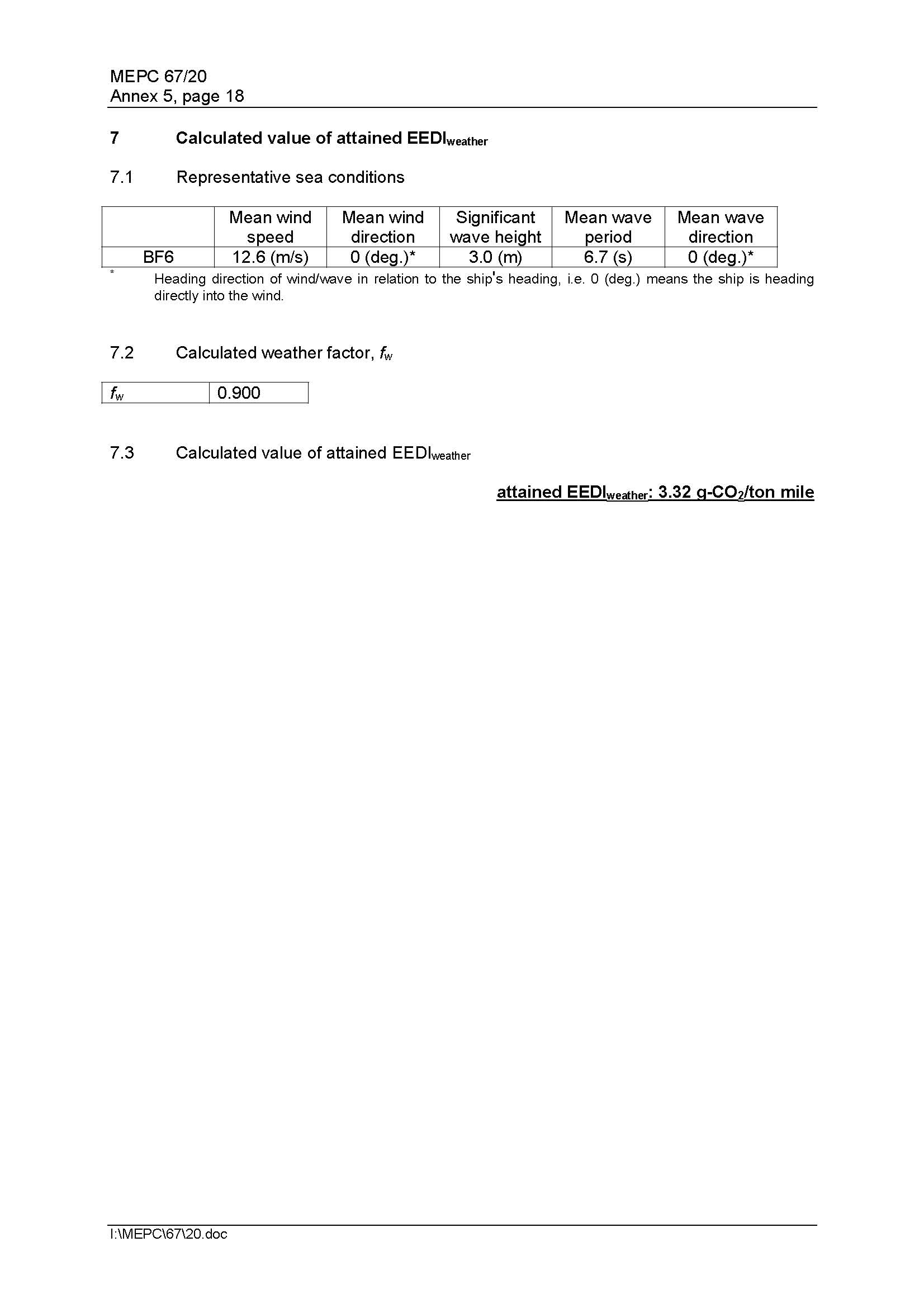
EEDI Technical File

Ship energy Efficiency Management Plan (SEEMP)
All ships of 400 gross tonnage and above, excluding platforms (including FPSOs and FSUs) and drilling rigs, regardless of their propulsion, shall keep on board a ship specific Ship Energy Efficiency Management Plan (SEEMP). This may form part of the ship’s Safety Management System (SMS).Technical File
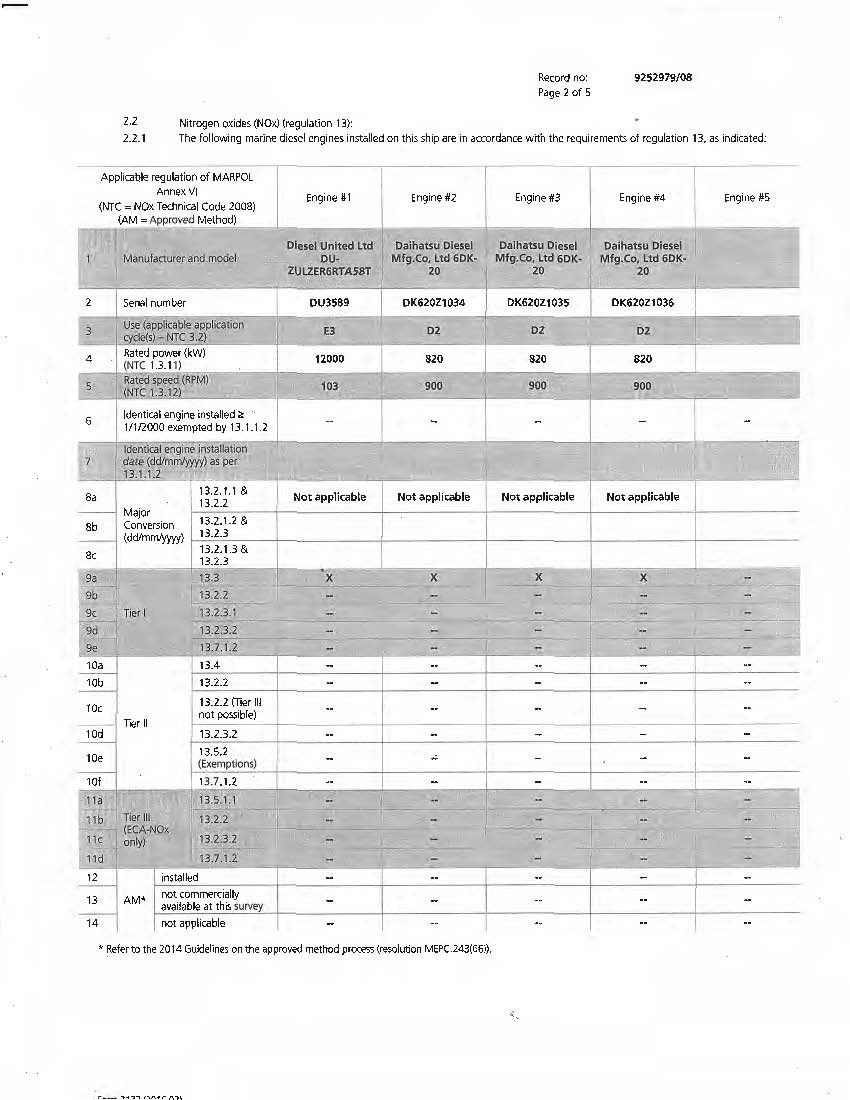
Every marine diesel engine installed on board a ship shall be provided with a Technical File. The Technical File shall be prepared by the applicant for engine certification and approved by the Administration, and is required to accompany an engine throughout its life on board ships. The Technical File shall contain the information as specified in paragraph 2.4.1 of the NOX Technical Code, 2008. Where the Engine Parameter Check method in accordance with paragraph 6.2 of the NOX Technical Code, 2008 is used to verify compliance, if any adjustments or modifications are made to an engine after its pre-certification, a full record of such adjustments or modifications shall be recorded in the engine’s Record Book of Engine Parameters.Certificate of Officers, Master and Ratings
Certificates for masters, officers or ratings shall be issued to those candidates who, to the satisfaction of the Administration, meet the requirements for service, age, medical fitness, training, qualifications and examinations in accordance with the appropriate provisions of the 1978 STCW Convention and STCW Code. Formats of certificates are given in section A-I/2 of the STCW Code. Certificates must be kept available in their original form on board the ships on which the holder is serving. Fishing vessel personnel serving on board seagoing fishing vessels shall be certificated in accordance with the provisions of STCW-F Convention 1995. Formats of certificates are given in the appendix 1, 2 and 3 of the Convention.Records of daily hours of rest
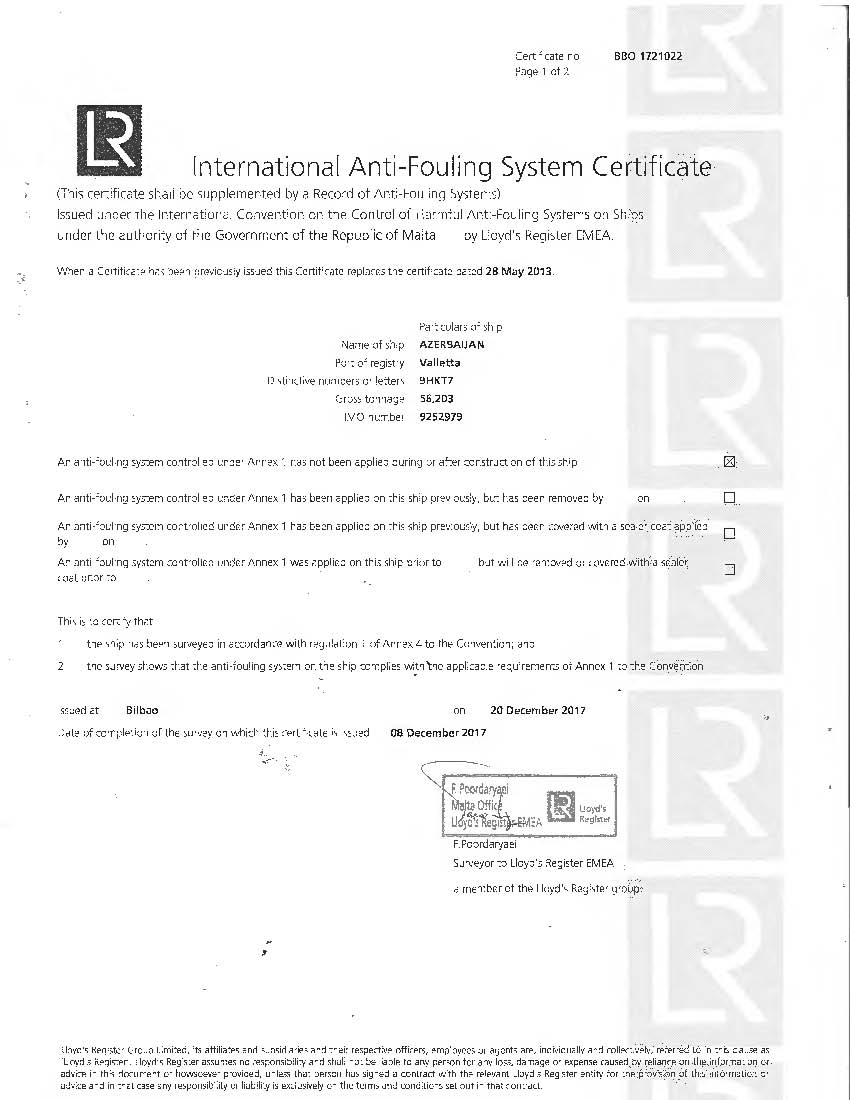
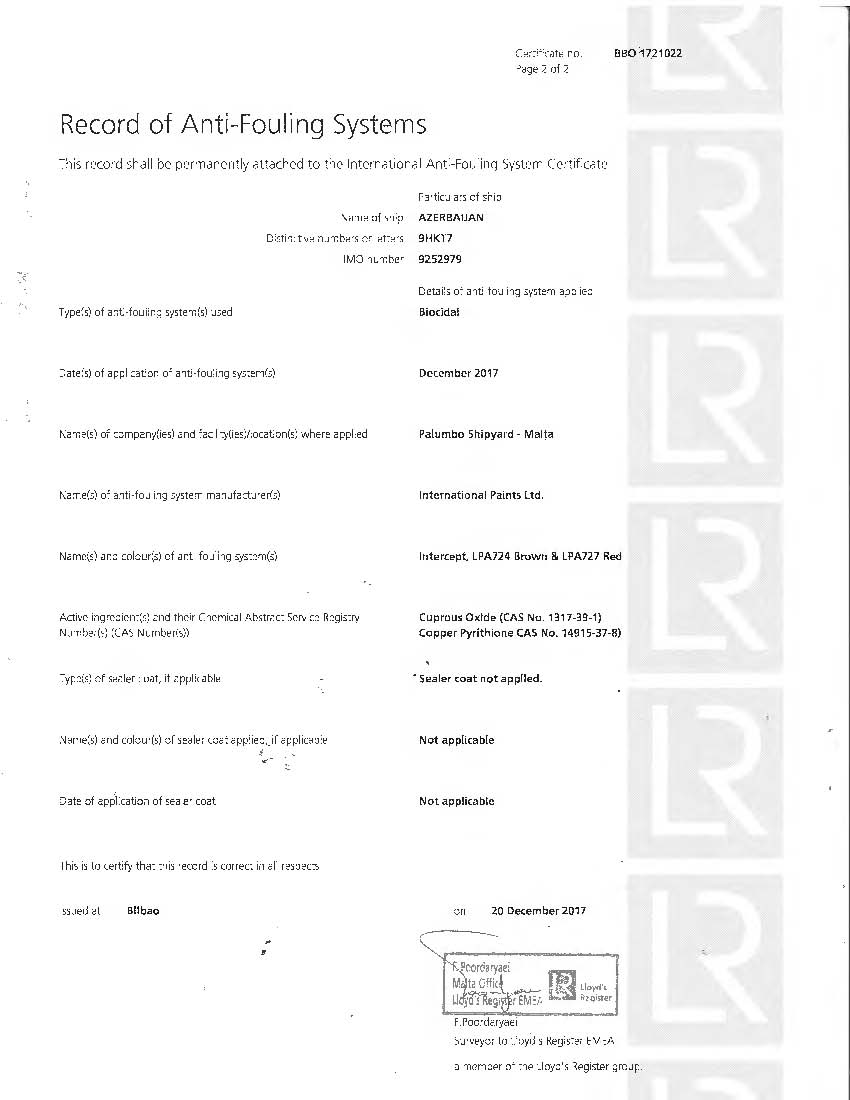
Records of daily hours of rest of seafarers shall be maintained on board.International Anti Fouling System Certificate
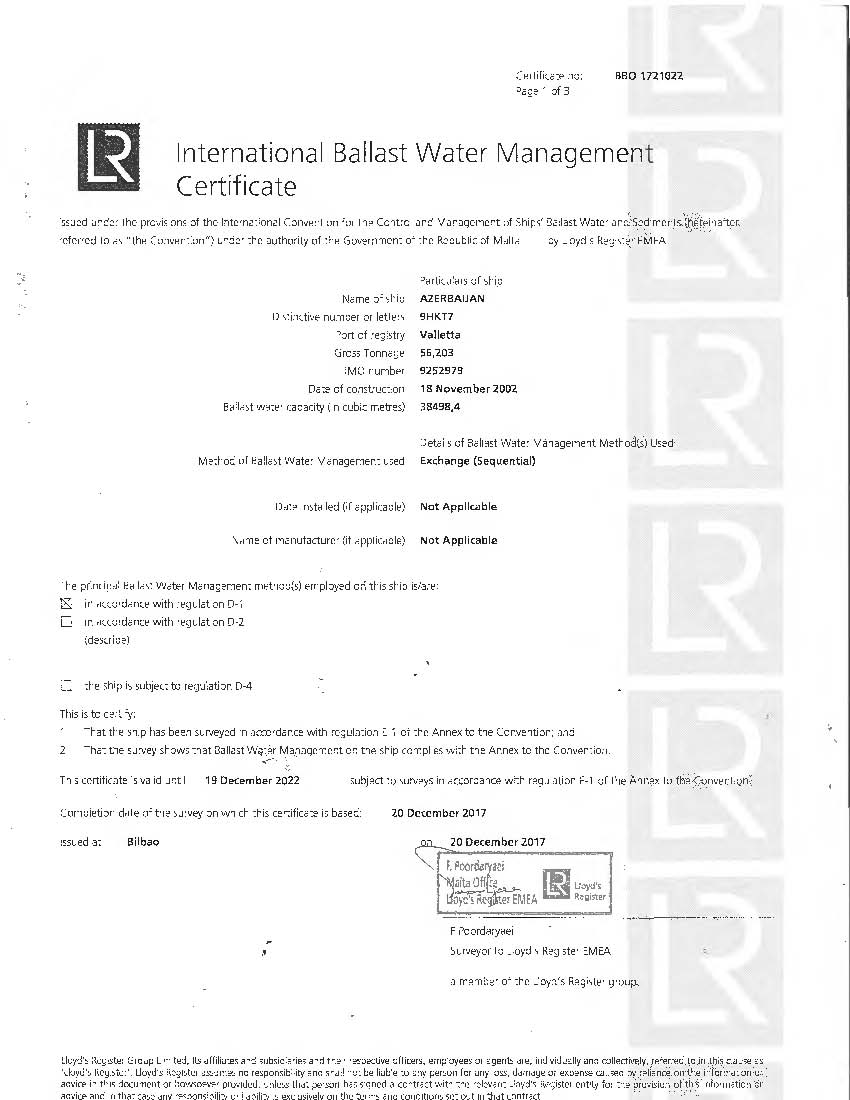
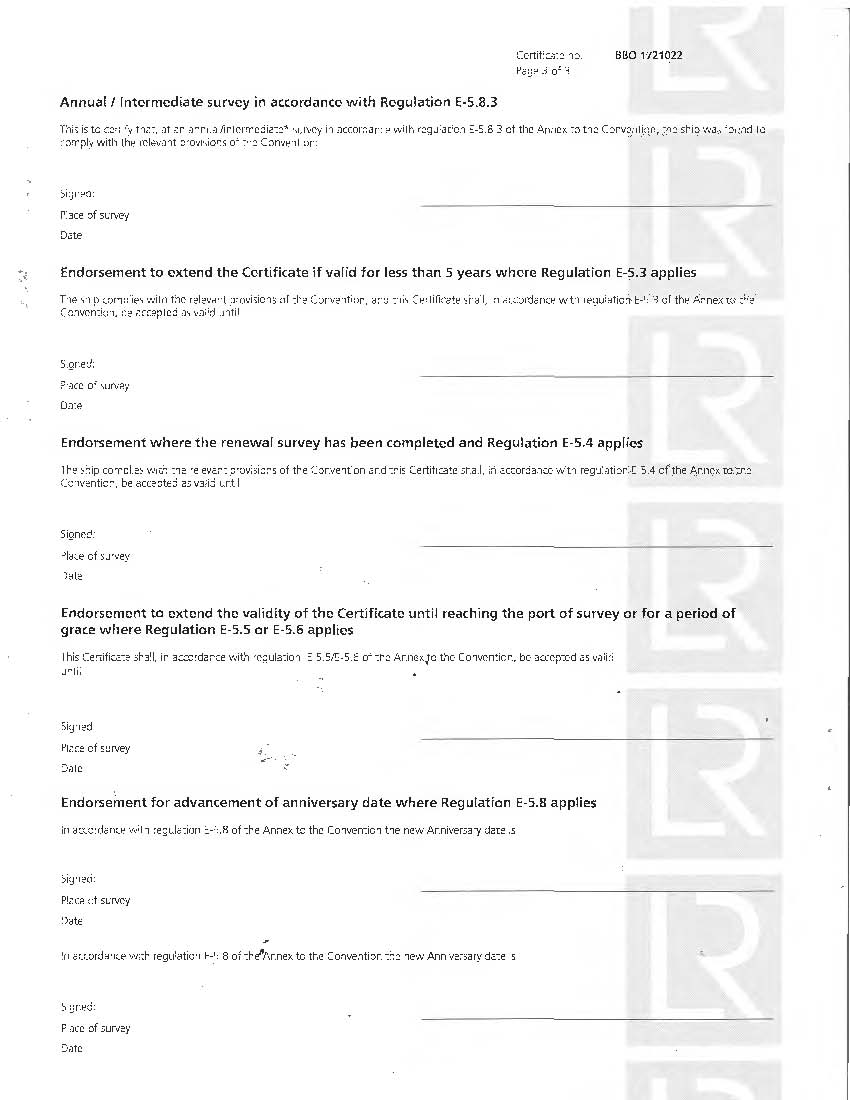
International Ballast Water Management Certificate

Ballast water Management Plan
Each ship shall have on board and implement a ballast water management plan. Such a plan shall be approved by the Administration taking into account guidelines developed by the Organization. Note: The item was added by the Secretariat as per the relevant requirements of the International Convention for the Control and Management of Ships’ Ballast Water and Sediments, 2004 (BWM 2004), which will enter into force on 8 September 2017.Ballast water record book

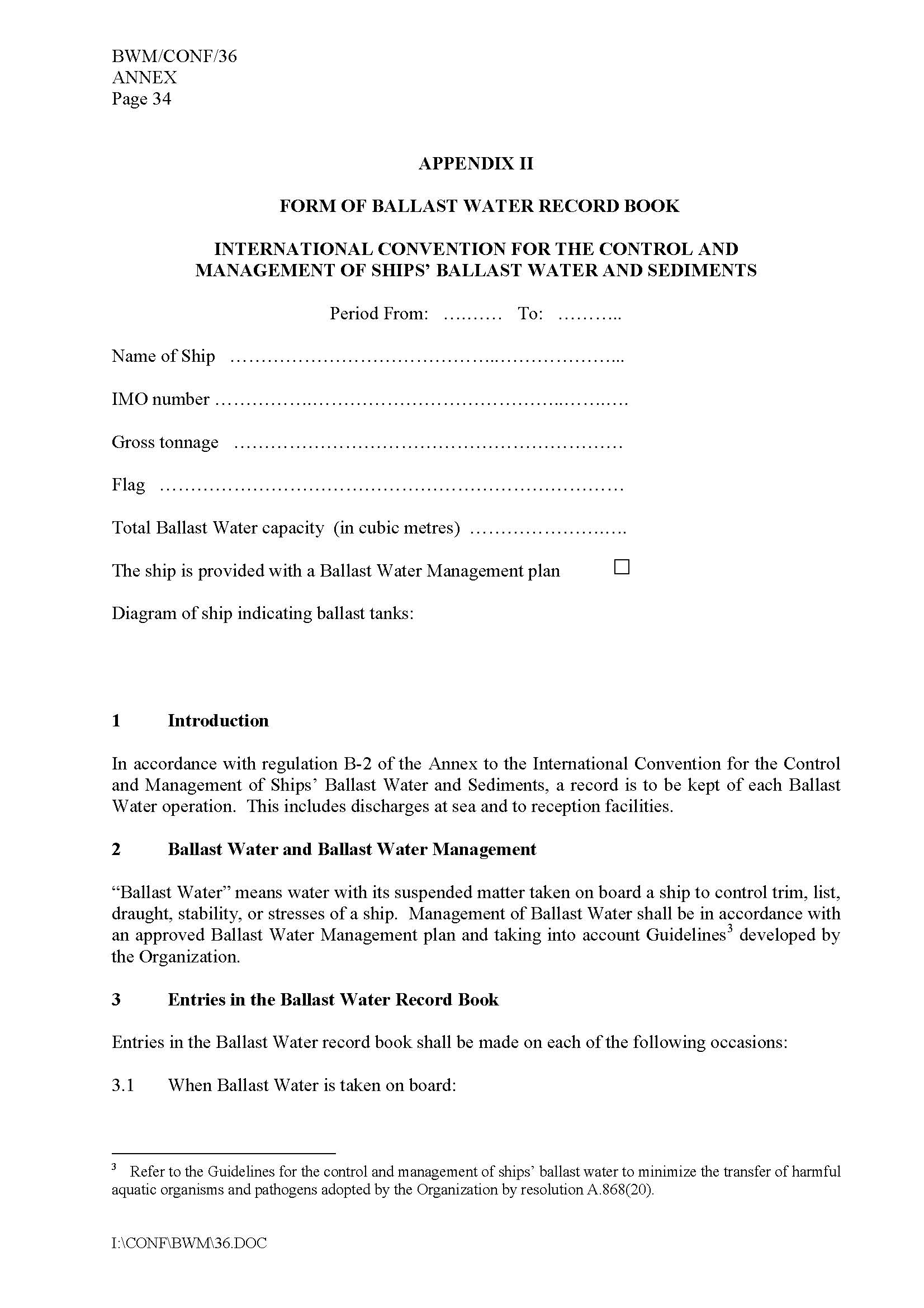

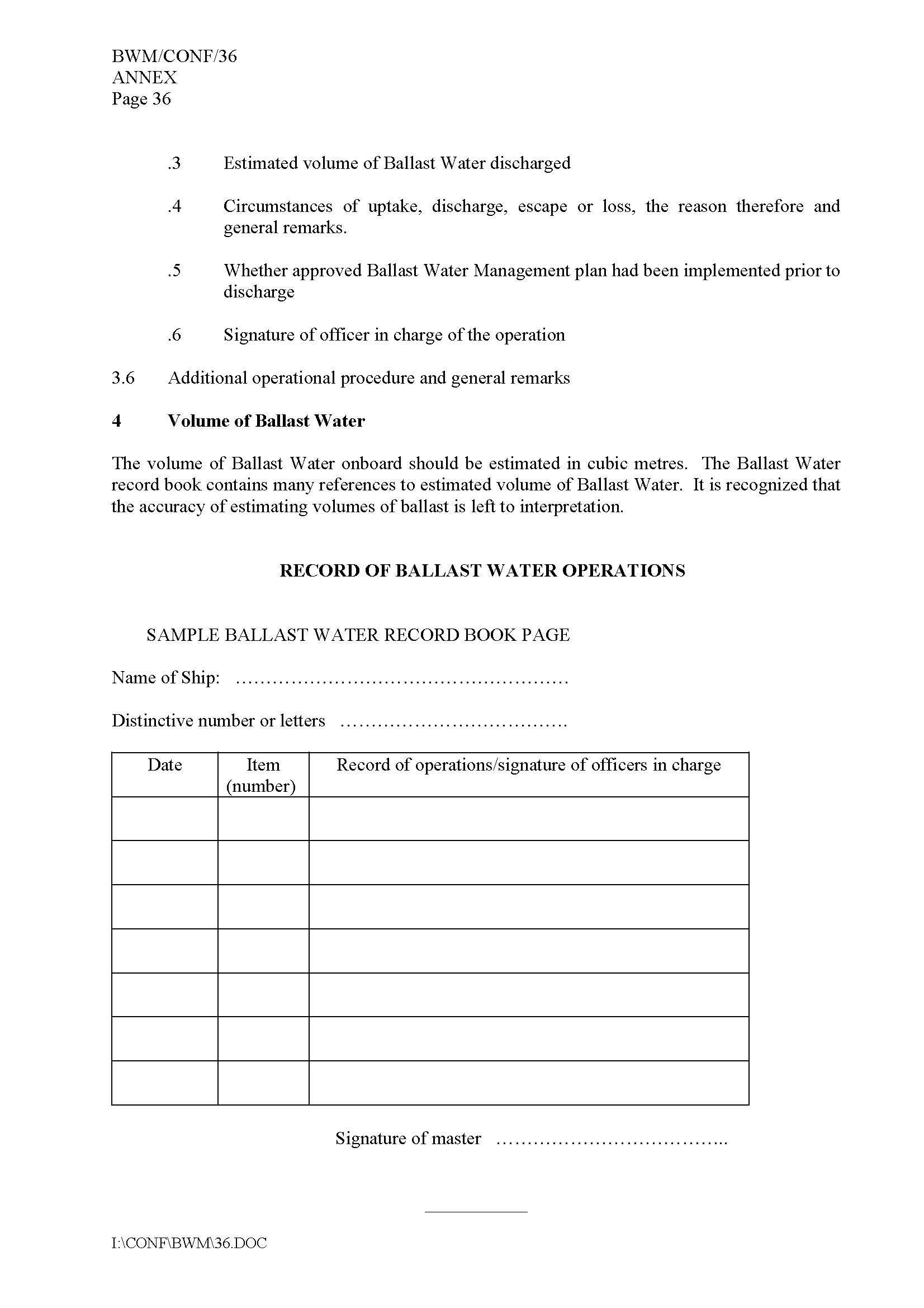
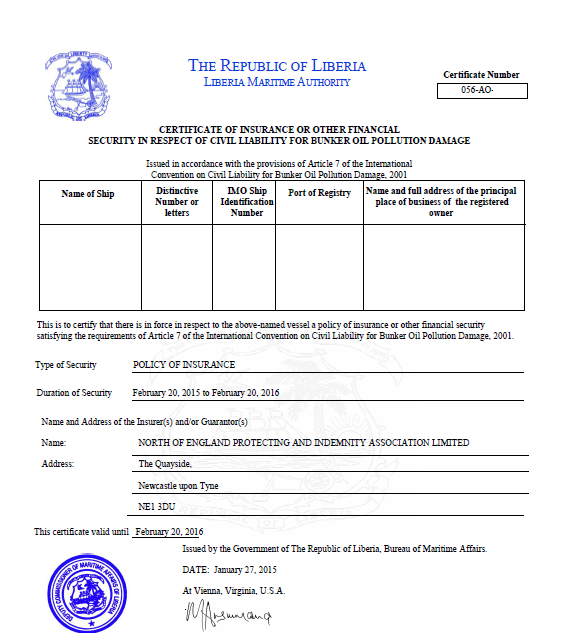
Certificate of Insurance or other Financial security in respect of civil liability for bunker Pollution Damage
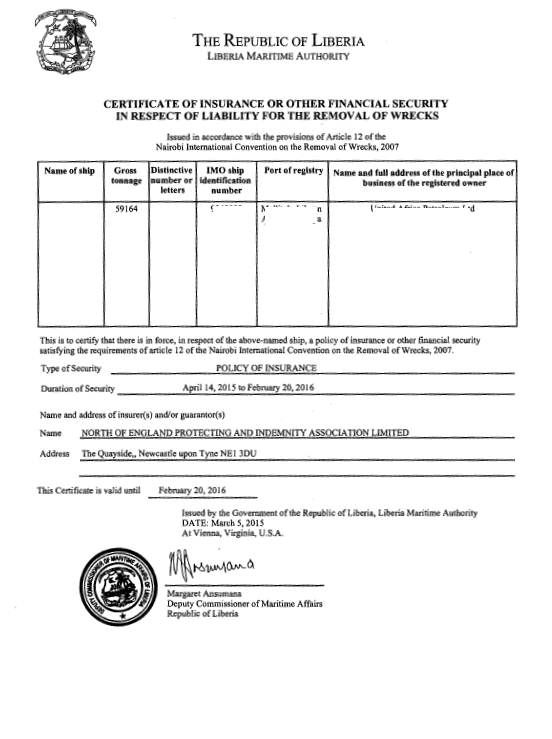
Certificate of insurance or other financial security in respect of liability for the removal of wrecks
In addition to the certificates listed above, passenger ships shall carry:
Passenger ship safety certificate
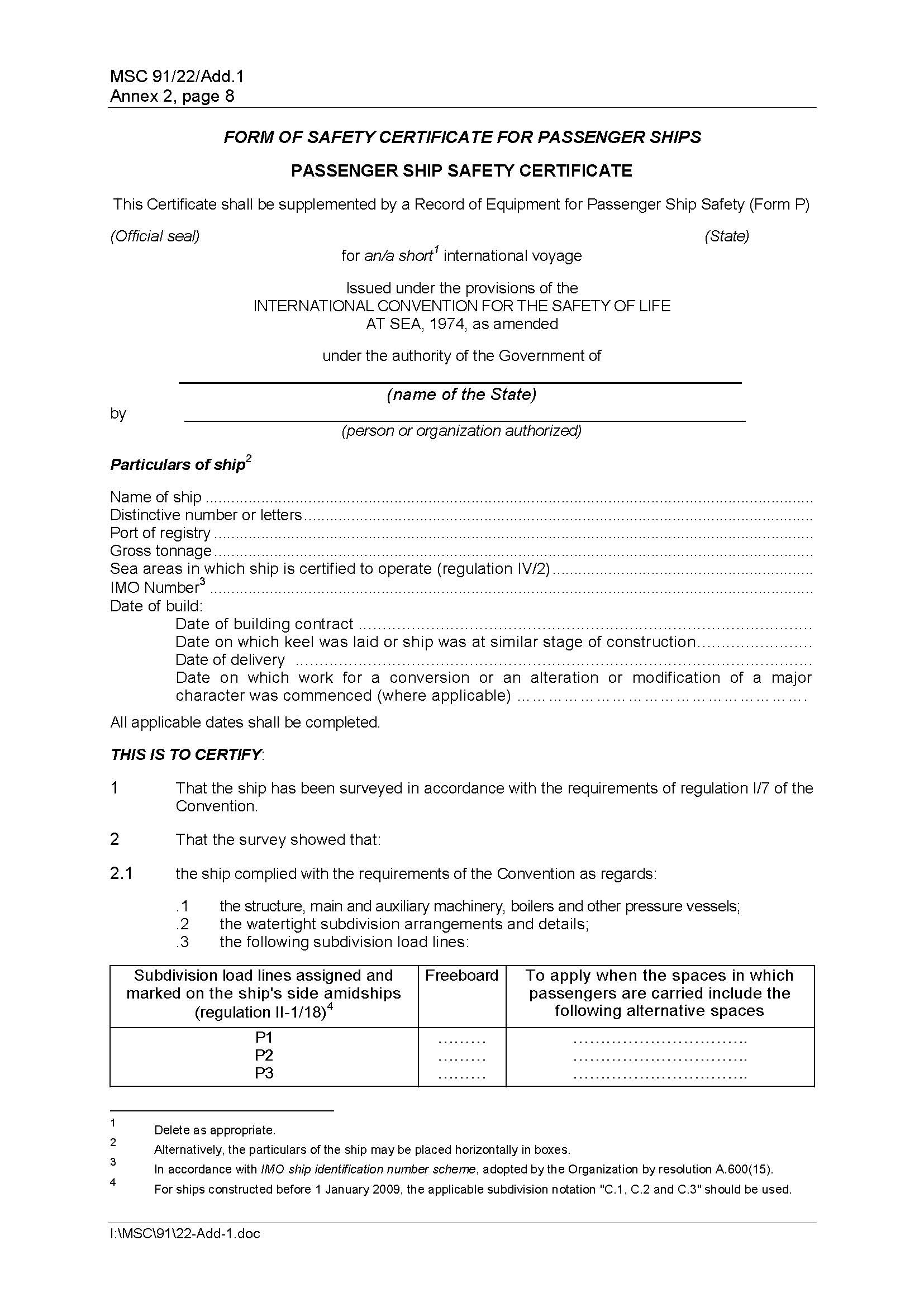
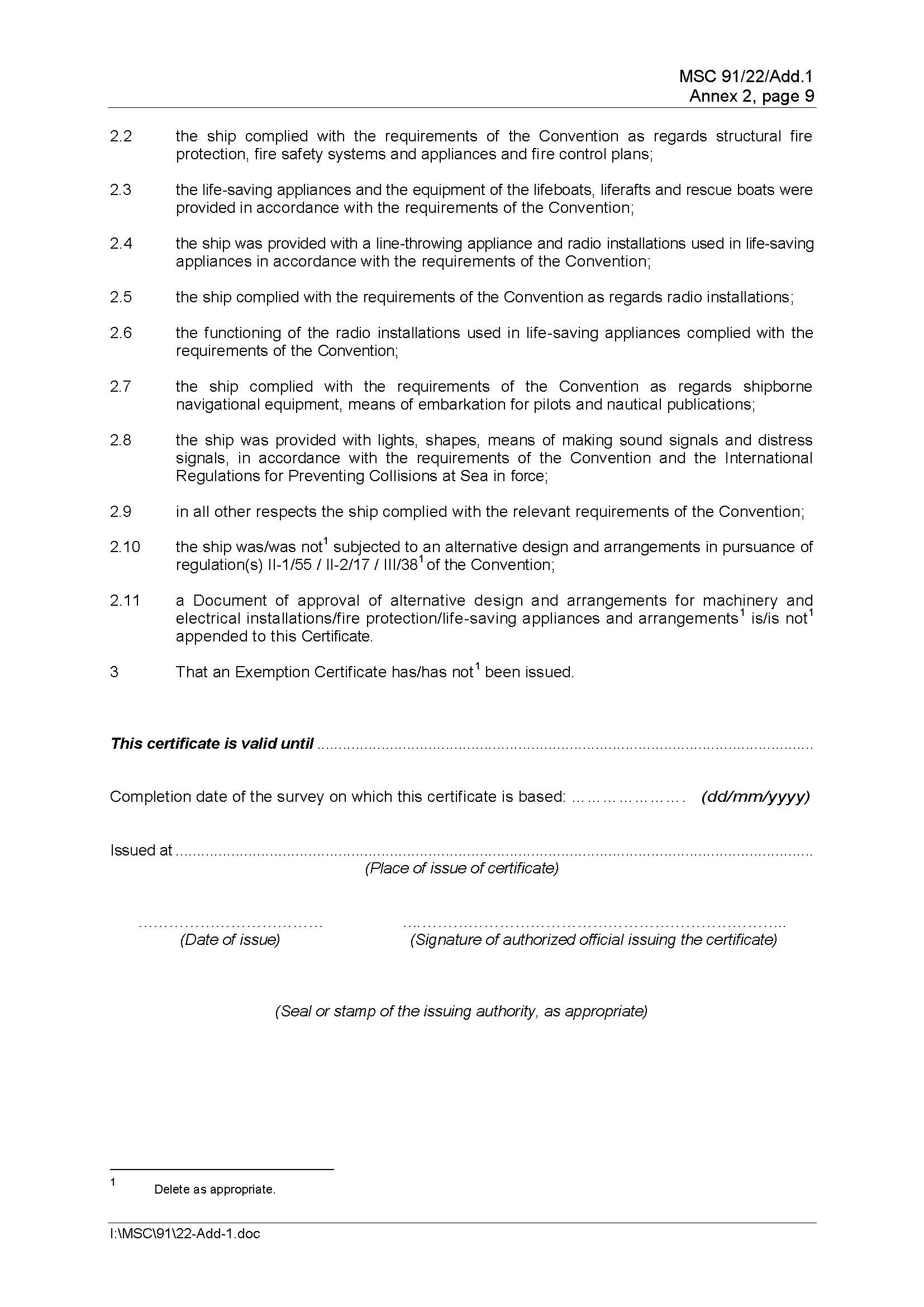
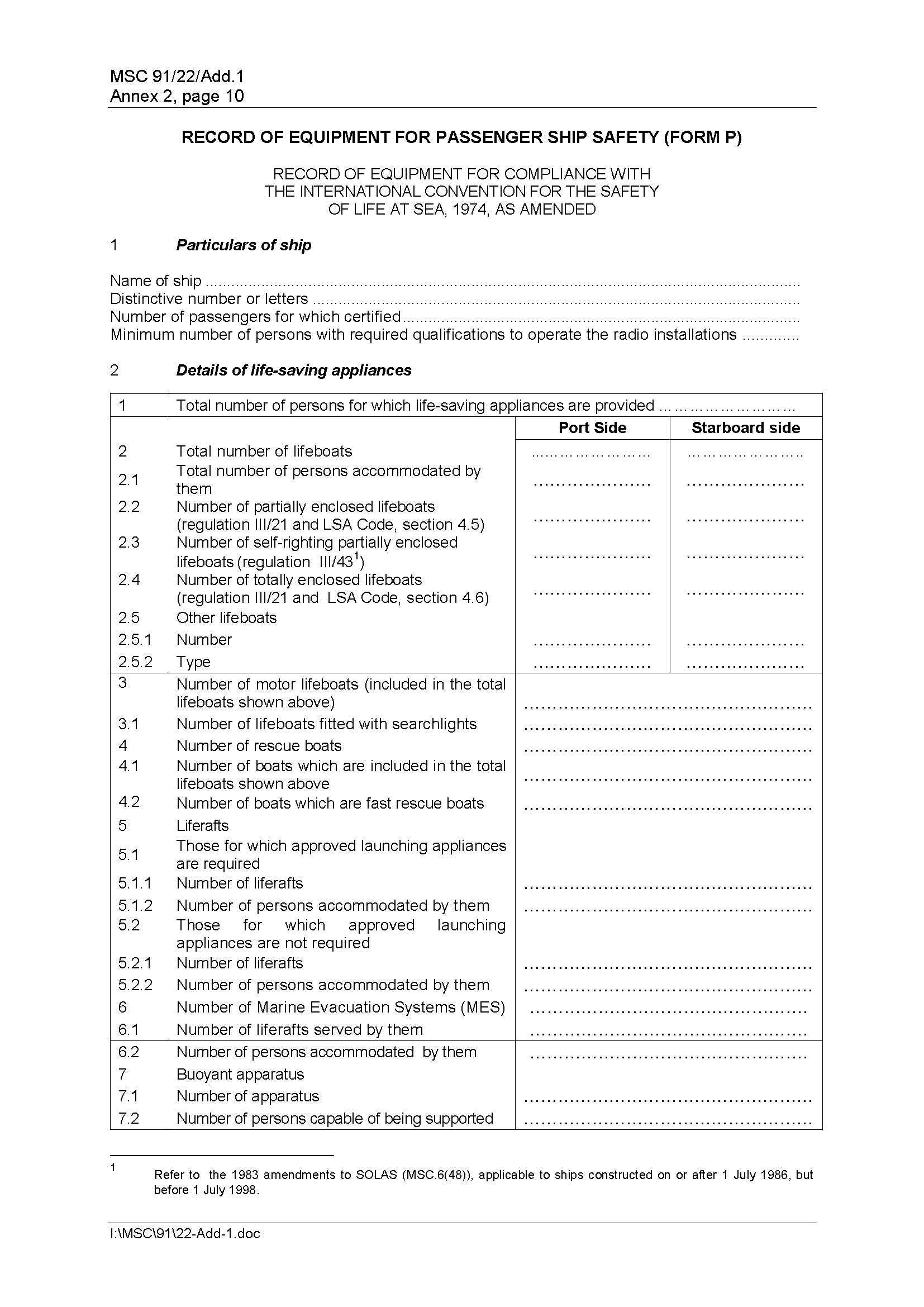
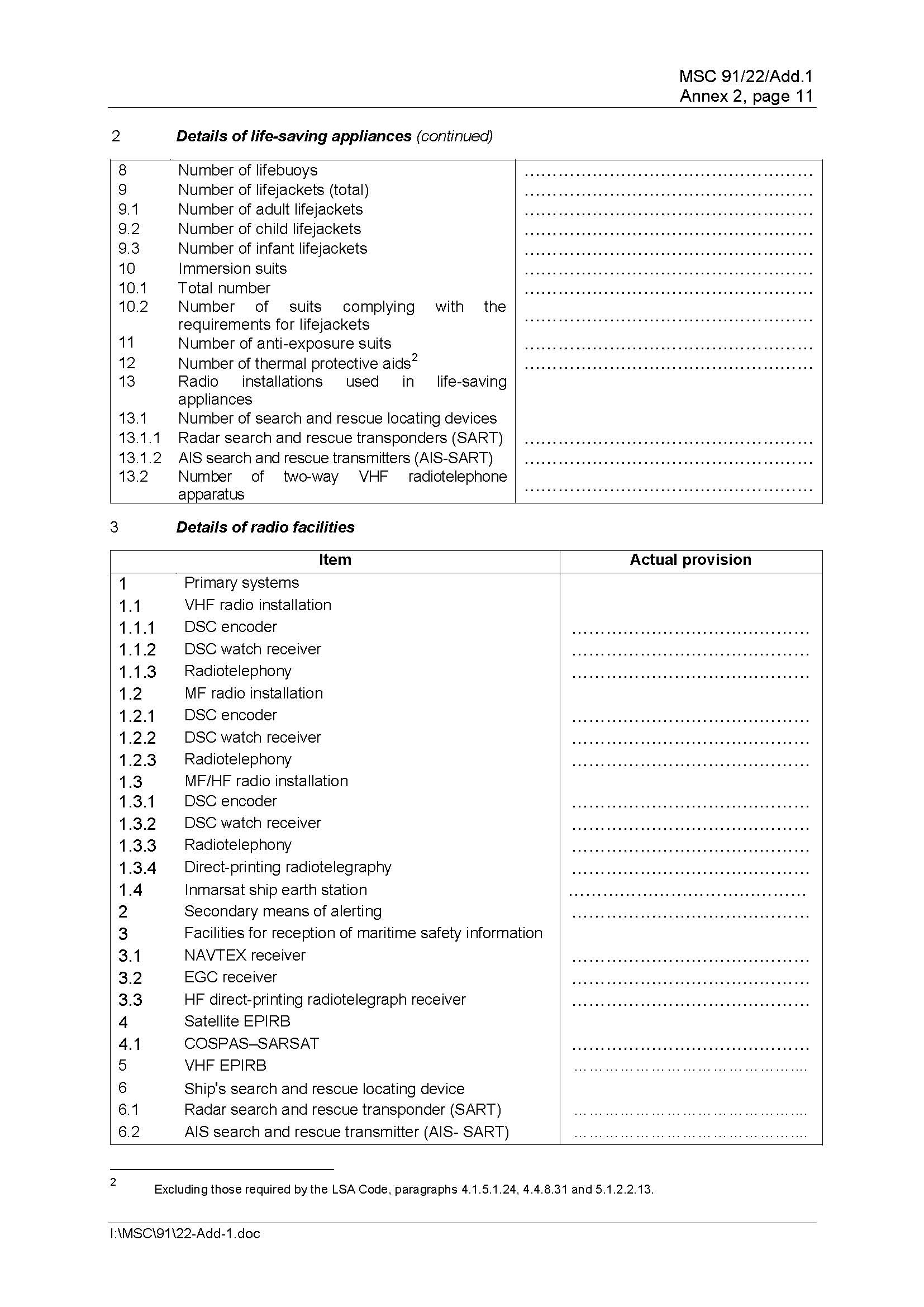
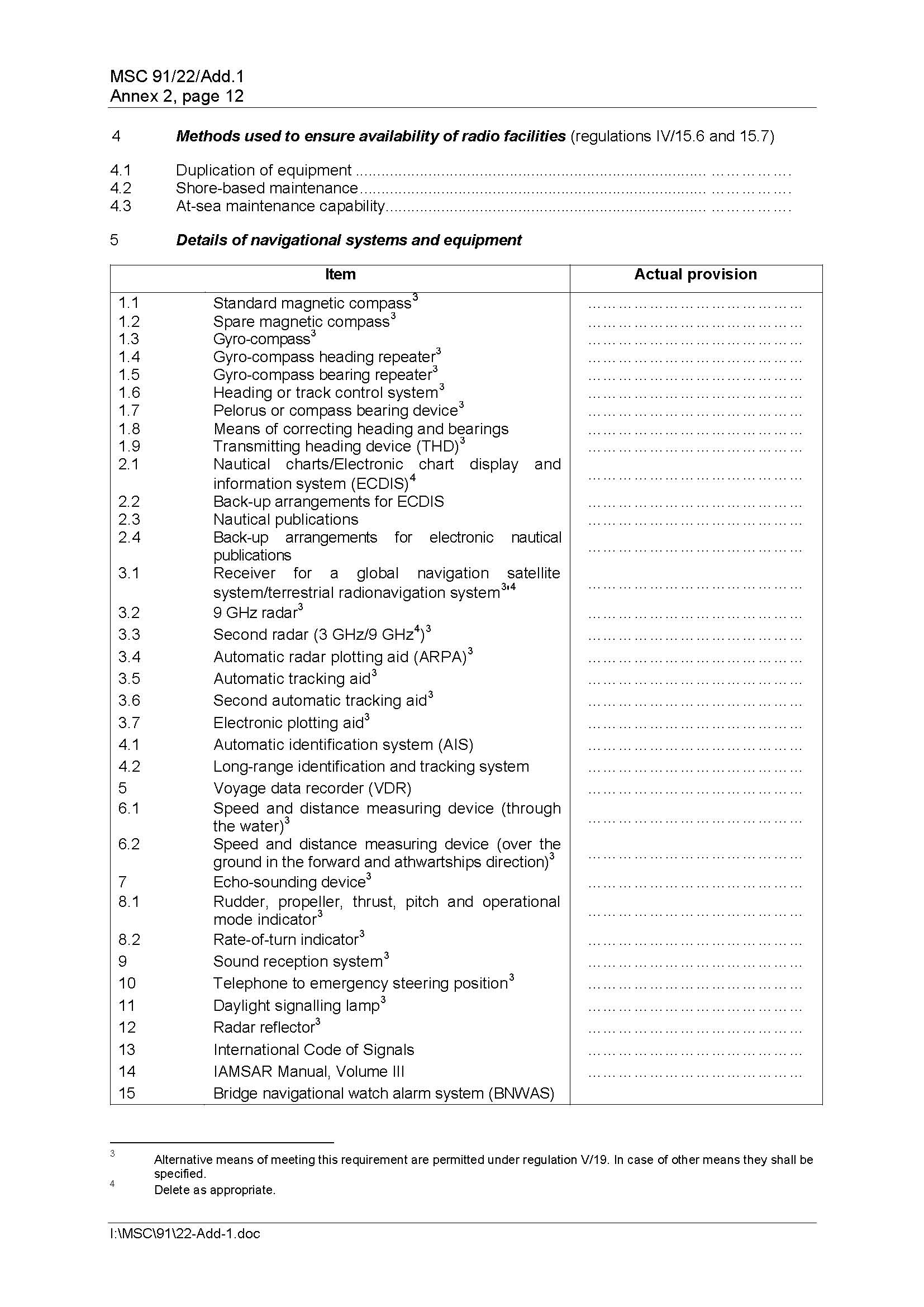
A certificate called a Passenger Ship Safety Certificate shall be issued after inspection and survey to a passenger ship which complies with the requirements of chapters II-1, II-2, III, IV and V and any other relevant requirements of SOLAS 1974. A Record of Equipment for the Passenger Ship Safety Certificate (Form P) shall be permanently attached.
Decision support system for masters
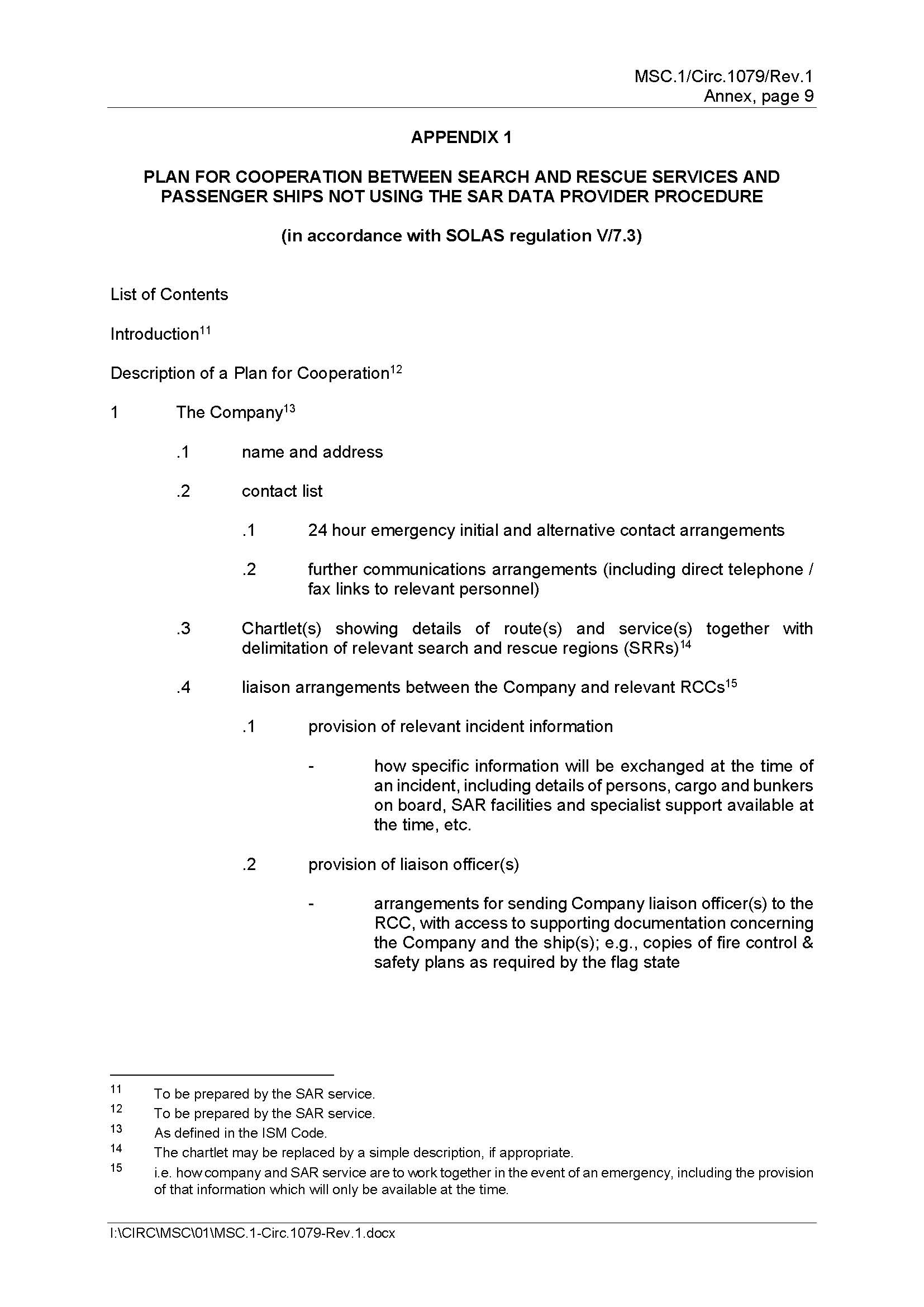
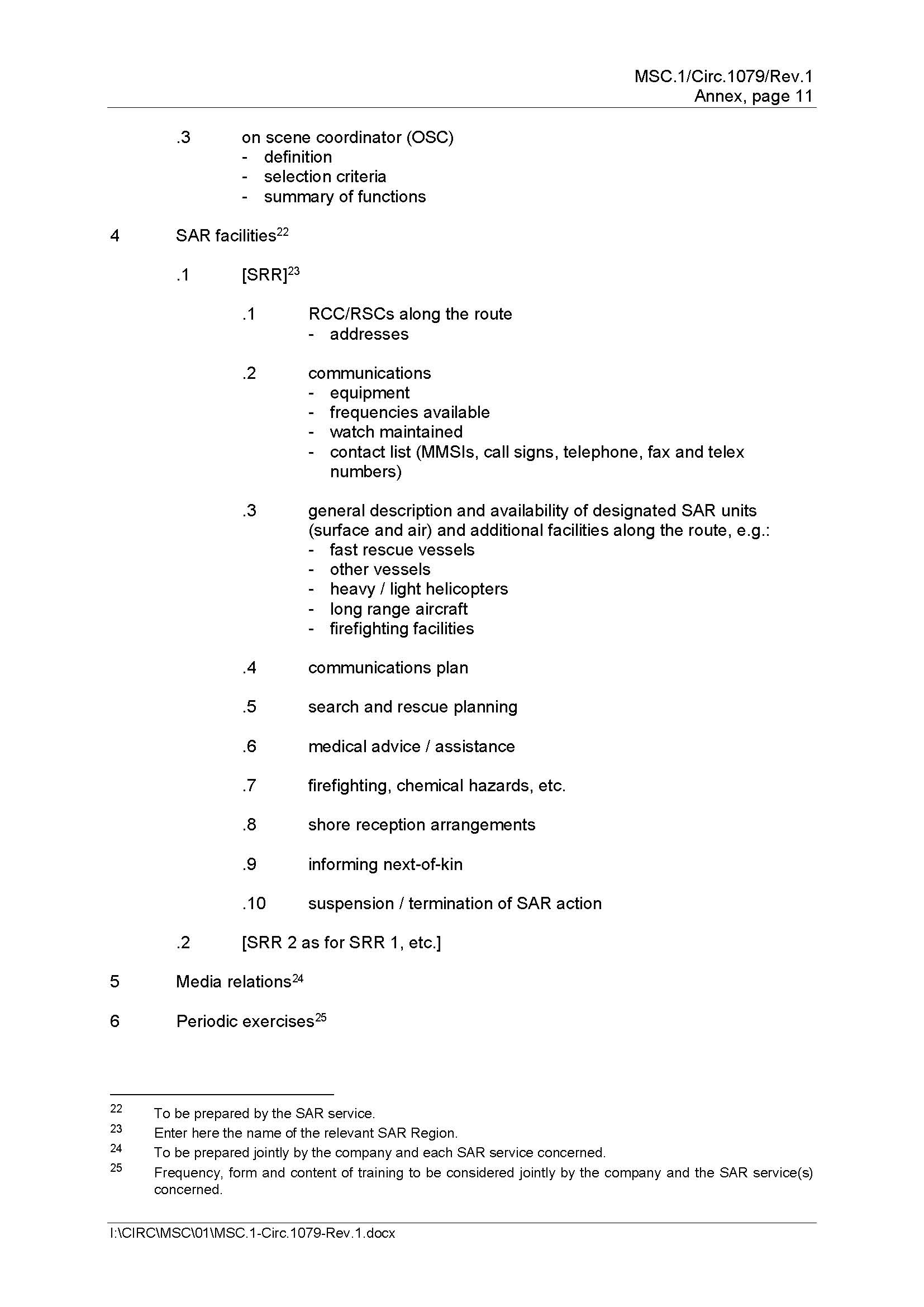
In all passenger ships, a decision support system for emergency management shall be provided on the navigation bridge.Search and rescue cooperation plan

List of operational limitations
Passenger ships to which chapter I of the Convention applies shall keep on board a list of all limitations on the operation of the ship, including exemptions from any of the SOLAS regulations, restrictions in operating areas, weather restrictions, sea state restrictions, restrictions in permissible loads, trim, speed and any other limitations, whether imposed by the Administration or established during the design or the building stages.Special trade passenger ship safety certificate, special trade passenger ship space certificate
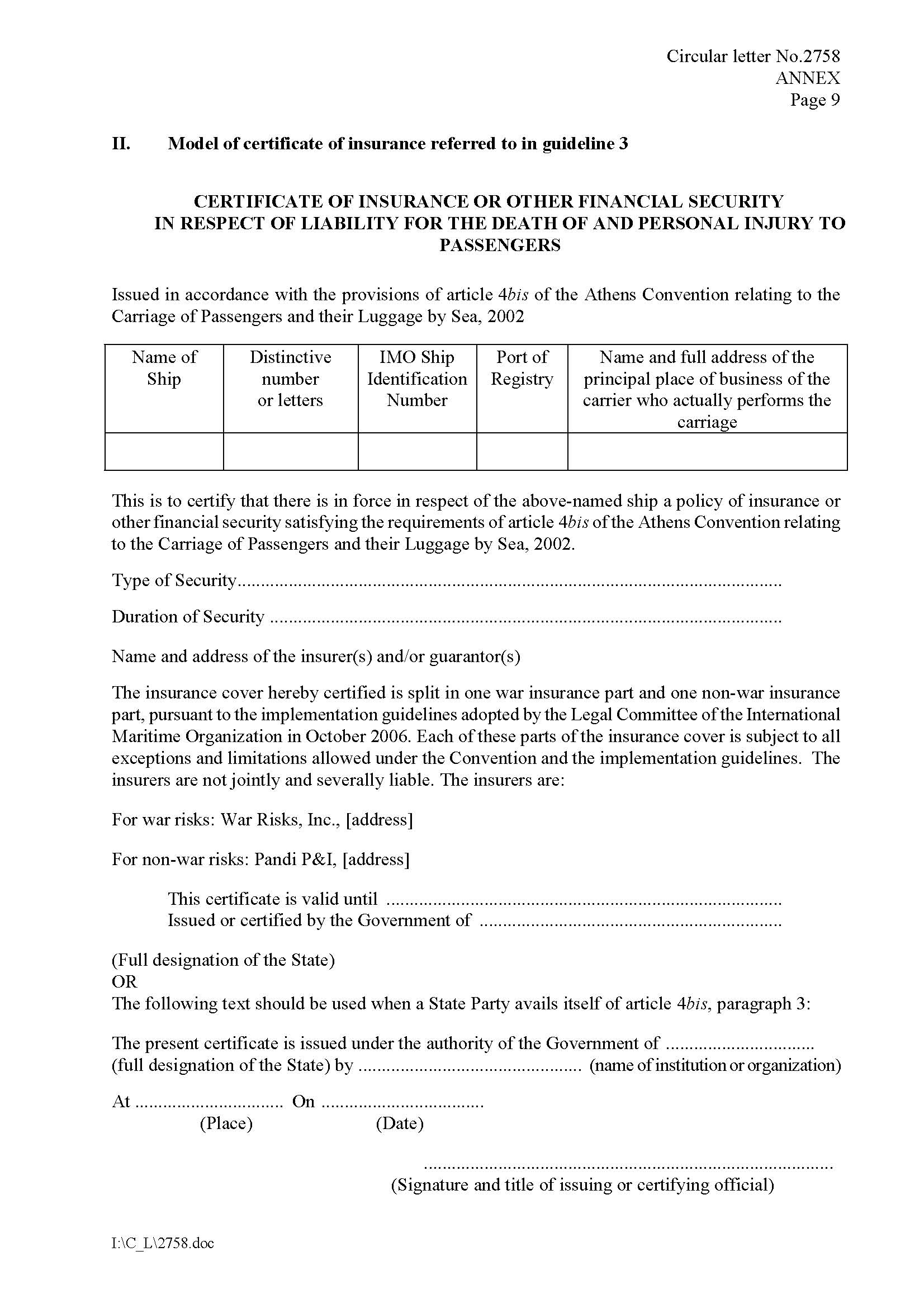
A Special Trade Passenger Ship Safety Certificate issued under the provisions of the Special Trade Passenger Ships Agreement, 1971. A certificate called a Special Trade Passenger Ship Space Certificate shall be issued under the provisions of the Protocol on Space Requirements for Special Trade Passenger Ships, 1973.Certificate if insurance or other financial security in respect of liability for the death of and personal injury to passengers
In addition to the certificates listed above, cargo ships shall carry:
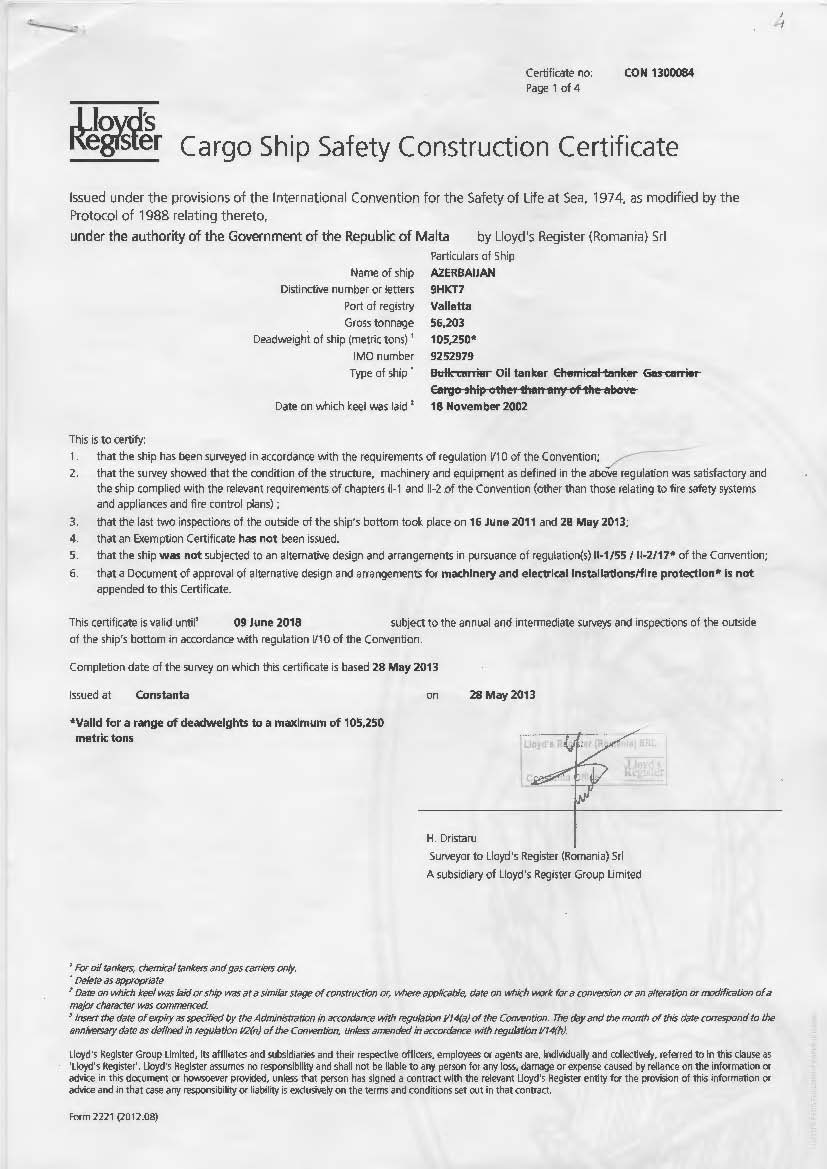
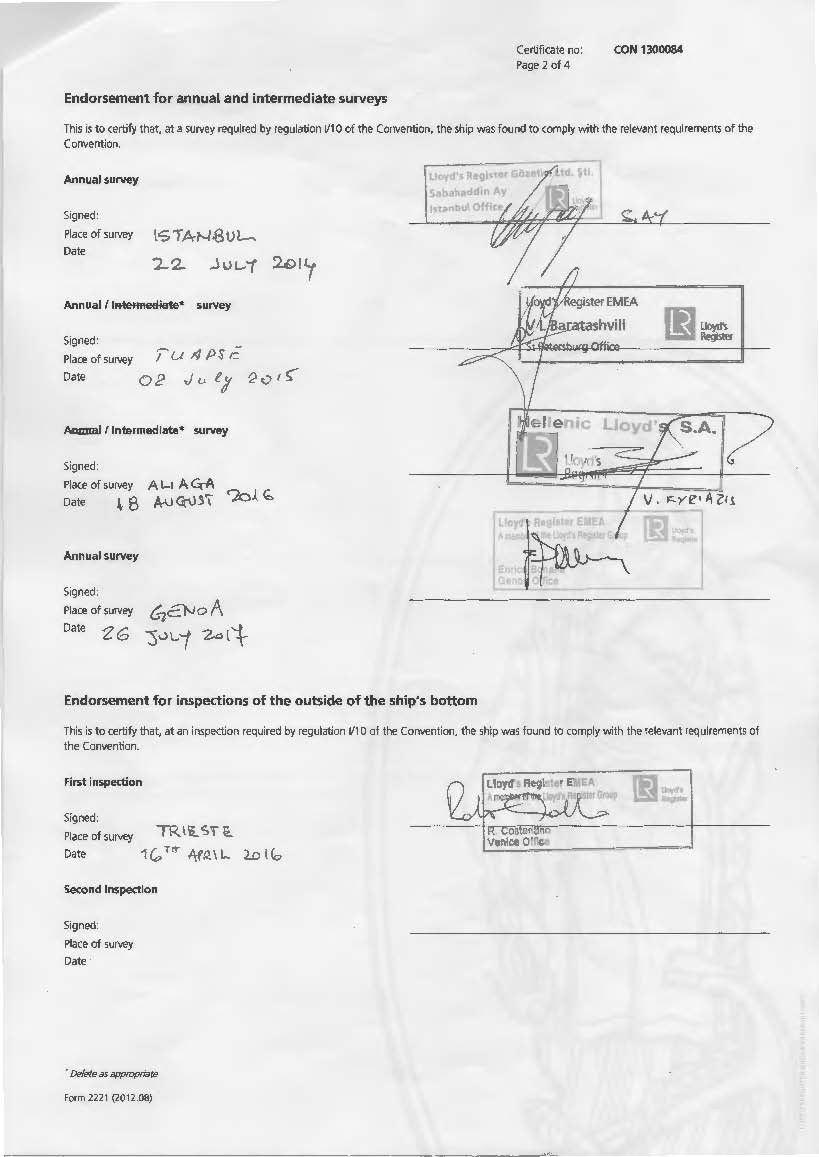
Cargo Ship Safety Construction Certificate

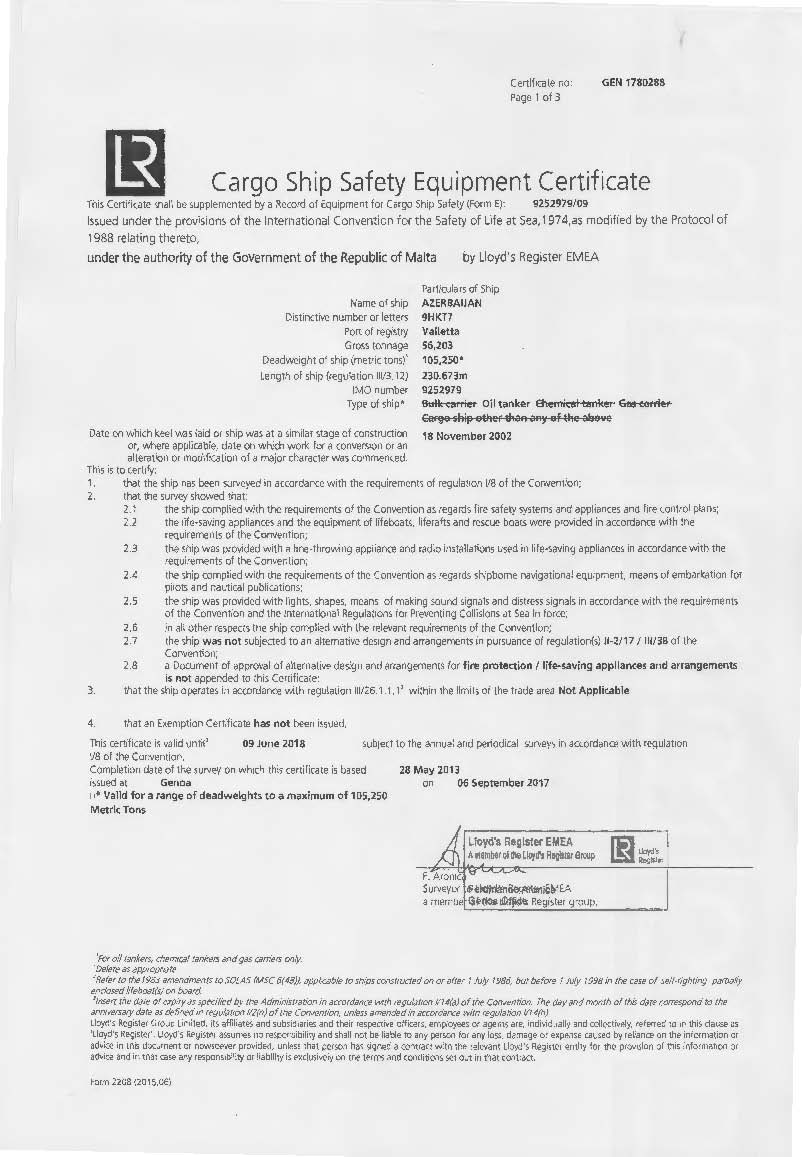
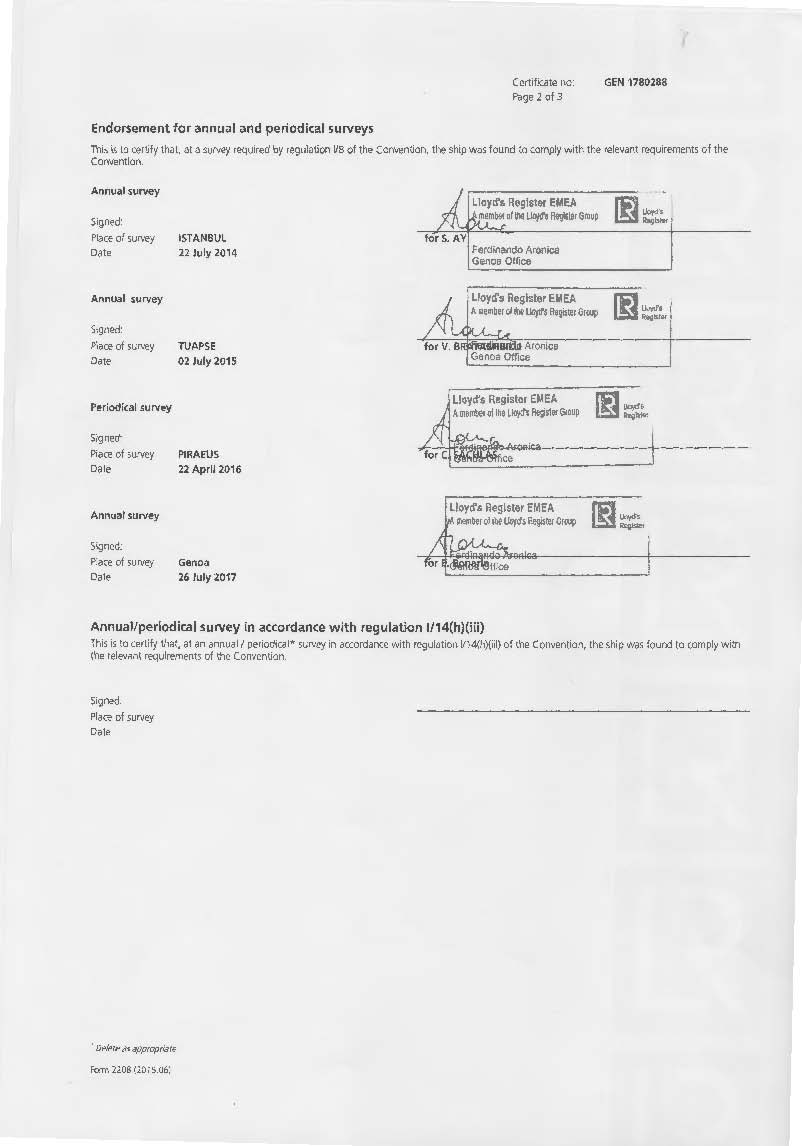
Cargo Ship Safety Equipment Certificate
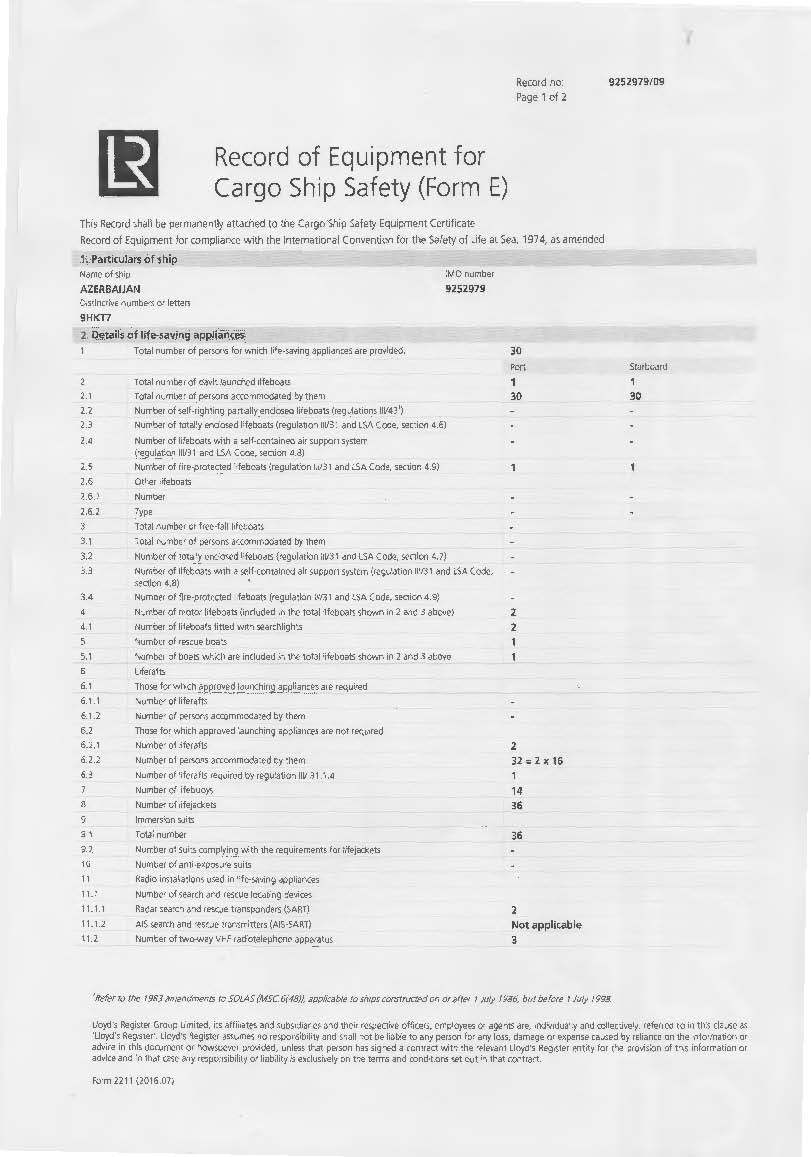
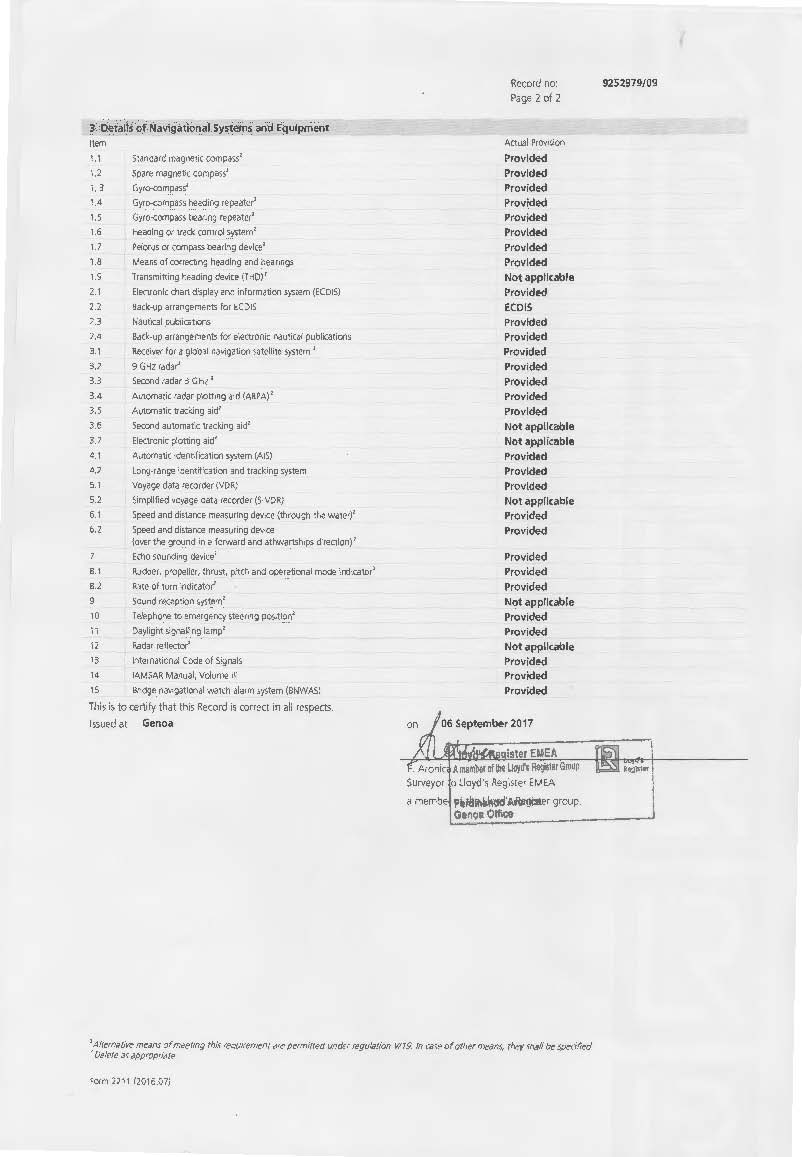
Cargo Ship Radio Certificate
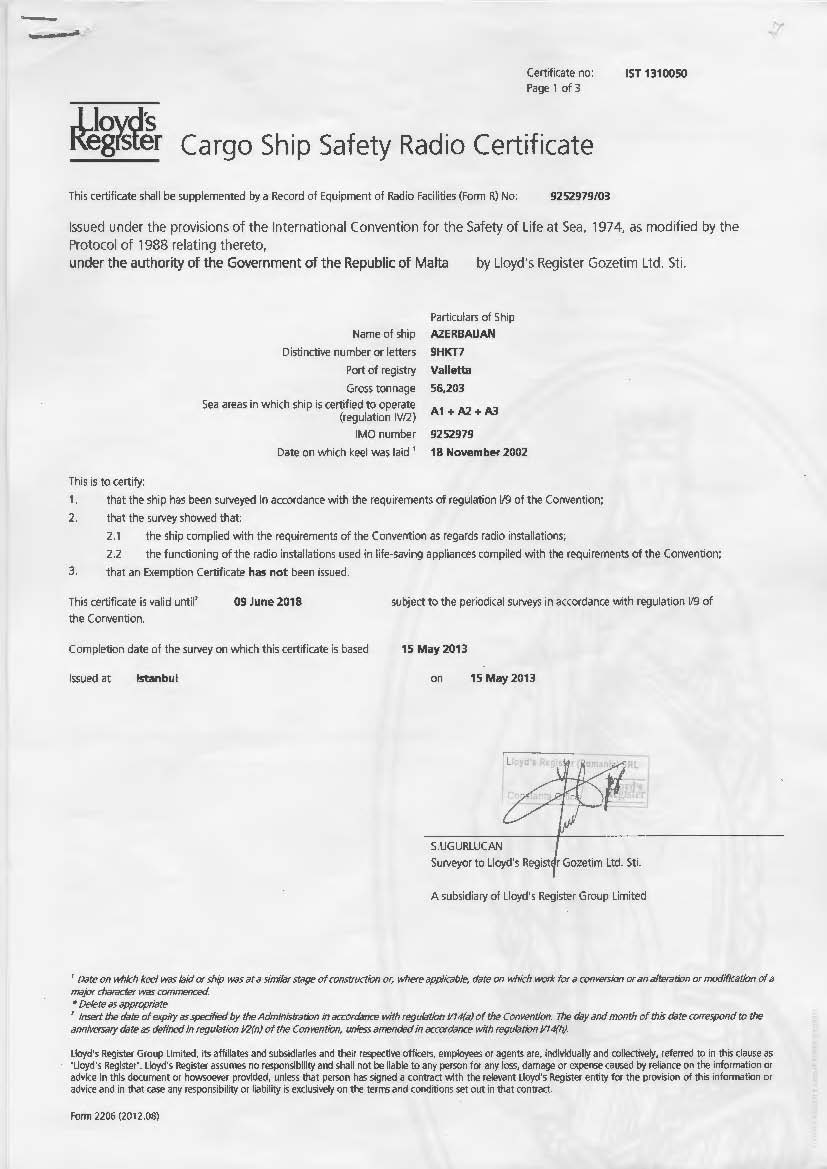

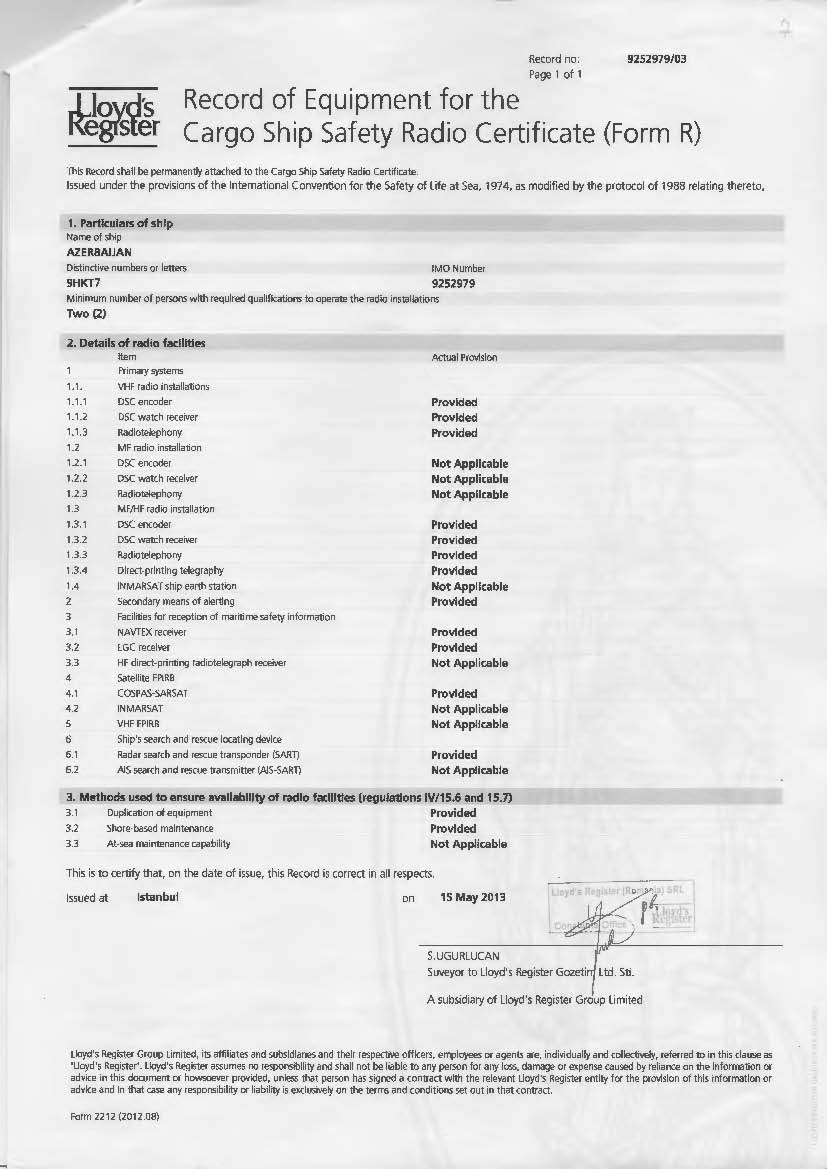
Cargo Ship Safety Certificate
A certificate called a Cargo Ship Safety Certificate may be issued after survey to a cargo ship which complies with the relevant requirements of chapters II-1, II-2, III, IV and V and other relevant requirements of SOLAS 1974 as modified by the 1988 SOLAS Protocol, as an alternative to the Cargo Ship Safety Construction Certificate, Cargo Ship Safety Equipment Certificate and Cargo Ship Safety Radio Certificate. A Record of Equipment for the Cargo Ship Safety Certificate (Form C) shall be permanently attached.Ship Structure Access Manual
This regulation applies to oil tankers of 500 gross tonnage and over and bulk carriers, as defined in regulation IX/1, of 20,000 gross tonnage and over, constructed on or after 1 January 2006. A ship’s means of access to carry out overall and close-up inspections and thickness measurements shall be described in a Ship Structure Access Manual approved by the Administration, an updated copy of which shall be kept on board.Cargo Information
The shipper shall provide the master or his representative with appropriate information, confirmed in writing, on the cargo, in advance of loading. In bulk carriers, the density of the cargo shall be provided in the above information.Bulk Carrier Booklet
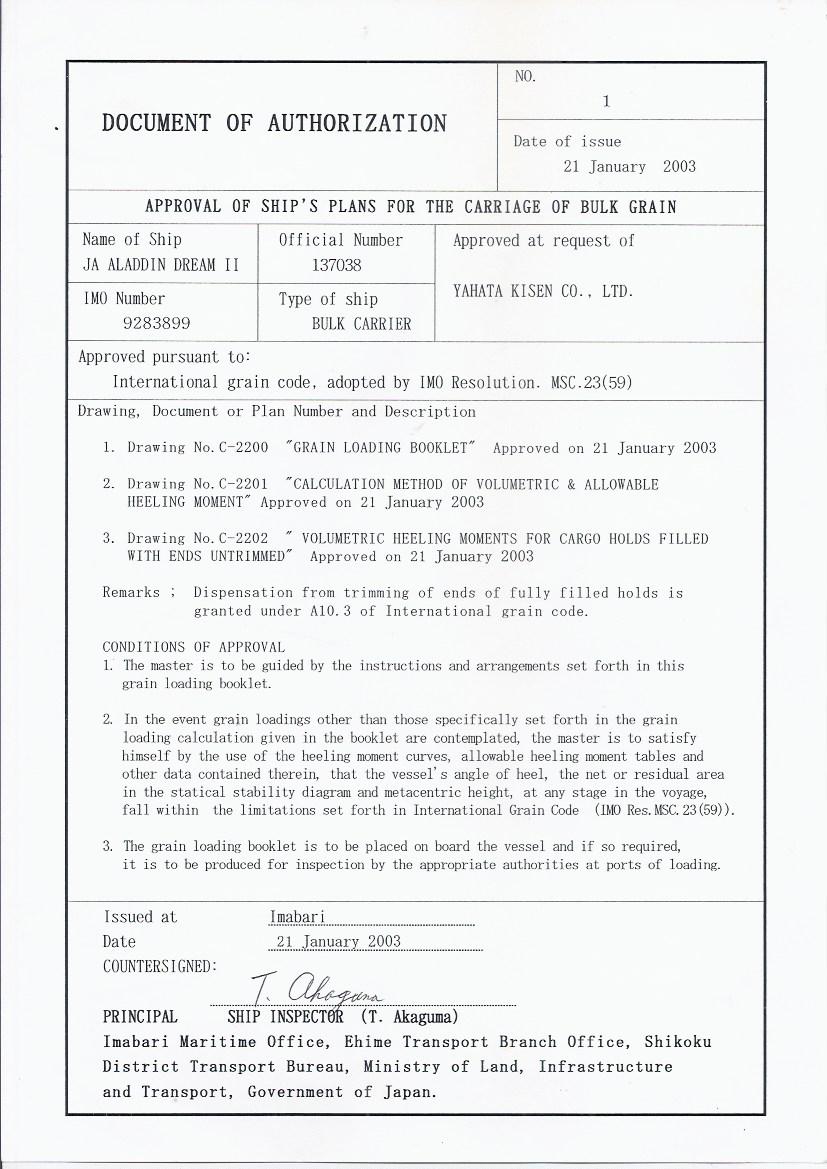
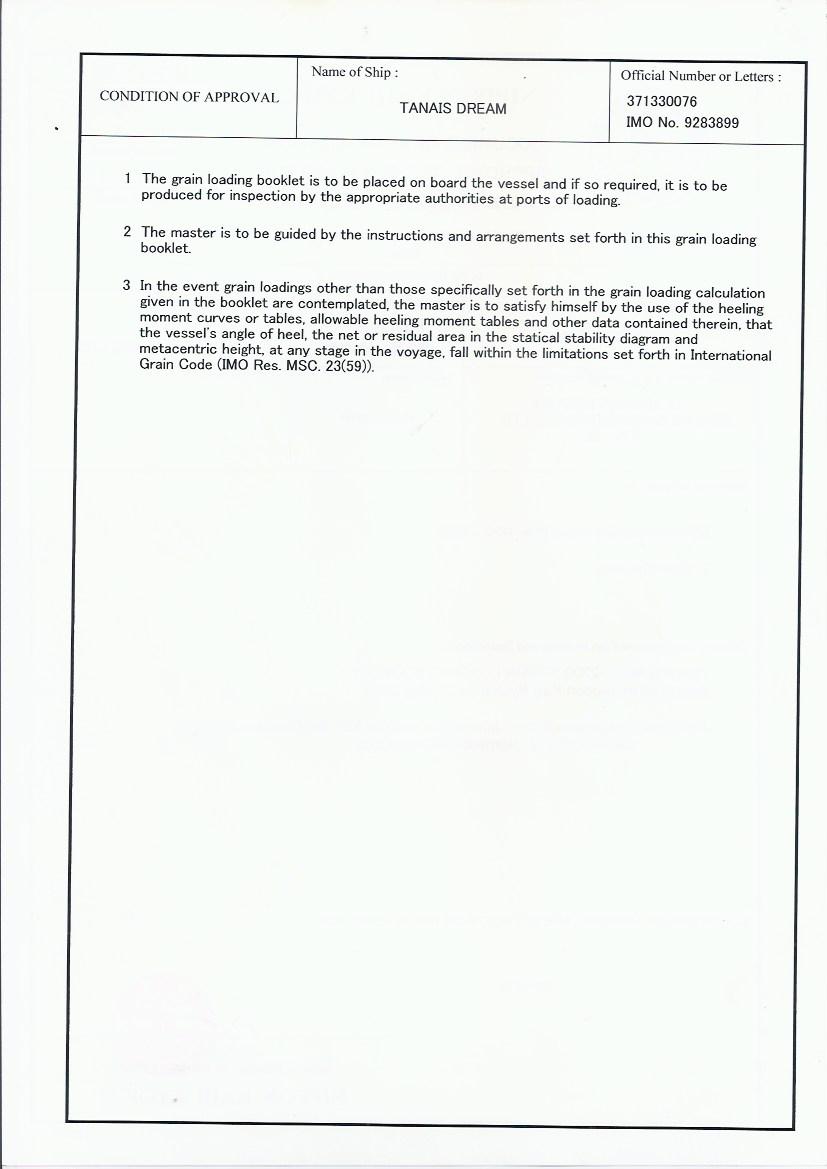
To enable the master to prevent excessive stress in the ship’s structure, the ship loading and unloading solid bulk cargoes shall be provided with a booklet referred to in SOLAS regulation VI/7.2. The booklet shall be endorsed by the Administration or on its behalf to indicate that SOLAS regulations XII/4, 5, 6 and 7, as appropriate, are complied with. As an alternative to a separate booklet, the required information may be contained in the intact stability booklet.Document of authorization for the carriage of grain and grain loading manual
Enhanced Survey Report File
Bulk carriers and oil tankers shall have a survey report file and supporting documents complying with paragraphs 6.2 and 6.3 of annex A/ and annex B, part A/part B, 2011 ESP Code.Condition Assessment Scheme (CAS) Statement of Compliance, CAS Final Report and Review Record
A Statement of Compliance shall be issued by the Administration to every oil tanker which has been surveyed in accordance with the requirements of the Condition Assessment Scheme (CAS) and found to be in compliance with these requirements. In addition, a copy of the CAS Final Report which was reviewed by the Administration for the issue of the Statement of Compliance and a copy of the relevant Review Record shall be placed on board to accompany the Statement of Compliance.Subdivision and stability information
Every oil tanker to which regulation 28 of Annex I of MARPOL applies shall be provided in an approved form with information relative to loading and distribution of cargo necessary to ensure compliance with the provisions of this regulation and data on the ability of the ship to comply with damage stability criteria as determined by this regulation.Record of oil discharge monitoring and control system for the last ballast voyage
Subject to the provisions of paragraphs 4 and 5 of regulation3 of MARPOL Annex I, every oil tanker of 150 gross tonnage and above shall be equipped with an oil discharge monitoring and control system approved by the Administration. The system shall be fitted with a recording device to provide a continuous record of the discharge in litres per nautical mile and total quantity discharged, or the oil content and rate of discharge. The record shall be identifiable as to time and date and shall be kept for at least three years.Oil discharge monitoring and control (ODMC) operation manual
Every oil tanker fitted with an Oil Discharge Monitoring and Control system shall be provided with instructions as to the operation of the system in accordance with an operational manual approved by the Administration.Crude oil washing operation and equipment manual (COW Manual)
Every oil tanker fitted with an Oil Discharge Monitoring and Control system shall be provided with instructions as to the operation of the system in accordance with an operational manual approved by the Administration.STS Operation Plan and Records of STS Operations
Any oil tanker involved in STS operations shall carry on board a plan prescribing how to conduct STS operations (STS operations Plan) not later than the date of the first annual, intermediate or renewal survey of the ship to be carried out on or after 1 January 2011. Each oil tanker’s STS operations plan shall be approved by the Administration. The STS operations plan shall be written in the working language of the ship. Records of STS operations shall be retained on board for three years and be readily available for inspection.VOC Management Plan
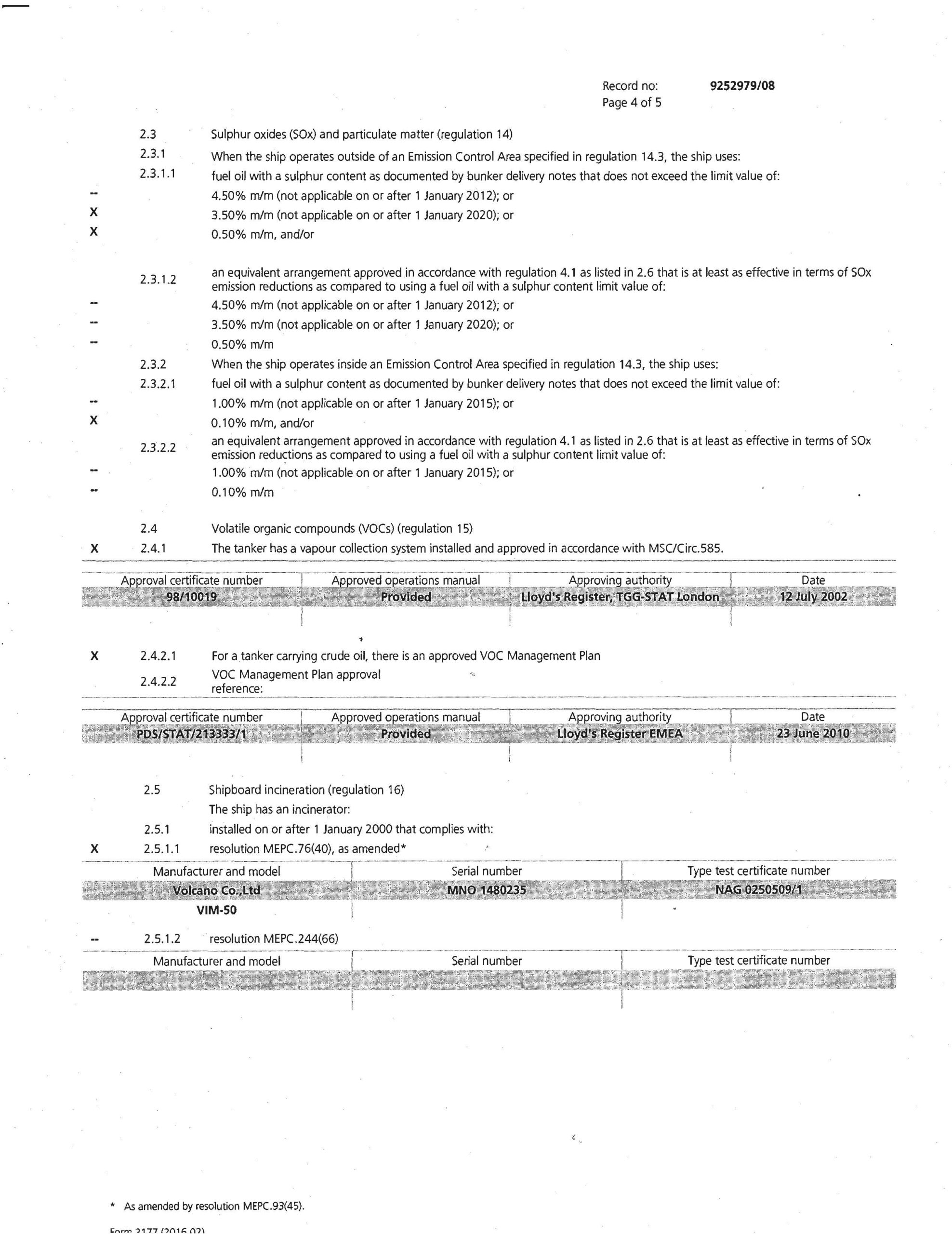
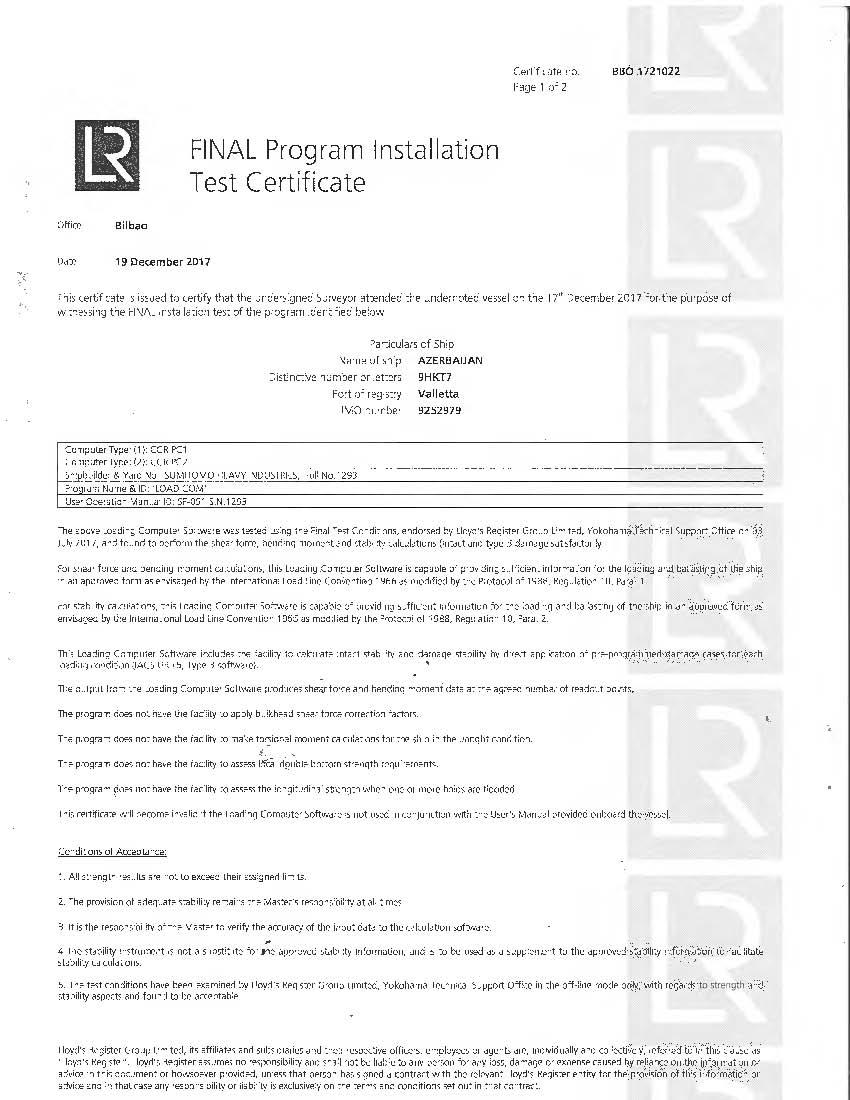
A tanker carrying crude oil, to which MARPOL Annex VI, regulation 15.1 applies, shall have on board and implement a VOC Management Plan.Document of approval for the stability instrument

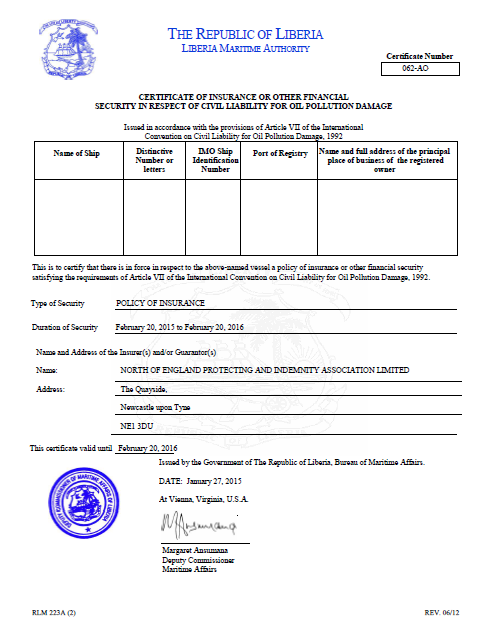
Certificate of Insurance or other Financial security in respect of civil liability for Oil Pollution damage
In addition to the certificates listed above, where appropriate, any ship carrying noxious liquid chemicals shall carry
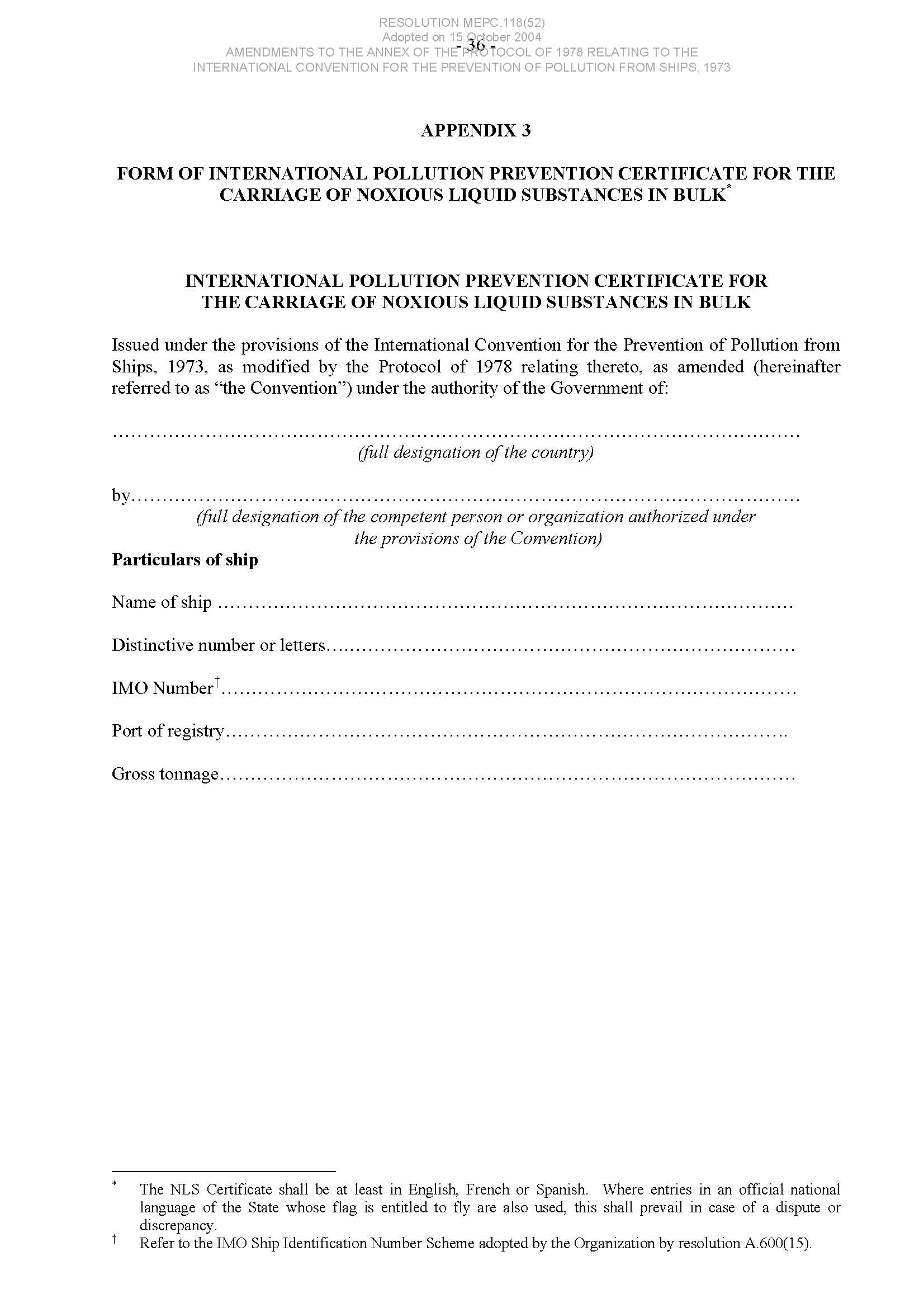
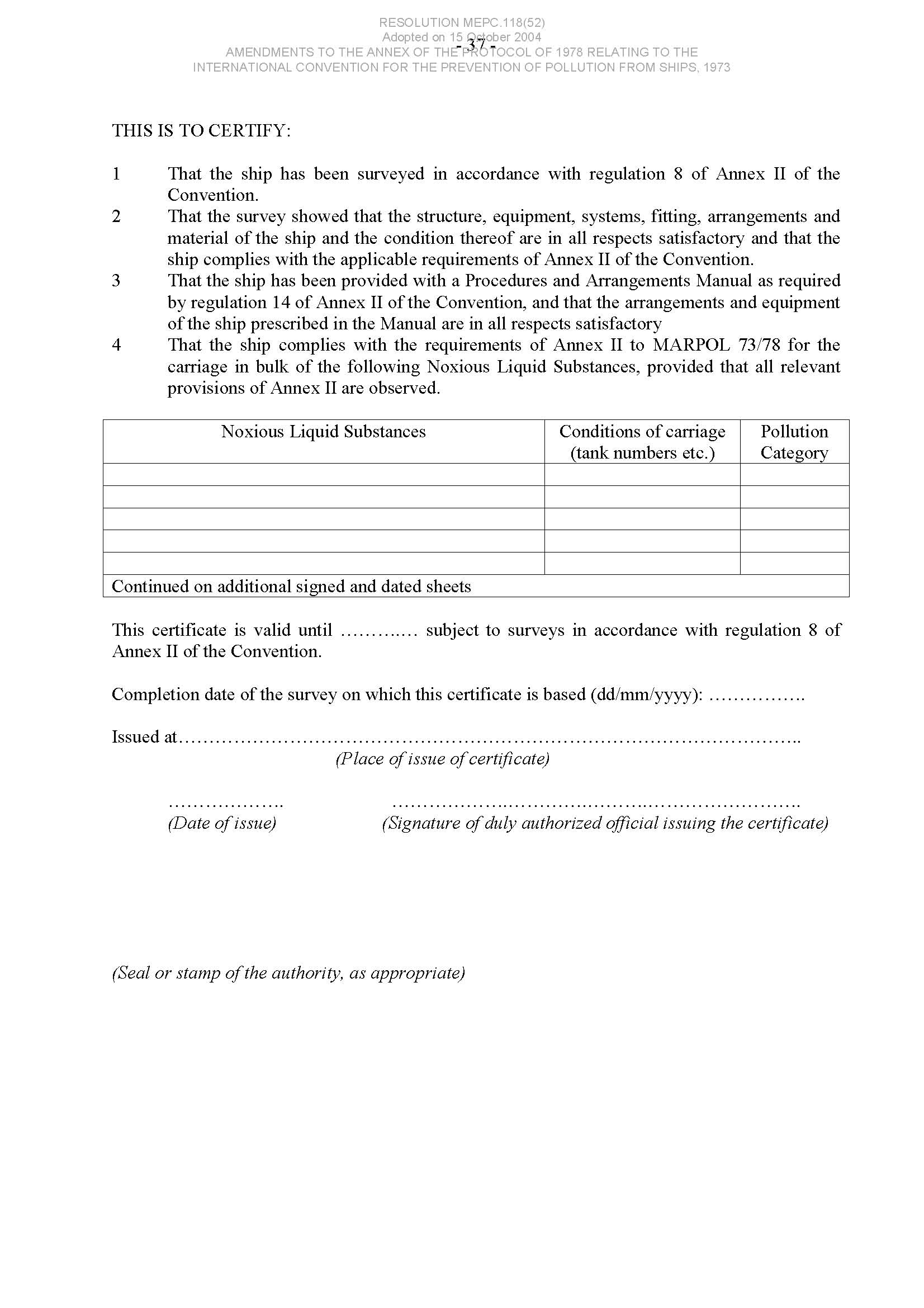
International Pollution Prevention Certificate for the Carriage of Noxious Liquid Substances in Bulk (NLS Certificate)
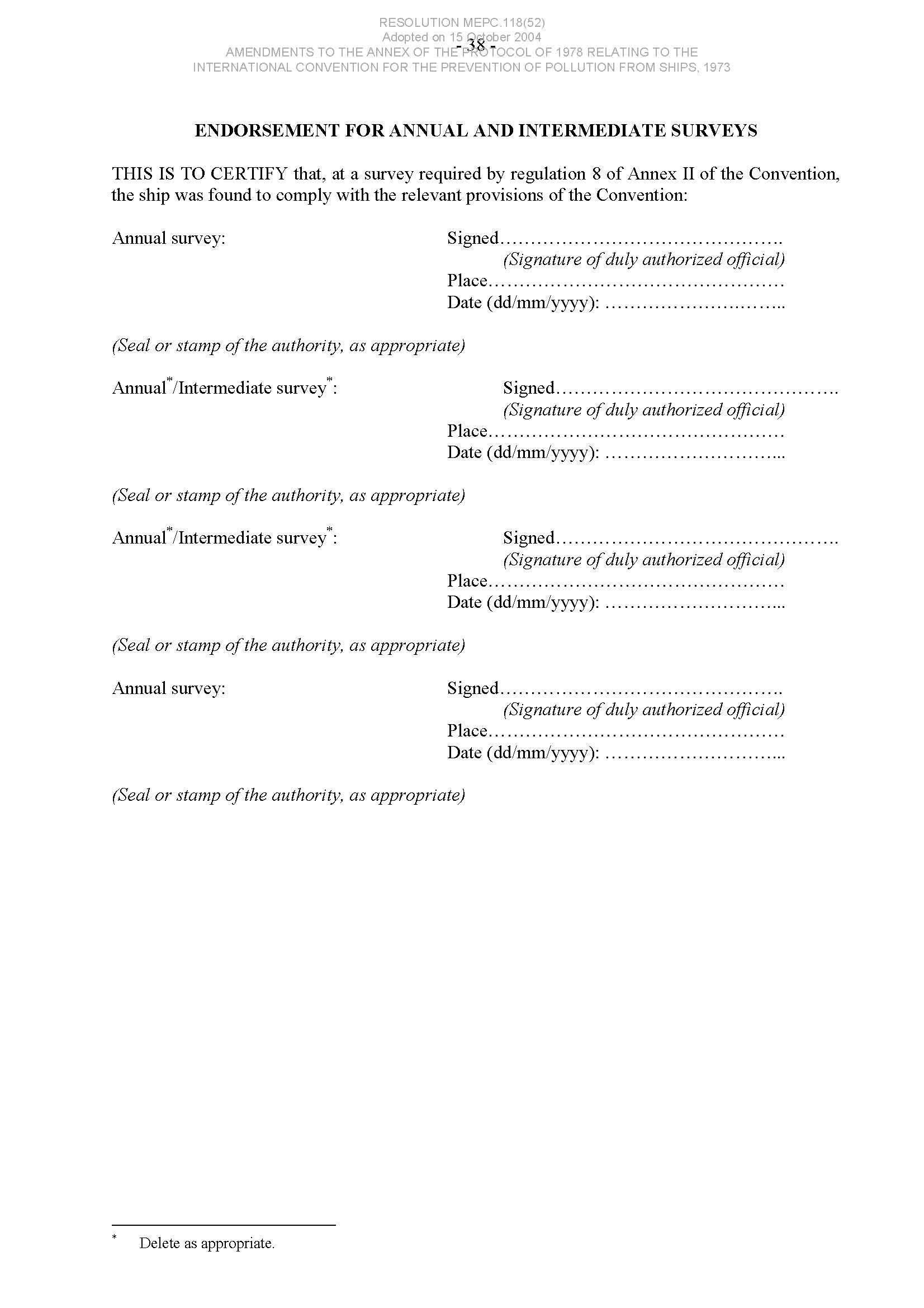
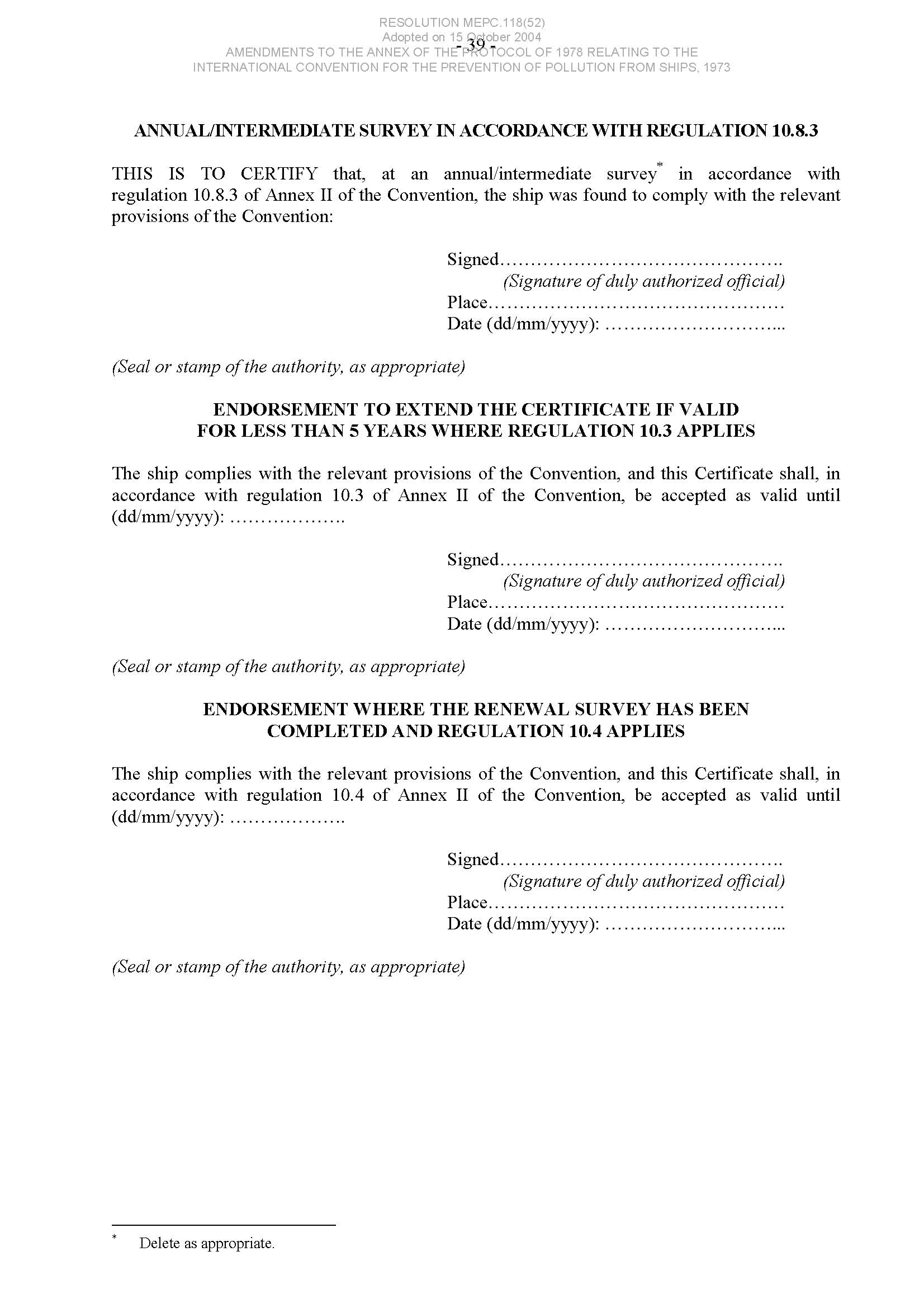
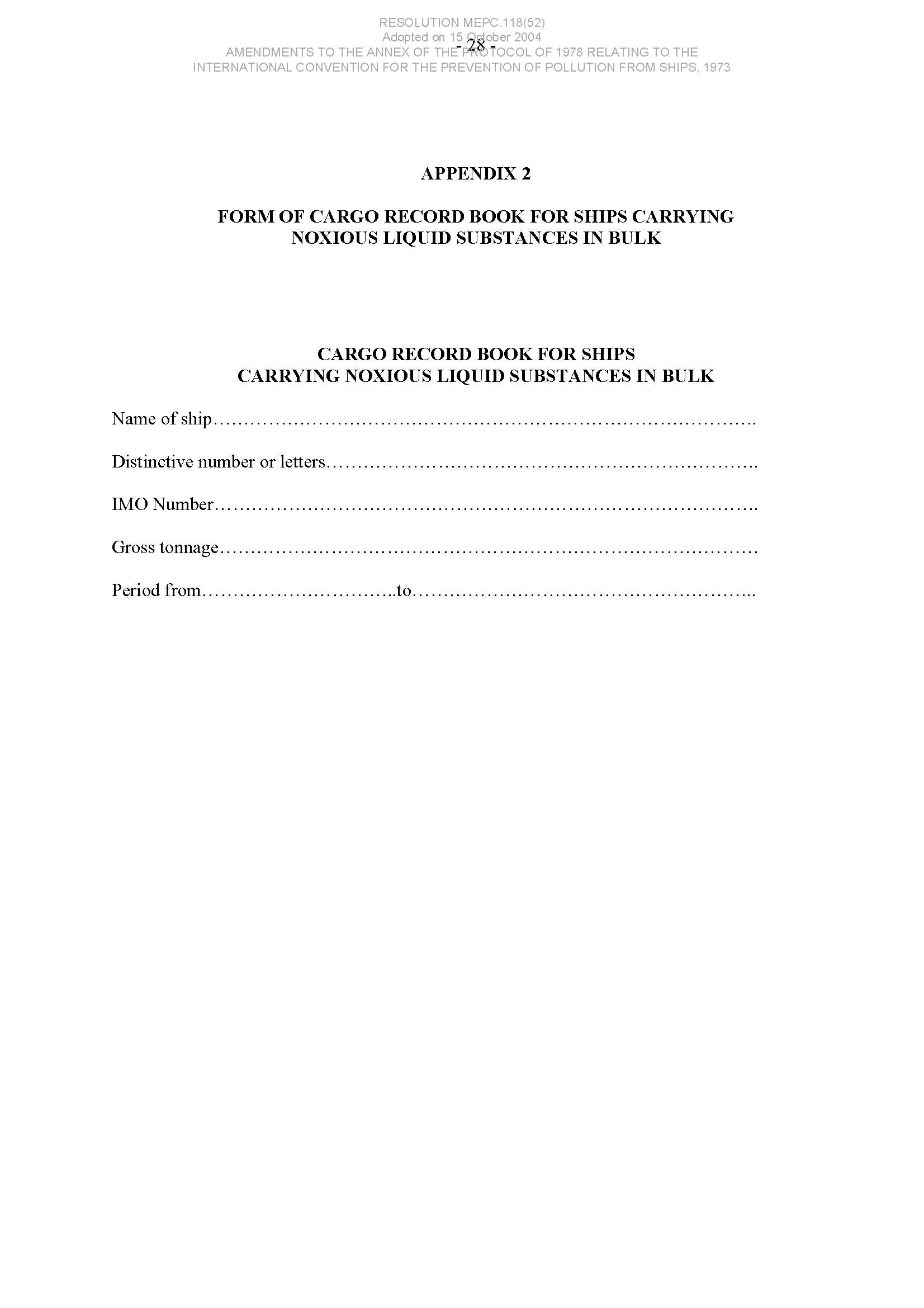
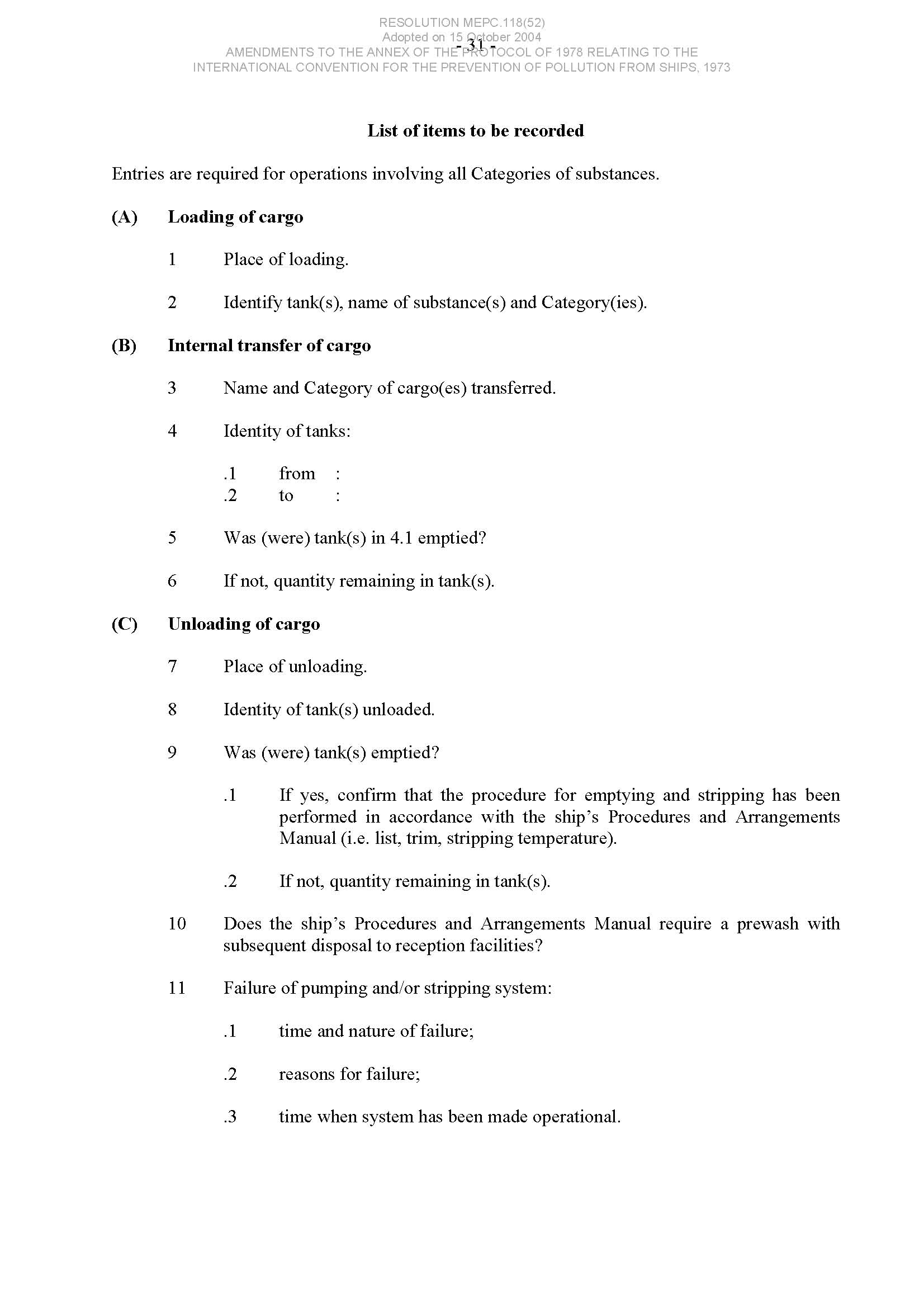
cargo Record Book


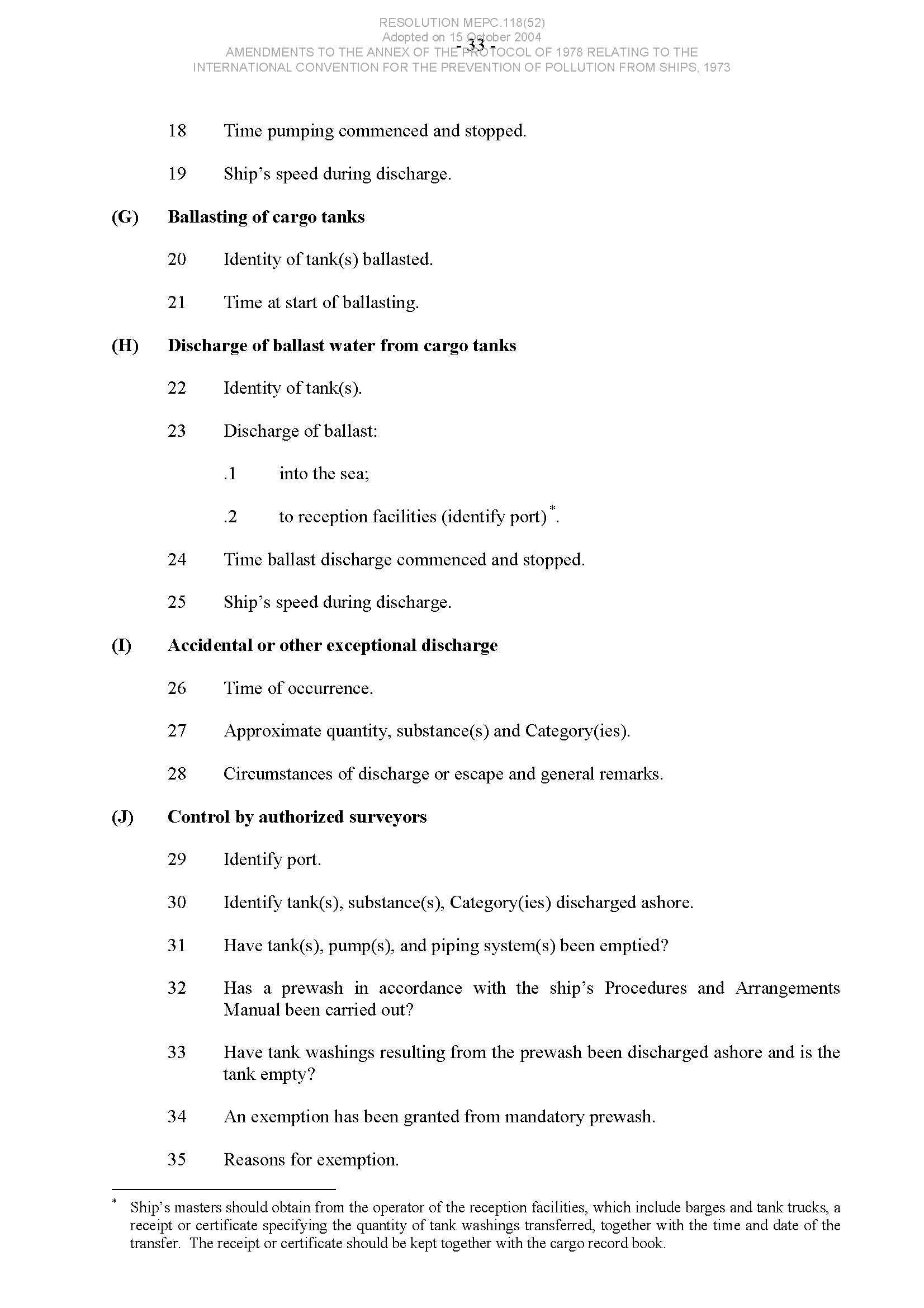

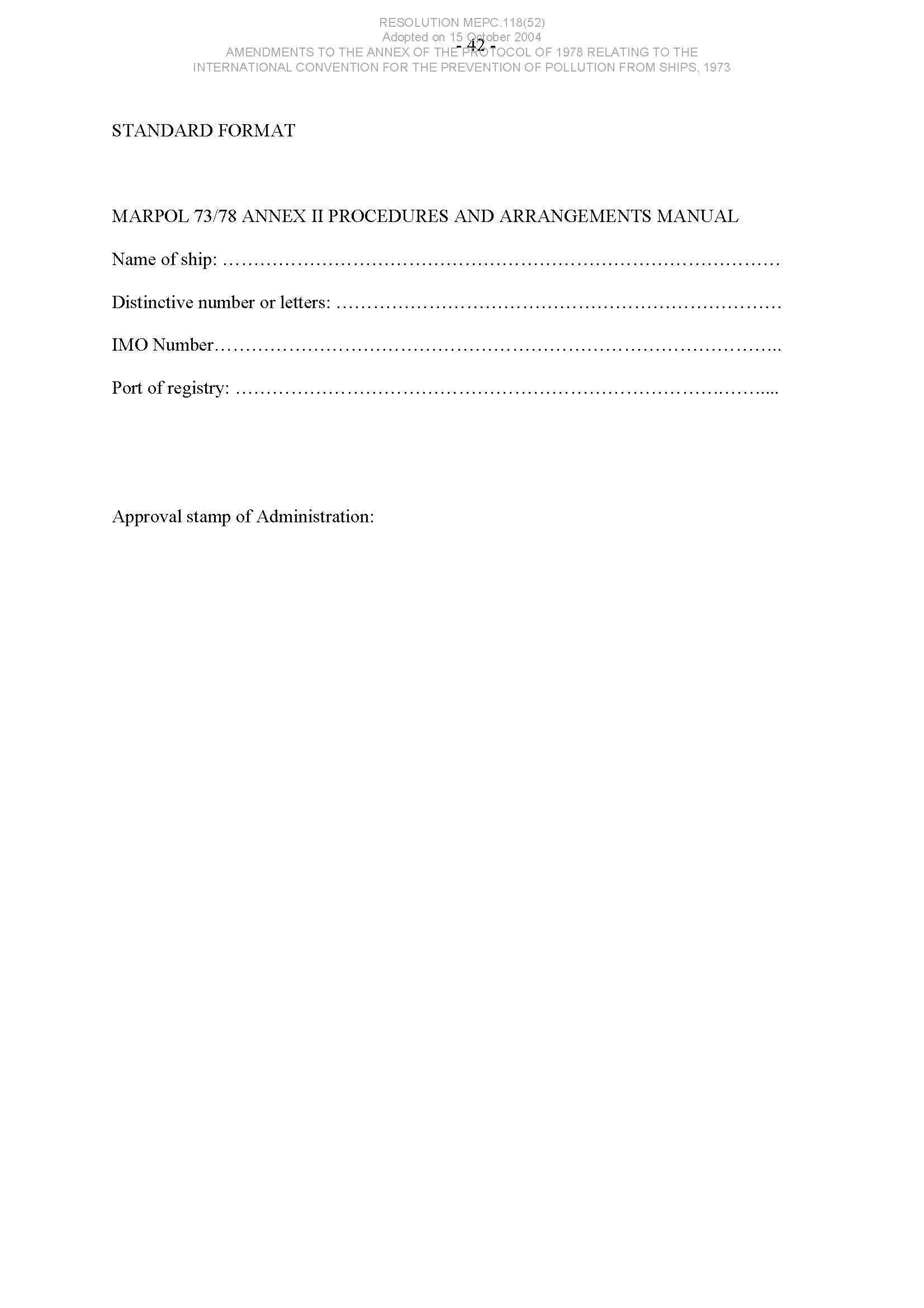
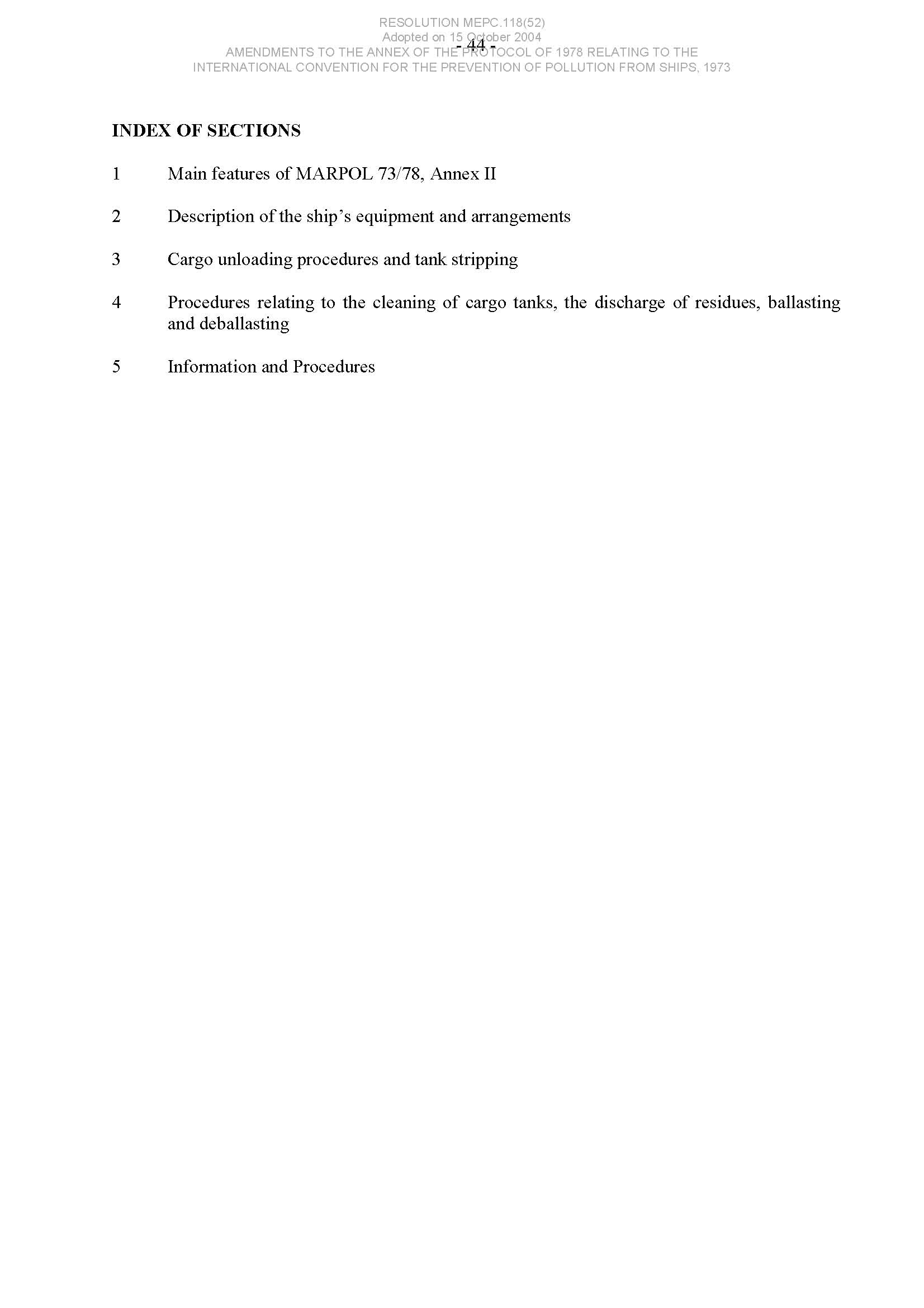
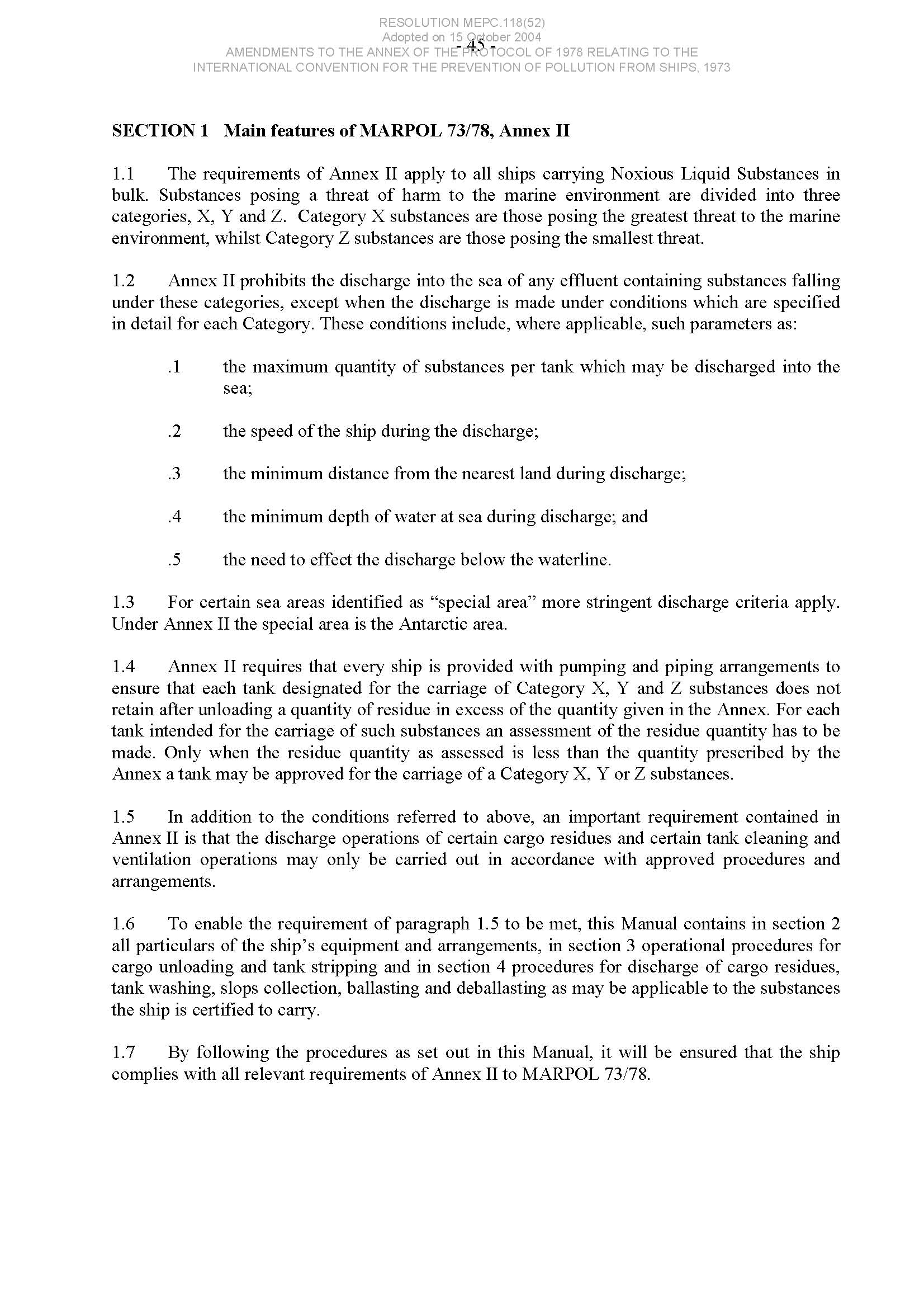
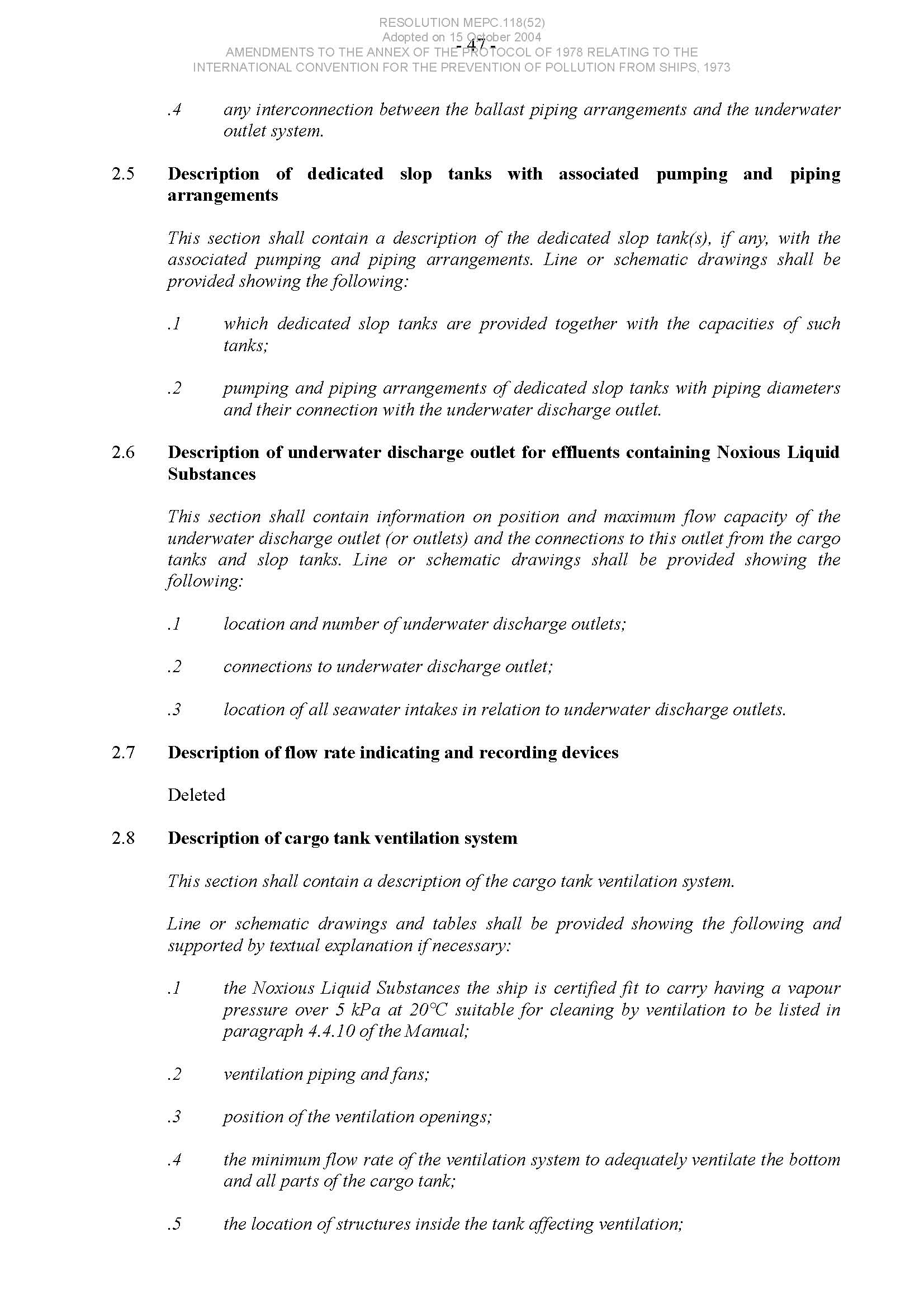
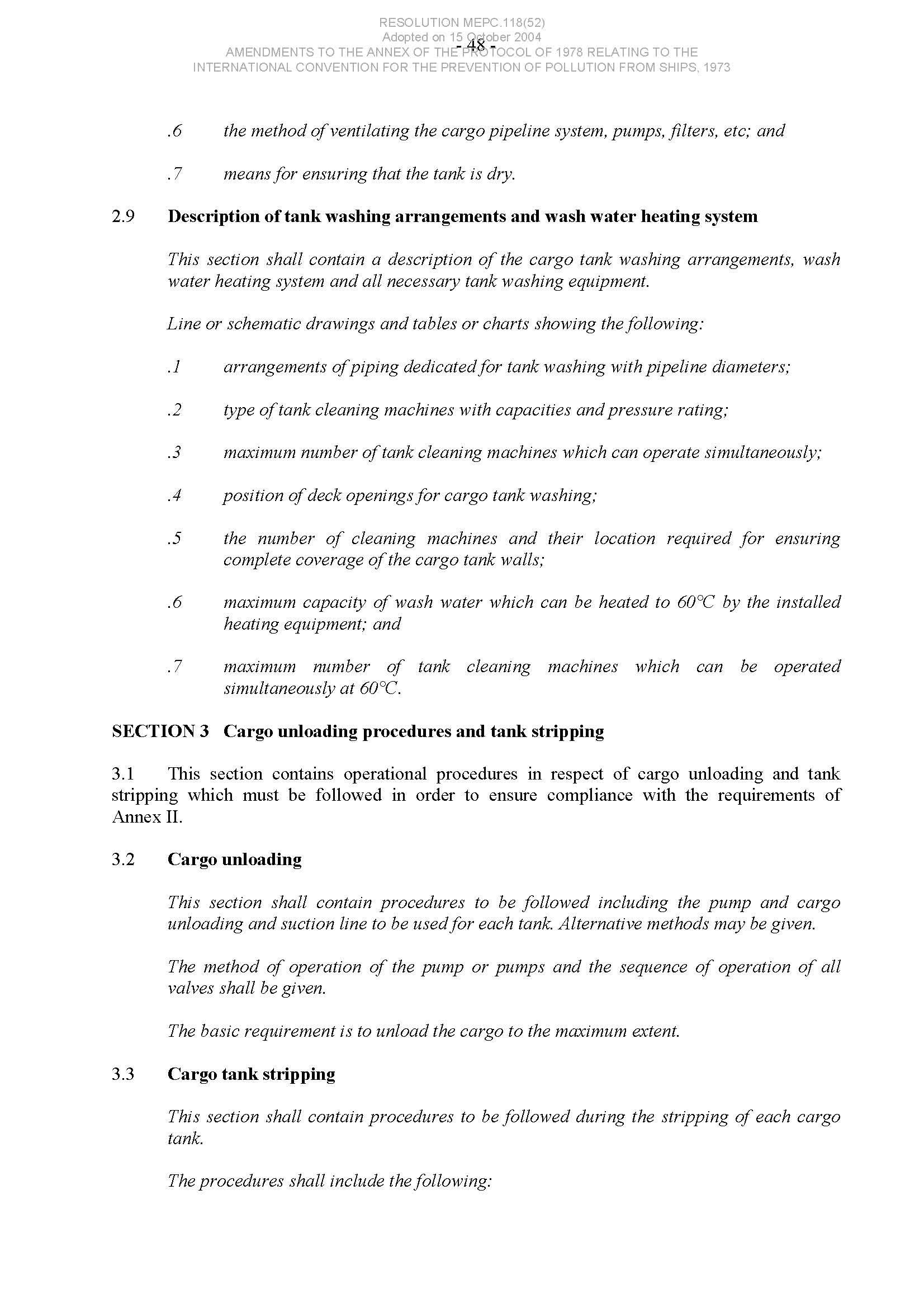
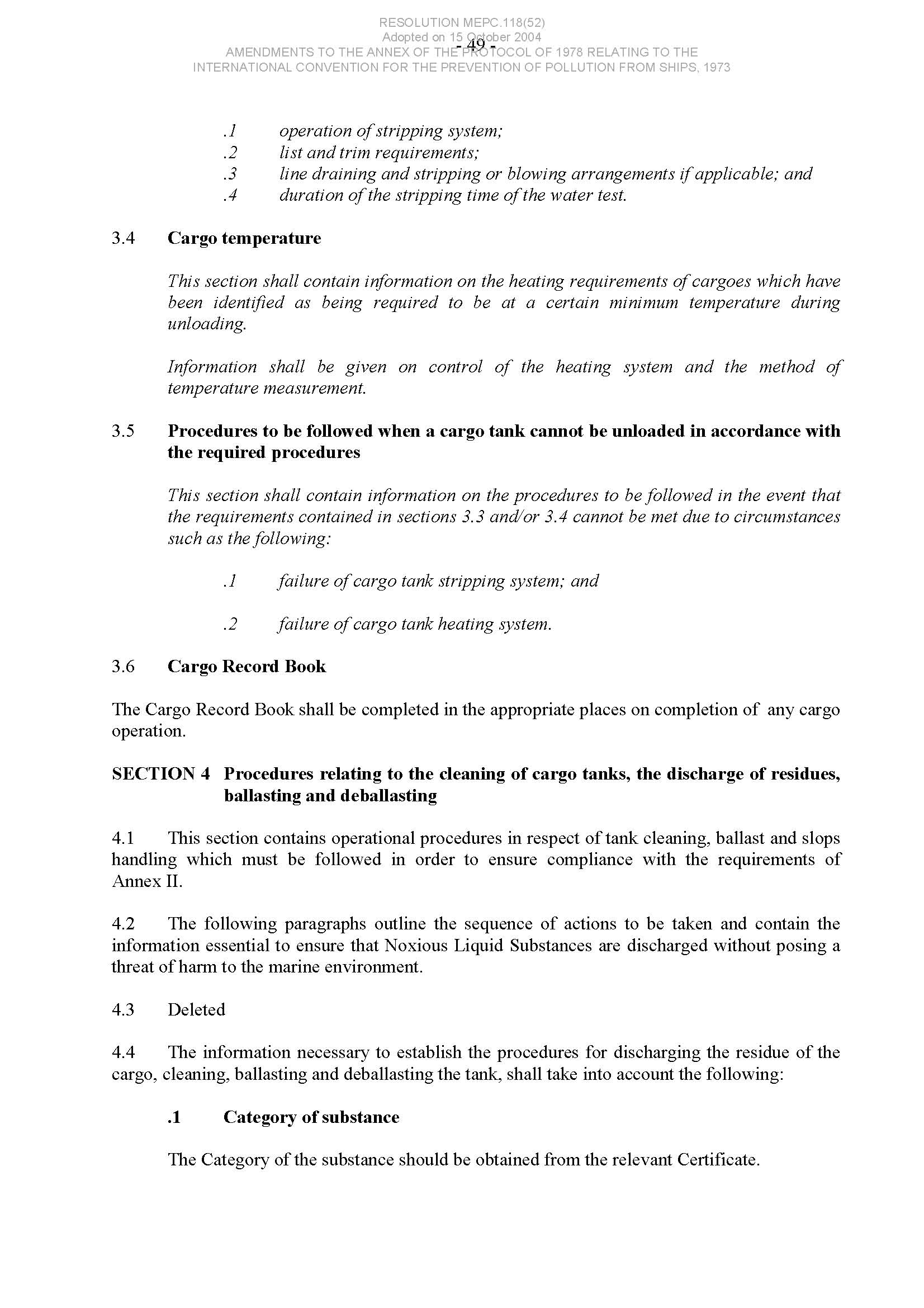
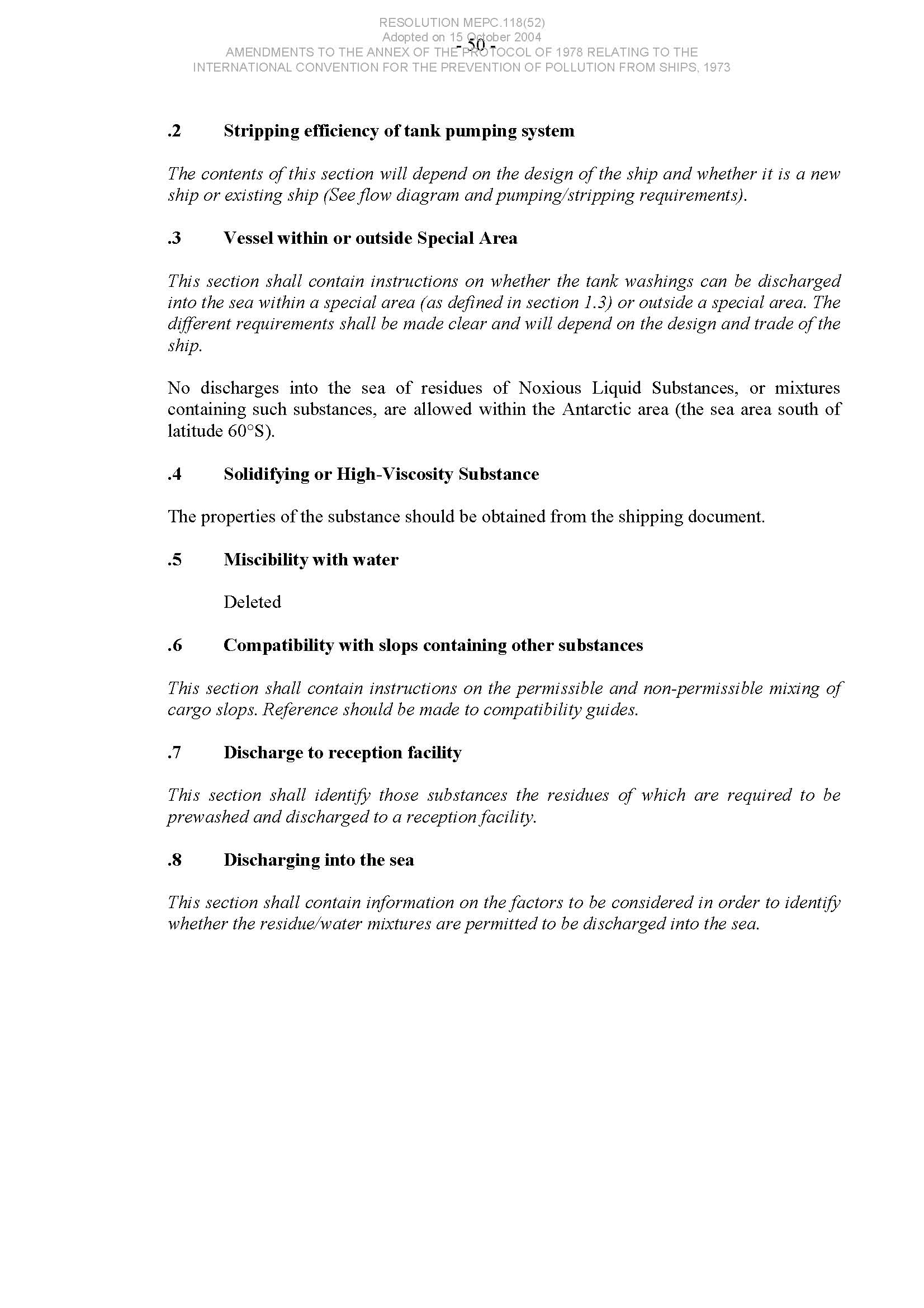
Procedures and Arrangement Manual (P & A Manual)


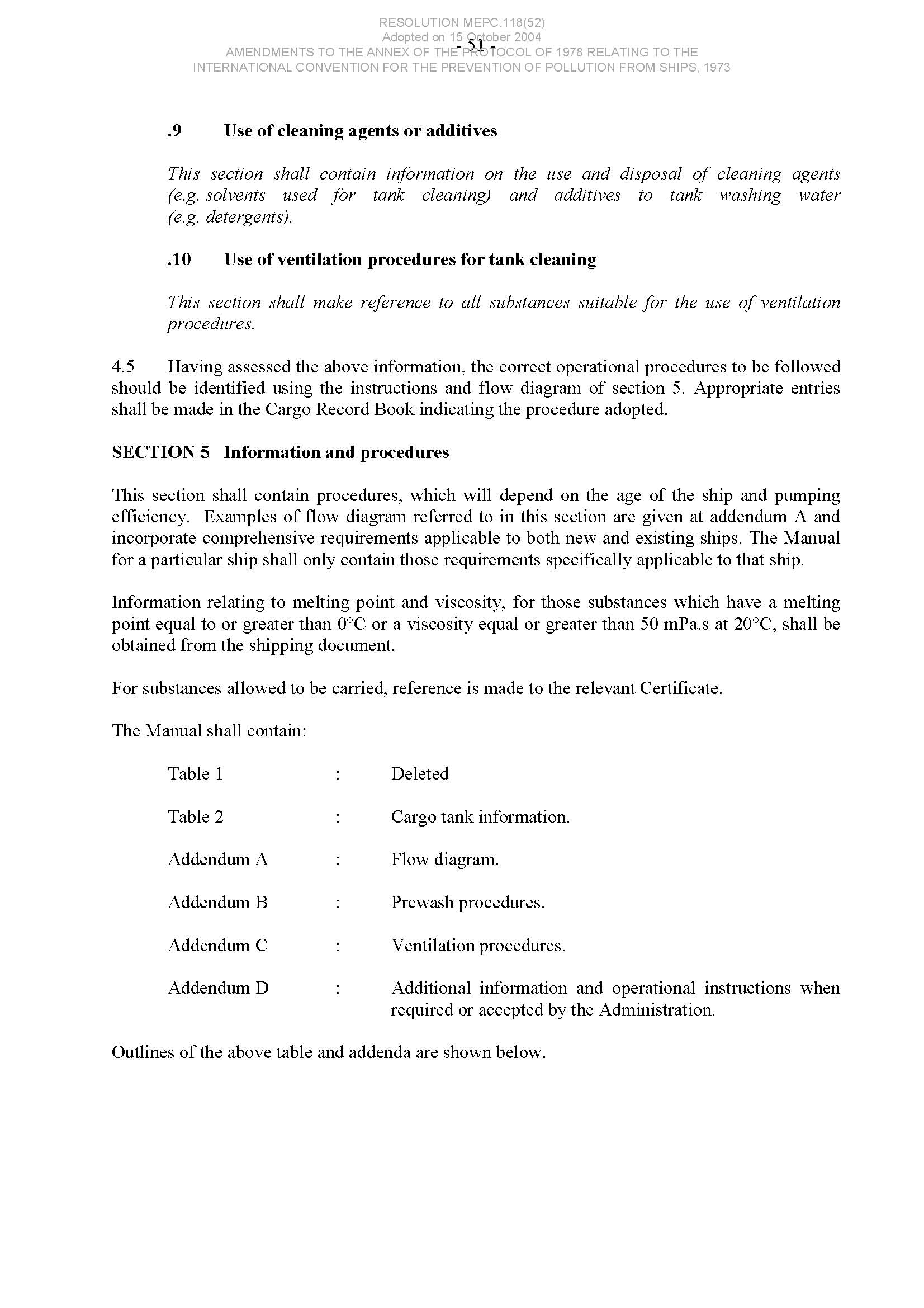
Shipboard Marine Pollution Emergency Plan for Noxious Liquid Substances
Every ship of 150 gross tonnage and above certified to carry noxious liquid substances in bulk shall carry on board a shipboard marine pollution emergency plan for noxious liquid substances approved by the Administration.In addition to the certificates listed above, where applicable, any chemical tanker shall carry
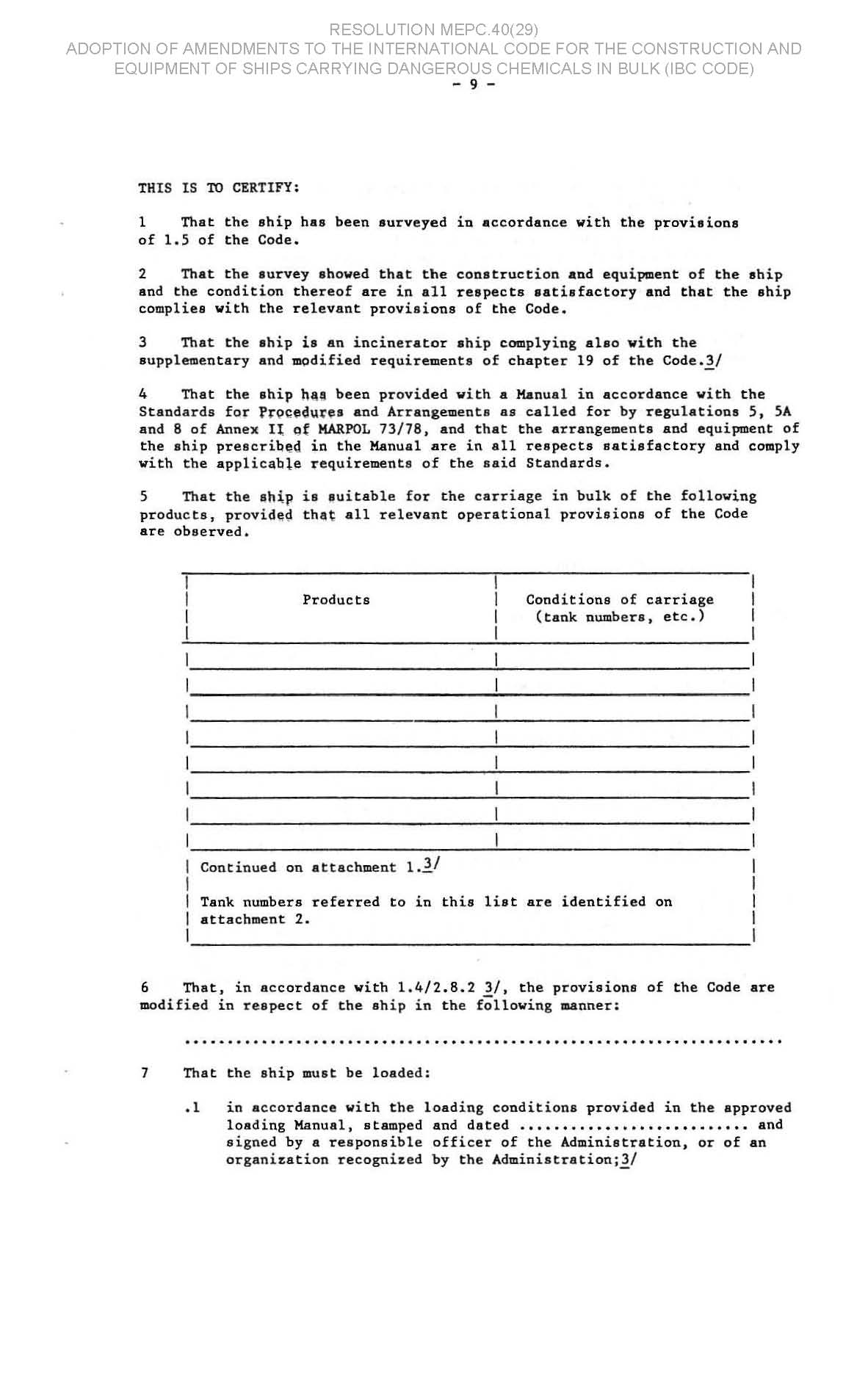
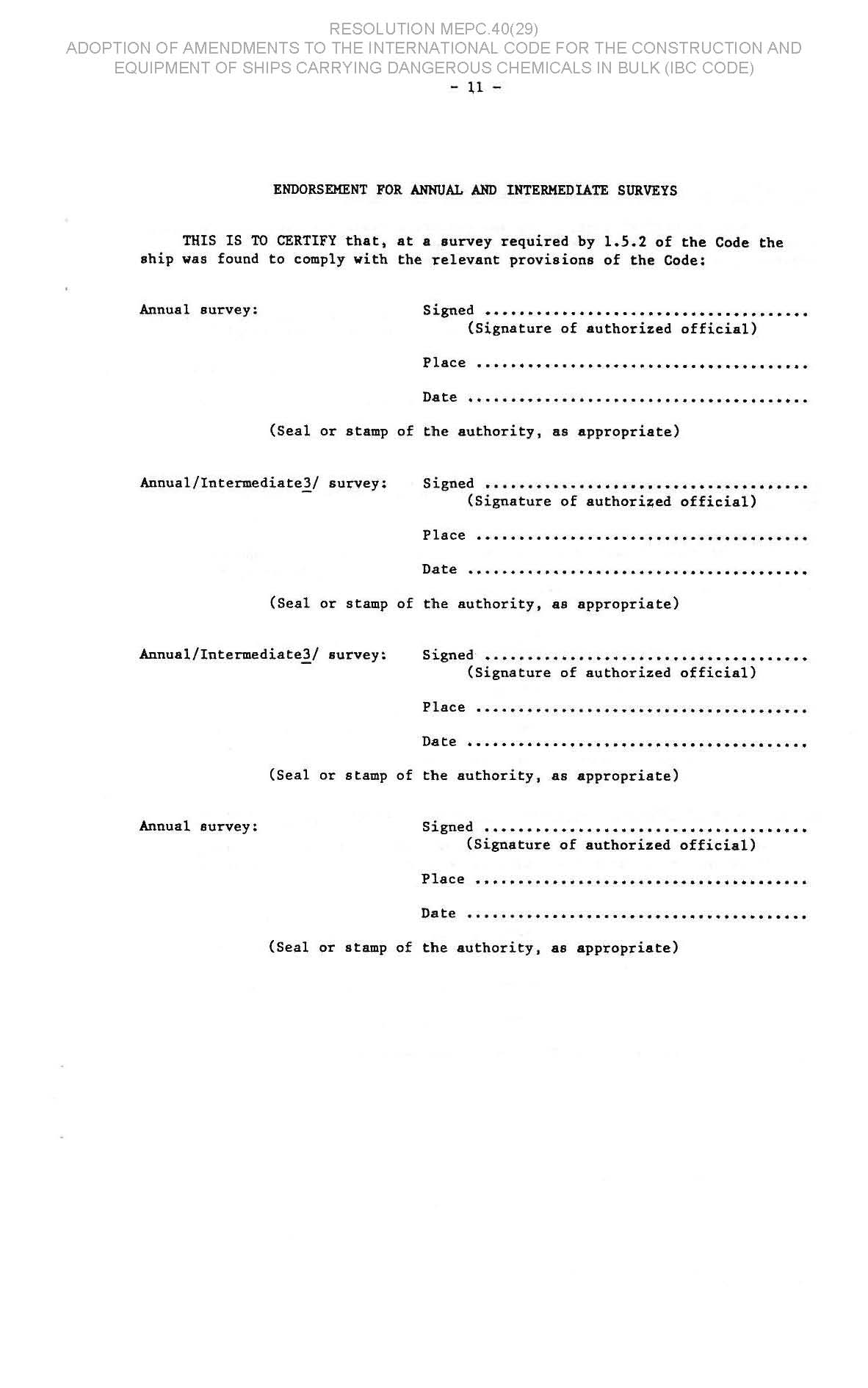
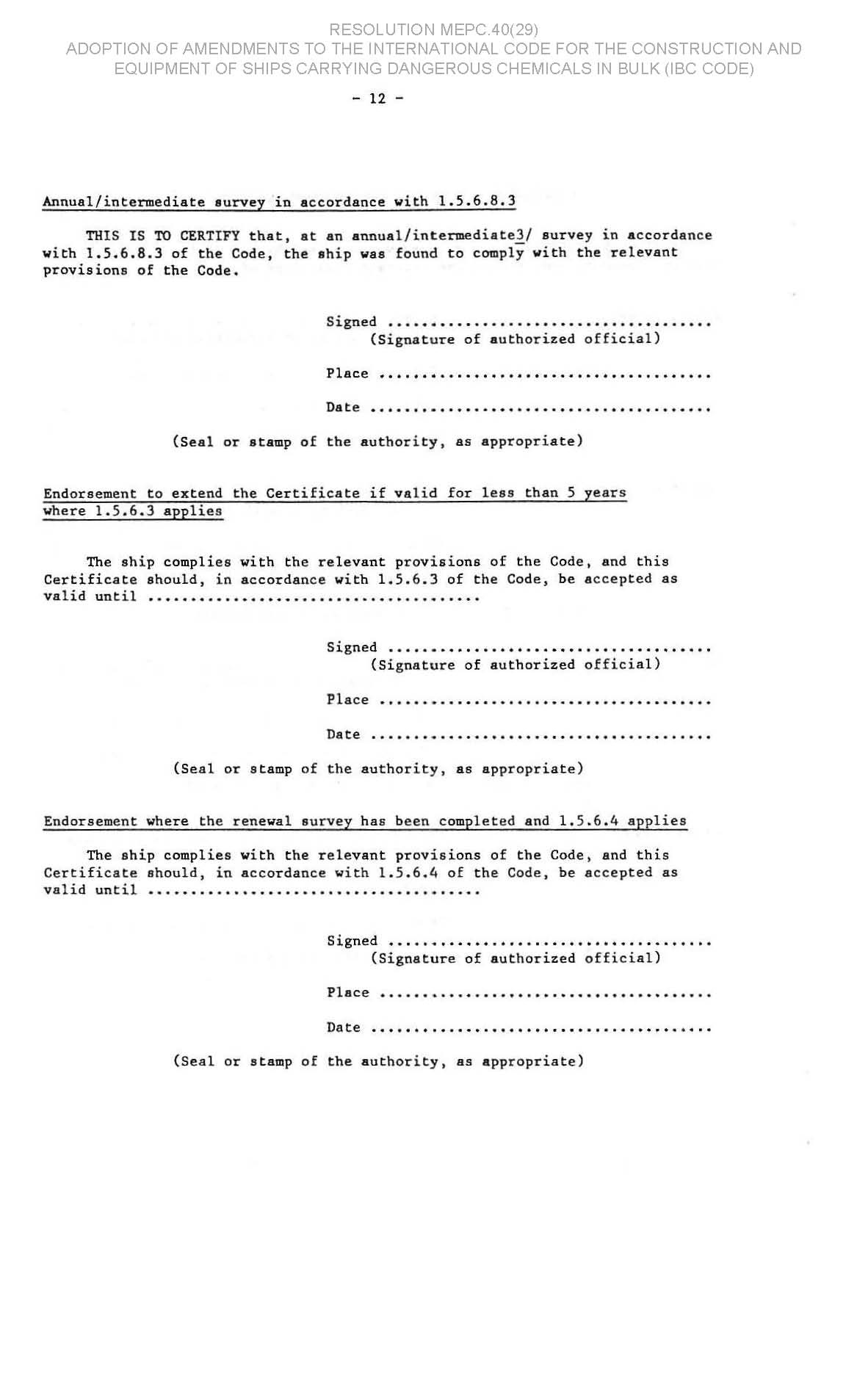
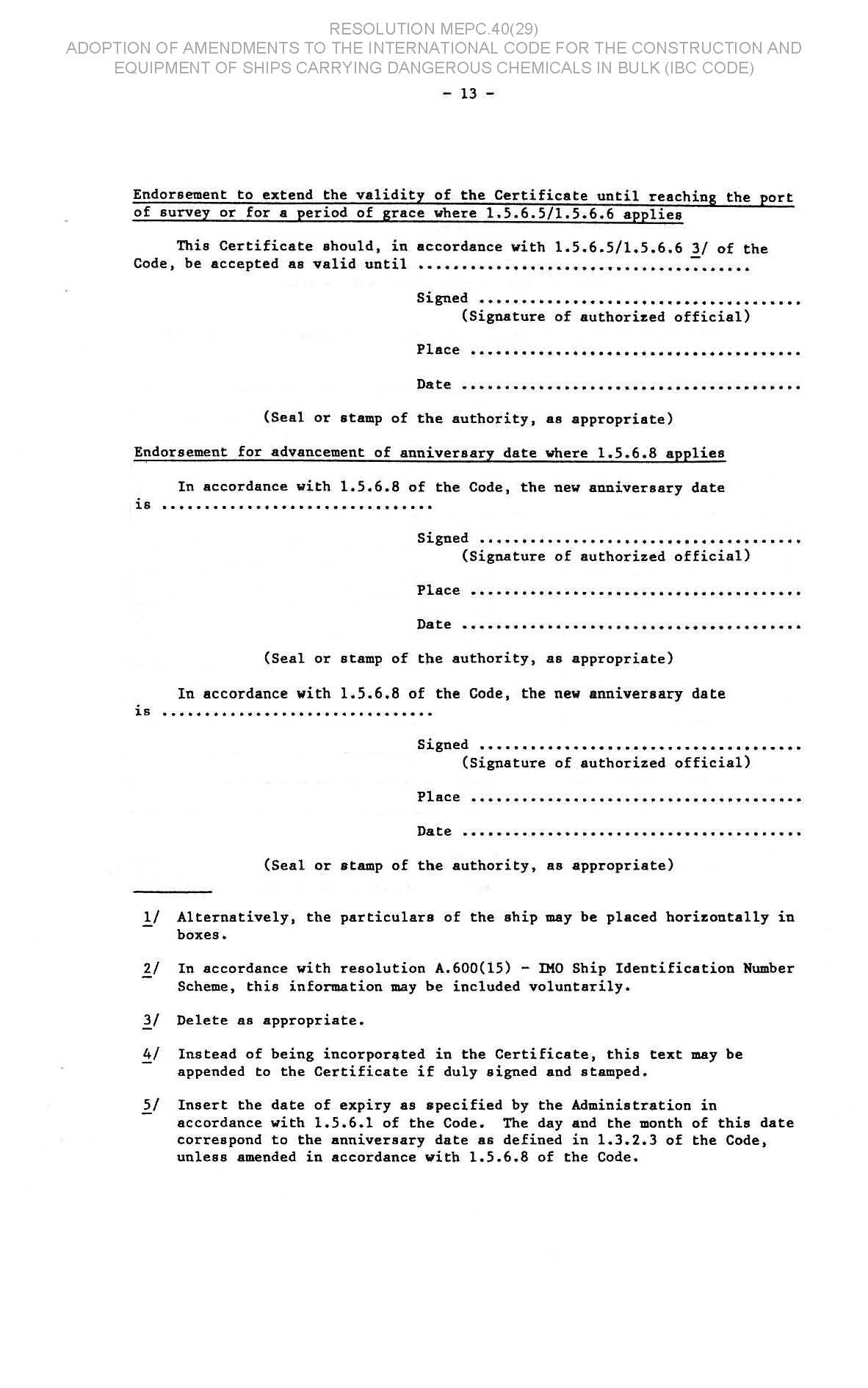
Certificate of fitness for carriage of dangerous chemicals in bulk
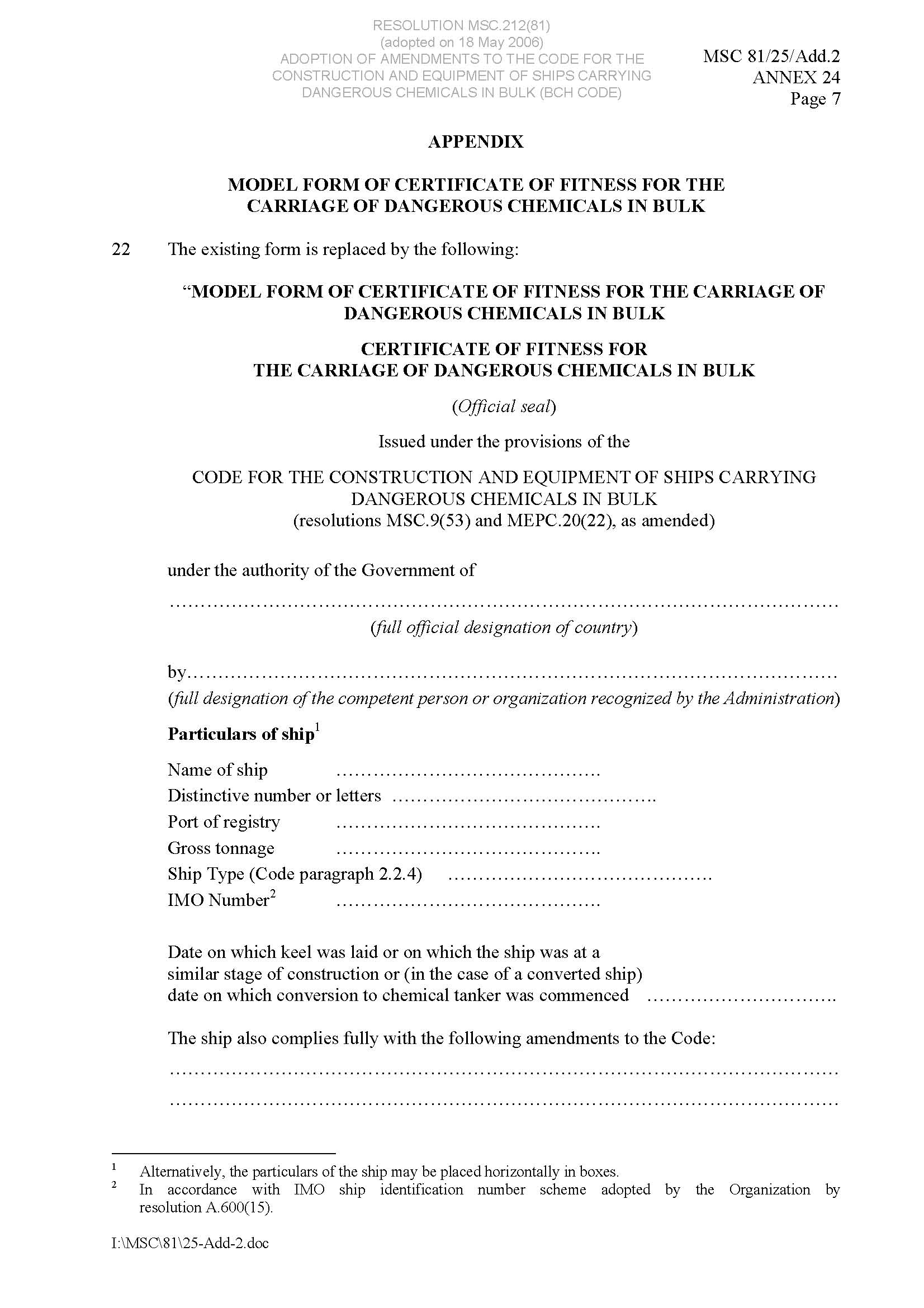

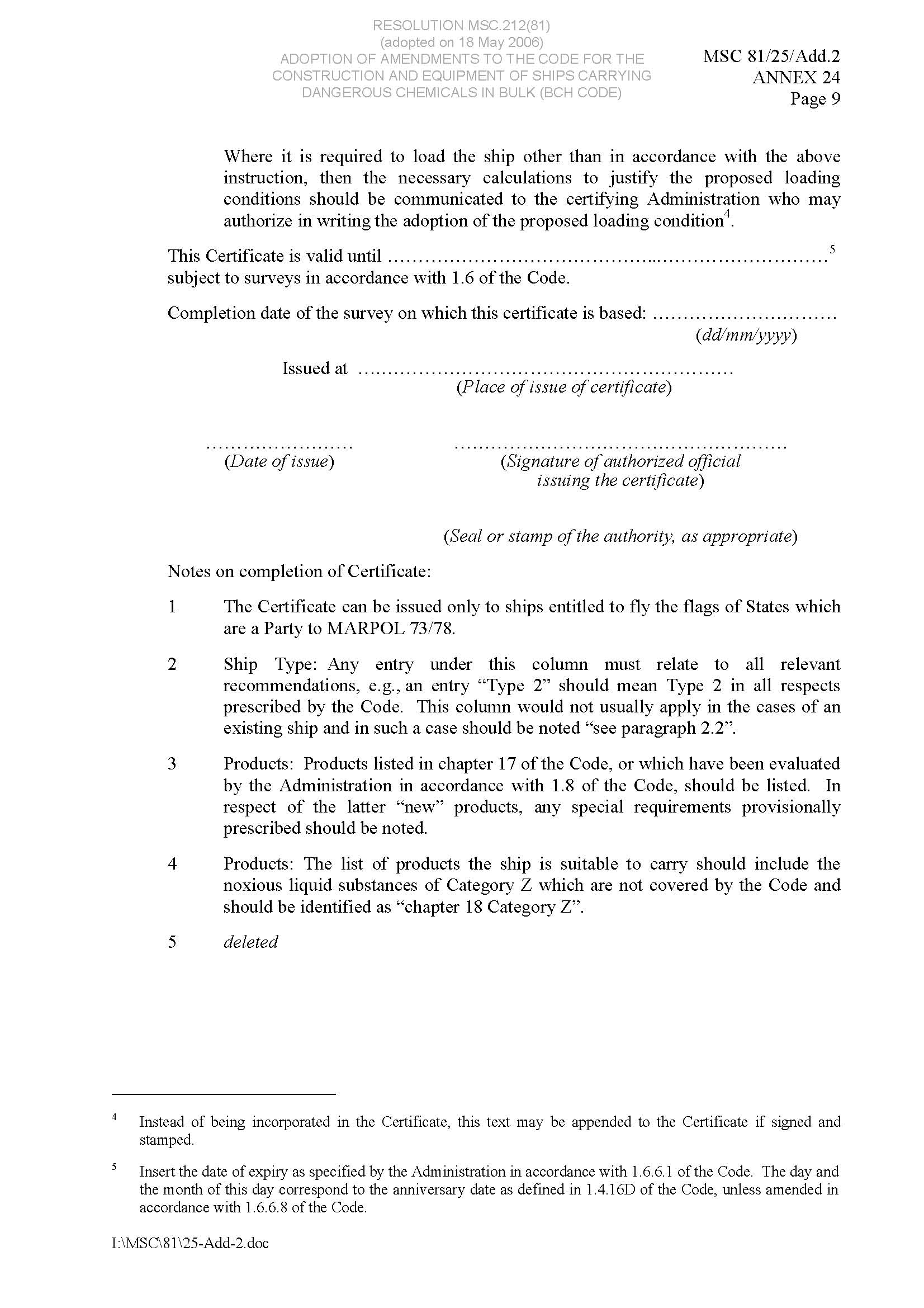
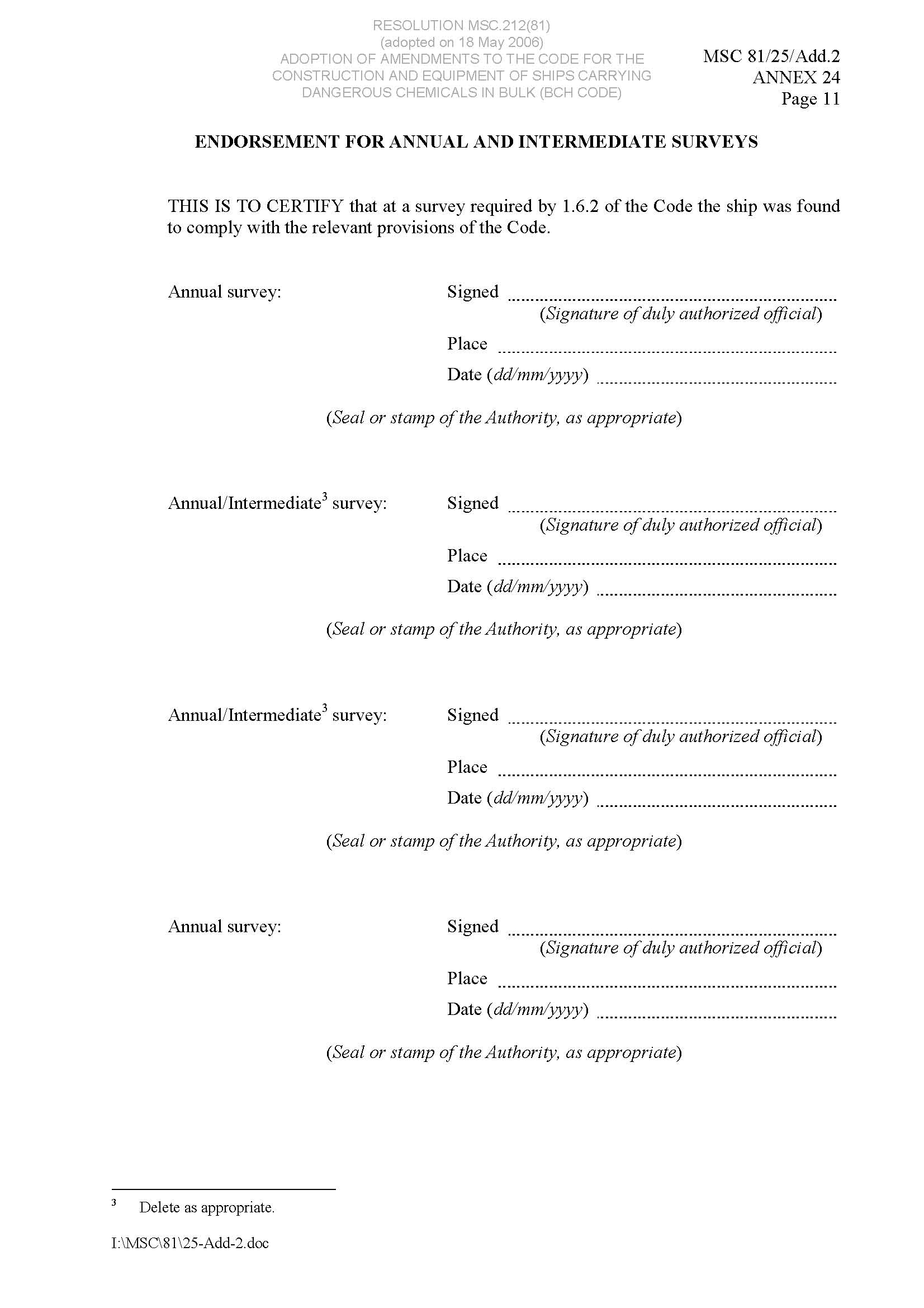
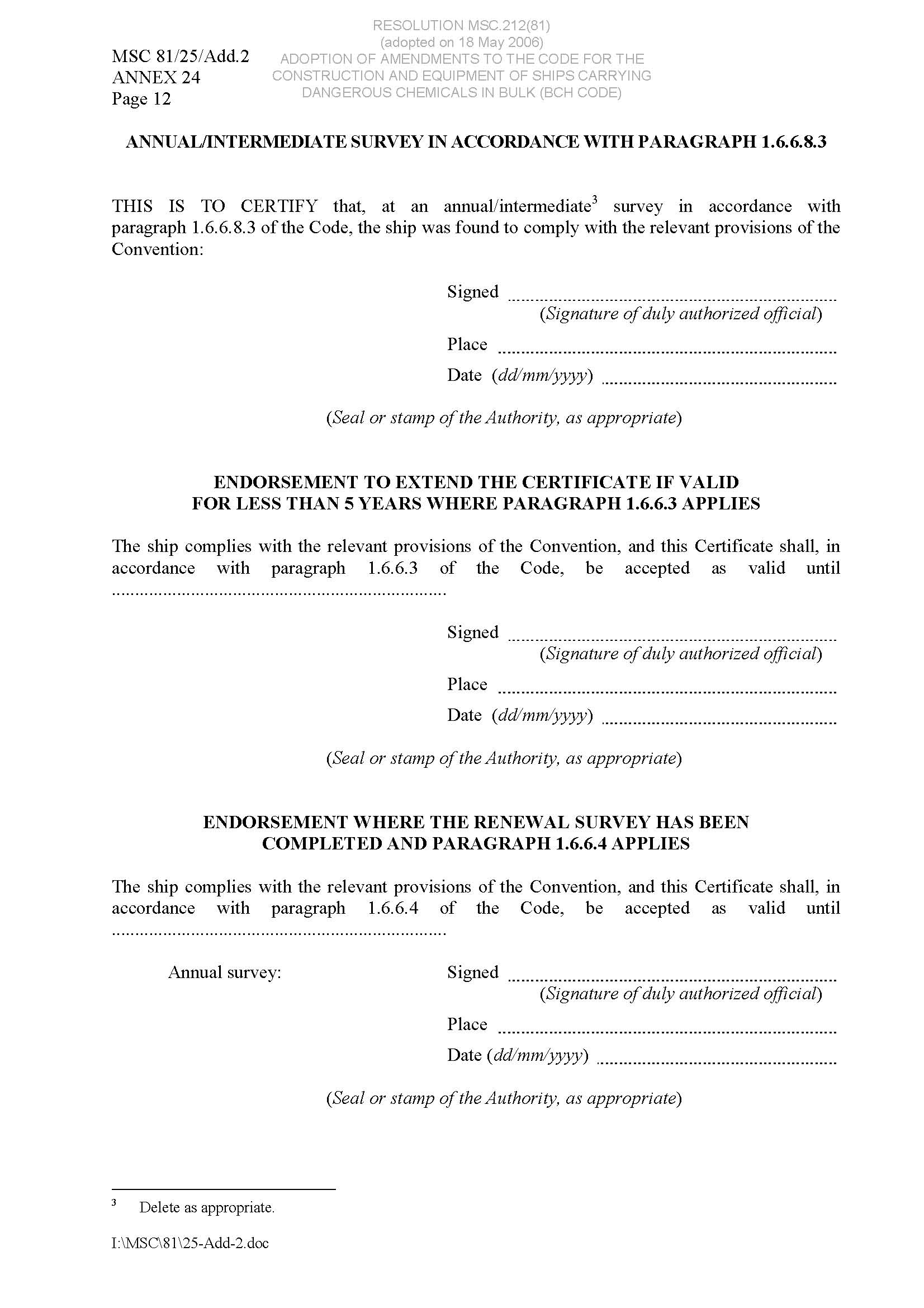
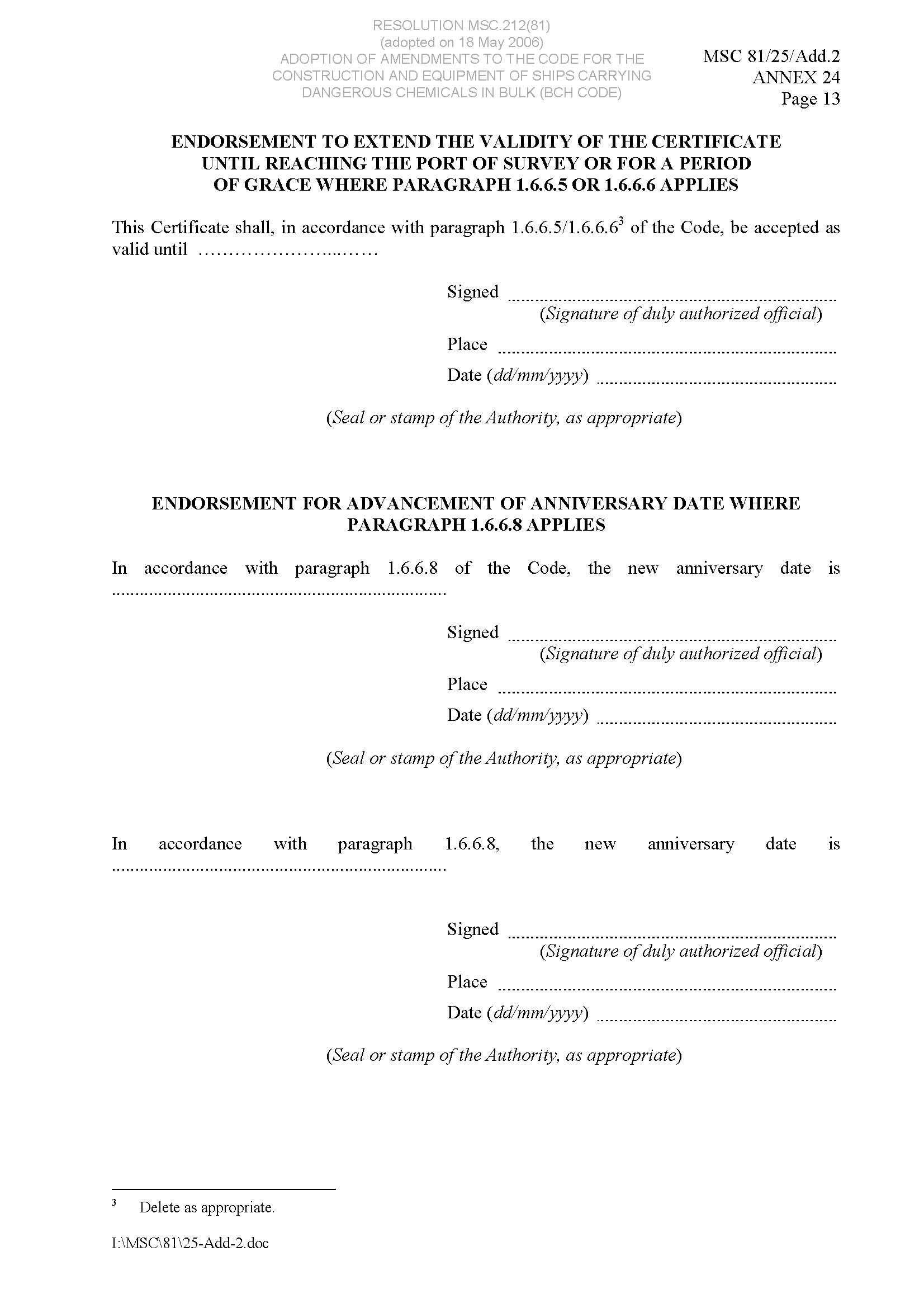

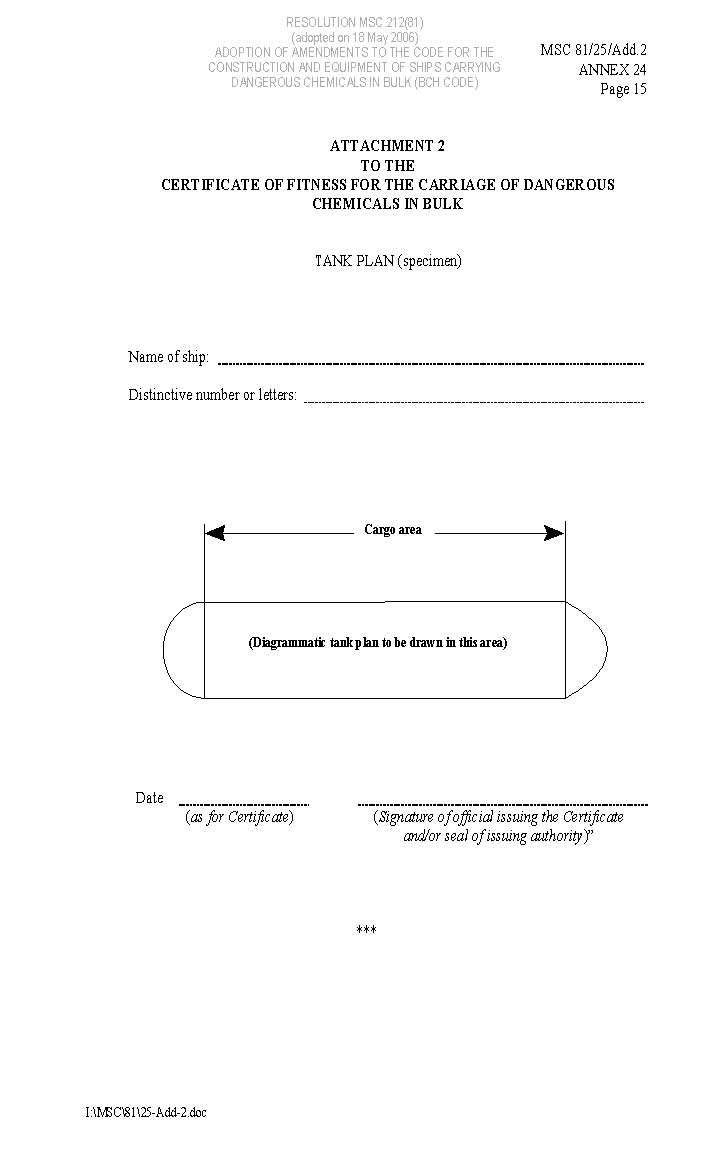
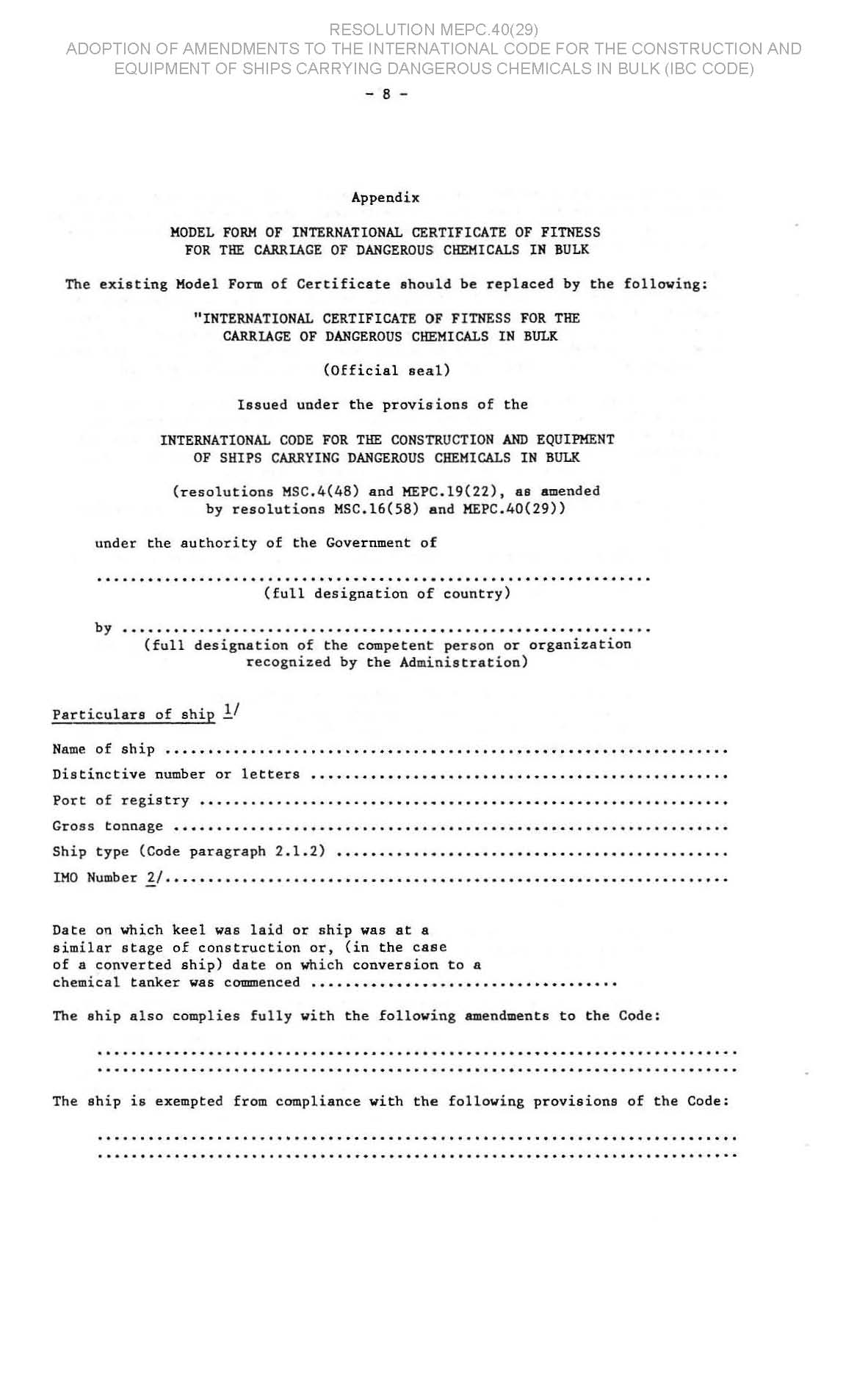
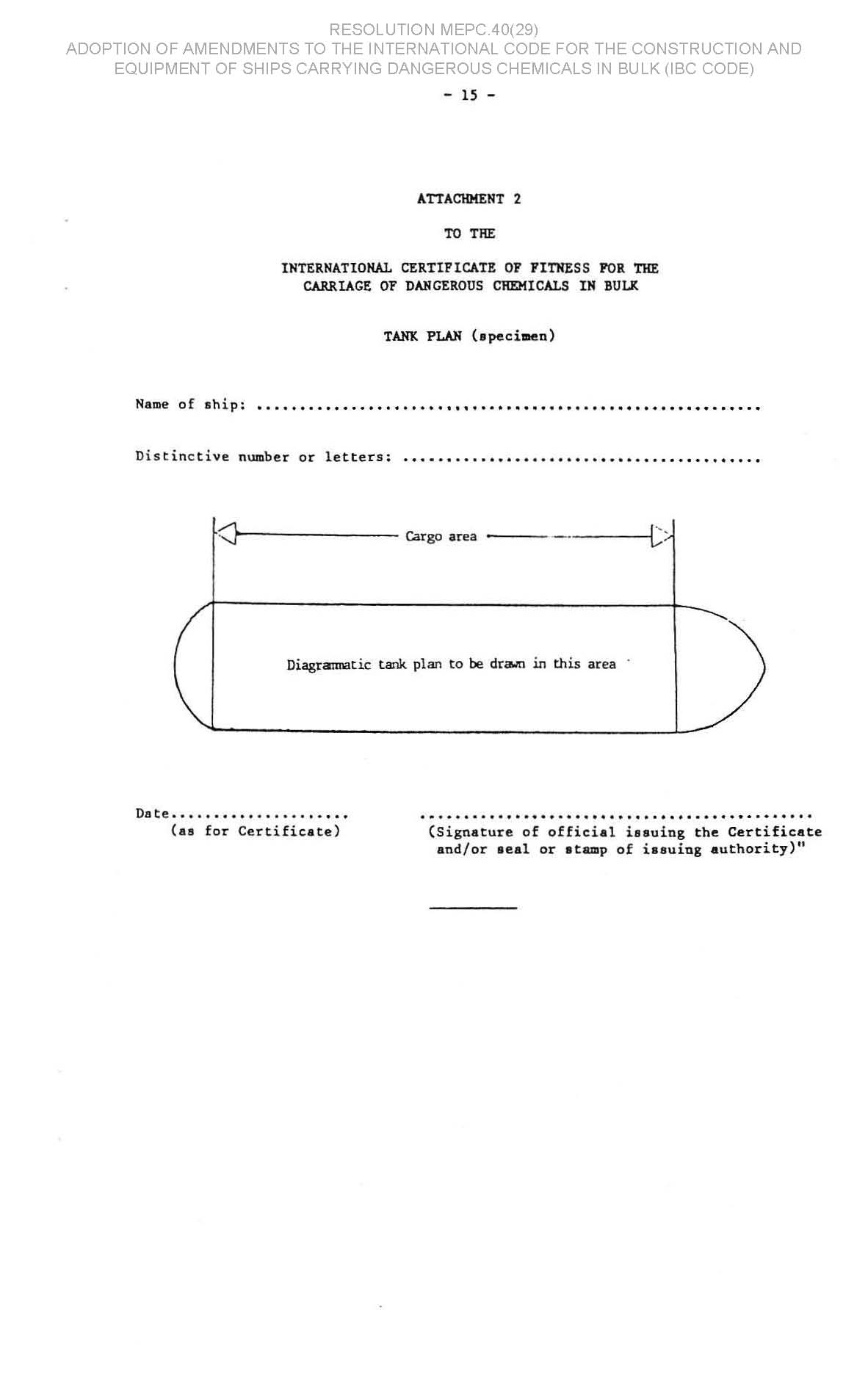
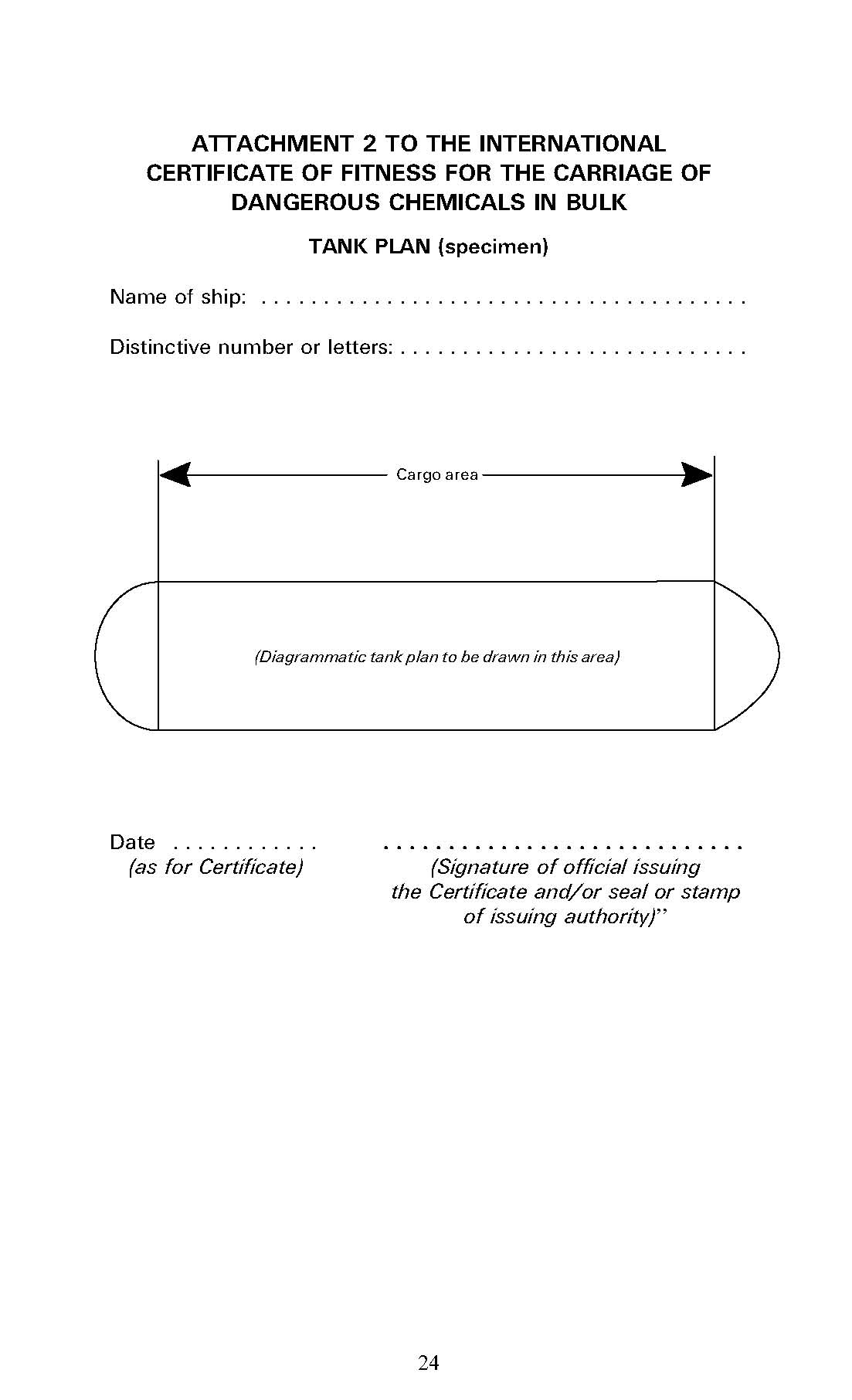
International Certificate of fitness for carriage of dangerous chemicals in bulk


In addition to the certificates listed above, where applicable, any gas carrier shall carry
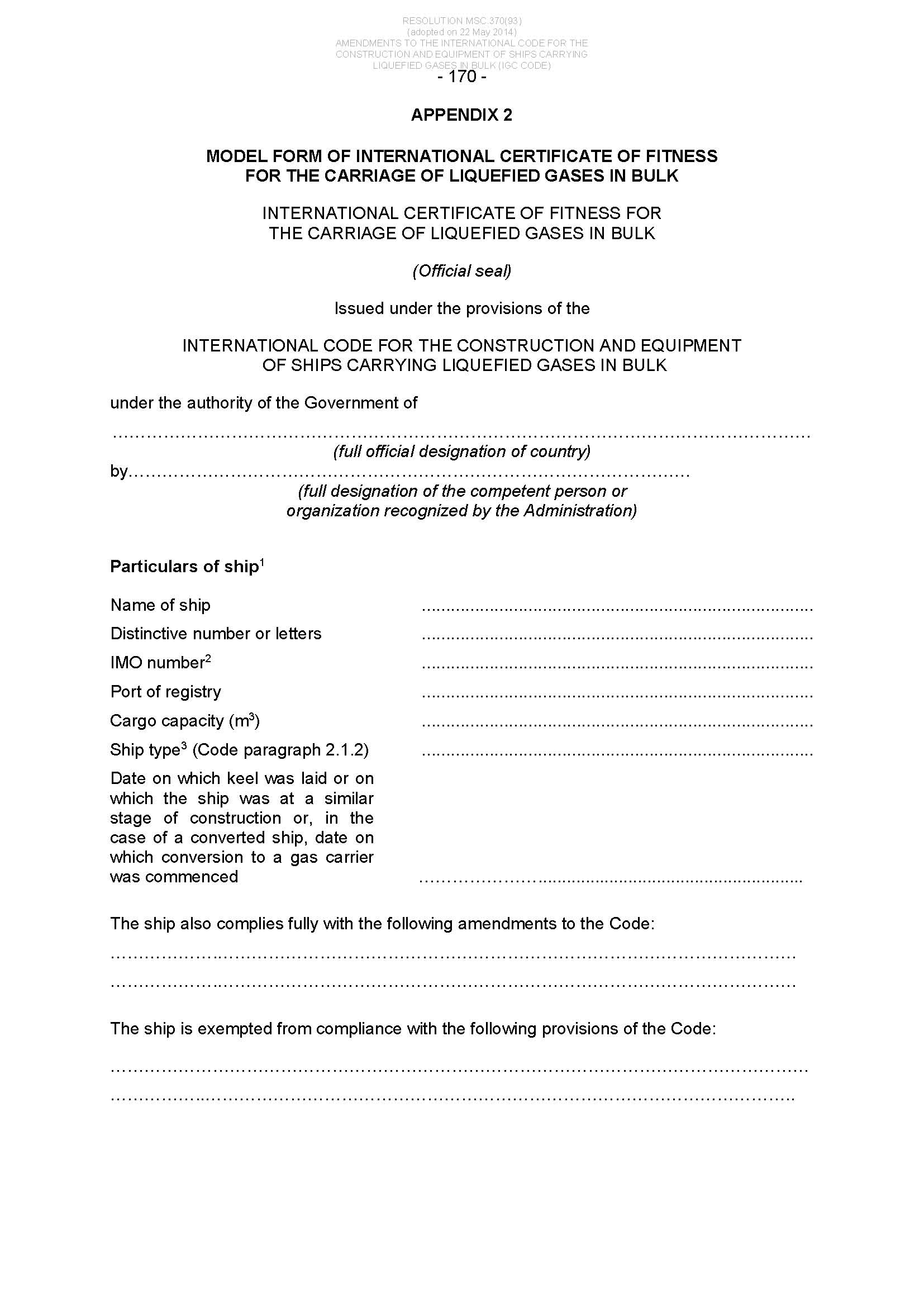
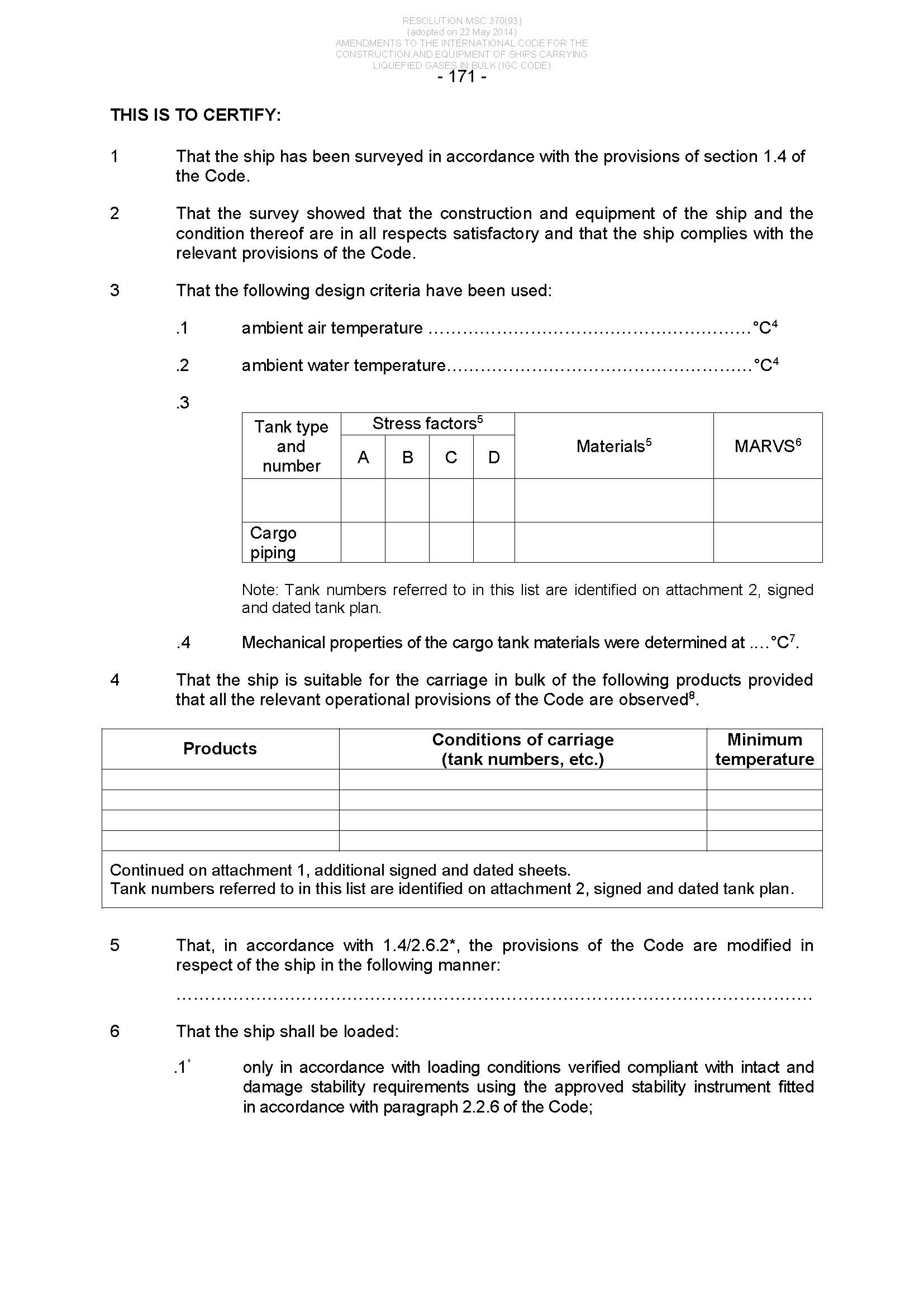
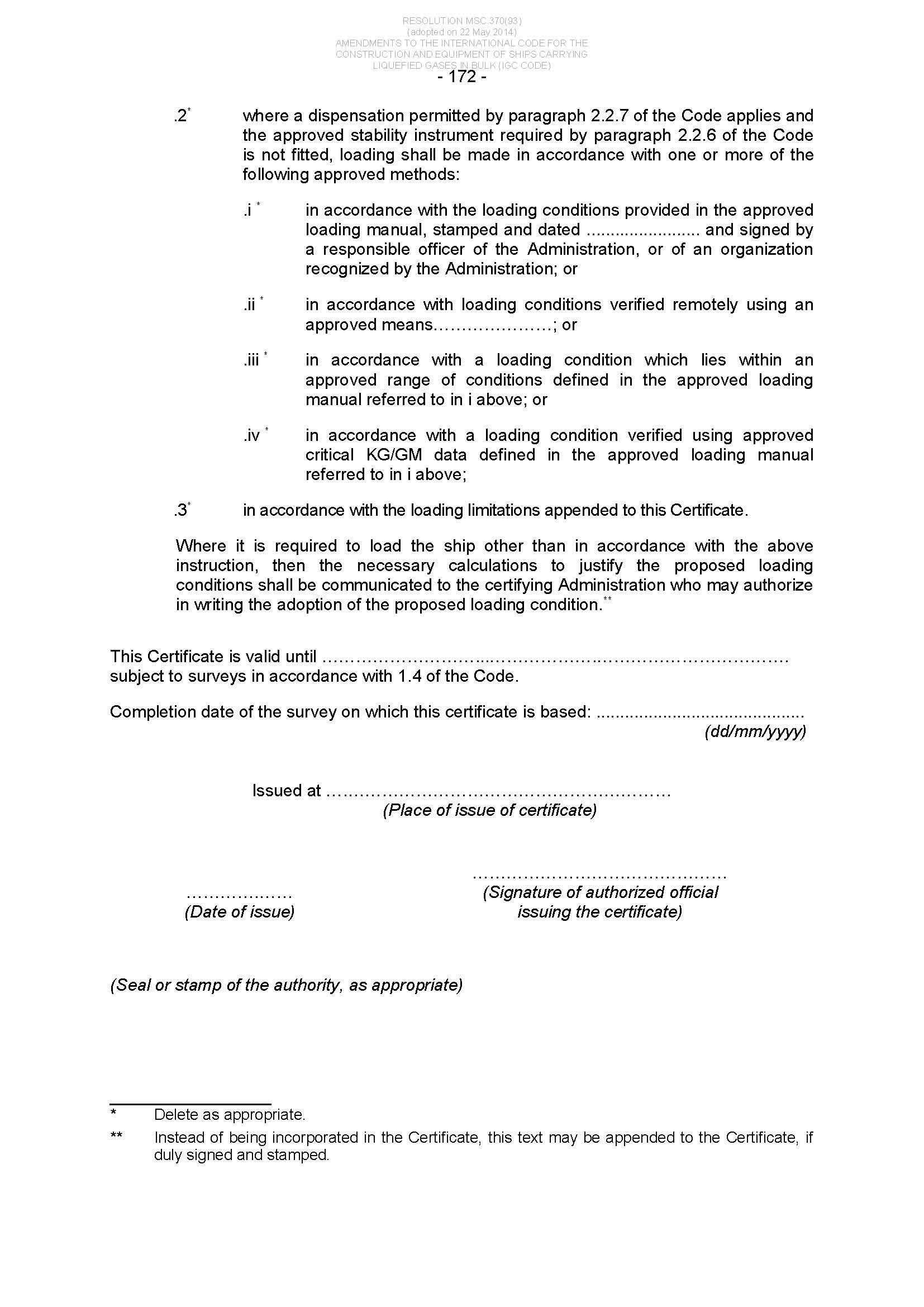
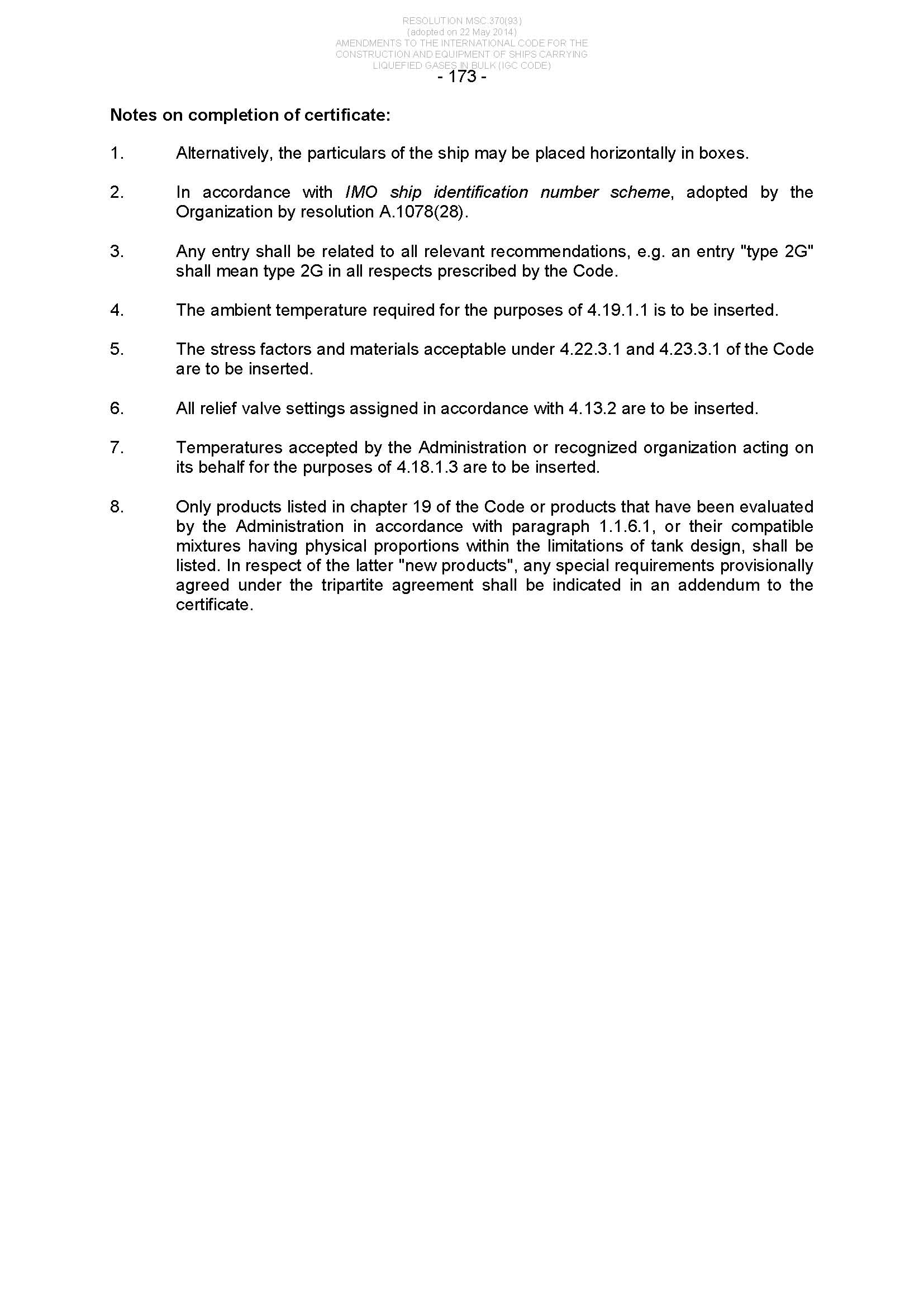
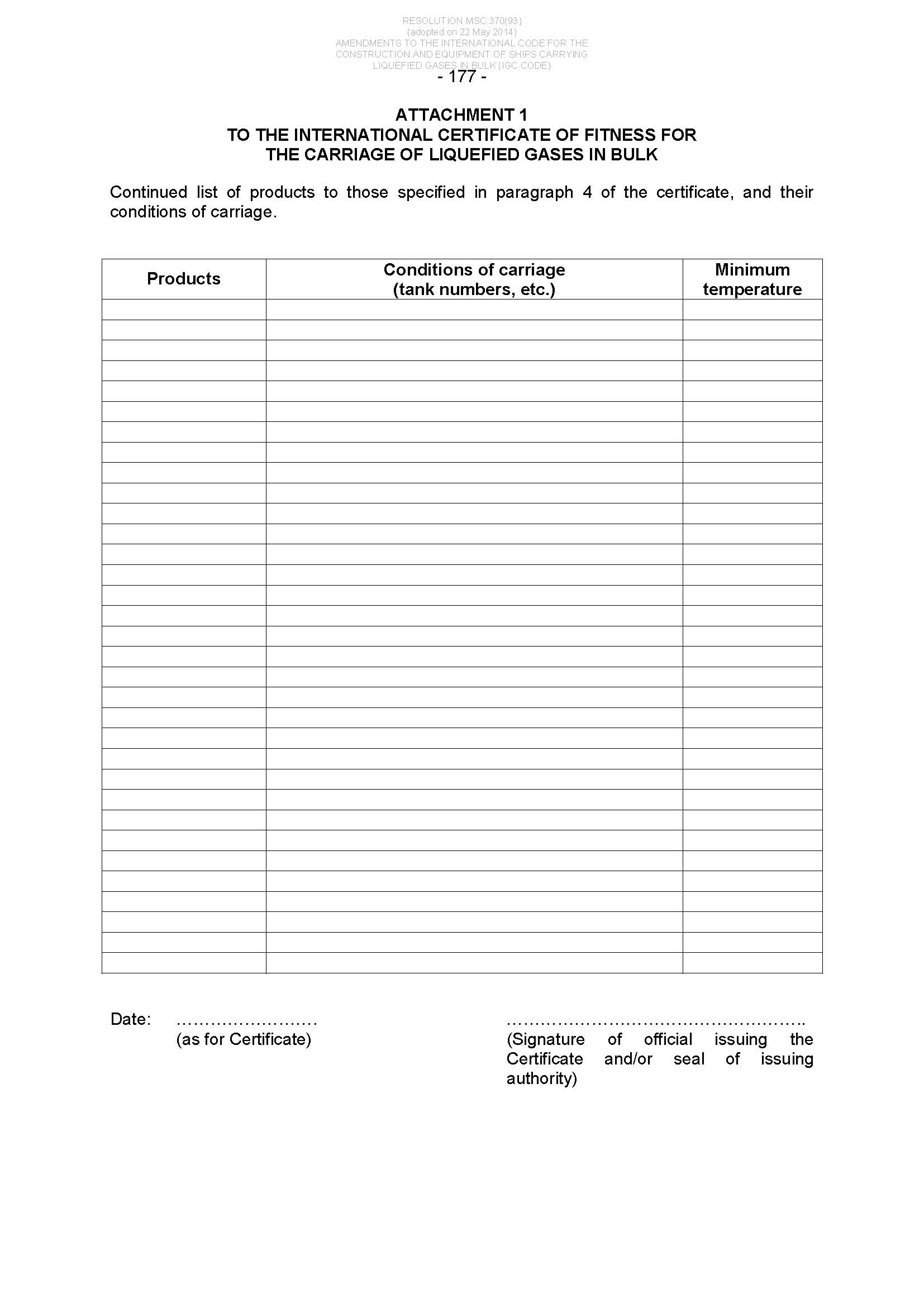
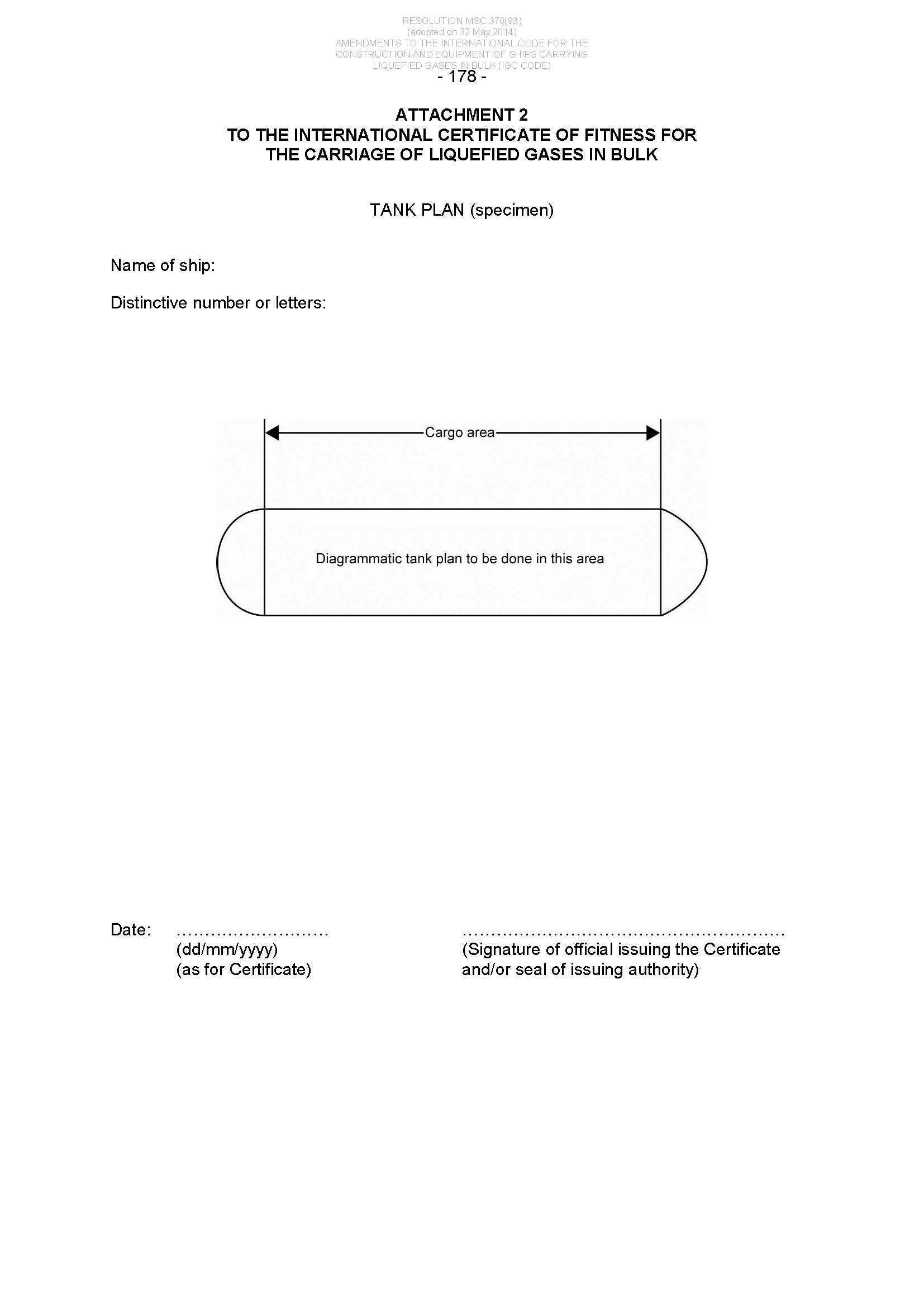
Certificate of fitness for carriage of Liquefied Gases in bulk
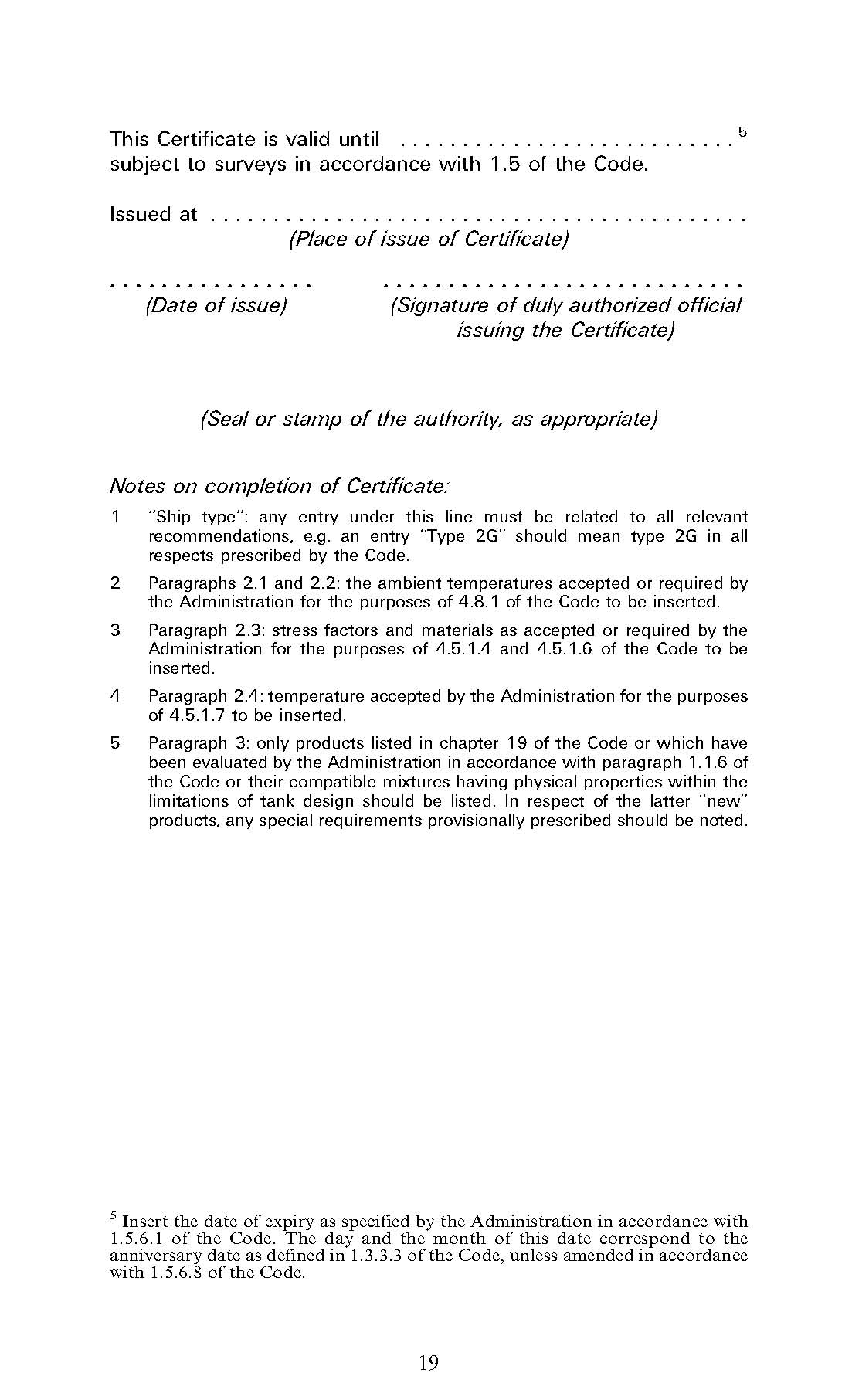
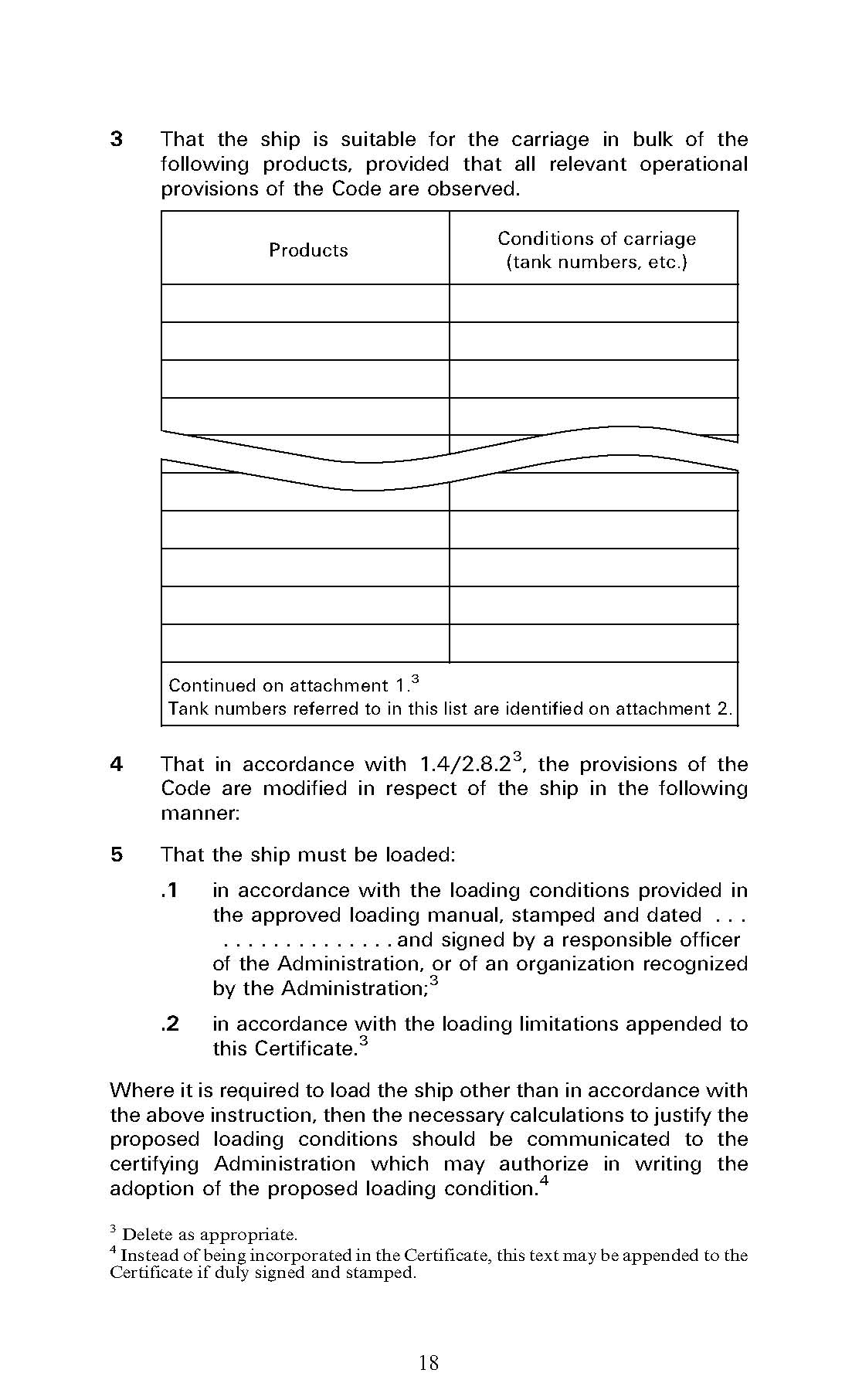
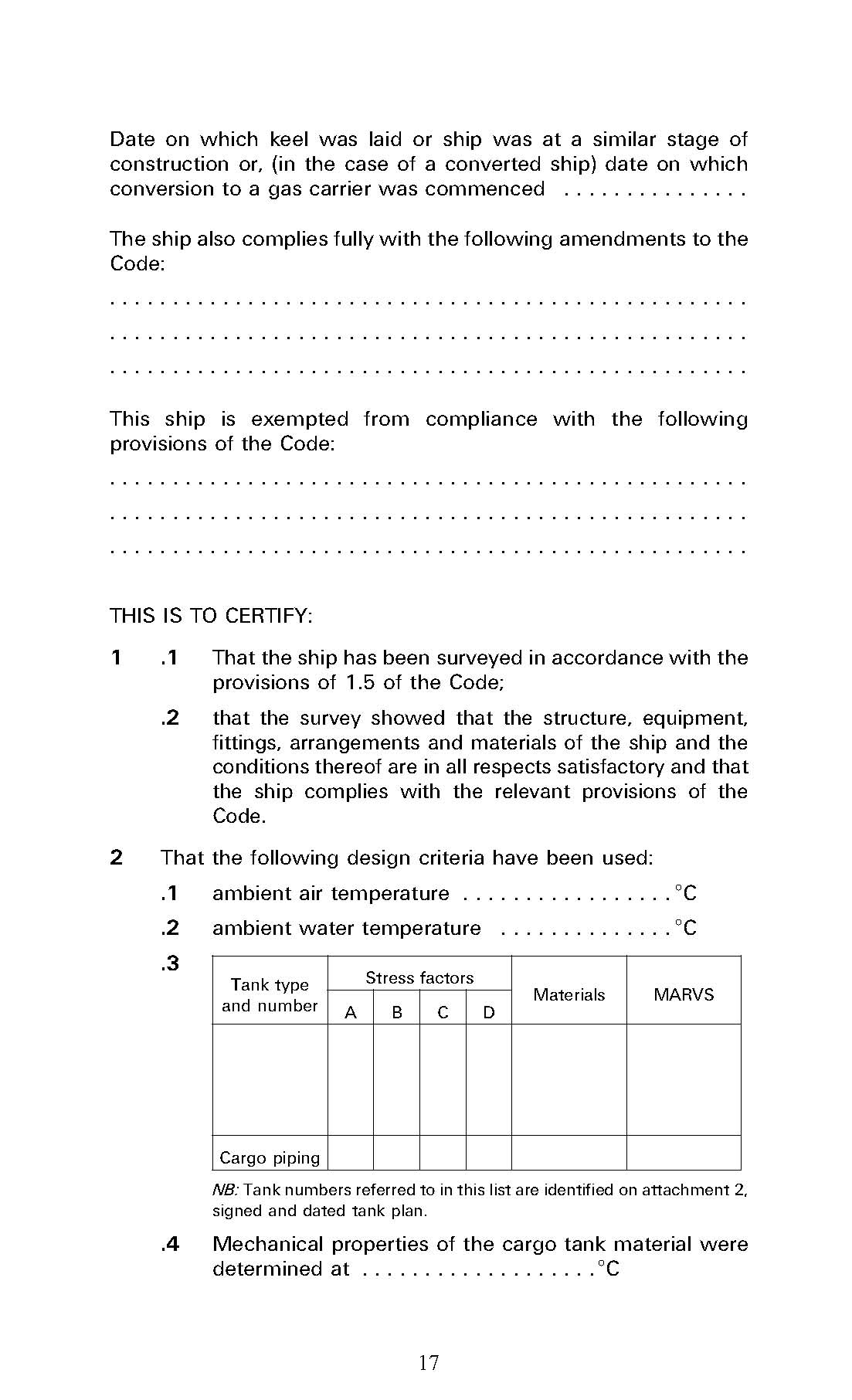
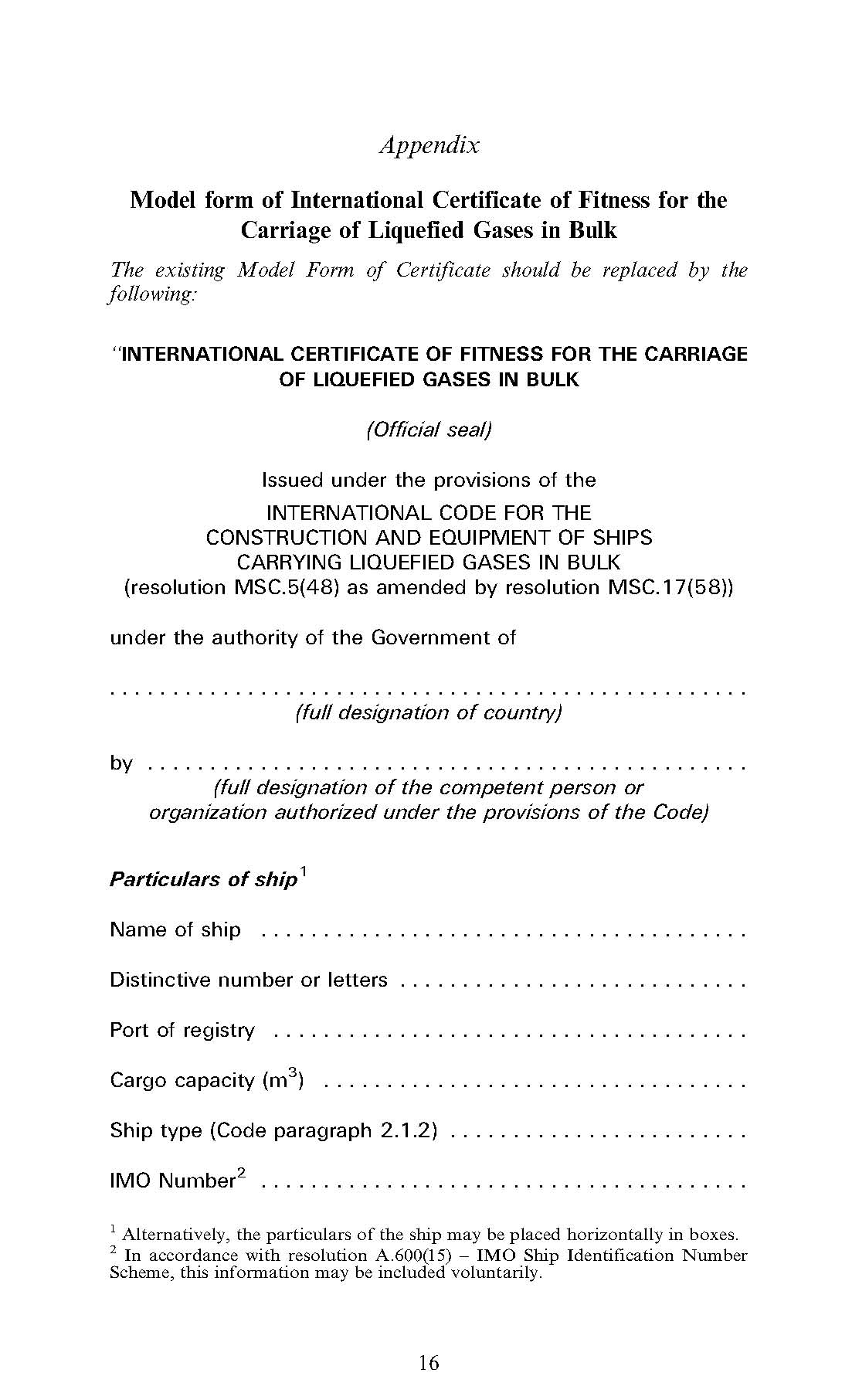

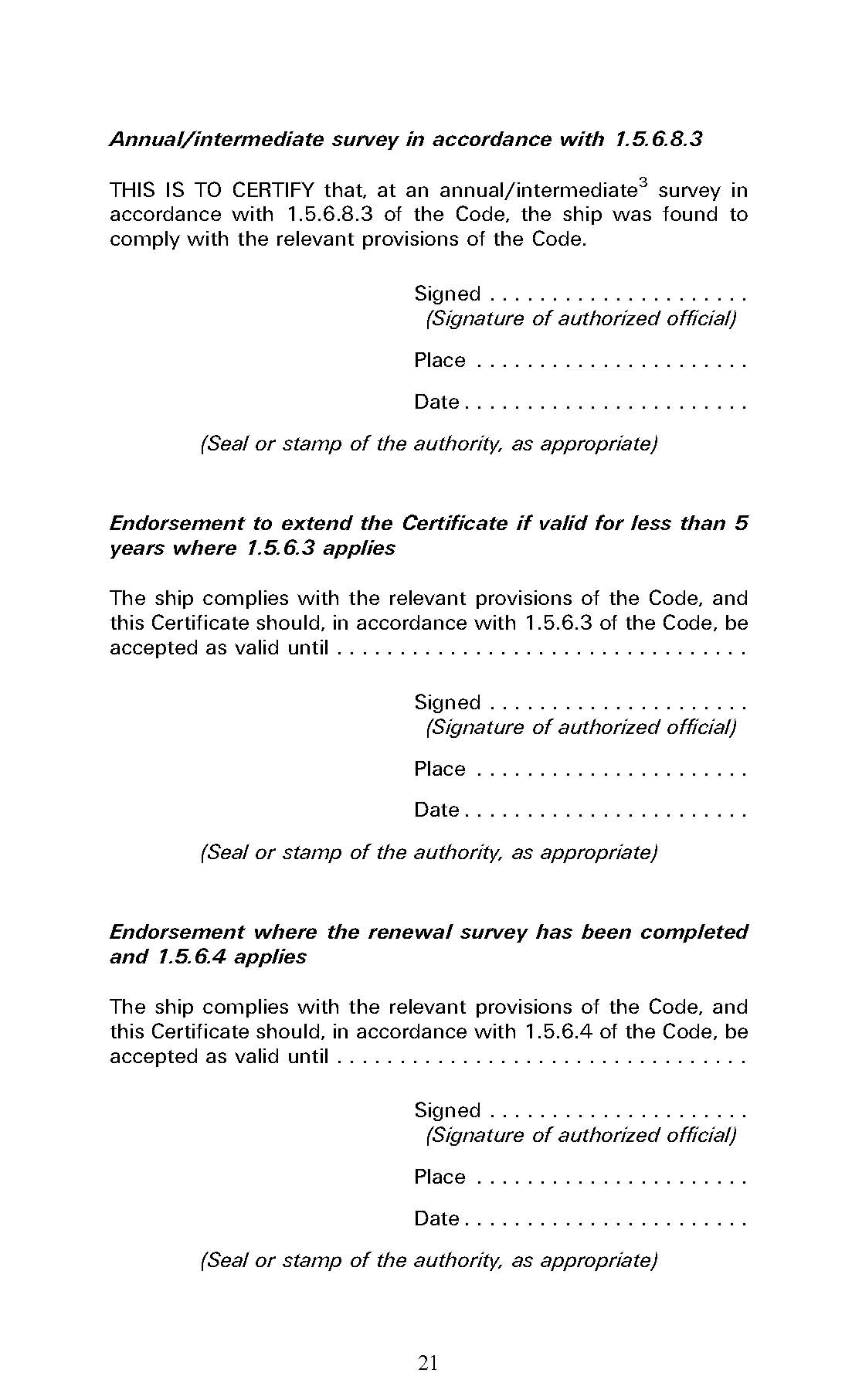
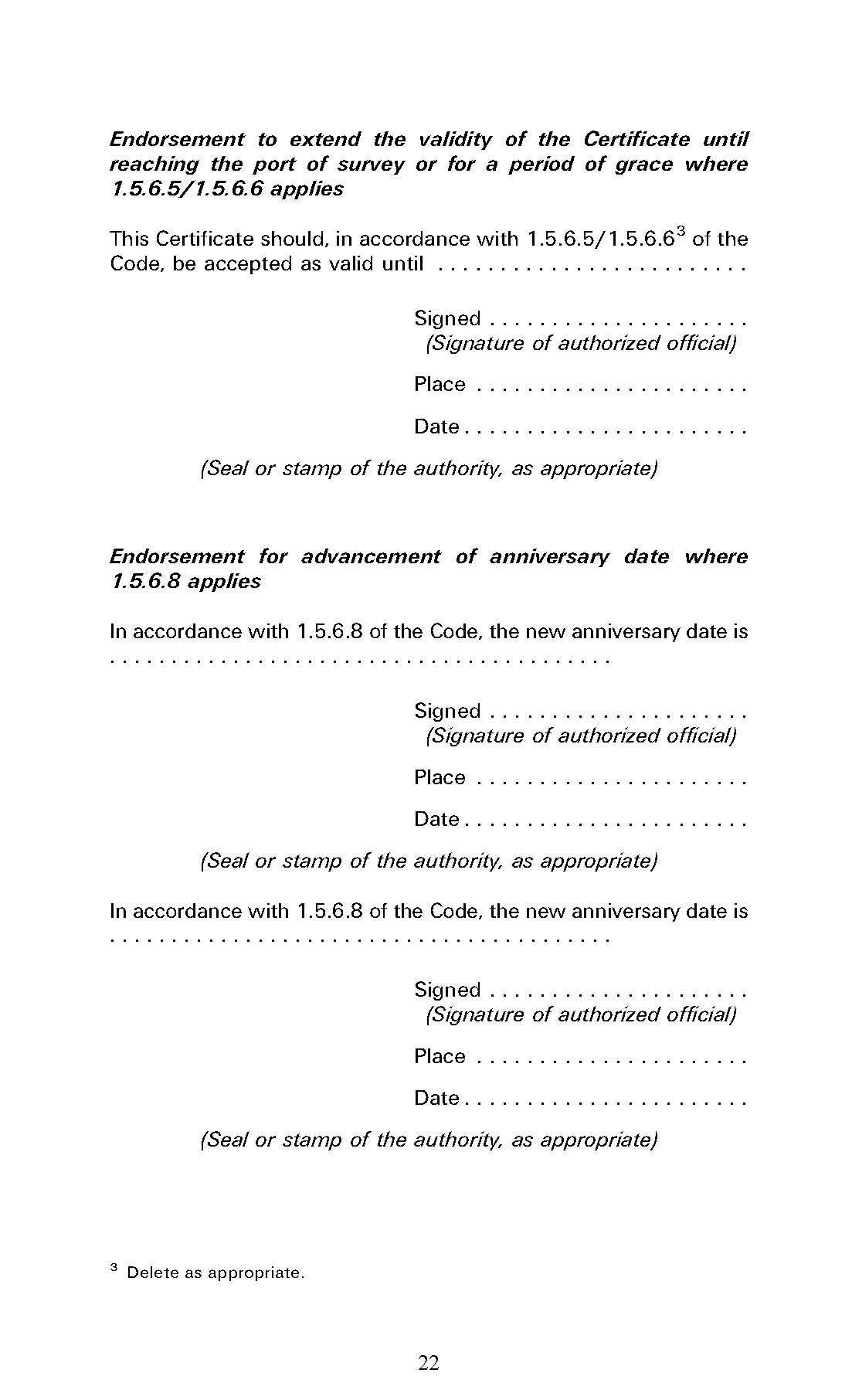
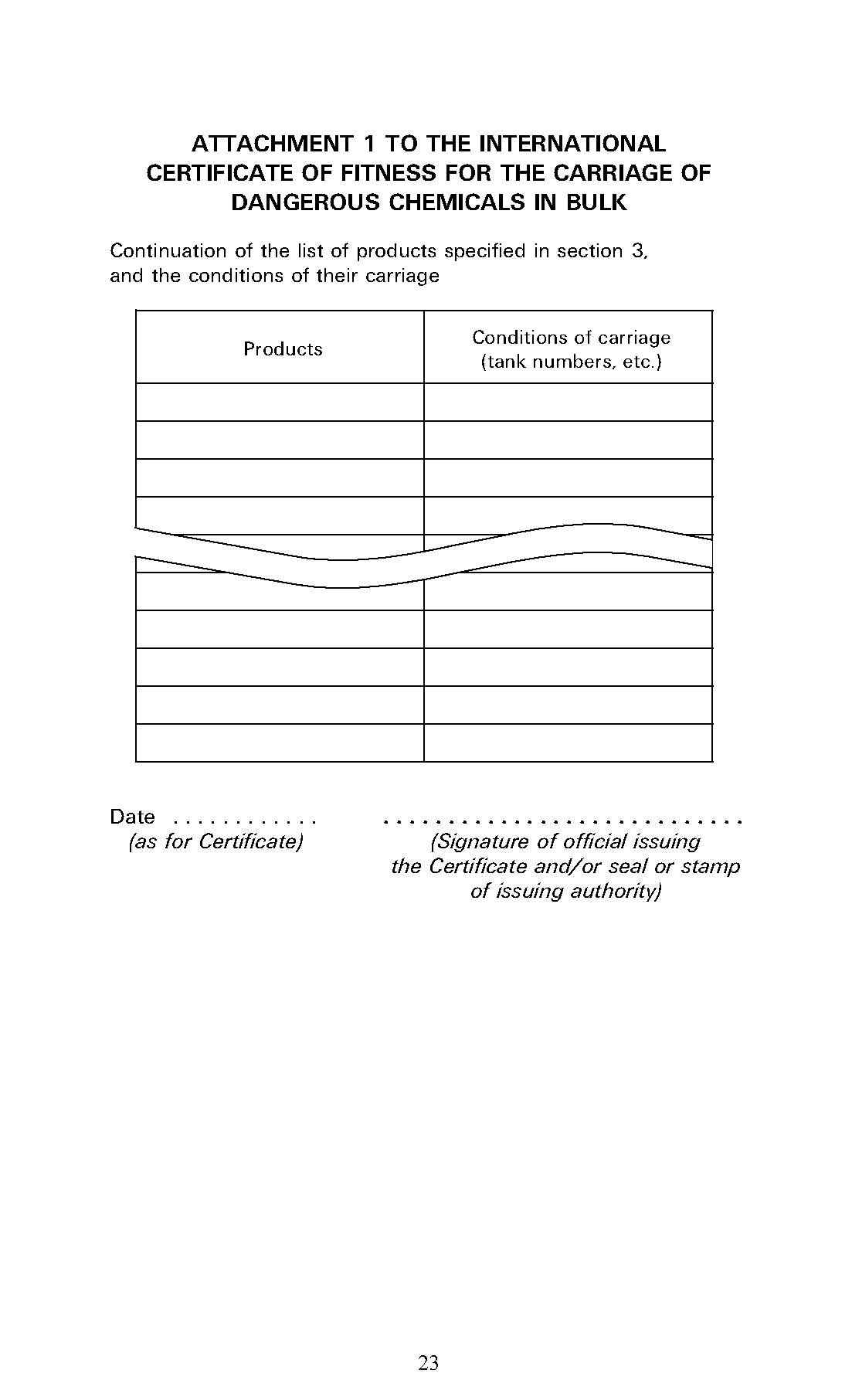
International Certificate of fitness for carriage of Liquefied Gases in bulk

In addition to the certificates listed above, where applicable, any high-speed craft shall carry
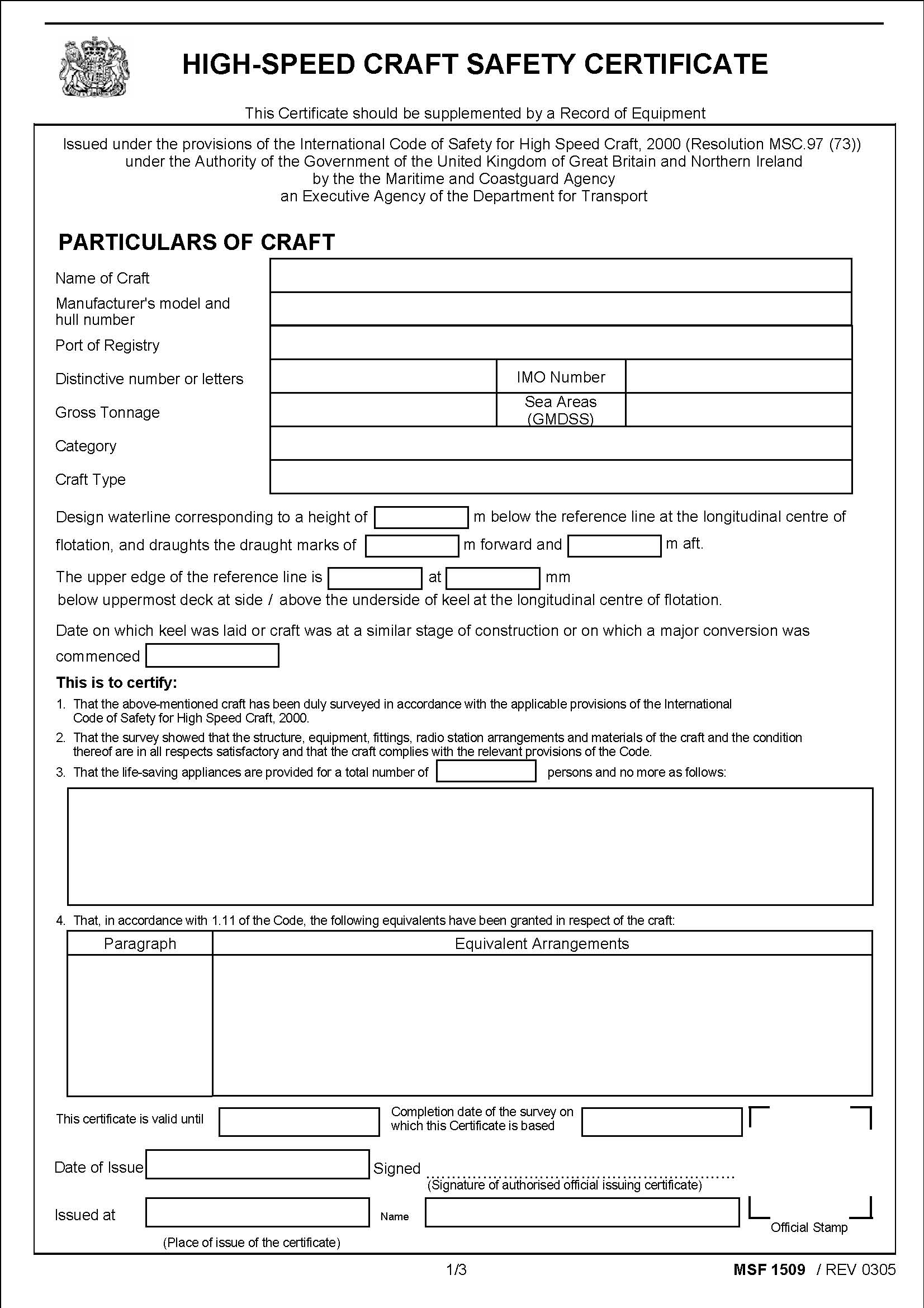
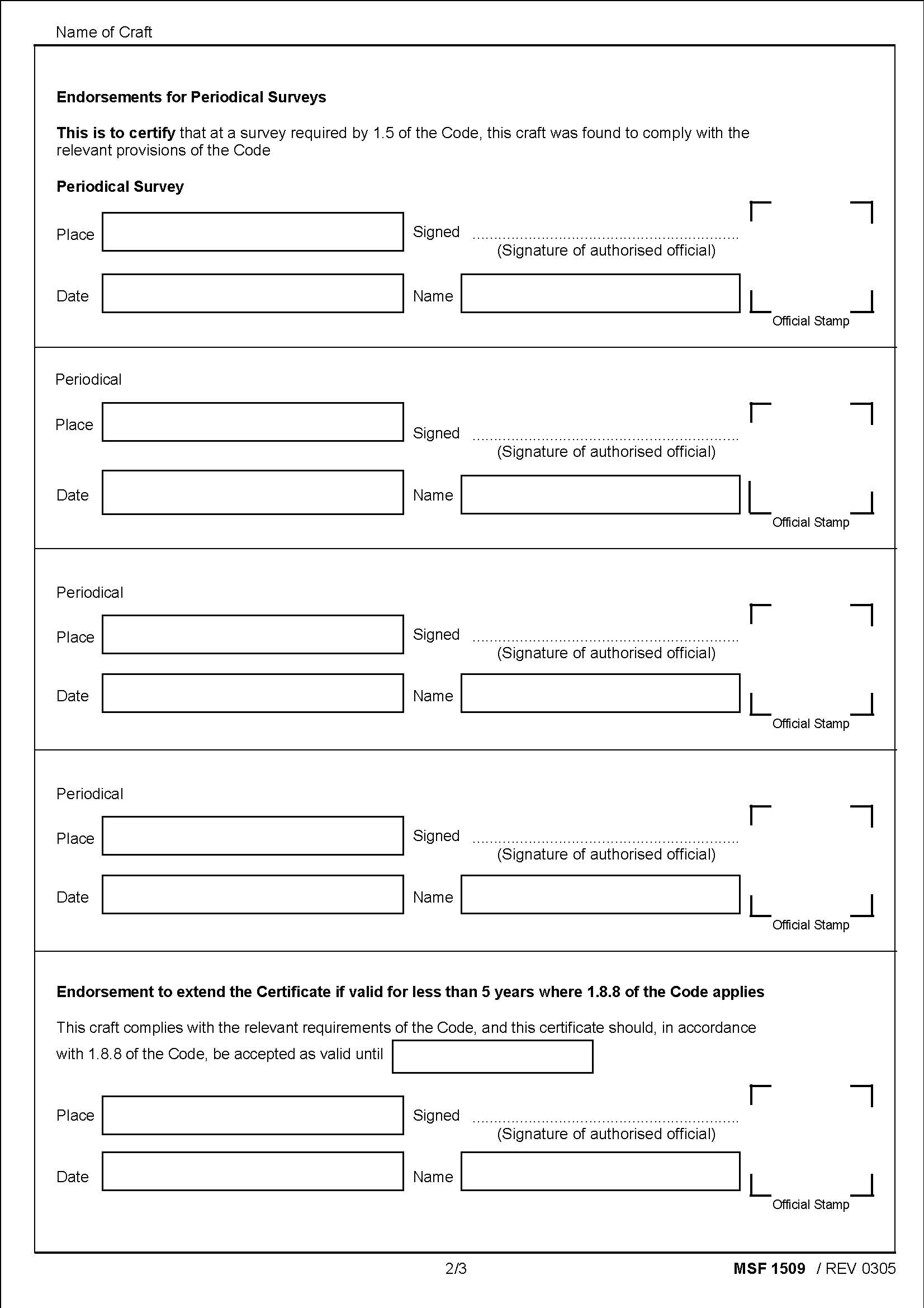
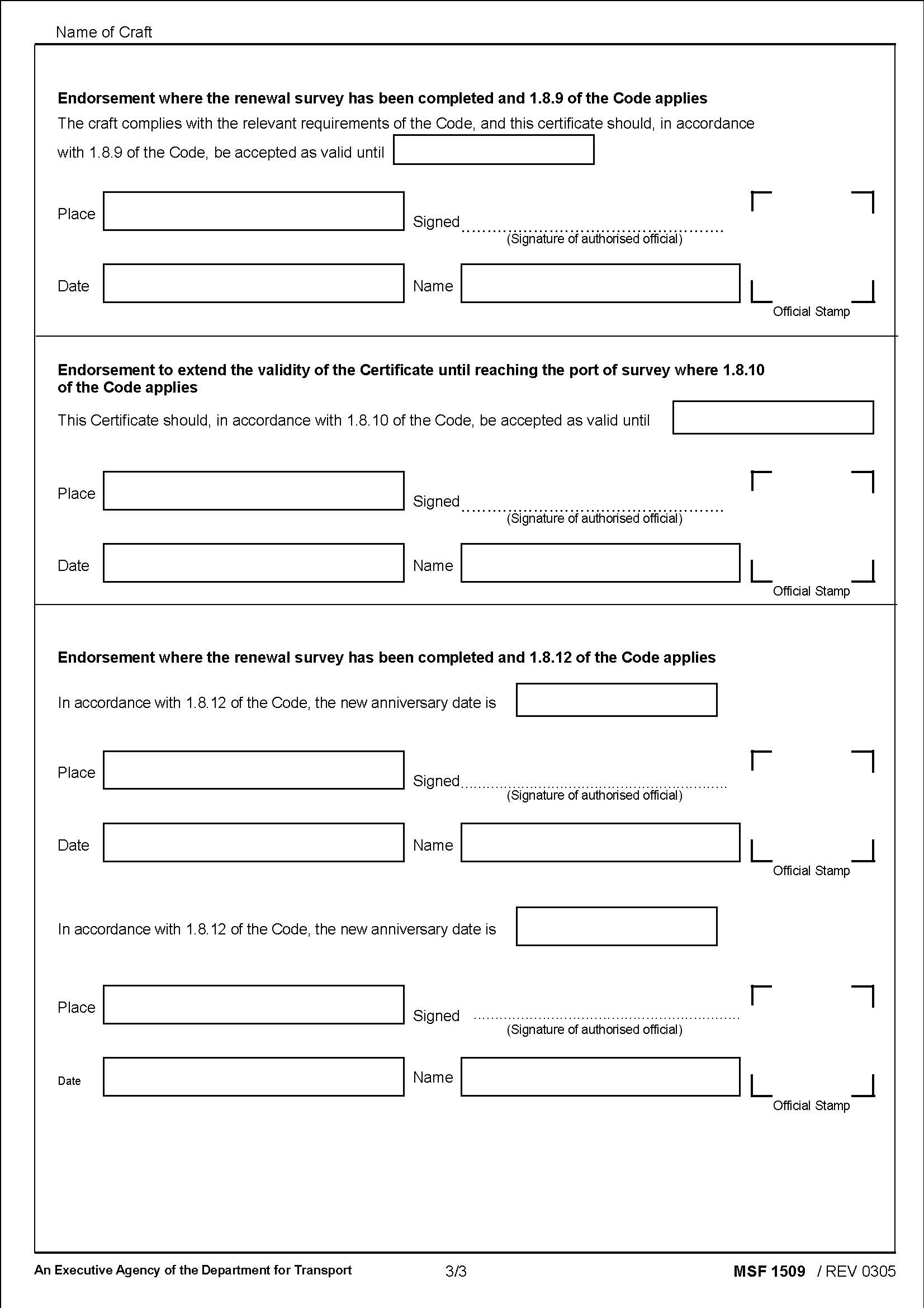
high Speed Craft Safety Certificate
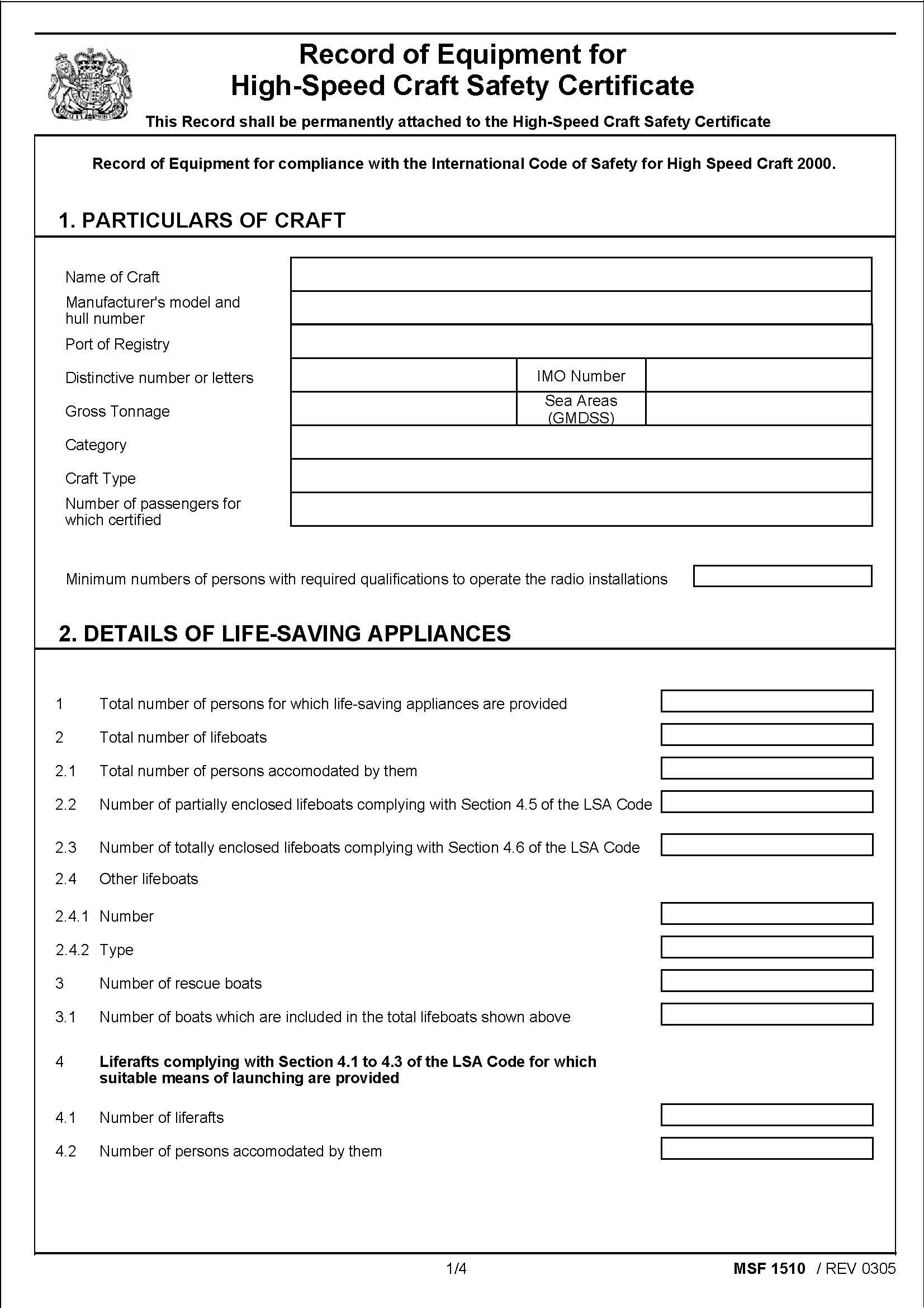
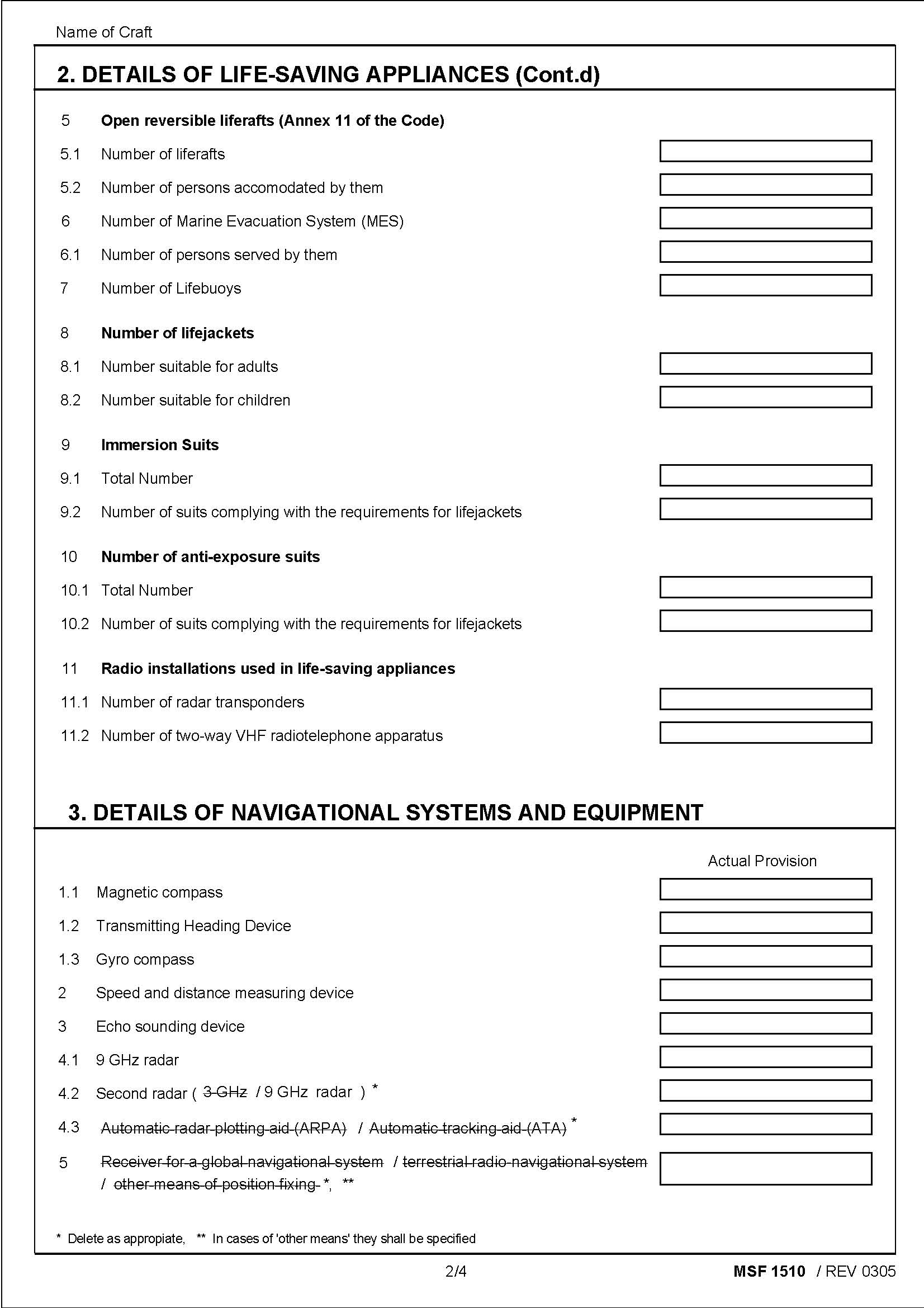
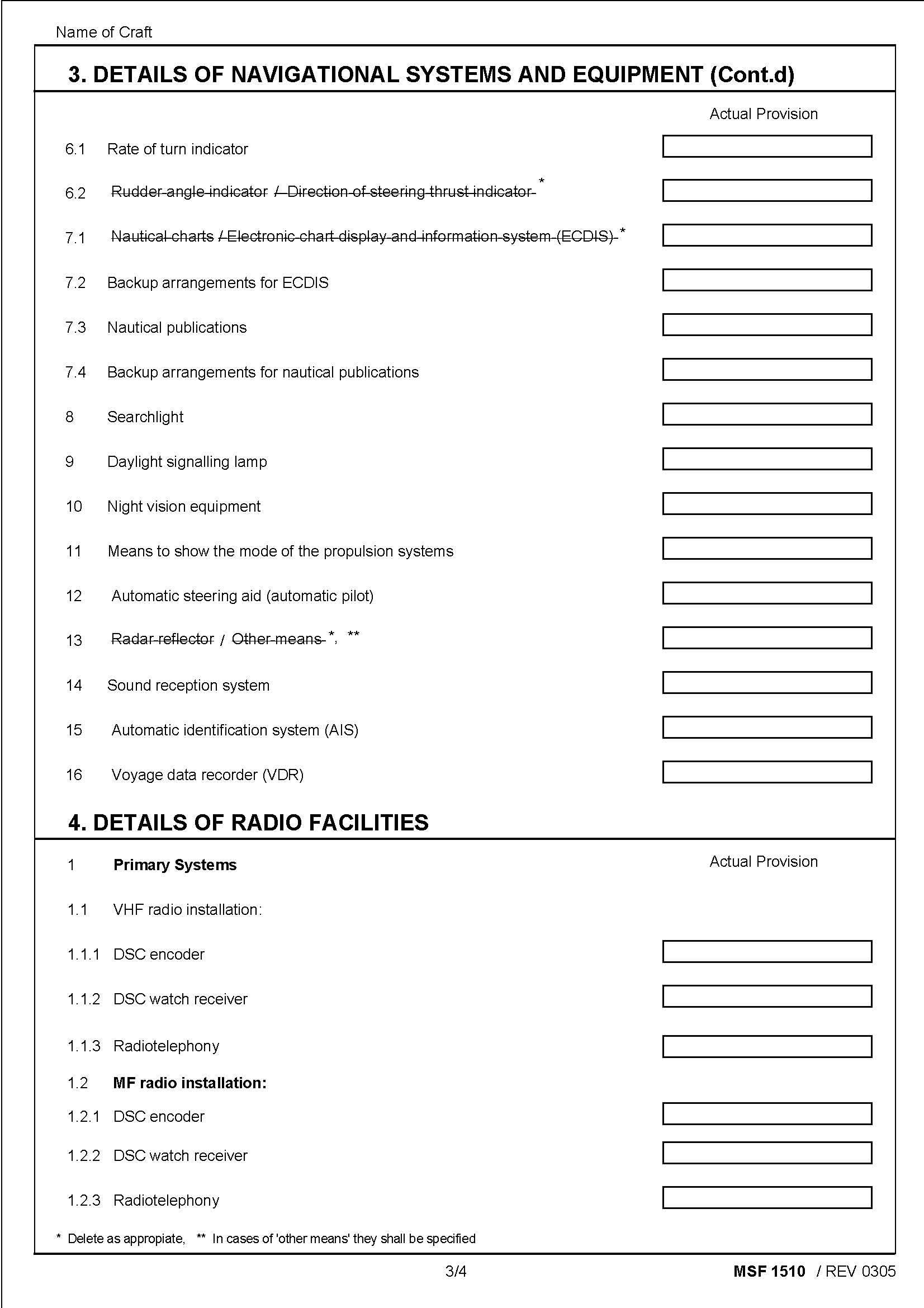
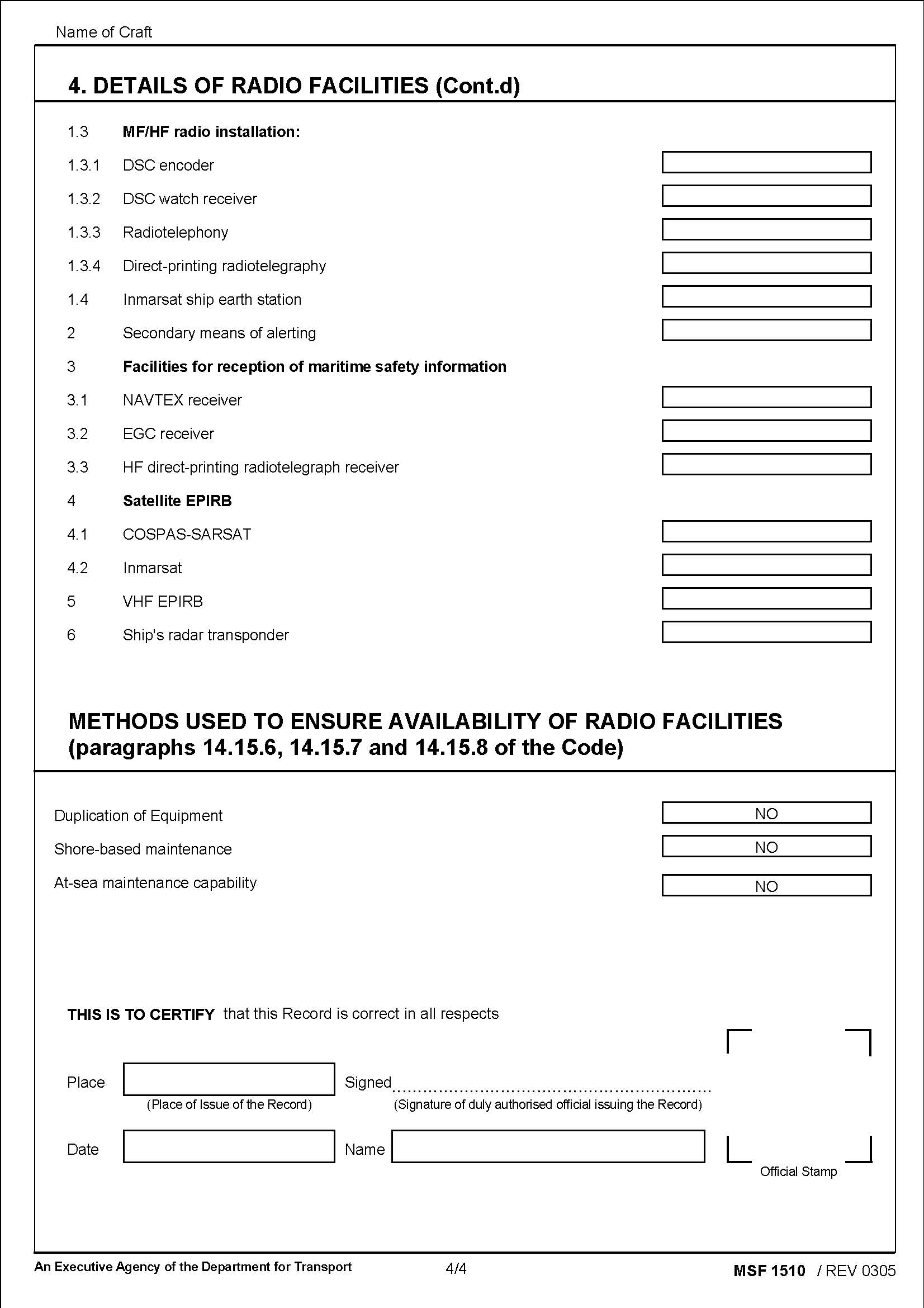
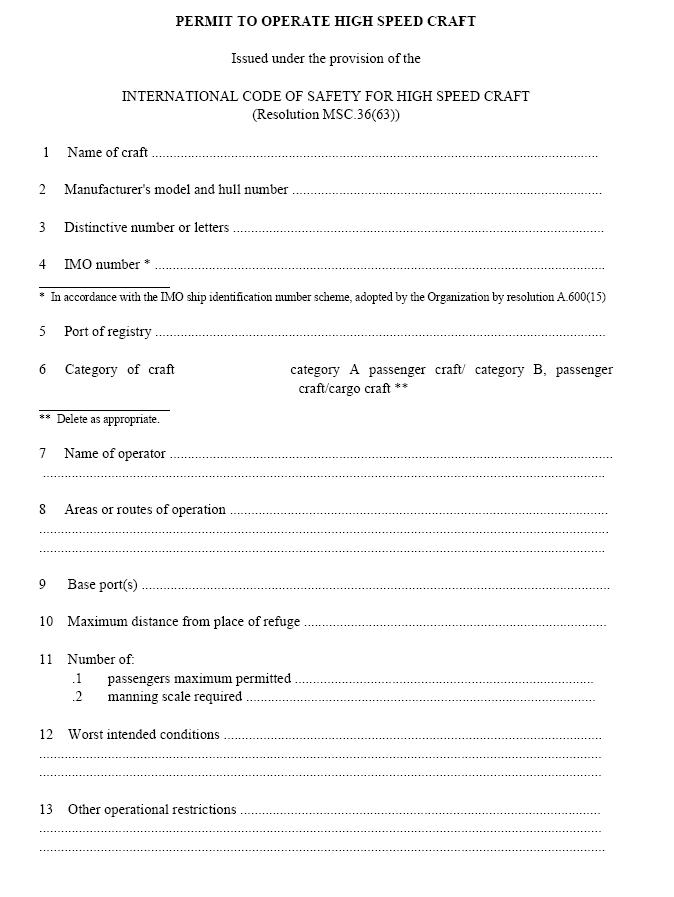
Permit to Operate High-Speed Craft
In addition to the certificates listed above, where applicable, any ship carrying dangerous goods shall carry
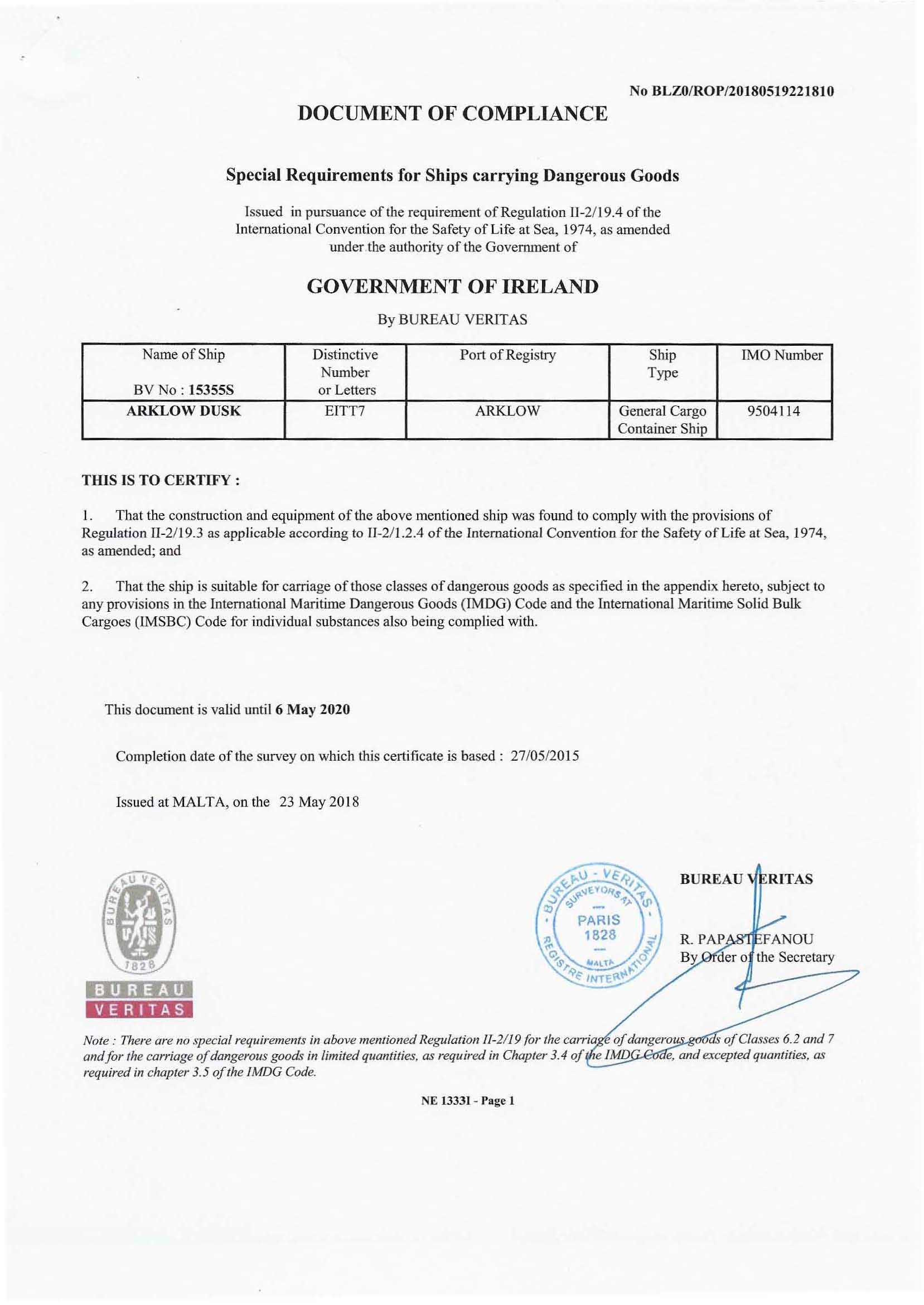
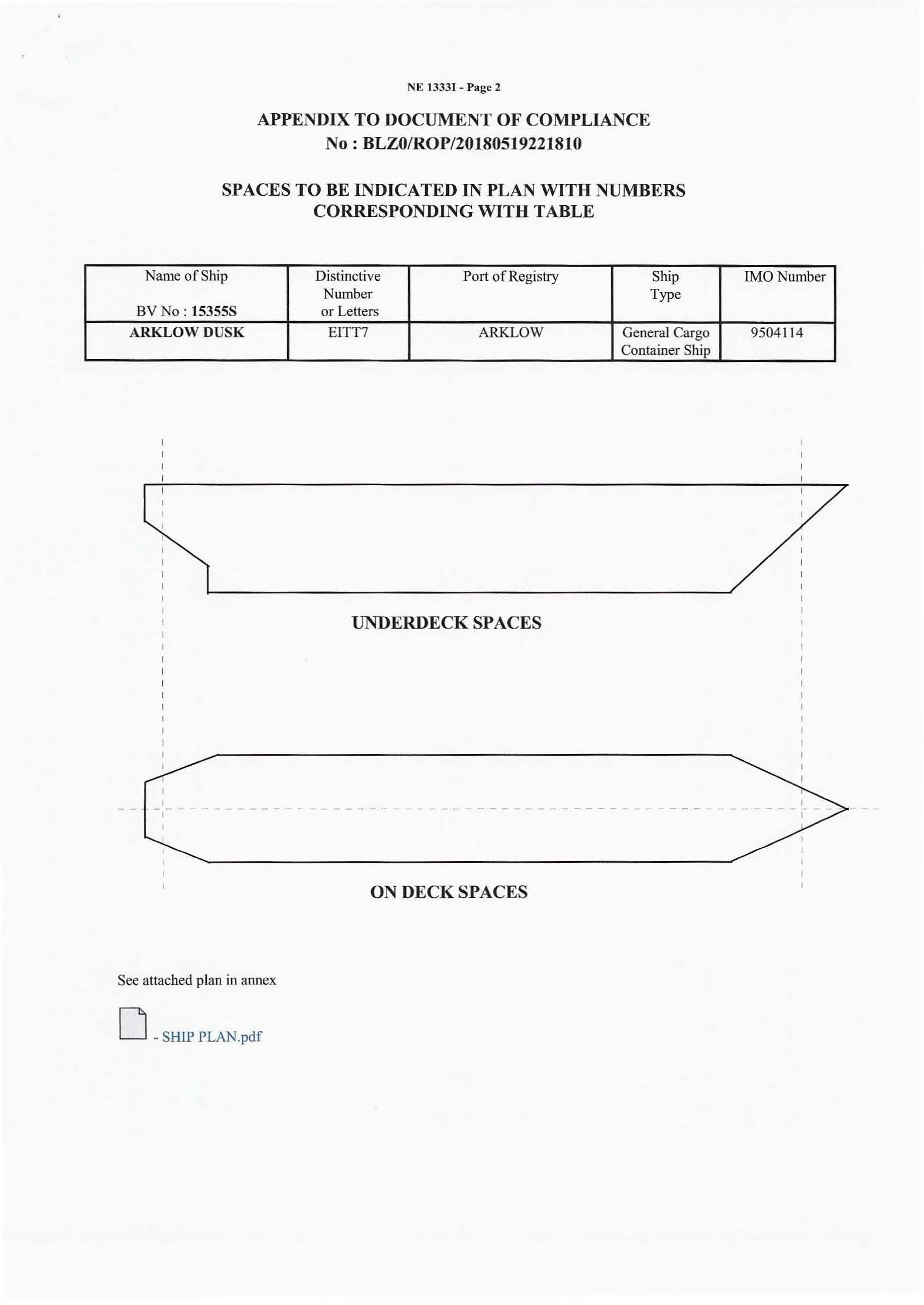
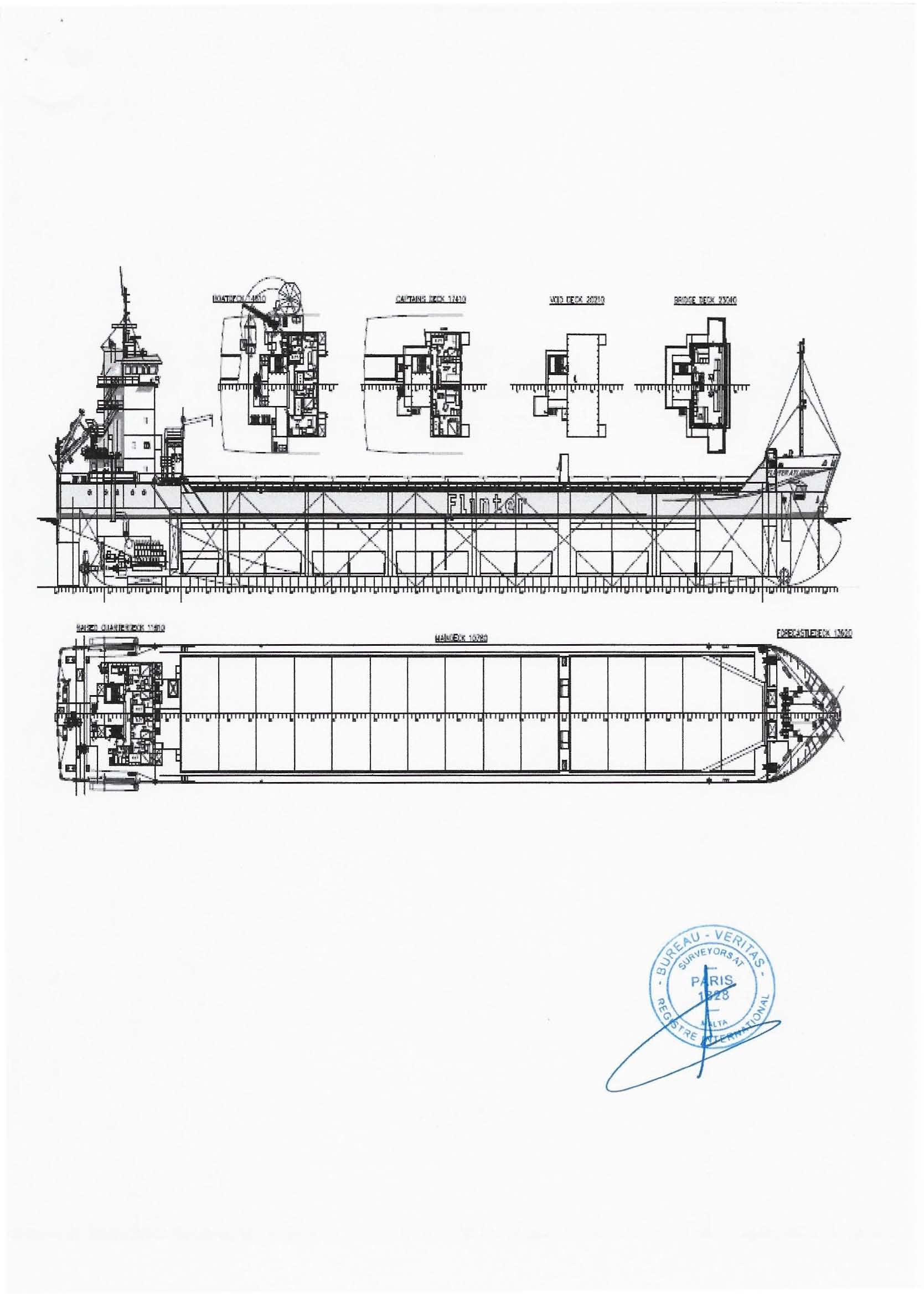
Document of compliance with the special requirements for ships carrying dangerous goods
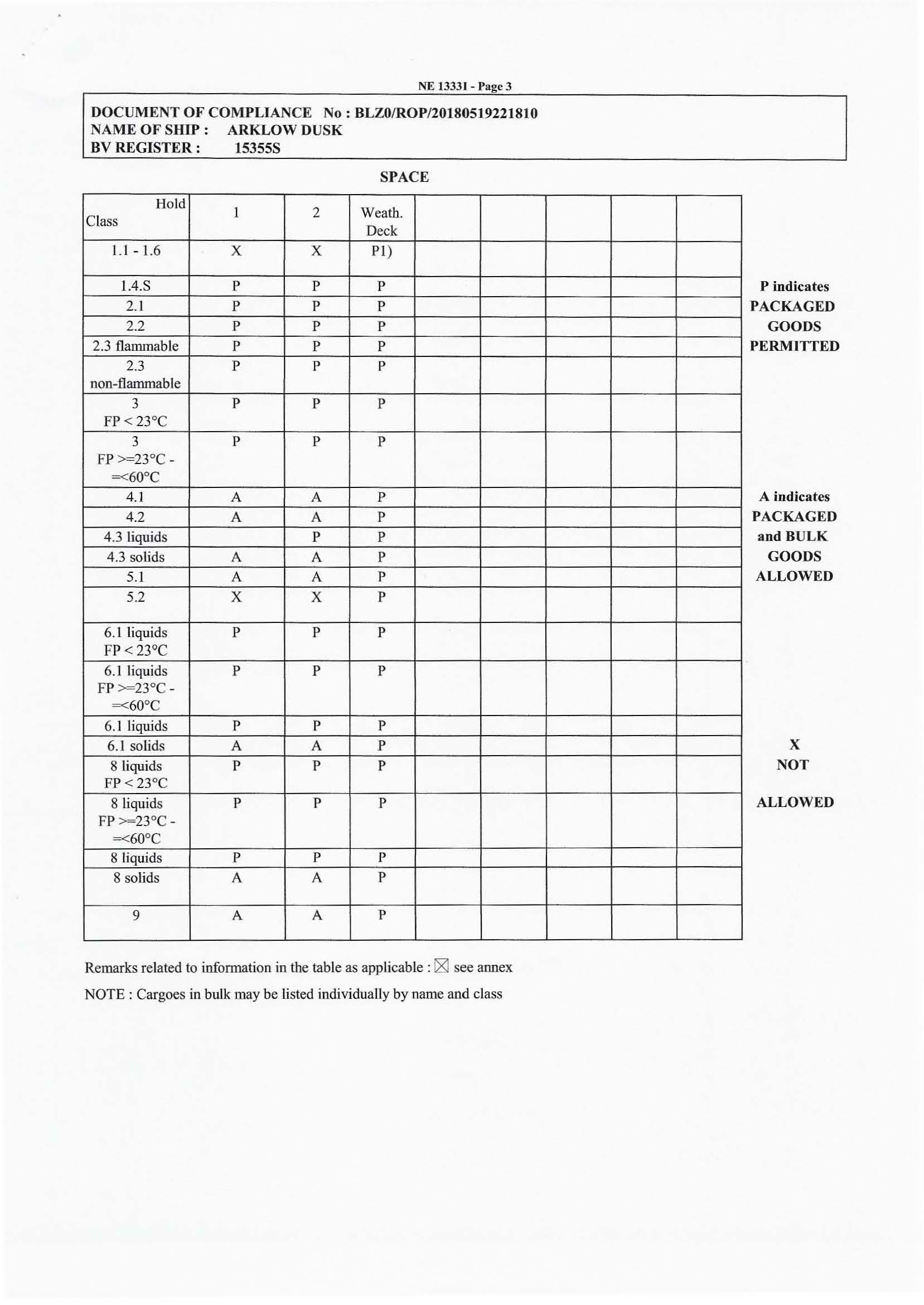
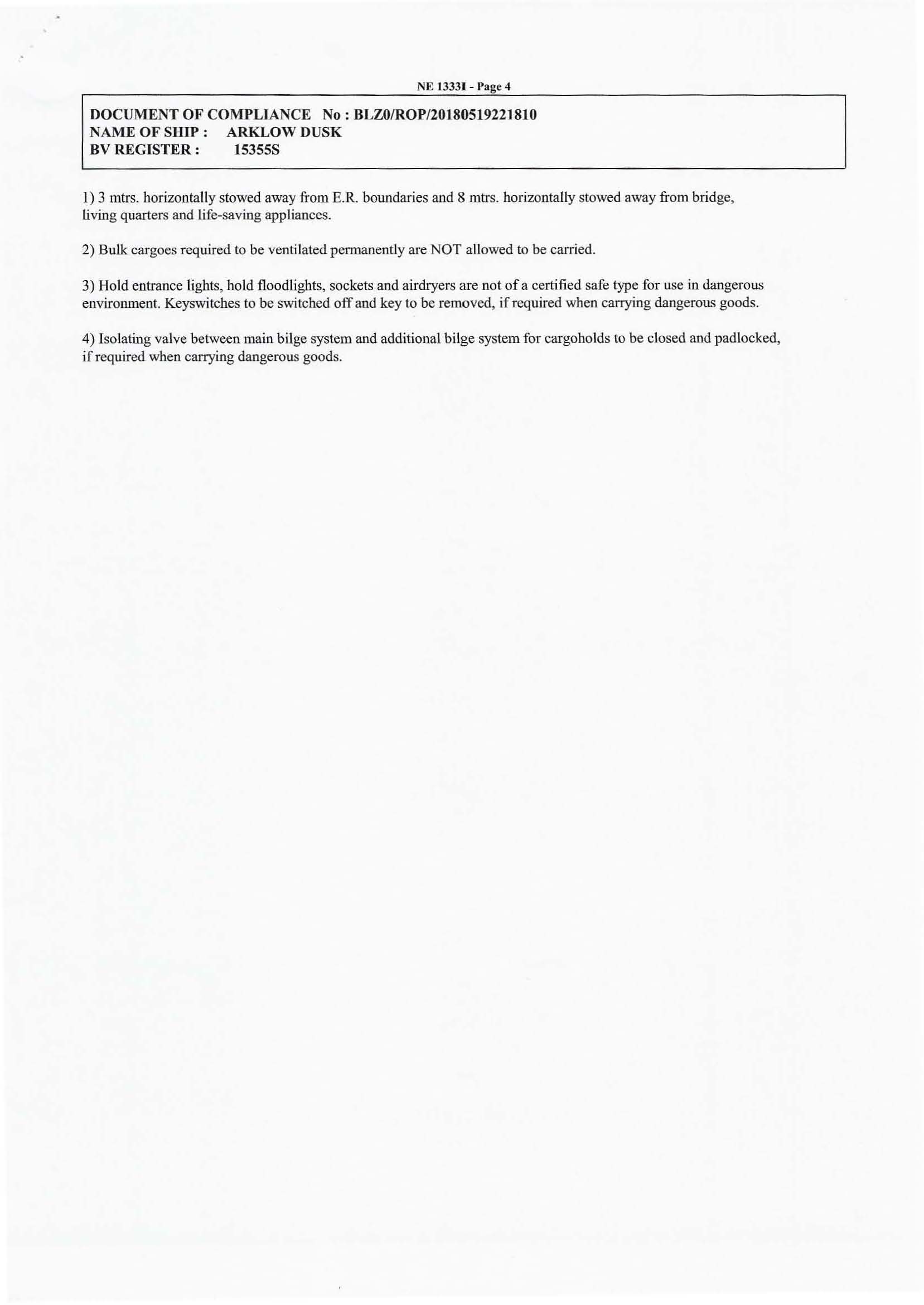
In addition to the certificates listed above, where applicable, any ship carrying dangerous goods in pakaged form shall carry:
Transport Information
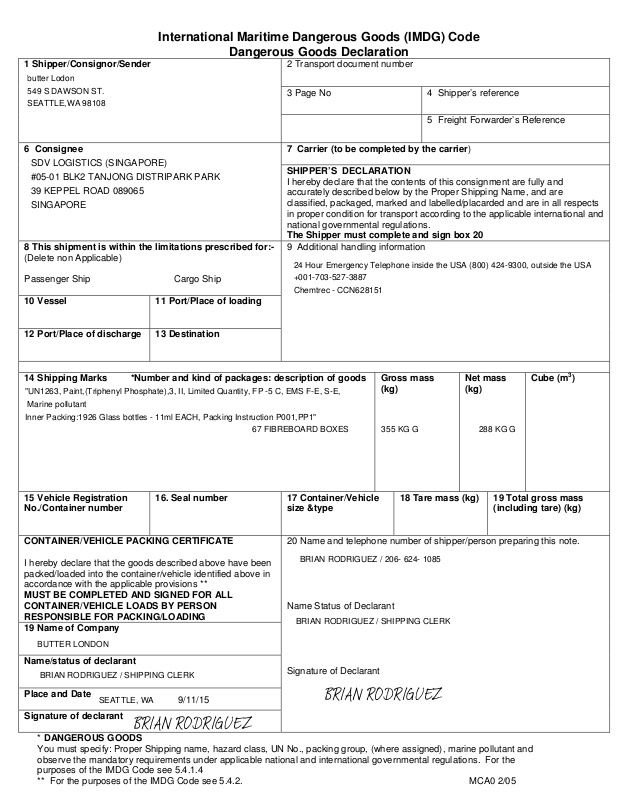
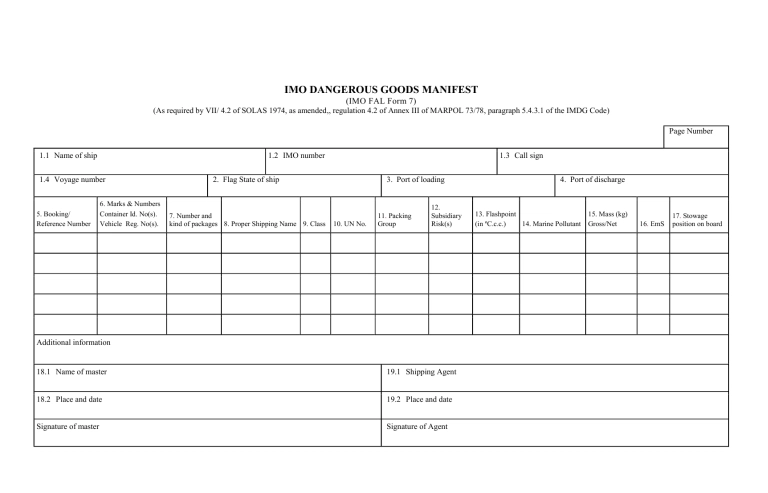
Dangerous goods manifest or Stowage Plan
This web site definitely has all of the information I needed concerning this subject and didn’t know who to ask. | а