Skip to content

Knowledge Of Sea

We will keep you updated

  • Home
  • Video
  • Chartering Terms
  • Rule of the Road (COLREG)
    • Nautical Flags
    • Rule of the Roads – CARDS
  • Tanker Definitions
  • Downloads
  • ORAL NOTES
    • ORAL NOTES- 2ND OFFICER
    • ORAL NOTES- CHIEF MATE
    • ASM ORAL NOTES 1
    • ASM ORAL NOTES 2
  • About Me
  • Exit Exam
    • FPFF exit exam questions and answers
    • EFA exit exam questions and answers
    • BST exit exam questions and answers
    • AFF DG Shipping exit exam question and answers
  • ASM ORAL NOTES 3
  • Toggle search form

CAP & CAS Survey

Posted on November 24, 2019November 24, 2019 By admin No Comments on CAP & CAS Survey

CAP Survey

Required by :  

  • Oil major requirement

Purpose :

  • Obtain info to rate steel condition and coating cond
  • Identify defects and areas of substantial corrosion.
  • Evaluate condition of anodes

Applicable : 

  • All type of tankers more than 15yrs of age and above 20000 DWT

Validity : 

  • As per oil major requirement, normally 2-3 years

Schedule : 

  • Inspection carried out along with class renewal or intermediate survey

Covers : 

  • CAP Hull and CAP machinery and cargo system

Items rated : 

  • Main structural elements in cargo tanks area and external structure
  • Coating condition of main structural elements in ballast tank
  • Vessel overall strength rated

Extent of visual examination : 

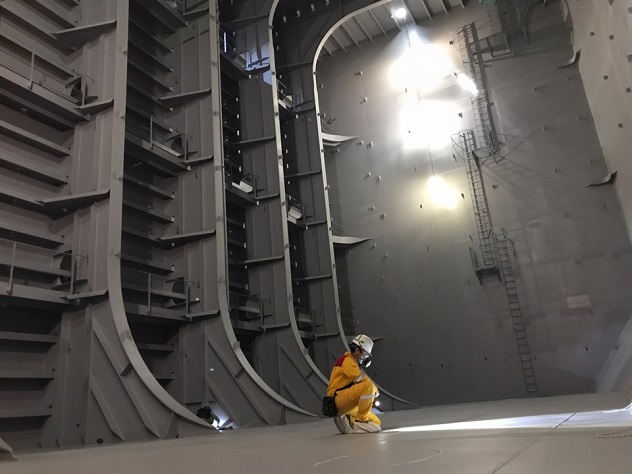
  • Complete close up of all ballast tank
  • Minimum completed close up of at least 1/3 of cargo tanks

Validity of thick measurement : 

  • 12 months

Inspection Completion time : 

  • 6 months

CAS Survey

Required by :  

  • Flag state

Purpose : 

  • Obtain info to rate coating condition.
  • Identify defects and areas of substantial corrosion.
  • Evaluate condition of anodes

Applicable : 

  • Oil tankers above 20,000 DWT as per cat 1,2,3 more than 15yrs old.

CAS is not applicable to Category I tankers.

  • ‘‘Category I oil tanker’’ means in oil tanker of 20,000 dwt and above carrying crude oil, fuel oil, heavy diesel oil or lubricating oil as cargo, and of 30,000 dwt and above carrying oil other than the above, which do not comply with the requirements for new tankers defined in MARPOL Reg.1(26).
  • “Category 2 oil tanker” means an oil tanker of 20,000 tons deadweight and above carrying crude oil, fuel oil, heavy diesel oil or lubricating oil as cargo, and of 30,000 tons dwt and above carrying oil other than the above, which do comply with the requirements for new tankers defined in Rcg. 1(26).
  • ‘Category 3 oil tanker” means an oil tanker of 5000 tons deadweight and above hut less than that specified in subparagraph I and 2 above.

Validity : 

  • 5 ½ years

Schedule : 

  • Inspection carried out along with class renewal or intermediate survey

Covers : 

  • Hull Structure

Items rated : 

  • Coating condition rated for main structural element in tank.

Extent of visual examination : 

  • Complete close up of all ballast tank
  • Minimum complete close up of one cargo tanks
  • 30% remaining of cargo tanks

Validity of thick meas : 

  • 18 months

Inspection Completion time : 

  • 18 months 
Rules and Regulation Tags:CAP HULL, CAP MACHINERY, CAP SURVEY, CAS SURVEY, CONDITION ASSESSMENT PROGRAMME, CONDITION ASSESSMENT SURVEY

Post navigation

Previous Post: Difference Between Towage & Salvage
Next Post: Charter Parties

Leave a Reply Cancel reply

Your email address will not be published. Required fields are marked *

Categories

  • Bulk Carrier
  • Cargo handling
  • Engine Room Operations
  • LSA & FFA
  • Maritime Industry
  • Maritime Law
  • Merchant Shipping
  • Navigation
  • Rules and Regulation
  • Ship Construction
  • Shipboard operation
  • Stability
  • Tanker
  • Uncategorized

Blog is primarily for candidates appearing for certificate of competency exams but such is the detail that while being equally suitable for the beginner, it is also reference work for experienced seaman, and the layout and style of blog make it suitable for shipboard training where practical experience can be allied to the theoretical approach.

Recent Comments

  • capt on Radar Best Practice -ARPA
  • admin on Dry Docking (Theory & Numericals)
  • Stelios Karamplakas on Dry Docking (Theory & Numericals)
  • Farid OMARI on Demurrage
  • admin on Tanker Cargo Calculations

Copyright © 2018 knowledge of sea – All Rights Reserved.

If you’re unsure about what type of training will work best for you, just tell us a little more about your needs. We will get back to you as soon as possible with the answers you need!

All answers will be from sailor mouth, who is practically working on board.

January 2026
S M T W T F S
 123
45678910
11121314151617
18192021222324
25262728293031
« Dec    

Copyright © 2026 Knowledge Of Sea.

Powered by PressBook WordPress theme

Go to mobile version