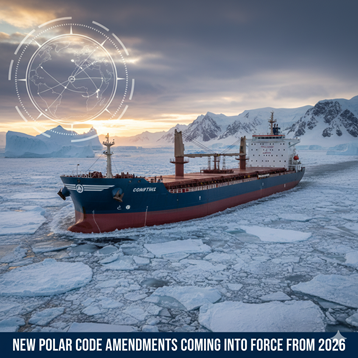
The IMO has adopted important amendments to the International Code for Ships Operating in Polar Waters (Polar Code), which will become mandatory from 1 January 2026. These changes strengthen safety, environmental protection, and operational standards for a wider range of vessels entering Arctic and Antarctic waters.
What the Polar Code Covers
The Polar Code sets mandatory standards for:
- Ship design and construction
- Navigation and voyage planning
- Crew training and operational safety
- Environmental protection in polar waters
Until now, these rules mainly applied only to SOLAS-certified ships.
What Changes in 2026?
1. More Vessel Types Become Mandatory
From 2026, the following non-SOLAS vessels must comply with specific parts of the Polar Code when operating in polar waters:
- Fishing vessels of 24 metres and above
- Pleasure yachts of 300 GT and above
- Cargo ships 300–499 GT
These vessels were previously outside the mandatory requirements but will now need to meet polar-specific safety and navigation provisions.
Key New Requirements
The amendments introduce new chapters in Part I-A of the Code, focusing on:
1. Navigation Safety
Vessels must follow enhanced rules for route selection, ice navigation, and use of up-to-date polar charts and information.
2. Voyage Planning
Operators must prepare detailed voyage plans that account for:
- Ice conditions
- Weather patterns
- Search & rescue limitations
- Emergency preparedness
3. Operational Readiness
Crew training, survival equipment, communication systems, and emergency procedures must be suitable for polar environments.
Why These Amendments Matter
- Improved safety: Small and medium vessels face high risks in remote polar regions.
- Environmental protection: Polar waters are sensitive ecosystems requiring strict operational controls.
- Uniform global standards: Ensures consistency and reduces regulatory gaps for vessels operating in polar areas.
- Growing traffic: As polar routes become more accessible, stronger regulations reduce accident and pollution risks.
What Shipowners and Operators Must Do
- Update navigation and voyage planning procedures
- Ensure crew training aligns with polar operations
- Equip vessels with polar-appropriate safety and survival gear
- Obtain necessary flag-state certifications
- Prepare for full compliance by 1 January 2026 (or 2027 for some existing vessels)
Conclusion
The new Polar Code amendments mark a major step toward safer and more environmentally responsible operations in polar waters. All vessels planning to enter Arctic or Antarctic regions—from small cargo ships to fishing vessels and large yachts—must prepare now to meet the upcoming requirements.