Rule 17
Action by stand-on vessel
(a) (i) Where one of two vessels is to keep out of the way, the other shall keep her course and speed.
(ii) The latter vessel may however take action to avoid collision by her maneuver alone, as soon as it becomes apparent to her that the vessel required to keep out of the way is not taking appropriate action in compliance with these Rules.
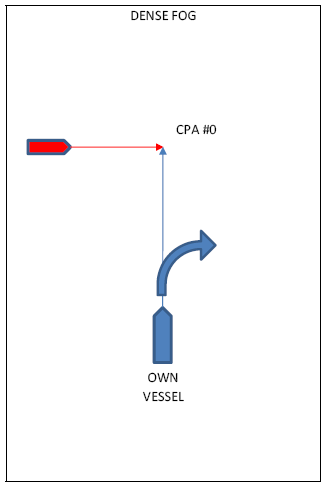
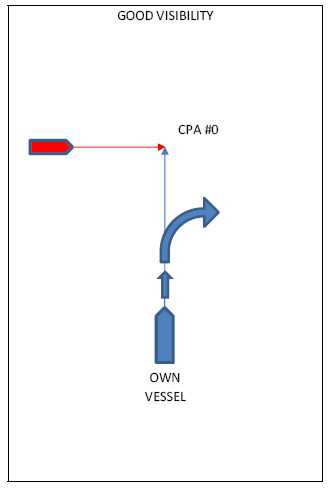
(c) A power-driven vessel which takes action in a crossing situation in accordance with sub-paragraph (a)(ii) of this Rule to avoid collision with another power-driven vessel shall, if the circumstances of the case admit, not alter course to port for a vessel on her own port side.
Rule 17: ACTION BY STAND-ON VESSEL
Rule 17 is very tricky, one of the harder rules to understand and to follow. If you are the “stand-on vessel” then you cannot relax. Remember always that the rule applies to vessels in sight; you have always the choice to become a “stand-on vessel” with a zero CPA or with a safe CPA. Rule 17 has three stages and you must identify and assess each of them:
- Rule 17(a)(i): when you are the “stand-on vessel”, you must keep your course and speed. You must not do anything unexpected.
- Rule 17(a)(ii): “as soon as it becomes apparent” that the give-way vessel is not taking appropriate action, then you may take your own action to avoid a collision.
- Rule 17(b): when a collision cannot be avoided by the give-way vessel alone, then you must take the best action you can to avoid colliding. Your action under Rule 17(b) must still be in time to avoid a collision so you must not leave it too late.
Do not go to port in a crossing situation – if the other ship goes to starboard, as it should, then both ships will turn towards each other.
You can use the “wake-up” signal under Rule 34(b) on maneuvering and warning signals. Blow your horn and flash your lights in due time at the other vessel but do not expect that this will solve the problem, the most important point is to have already a plan on what to do and when to do to avoid any danger if the other will fail to do as required.
Use always at least 3 times maneuvering tactical diameter as safe distance to start your own maneuver, at less distance the risk will increase unacceptable.
Think twice before calling it on VHF, this take valuable time during which the risk of collision will increase and also any communication error will lead to disaster.
When approaching a give-way vessel, maintain your course and speed but always be prepared to take action to avoid collision.
Attention, planning, decision and action are the main tools during navigation.