Recognition of, and use of, emergency and distress signals
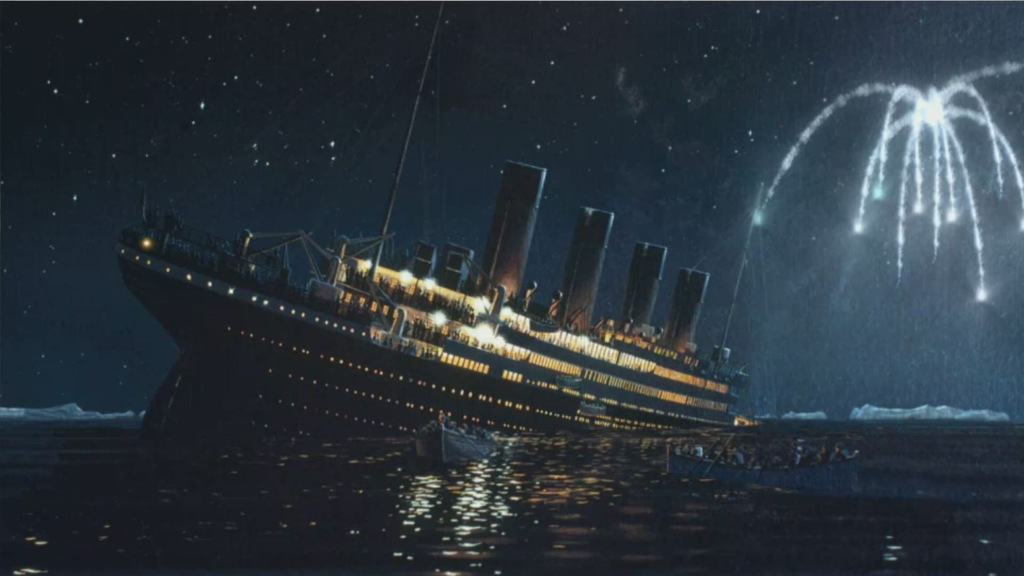
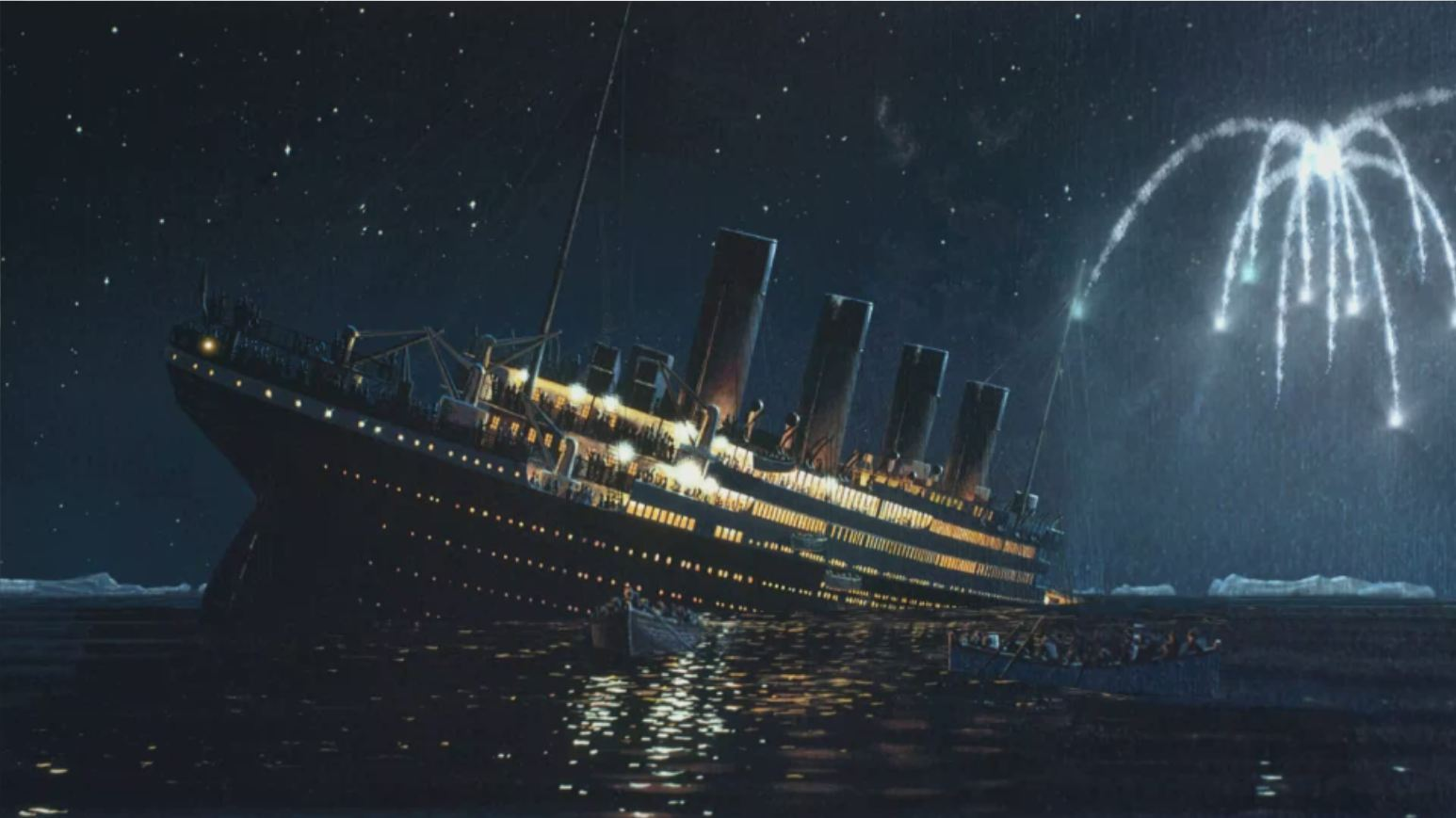
Distress signals should be as distinctive as possible, so that they may be recognised at once and assistance dispatched immediately. In this context, it has been found that the best distress signals are red parachute flares or rockets emitting red stars. The numbers of these on board and in lifeboats I life rafts being limited, these should be used only when there is the possibility of their being seen by ships, aircraft, coast, etc. i.e. within vicinity of possible assistance.
Further, “Continuous sounding with any fog signalling apparatus” and “flame on a vessel” have been found to give rise to misunderstanding; and it is suggested that the Morse code SOS may be sounded continuously rather than merely making a sound continuously.
The Merchant Shipping (Distress Messages and Navigational Warnings) Rules provide that:
► Distress Signals shall not be used by any vessel without the authority of the Master of the vessel.
► The Master of the vessel shall not order the use of the distress signal unless he is satisfied that his vessel is threatened by grave and imminent danger and requires assistance, or that another vessel or aircraft is so threatened and requires assistance and cannot of itself send that signal.
► After sending out a distress signal by means of radio, the Master of the vessel, which sent out the distress signal initially, may find subsequently that assistance is no longer required. He shall immediately send out a message notifying that assistance is no longer required and normal working may be resumed.
Statutory Distress Signals:
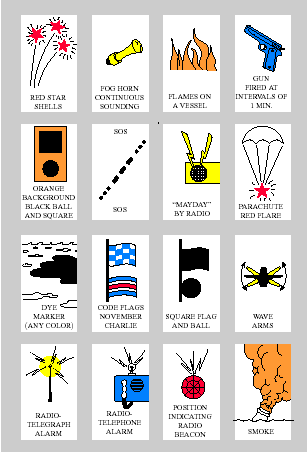
Under the International Regulations for Preventing Collisions at Sea, the signals to be used or exhibited either together or separately to indicate distress and need of assistance are as follows:
► A gun or other explosive signal fired at intervals of about a minute;
► A continuous sounding with any fog•signalling apparatus;
► Rockets or shells, throwing red stars fired one at a time at short intervals;
► A signal made by radiotelegraphy or by any other signalling method consisting of the SOS(●●● – – – ●●● ) in the Morse Code;
► A signal sent by radiotelephony consisting of the spoken word “Mayday”;
► A signal consisting of a square flag having above or below it a ball or anything resembling a ball;
► Flames on the vessel (as from a burning tar barrel, oil barrel, etc.)
► A rocket parachute flare or a hand flare showing a red light;
► A smoke signal giving off orange-coloured smoke Slowly and repeatedly raising and lowering arms outstretched to each side
► Signals transmitted by Emergency Position-Indicating Radio Beacon (EPIRB).
► Approved signals transmitted by radio communications systems, including survival craft transponder Beacons. (SART)
► GMDSS (refer to Global Maritime Distress and Safety System installed on your ship)
► The International Code Signal of distress indicated by NC;
Caution
The use or exhibition of any of the foregoing signals except for the purpose of indicating distress and need of assistance. The use of other signals, which may be confused, with any of the above signals is prohibited.