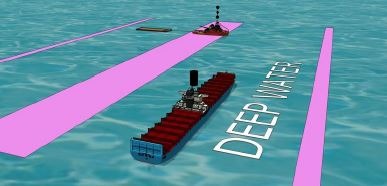
Before we start with the situations, we need to focus on some important Rules and
Phrases and they are:
THE RULES:
Rule 8 (f), Rule 9, Rule 10 and Rule 18.
All the rules mentioned above have a connection between them and it will be explained in the examples later
8 (f) (i). A vessel which, by any of these Rules, is required not to impede the
passage or safe passage of another vessel shall, when required by the
circumstances of the case, take early action to allow sufficient sea-room for the
safe passage of the other vessel.
8 (f) (ii). A vessel required not to impede the passage or safe passage of another
vessel is not relieved of this obligation if approaching the other vessel so as to
involve risk of collision and shall, when taking action, have full regard to the action which may be required by the Rules of this part.
8 (f) (iii). A vessel the passage of which is not to be impeded remains fully obliged
to comply with the Rules of this part when the two vessels are approaching one
another so as to involve risk of collision.
(i) Impede Passage;
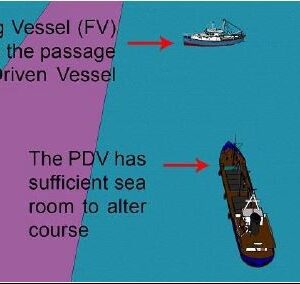
(ii) Impede SAFE Passage.
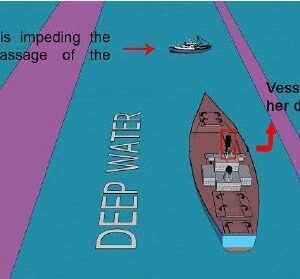
Any situation like Head-On, Crossing and Overtaking inside Narrow Channel and
Traffic Separation Scheme (TSS) will be solved the same way like the examples
below:
FISHING VESSEL
(IMPEDING THE PASSAGE)
Traffic Separation Scheme Situation
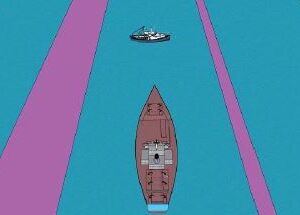
– As per the picture above, the first rule will come to your mind is Rule 10(a) which
state:
“This Rule applies to Traffic separation schemes adopted by the Organization and
does not relieve any vessel of her obligation under any other rule.”
– Rule 18(a) has to be applied according to Rule 10(a), which state:
“A power-driven vessel underway shall keep out of the way of:”
“a vessel engaged in fishing.”
– Power-Driven Vessel (PDV) has to keep clear of Fishing Vessel (FV).
– But by reading the first line in Rule 18:
“Except where Rules 9, 10 and 13 otherwise require”
Rule 10(i) states:
“A vessel engaged in fishing shall not impede the passage of any vessel following a traffic lane.”
So BIG Question is does Rule 18 apply in Rule 10?
Rule 18 says “Except where Rules 9, 10 and 13 otherwise require”
Means if rule 9,10 or 13 wants action which is in contrast of rule 18,then rule 9 or 10 or 13 will apply otherwise rule 18 will apply.
“So for this situation when Fishing Vessel is impeding passage of Power Driven Vessel in TSS, it is the duty of Fishing Vessel to take action as per Rule 10(i) & 8(f)(i). But if Fishing Vessel does not take action, its Power Driven Vessel should attract attention of Fishing Vessel by
sounding 5 short and rapid blasts as per Rule 34 (d). If still Fishing Vessel still does not take any action, then Power Driven Vessel will have to take action to avoid collision as per Rule 8(f)(iii). But Rule 8(f)(iii) does not relieve Fishing Vessel from her duty.”
Options available to PDV, if FV does take action even after repeated attempts of
attracting attention.
-Reduce Speed
-Alter course and enter Separation Zone.
-Alter course and go to Inshore Traffic Zone to avoid immediate danger.
-Stop & Take all the way off.
FISHING VESSEL
(IMPEDING THE PASSAGE)
Narrow Channel Situation
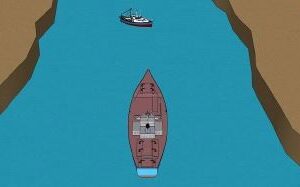
– As per the picture above, the first rule will come to your mind is Rule 18(a) which
state:
“A power-driven vessel underway shall keep out of the way of:”
“a vessel engaged in fishing.”
– In this case Power-Driven Vessel (PDV) has to keep clear of Fishing Vessel (FV).
– But by reading the first line in Rule 18:
“Except where Rules 9, 10 and 13 otherwise require”
– Rule 9(c) states:
“A vessel engaged in fishing shall not impede the passage of any other vessel
navigating within a narrow channel or fairway.”
“So for this situation when Fishing Vessel is impeding passage of Power Driven Vessel in Narrow Channel, it is the duty of Fishing Vessel to take action as per Rule 9(c) & 8(f)(i). But if Fishing Vessel does not take action, its Power Driven Vessel should attract attention of Fishing Vessel by sounding 5 short and rapid blasts as per Rule 34 (d). If still Fishing Vessel still does not take any action, then Power Driven Vessel will have to take action to avoid collision as per Rule 8(f)(iii). But Rule 8(f)(iii) does not relieve Fishing Vessel from her.”
A SAILING VESSEL
(IMPEDING THE PASSAGE)
Traffic Separation Scheme Situation
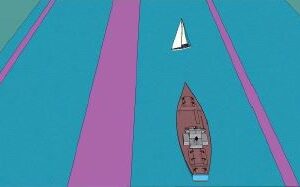
– As per the picture above, the Sailing Vessel (SV) impeding the passage of (PDV)
and NOT the SAFE passage, as per Rule 10(j), which states:
“A vessel of less than 20 metres in length or a sailing vessel shall not impede the
safe passage of a power-driven vessel following a traffic lane.”
“So for this situation when Sailing Vessel is impeding passage of Power Driven Vessel in TSS, it is the duty of Power Driven Vessel to take action as per Rule 18.”
Here Rule 10(j) did not required action otherwise that is SV is not impeding the
SAFE passage of PDV. Its only impeding the passage of PVD, rule 10 does only talks
about Safe passage in case of sailing vessel or vessel less than 20 m in length.
Therefore it does not require a action which is in contrast with rule 18. Hence rule 18 will apply.
– So (PDV) should take immediate action without sounding the 5 short blasts to
avoid collision and keep clear of (SV).
Options available to PDV:
– Reduce Speed
– Alter course and keep clear of sailing vessel.
– Stop & Take all the way off.
VESSEL OF LESS THAN 20 METRES IN LENGTH
(IMPEDING THE PASSAGE)
Traffic Separation Scheme Situation
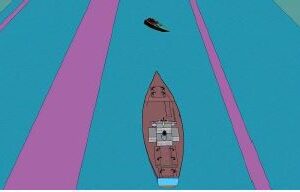
– As per the picture above, the Small Vessel is impeding the passage of (PDV) and
NOT the SAFE passage, as per Rule 10(j), which states:
“A vessel of less than 20 metres in length or a sailing vessel shall not impede the
safe passage of a power-driven vessel following a traffic lane.”
“So for this situation when Small Vessel is impeding passage of Power Driven Vessel in TSS, it is the duty of Power Driven Vessel to take action as per Rule 18.”
Here Rule 10(j) did not required action otherwise that is small vessel is not
impeding the SAFE passage of PDV. Its only impeding the passage of PVD, rule 10
does only talks about Safe passage in case of sailing vessel or vessel less than 20
m in length. Therefore it does not require a action which is in contrast with rule 18.
Hence rule 18 will apply.
– So (PDV) should take immediate action without sounding the 5 short blasts to
avoid collision and keep clear of small vessel.
Options available to PDV:
– Reduce Speed
– Alter course and keep clear of sailing vessel.
– Stop & Take all the way off.
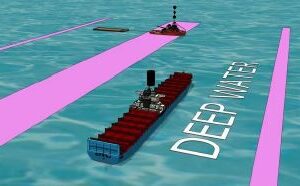
Situation :
RAM Crossing TSS and you are following Deep water Lane being a CBD vessel.
Ideal answer will be:
– Reduce Speed
– Take all the way off
To let the RAM vessel pass ahead of you.
Rule applicable in above situation is Rule 18. & Good Seamanship.
What Rule 10 says about RAM
(k). A vessel restricted in her ability to manoeuvre when engaged in an operation
for the maintenance of safety of navigation in a traffic separation scheme is exempted from complying with this Rule to the extent necessary to carry out the
operation.
(l). A vessel restricted in her ability to manoeuvre when engaged in an operation
for the laying, servicing or picking up of a submarine cable, within a traffic
separation scheme, is exempted from complying with this Rule to the extent
Nothing is stopping a RAM vessel to cross the TSS Rule 10(c), which states: A
vessel shall, so far as practicable, avoid crossing traffic lanes but if obliged to do so
shall cross on a heading as nearly as practicable at right angles to the general
direction of traffic flow.
So Above RAM is doing so crossing TSS at Right Angle, and since RAM is hampered
vessel, keeping Good Seamanship in mind and rule 18, CBD vessel have to let RAM
pass ahead of her, and keep clear of RAM.
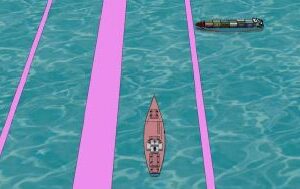
Situation :
Crossing Situation between two PDV’s and Vessel (A) is Following TSS Lane and
Vessel (B) is Crossing TSS.
Ideal answer will be:
(A) is Give Way Vessel
(B) is Stand on Vessel
As per Rule 10(a), which states: This Rule applies to traffic separation schemes
adopted by the Organization and does not relieve any vessel of her obligation under
any other rule.
Which means other rules are applicable so crossing situation Rule 15 is applicable,
which states:
When two power-driven vessels are crossing so as to involve risk of collision, the vessel which has the other on her own starboard side shall keep out of the way and shall, if the circumstances of the case admit, avoid crossing ahead of the other
vessel.
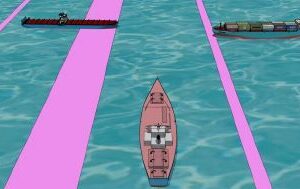
Situation :
Crossing Situation between three PDV’s and Vessel (A) is Following TSS Lane
Vessel (B) is Crossing Vessel(A) bow from Stbd to Port.
Vessel (C) is Crossing Vessel(A) bow from Port to Stbd.
First thing that will come to our mind is:
Vessel (A) is Give Way Vessel for Vessel (B) and Stand on for Vessel (C)
As per Rule 10(a), which states: This Rule applies to traffic separation schemes
adopted by the Organization and does not relieve any vessel of her obligation under
any other rule.
Which means other rules are applicable so crossing situation Rule 15 is applicable,
which states:
When two power-driven vessels are crossing so as to involve risk of collision, the vessel which has the other on her own starboard side shall keep out of the way and shall, if the circumstances of the case admit, avoid crossing ahead of the other
vessel.
But here Three Power Driven Vessels are involved, therefore Rule 15 is not
applicable as Rule 15 says When two power-driven vessels are crossing so as to
involve risk of collision, therefore Good Seamanship says to reduce speed and let
both the vessels cross your bow.