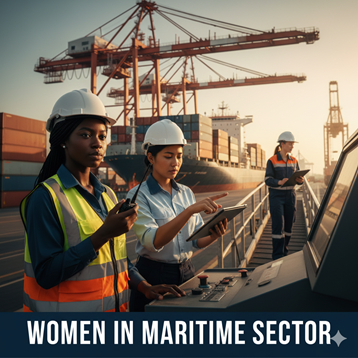
The maritime industry has traditionally been male-dominated, but the last decade has seen a strong global push to increase the participation of women across all maritime professions. From seafarers and engineers to surveyors, regulators and port managers, women are now taking on roles once considered out of reach — shaping the future of a modern, diverse and resilient maritime sector.
Why Women Matter in Maritime
The maritime industry connects 90% of global trade; its efficiency and sustainability depend on a skilled and diverse workforce. Increasing the participation of women brings:
- Broader perspectives for safer and smarter operations
- More innovation, especially in technology-driven roles
- Stronger workforce resilience
- Positive social and economic impact in maritime communities
A diverse maritime workforce is not only a matter of equality — it is a strategic advantage.
Current Representation of Women in Maritime
Despite progress, women remain significantly underrepresented:
- Around 2% of the world’s seafarers are women
- Most work in the cruise and passenger sectors
- Female participation in engineering, ship management and offshore sectors remains low
- Shore-based roles show improvement, with more women in
- Port management
- Maritime law
- Survey and inspection
- Safety and environmental regulation
- Maritime education and training
Encouragingly, more young women are choosing maritime science, maritime engineering and nautical studies.
Key Challenges Faced by Women at Sea and Ashore
1. Low Awareness and Limited Entry Opportunities
Many young women are unaware of maritime career paths or lack mentorship and guidance.
2. Workplace Culture and Gender Bias
Traditional perceptions and male-dominated environments can create barriers, especially onboard ships.
3. Difficulties with Onboard Accommodation
Some older vessels lack suitable accommodation or facilities for mixed-gender crews.
4. Safety and Harassment Concerns
Women have reported concerns about harassment, discrimination and lack of reporting mechanisms.
5. Work–Life Balance
Long contracts, extended time away from family and unpredictable schedules pose unique challenges.
What Is Being Done to Support Women in Maritime?
1. IMO’s Women in Maritime Programme
The International Maritime Organization is leading initiatives to promote training, capacity-building and visibility for women in the industry.
2. Regional Women-in-Maritime Associations (WIMAs)
These networks provide support, advocacy and professional development opportunities across Africa, Asia, the Pacific, the Caribbean and the Arab region.
3. Gender-Equality Policies in Shipping Companies
Many global operators are adopting:
- Anti-harassment policies
- Diversity recruitment goals
- Leadership development programs for women
- Gender-sensitive ship design
4. Maritime Academies Opening Doors
Training institutes and navies are admitting more female cadets than ever before.
5. International Campaigns
UN and industry-led campaigns are raising awareness, such as:
- IMO’s International Day for Women in Maritime (18 May)
- IWD Maritime Campaigns (8 March)
- DNV, ICS and BIMCO diversity programs
Inspiring Roles Where Women Are Making an Impact
Women today are excelling in:
- Master Mariners and Chief Officers
- Marine Engineers and ETOs
- Harbor and Marine Pilots
- Ship Surveyors and Classification Inspectors
- Naval Architects
- Maritime Educators and Trainers
- Port Authority Directors
- Maritime Lawyers and Policy Leaders
Their achievements are setting strong examples for future generations.
How the Industry Can Accelerate Gender Equality
To truly empower women in maritime, the industry must:
1. Promote Gender-Sensitive Recruitment
Encourage more female cadets through scholarship programs and career visibility.
2. Ensure Safe and Inclusive Workplaces
Adopt clear reporting mechanisms, zero-tolerance policies and onboard safety protections.
3. Improve Ship Design and Accommodation
Modern vessels must include facilities that support mixed-gender crews.
4. Provide Leadership Training
Support women’s career progression from junior roles to senior management and command positions.
5. Highlight Success Stories
Sharing real journeys of women at sea inspires interest and builds confidence among newcomers.
Conclusion
Women are increasingly shaping the future of the maritime industry — contributing to safer operations, innovation, sustainability and leadership. While challenges remain, strong global initiatives, supportive company policies and growing awareness are transforming the sector.
Empowering women is not just about representation — it is essential for building a modern, inclusive and future-ready maritime workforce.